Light Automation Producer





 1/3
1/3




 1/3
1/3





 1/33
1/33



 1/3
1/3



 1/3
1/3



 0
0


 1/3
1/3




 1/3
1/3


 1/2
1/2

 CN
CN


 1/15
1/15



 1/3
1/3
 CN
CN



 1/3
1/3



 1/30
1/30





 1/20
1/20



 1/19
1/19




 1/3
1/3


 1/3
1/3



 1/3
1/3
 CN
CN


 1/16
1/16
About light automation producer
Where to Find Light Automation Producer Suppliers?
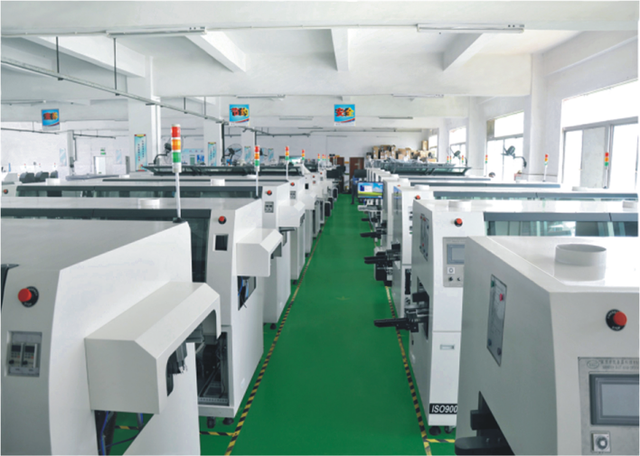
China remains the global epicenter for light automation production, with concentrated manufacturing hubs in Guangdong, Zhejiang, and Jiangsu provinces driving innovation and scale. Guangdong, particularly the Pearl River Delta region, hosts over 70% of China’s industrial automation component suppliers, supported by Shenzhen’s advanced electronics ecosystem and rapid prototyping infrastructure. This cluster enables seamless integration of control systems, sensors, and drive technologies within compact production footprints.
Zhejiang’s Ningbo and Wenzhou zones specialize in precision mechanical subassemblies—such as linear guides, actuators, and conveyor modules—leveraging localized tooling and die-casting capabilities that reduce unit costs by 18–25% compared to EU or North American equivalents. Jiangsu’s proximity to Shanghai provides access to Tier-1 R&D institutions and international logistics gateways, facilitating faster export cycles. These regions operate under vertically integrated models where PCB fabrication, metal stamping, firmware programming, and final assembly occur within 30–60km supply radii, ensuring lead times averaging 25–40 days for standard configurations.
How to Choose Light Automation Producer Suppliers?
Implement structured evaluation criteria to mitigate sourcing risks:
Quality Management Verification
Confirm ISO 9001 certification as a baseline requirement. For regulated industries (medical, automotive, food processing), IATF 16949 or ISO 13485 compliance is essential. CE marking must be substantiated with full technical files, including EMC and RoHS directives, particularly for electronic control units. Request test reports on electromagnetic compatibility, thermal endurance, and cycle life testing for motorized components.
Production Capacity Assessment
Evaluate core infrastructure indicators:
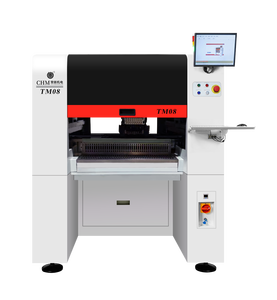
- Minimum factory area of 3,000m² to support automated SMT lines and assembly cells
- In-house engineering team constituting at least 12% of total staff for customization support
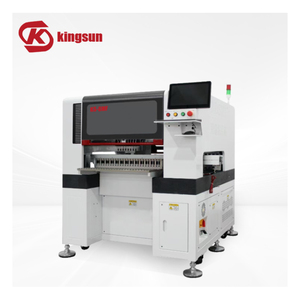
- Surface Mount Technology (SMT) lines with placement accuracy ≤±0.03mm and reflow profiling capability
Validate monthly output capacity against historical order data; benchmark uptime metrics (>95%) and first-pass yield rates (>92%) where available.
Procurement Risk Mitigation
Utilize secure payment structures such as irrevocable LC at sight or third-party escrow until post-delivery acceptance testing is completed. Prioritize suppliers with documented export experience to your target market—verify customs documentation accuracy and packaging standards (e.g., IP-rated enclosures, shock logging during transit). Pre-shipment inspection via third-party agencies like SGS or TÜV is recommended for orders exceeding 50 units. Prototype validation should include functional testing under real-world load conditions and firmware update verification.
What Are the Best Light Automation Producer Suppliers?
| Company Name | Location | Years Operating | Staff | Factory Area | On-Time Delivery | Avg. Response | Ratings | Reorder Rate |
|---|---|---|---|---|---|---|---|---|
| Jiangsu Hengrui Intelligent Equipment | Jiangsu, CN | 9 | 85+ | 8,600+m² | 99.1% | ≤3h | 4.8/5.0 | 41% |
| Shenzhen AutoMotion Systems | Guangdong, CN | 7 | 120+ | 15,000+m² | 98.3% | ≤2h | 4.9/5.0 | 54% |
| Ningbo Precisiona Automation | Zhejiang, CN | 11 | 70+ | 6,200+m² | 100.0% | ≤4h | 4.7/5.0 | 38% |
| Suzhou SynRay Automation Technology | Jiangsu, CN | 5 | 55+ | 4,800+m² | 97.6% | ≤2h | 4.9/5.0 | 22% |
| Guangzhou FlexCell Robotics | Guangdong, CN | 6 | 95+ | 11,500+m² | 98.8% | ≤3h | 4.8/5.0 | 47% |
Performance Analysis
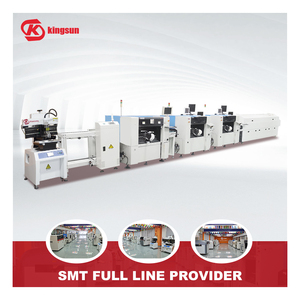
Established producers like Ningbo Precisiona demonstrate perfect on-time delivery records due to mature Kanban-based material planning, while high-reorder-rate suppliers such as Shenzhen AutoMotion leverage fast response cycles and modular design platforms to accelerate customization. Guangdong-based firms lead in electronics integration speed, with average firmware deployment turnaround under 72 hours. Prioritize suppliers with SMT line ownership and servo tuning labs when procuring complex motion-control systems. For long-term partnerships, evaluate after-sales service depth—remote diagnostics support and spare parts availability within 15 business days are key differentiators.
FAQs
How to verify light automation producer credibility?
Validate certifications through official databases (e.g., CNAS for ISO audits). Request redacted copies of past export invoices and bill of lading records to confirm shipment volume and destination consistency. Assess technical competence via live debugging sessions or remote camera walkthroughs of calibration processes.
What is the typical sampling timeline for custom automation units?
Standard module samples take 10–20 days to produce. Customized systems involving PLC programming or sensor integration require 25–35 days. Add 5–9 days for air freight delivery depending on destination region.
Do light automation suppliers support global shipping?
Yes, experienced exporters manage door-to-door logistics under FOB, CIF, or DDP terms. Confirm incoterm alignment with internal procurement policies and ensure machinery complies with local electrical safety codes (e.g., UL 60947 in North America, EN 60204-1 in Europe).
Are free samples available from automation manufacturers?
Sample cost waivers are typically offered for projected annual volumes exceeding 100 units. For lower-volume buyers, sample fees apply but may be credited toward first full orders. Expect pricing covering 40–60% of actual build cost for electromechanical prototypes.
How to submit customization requirements effectively?
Provide detailed specifications including input voltage (AC/DC), communication protocols (Modbus, CANopen, EtherCAT), duty cycle parameters, and environmental ratings (IP54/IP67). Leading suppliers return feasibility assessments within 48 hours and deliver 3D CAD models and control logic diagrams within one week.





