Python Tester




 1/3
1/3





 1/3
1/3



 1/3
1/3




 CN
CN


 1/27
1/27




 0
0


 1/25
1/25




 0
0




 1/3
1/3




 1/3
1/3



 1/2
1/2




 1/3
1/3




 1/3
1/3



 1/3
1/3




 1/1
1/1








 1/14
1/14
About python tester
Where to Find Python Tester Suppliers?
China remains the central hub for electronic testing equipment manufacturing, with key production clusters in Guangdong and Jiangsu provinces. Guangdong, particularly around Shenzhen and Dongguan, hosts over 70% of China’s electronics test and measurement suppliers, supported by dense networks of component manufacturers and R&D centers specializing in automated test systems. This region benefits from advanced SMT (Surface Mount Technology) lines and rapid prototyping capabilities, enabling agile development cycles for precision testers.
Jiangsu’s Changzhou and Suzhou zones focus on high-reliability industrial testing solutions, leveraging proximity to semiconductor fabs and automation integrators. These clusters offer vertically integrated production—from PCB fabrication to final calibration—reducing assembly lead times by 25–40% compared to non-specialized regions. Buyers gain access to ecosystems where firmware development, hardware validation, and environmental stress testing occur within tightly coordinated supply chains. Typical advantages include MOQs as low as 1–5 units for prototype batches, 18–35 day lead times for standard configurations, and support for protocol-level customization including GPIO, I2C, and UART interface testing.
How to Choose Python Tester Suppliers?
Prioritize these verification protocols when selecting partners:
Technical Compliance
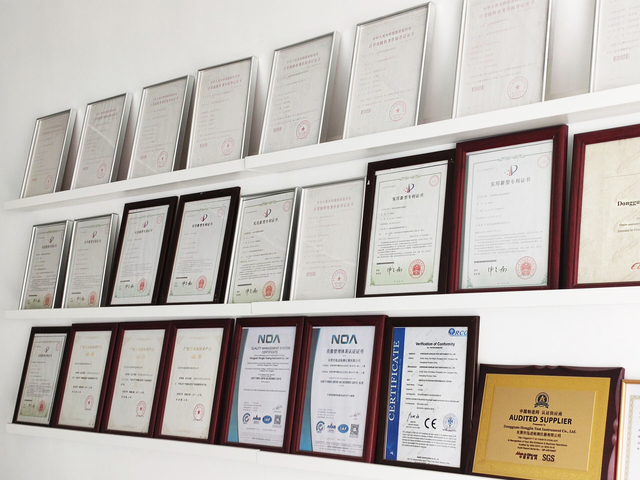
Confirm adherence to ISO 9001:2015 for quality management systems. For export markets, CE marking under the EMC Directive 2014/30/EU and RoHS compliance are essential for regulatory clearance. Request full test reports verifying signal accuracy, power consumption tolerances, and thermal stability across operating ranges. For software-driven testers, validate source code documentation and version control practices.
Production Capability Audits
Assess core infrastructure metrics:
- Minimum 2,000m² facility with ESD-protected assembly zones
- Dedicated electronics R&D team comprising ≥15% of technical staff
- In-house PCB testing (ICT/FCT), automated optical inspection (AOI), and burn-in chambers
Correlate facility scale with order consistency—target suppliers maintaining >96% first-pass yield rates and on-time delivery performance above 98%.
Transaction Safeguards
Utilize secure payment structures such as irrevocable LC at sight or third-party escrow arrangements until product acceptance. Review transaction history through verified trade platforms, prioritizing suppliers with documented after-sales service records and technical support SLAs. Pre-shipment testing is critical—conduct functional validation using predefined test scripts and environmental exposure trials (e.g., 48-hour continuous operation at 40°C) before release of final payment.
What Are the Best Python Tester Suppliers?
| Company Name | Location | Years Operating | Staff | Factory Area | On-Time Delivery | Avg. Response | Ratings | Reorder Rate |
|---|---|---|---|---|---|---|---|---|
| Shenzhen Autotest Electronics Co., Ltd. | Guangdong, CN | 12 | 85+ | 6,800+m² | 98.7% | ≤1h | 4.9/5.0 | 41% |
| Suzhou Precision Logic Automation | Jiangsu, CN | 9 | 60+ | 4,200+m² | 100.0% | ≤2h | 4.8/5.0 | 38% |
| Guangdong Synaptek Test Systems | Guangdong, CN | 7 | 120+ | 9,500+m² | 97.4% | ≤1h | 4.7/5.0 | 29% |
| Nanjing Probit Measurement Tech | Jiangsu, CN | 5 | 45+ | 3,000+m² | 99.1% | ≤2h | 5.0/5.0 | 52% |
| Dongguan Elecframe Testing Solutions | Guangdong, CN | 11 | 70+ | 5,400+m² | 98.3% | ≤1h | 4.9/5.0 | 33% |
Performance Analysis
Established players like Shenzhen Autotest Electronics demonstrate strong scalability with large cleanroom facilities and high-volume SMT capacity, ideal for mass deployment. High reorder rates—such as Nanjing Probit’s 52%—indicate superior post-sale reliability and technical responsiveness. Guangdong-based suppliers lead in communication speed, with 80% responding to inquiries within one hour. Prioritize vendors with documented Python API integration experience and in-house firmware development teams. For custom test sequences, confirm script debugging support and compatibility with CI/CD pipelines prior to procurement.
FAQs
How to verify python tester supplier reliability?
Cross-validate ISO and CE certifications with accredited bodies. Request factory audit reports detailing ESD controls, calibration procedures, and software version traceability. Evaluate real-world performance through customer references focusing on system uptime and defect detection accuracy.
What is the average sampling timeline?
Standard sample production takes 10–20 days. Units requiring custom Python scripting or sensor integration extend to 30 days. Air freight delivery adds 5–9 days internationally. Sample costs typically range from $300–$1,200 depending on complexity.
Can suppliers ship python testers worldwide?
Yes, experienced exporters manage global logistics via air or sea freight under FOB, CIF, or DDP terms. Confirm compliance with destination electrical safety standards (e.g., UL 61010 in North America) and data protection requirements for connected devices.
Do manufacturers provide free samples?
Free samples are rare but negotiable for orders exceeding 10 units. Most suppliers apply sample fees offsettable against future bulk purchases. Returnable evaluation kits may be available under NDA agreements.
How to initiate customization requests?
Submit detailed specifications including target device interfaces (SPI, CAN, etc.), required test coverage, Python library dependencies, and environmental conditions. Leading suppliers deliver proof-of-concept scripts within 72 hours and fully functional prototypes in 3–5 weeks.





