












Queue Management System






 1/1
1/1




 1/13
1/13




 1/3
1/3



 1/3
1/3


 0
0


 1/3
1/3



 1/3
1/3


 1/3
1/3




 1/3
1/3





 1/17
1/17


 1/3
1/3



 0
0




 1/3
1/3




 1/3
1/3


 1/3
1/3




 1/3
1/3




 1/3
1/3








 0
0


 0
0
About queue management system
Where to Find Queue Management System Suppliers?
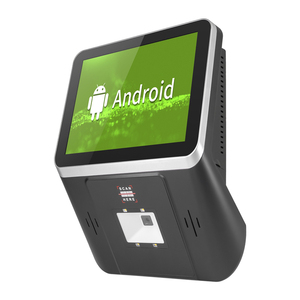
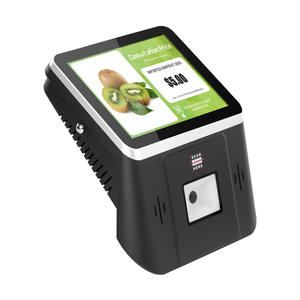
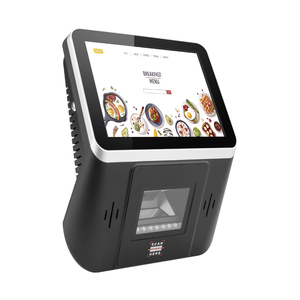
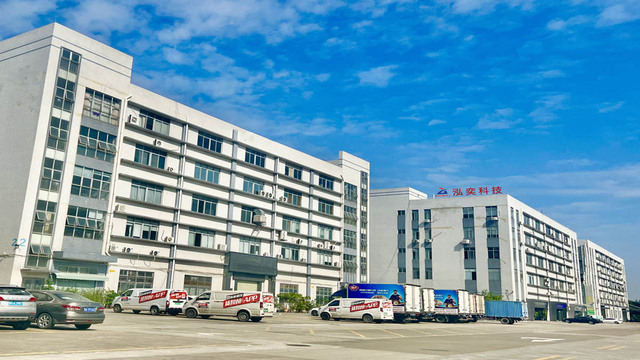
China remains the central hub for queue management system manufacturing, with key production clusters in Guangdong and Shenzhen offering integrated electronics ecosystems. The Pearl River Delta region hosts a dense network of technology suppliers specializing in touchscreen interfaces, embedded Android systems, and digital signage integration—core components of modern queuing solutions. Shenzhen's proximity to semiconductor and display panel suppliers enables rapid prototyping and assembly, reducing component procurement lead times by 25–40% compared to offshore alternatives.
These industrial zones support vertically aligned production, combining infrared touchscreens, thermal printers, wireless signal modules, and software-defined logic into unified systems. Manufacturers benefit from localized access to LCD panel fabricators, PCB assemblers, and firmware developers within a 30km radius, facilitating faster time-to-market. Buyers gain scalability advantages, including MOQ flexibility (as low as 1 unit) and average production lead times of 15–25 days for standard configurations. Cost efficiencies range from 20–35% over Western-assembled equivalents due to lower labor and logistics overheads.
How to Choose Queue Management System Suppliers?
Effective supplier selection requires structured evaluation across technical, operational, and transactional dimensions:
Technical Capability Verification
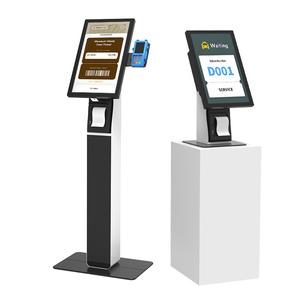
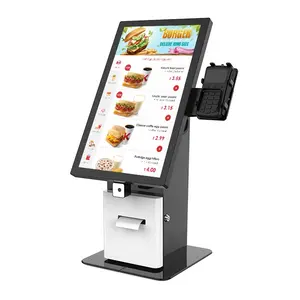
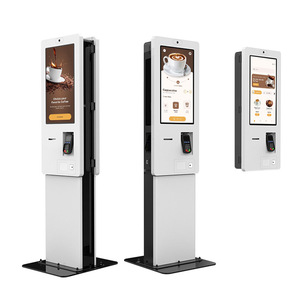
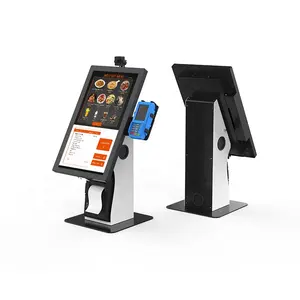
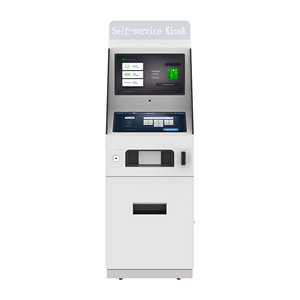
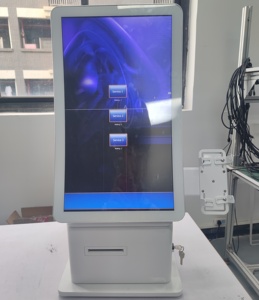
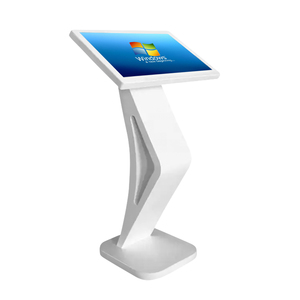
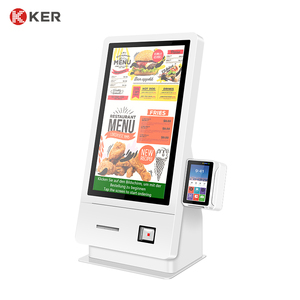
Confirm compatibility with intended deployment environments—hospital, banking, or retail—by assessing hardware specifications: screen size (typically 17–21.5 inches), touchscreen type (infrared/resistive), and mounting options (floor-standing, desktop, wall-mounted). Validate software features such as multi-language support, cloud-based monitoring, and integration with existing CRM or appointment systems. Request demonstration units or remote access to live system interfaces before procurement.
Production & Quality Assurance
Evaluate supplier infrastructure using these benchmarks:
- In-house R&D capability for firmware customization and UI adaptation
- Compliance with international standards (CE, RoHS) for electronic equipment
- On-time delivery performance exceeding 85% to ensure supply chain reliability
Prioritize suppliers providing detailed product testing reports, including mean time between failures (MTBF) and environmental stress testing under continuous operation.
Sourcing & Transaction Protocols
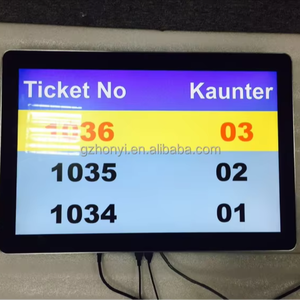
Utilize secure payment mechanisms such as escrow services for initial orders. Assess reorder rates as an indicator of customer satisfaction—suppliers with rates above 25% demonstrate consistent quality and service. Sample testing is critical; verify kiosk responsiveness, ticket printing accuracy, and audio-visual signaling functionality prior to volume ordering. Negotiate terms covering warranty duration (standard: 12 months), spare parts availability, and remote technical support response windows.
What Are the Best Queue Management System Suppliers?
| Company Name | Location | Main Products | Price Range (USD) | Min. Order | On-Time Delivery | Avg. Response | Reorder Rate | Online Revenue |
|---|---|---|---|---|---|---|---|---|
| Shenzhen DingChuang Vision Technology Co., Ltd | Shenzhen, CN | Digital Signage, LED Display, Interactive Boards, Payment Kiosks | $490–570 | 1 piece | 100% | ≤4h | 25% | US $20,000+ |
| Guangzhou Dyasuo Technology Co., Ltd. | Guangzhou, CN | Customization Options, Sound Integration, Logo Kiosks | $370–680 | 1 piece | 63% | ≤5h | <15% | US $40,000+ |
| Guangzhou Shangling Electronics Technology Co., Ltd. | Guangzhou, CN | Interactive Boards, LED/LCD Displays, Payment Kiosks | $415–980 | 1 set | 100% | ≤1h | - | - |
| Guangzhou Ideal Running Technology Co., Ltd. | Guangzhou, CN | Digital Signage, Other Service Equipment, Hotel & Restaurant Supplies | $27–699 | 1 unit | 74% | ≤2h | 15% | US $60,000+ |
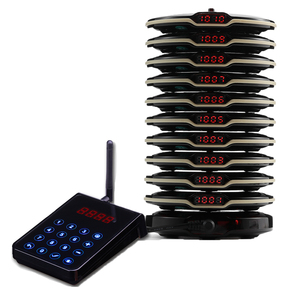
| Ihome International Business Limited | Guangdong, CN | Calling Systems, Pagers, Thermal Printers, Door Phones | $50–2,000 | 2 sets | 87% | ≤3h | 50% | US $10,000+ |
Performance Analysis
Shenzhen DingChuang and Guangzhou Shangling stand out for perfect on-time delivery records, indicating strong production planning and inventory control. Shangling excels in responsiveness (≤1h average), making it suitable for urgent procurement cycles. Ihome International demonstrates the highest reorder rate (50%), suggesting strong post-sale support and product reliability despite higher price variability. Guangzhou Dyasuo offers broader customization but lags in delivery consistency (63%), which may affect time-sensitive deployments. Ideal Running provides wide pricing tiers, enabling budget-tier sourcing without sacrificing core functionality. For mission-critical applications like hospitals, prioritize suppliers with proven track records in wireless synchronization and voice broadcast integration.
FAQs
How to verify queue management system supplier reliability?
Cross-check declared certifications (CE, RoHS) through official databases. Request factory audit reports or video walkthroughs of production lines. Analyze transaction history metrics—on-time delivery rate, response speed, and reorder frequency—as proxies for operational stability.
What is the typical sampling timeline?
Standard samples are shipped within 7–12 days after confirmation. Custom-configured units with branded UI or extended hardware integration require 18–25 days. Air freight adds 5–8 days for international delivery.
Can suppliers provide customized software interfaces?
Yes, most manufacturers offer UI/UX customization, multi-language setup, and API-level integration with hospital information systems or banking platforms. Minimum order requirements may apply for deep software modifications (typically 5+ units).
Do queue management systems support wireless networks?
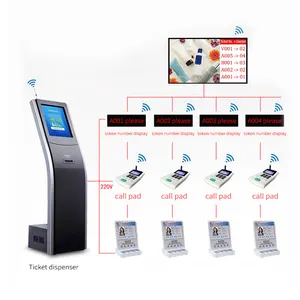
Modern systems include Wi-Fi and LAN connectivity as standard. High-end models support cloud-based dashboards for real-time queue analytics and remote device management. Confirm protocol compatibility (TCP/IP, HTTP) during technical validation.
What are common packaging and shipping considerations?
Units are typically packed in reinforced wooden crates with EPE foam protection. FOB Guangzhou/Shenzhen is standard; CIF terms are available upon request. Buyers should confirm import compliance for electronic kiosks, including electrical safety and EMC regulations in destination markets.





