


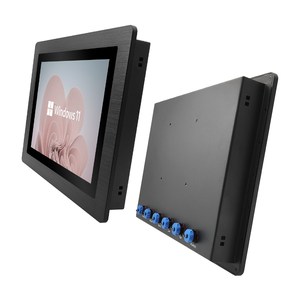


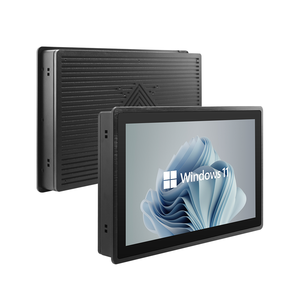
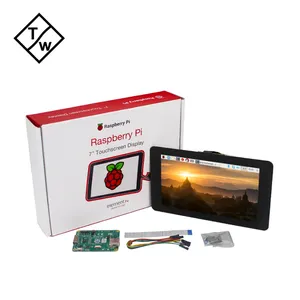
Raspberry Pi Touchscreen


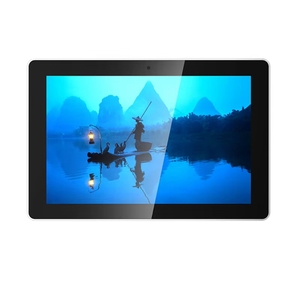


 1/3
1/3






 1/2
1/2




 0
0




 1/2
1/2



 1/3
1/3




 1/3
1/3



 1/3
1/3


 1/2
1/2



 0
0



 1/3
1/3






 1/20
1/20


 0
0




 1/10
1/10




 1/3
1/3


 1/3
1/3



 1/4
1/4


 1/3
1/3




 0
0


 1/30
1/30


 1/3
1/3
About raspberry pi touchscreen
Where to Find Raspberry Pi Touchscreen Suppliers?
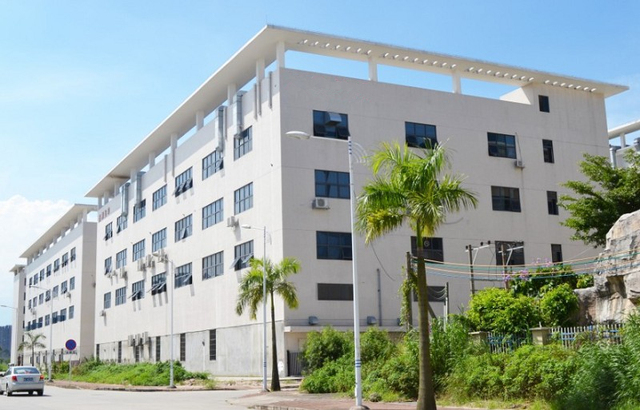
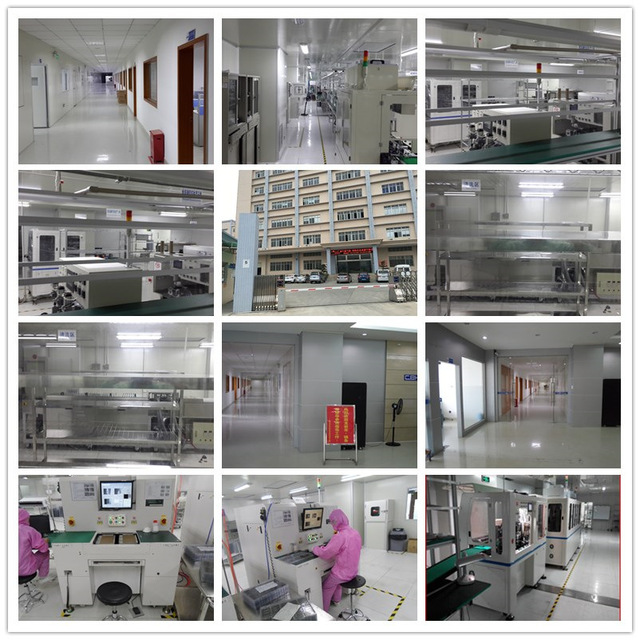
China remains the central hub for embedded display and single-board computer integration, with Shenzhen-based manufacturers dominating production of Raspberry Pi-compatible touchscreens. The city’s electronics ecosystem—supported by dense supplier networks in components, PCBs, and display modules—enables rapid prototyping and scalable manufacturing. Over 80% of global third-party Raspberry Pi displays originate from Guangdong Province, where vertically integrated supply chains reduce component lead times by 25–40% compared to non-specialized regions.
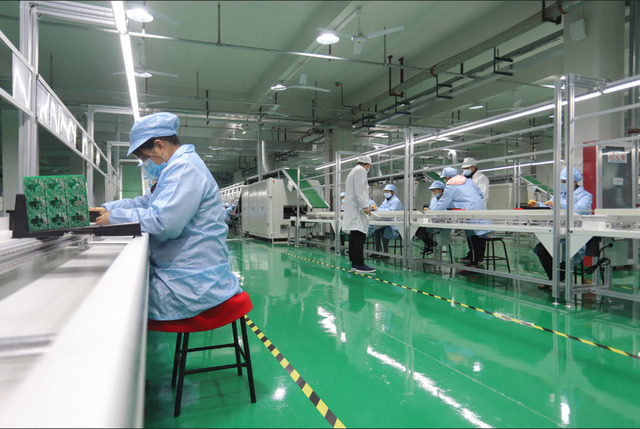
Shenzhen suppliers benefit from proximity to key IC distributors, TFT panel producers, and logistics gateways, allowing efficient fulfillment of both small-batch developer orders and bulk industrial deployments. Typical advantages include MOQs as low as one unit for standard configurations, lead times of 7–15 days for in-stock items, and access to hybrid assembly lines capable of producing resistive, capacitive, and AMOLED touch modules. This infrastructure supports diverse applications ranging from education and IoT prototyping to industrial HMIs and point-of-sale systems.
How to Choose Raspberry Pi Touchscreen Suppliers?
Apply rigorous evaluation criteria to ensure technical compatibility, production reliability, and transaction security:
Technical Compatibility & Specifications
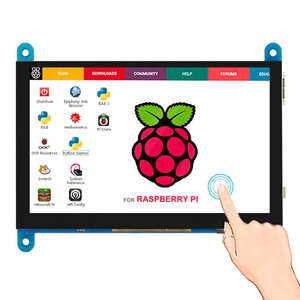
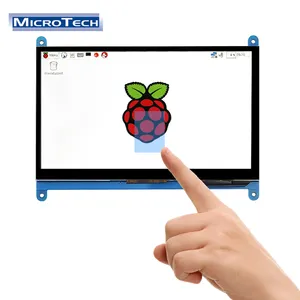
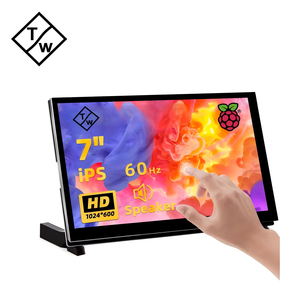
Confirm interface alignment: DSI, HDMI, or SPI protocols must match target Raspberry Pi models (e.g., Pi 4B, Pi 5). Verify resolution (800x480 typical for 7-inch), touchscreen type (capacitive preferred for multi-touch), and power requirements (5V/2A standard). Suppliers should provide pinout diagrams, driver support details, and OS compatibility (Raspberry Pi OS, Ubuntu Core).
Production and Quality Verification
Assess operational scale and quality control through these indicators:
- On-time delivery rate ≥97% indicates reliable order management
- Response time ≤3 hours reflects strong customer service infrastructure
- Reorder rate >30% signals customer satisfaction and product consistency
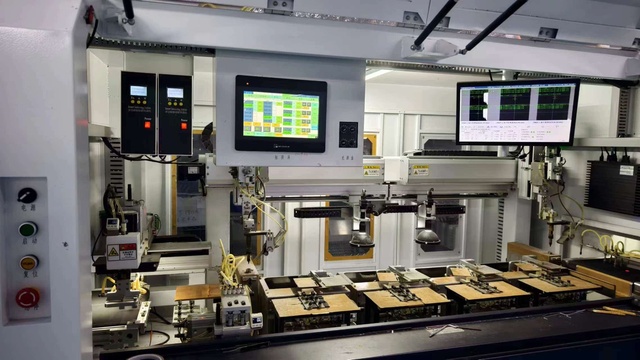
Prioritize suppliers with documented testing procedures for screen uniformity, touch accuracy, and EMI shielding.
Procurement Safeguards
Utilize secure transaction methods such as escrow payment systems. Request sample units before bulk ordering to evaluate build quality, backlight performance, and software integration. For customized variants (e.g., extended temperature range, anti-glare coating), confirm firmware modification capabilities and minimum batch feasibility (typically 10–50 units).
What Are the Best Raspberry Pi Touchscreen Suppliers?
| Company Name | Main Products | Price Range (USD) | Min. Order | On-Time Delivery | Avg. Response | Reorder Rate | Online Revenue |
|---|---|---|---|---|---|---|---|
| Shenzhen Silver Qiao Electronic Technology Co., Ltd. | Industrial Tablets, Capacitive Displays, AMOLED Modules | $19.88–184 | 1 piece | 100% | ≤3h | <15% | $7,000+ |
| Shenzhen Hong Shu Yuan Technology Co., Ltd. | LCD Touch Screens, All-in-One Pi Monitors | $9–48 | 2–10 sets | 92% | ≤9h | 31% | $150,000+ |
| Shenzhen Hong Xin Bao Rui Technology Co., Ltd. | Resistive/Capacitive Displays, Education Boards | $7.50–64 | 1–2 sets | 100% | ≤11h | - | $1,000+ |
| Shenzhen Yzy Technology Co., Ltd. | IPS Displays, 10.1" Touch Modules | $5–47 | 1 piece | 97% | ≤1h | <15% | $20,000+ |
| Shenzhen TCT Electronics Co., Ltd. | Cut-to-Size Panels, DSI Interfaces, Tablet Integrations | $20.50–270 | 1–50 pieces | 100% | ≤3h | <15% | $20,000+ |
Performance Analysis
Shenzhen Hong Shu Yuan stands out with a 31% reorder rate and high online revenue, indicating strong market acceptance and repeat business—key markers of product reliability and competitive pricing. While several suppliers report 100% on-time delivery, response time varies significantly; Shenzhen Yzy and Silver Qiao offer sub-3-hour responsiveness, critical for urgent procurement cycles. TCT Electronics and Silver Qiao specialize in higher-end integrations, including industrial tablets and AMOLED panels, suitable for advanced deployment scenarios. Buyers seeking customization should prioritize Hong Shu Yuan, which explicitly lists options for color, logo, packaging, and labeling modifications.
FAQs
How to verify Raspberry Pi touchscreen supplier reliability?
Cross-check supplier claims with transaction metrics: on-time delivery, response speed, and reorder rates. Request sample units to test mechanical fit, display clarity, and driver stability. Evaluate technical documentation completeness—reliable suppliers provide GitHub links, wiring schematics, and calibration instructions.
What is the average lead time for samples?
Standard touchscreen samples ship within 3–7 days. Custom variants (e.g., altered bezel, firmware tweaks) require 10–14 days. Air freight adds 5–10 days for international delivery.
Can suppliers accommodate OEM/ODM requests?
Yes, select manufacturers like Shenzhen Hong Shu Yuan offer full customization including branding, packaging, and hardware modifications. Minimum volumes typically start at 50 units for logo imprinting and 100+ for structural changes.
Are these displays compatible with Raspberry Pi OS updates?
Most suppliers use open-source drivers compatible with current Raspberry Pi OS versions. However, long-term compatibility depends on vendor support cycles. Confirm whether firmware updates are provided via public repositories or direct customer channels.
What are typical MOQs and pricing structures?
MOQs range from 1 piece (for retail/developer segments) to 10–50 units for discounted bulk rates. Prices vary by size and technology: 3.5-inch resistive screens start at $7.50, while 10.1-inch IPS capacitive displays reach $270 for fully assembled units. Volume discounts of 10–20% are common above 100 units.





