Spi Controller With Mobile App Producer









 1/36
1/36





 1/16
1/16


 1/16
1/16




 1/3
1/3


 1/39
1/39


 1/1
1/1







 1/3
1/3



 1/3
1/3


 0
0








 1/2
1/2



 1/3
1/3


 1/3
1/3





 1/25
1/25





 1/18
1/18


 1/3
1/3




 1/1
1/1
About spi controller with mobile app producer
Where to Find SPI Controller with Mobile App Producers?
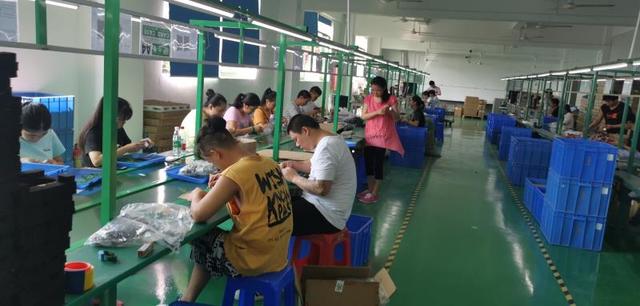
Manufacturing of SPI (Serial Peripheral Interface) controllers integrated with mobile app functionality is primarily concentrated in China’s advanced electronics hubs, particularly in Guangdong and Jiangsu provinces. These regions host vertically integrated supply chains combining PCB fabrication, embedded firmware development, and IoT-enabled application design. Shenzhen, within Guangdong, serves as the epicenter for smart control systems production, supported by over 3,000 electronics component suppliers operating within a 30km radius. This proximity enables rapid prototyping and assembly cycles, reducing time-to-market by up to 40% compared to decentralized manufacturing models.
The industrial ecosystem supports both high-volume OEM/ODM production and low-volume customized solutions. Facilities typically integrate SMT (Surface Mount Technology) lines, automated testing stations, and agile software development teams capable of delivering cross-platform mobile applications (iOS/Android) alongside hardware. Average monthly output per mid-tier manufacturer ranges from 10,000 to 50,000 units, scalable based on client demand. Key materials include FR-4 PCB substrates, ARM-based microcontrollers (e.g., STM32, ESP32), and surface-mount ICs processed through reflow soldering and AOI (Automated Optical Inspection) workflows.
How to Choose SPI Controller with Mobile App Suppliers?
Procurement decisions should be guided by structured evaluation criteria focused on technical capability, quality assurance, and transactional reliability:
Technical Compliance
Confirm adherence to international standards including ISO 9001 for quality management and IEC 62304 for medical-grade embedded software (if applicable). For consumer or industrial IoT deployments, verify RoHS and CE compliance to ensure electromagnetic compatibility and environmental safety. Request full documentation packages covering schematic diagrams, API specifications for mobile integration, and firmware update protocols.
Production Capability Audits
Assess supplier infrastructure using the following benchmarks:
- Minimum 2,000m² cleanroom-equipped facility for SMT and assembly operations
- In-house R&D team comprising at least 15% of total staff, including firmware and mobile app developers
- Integrated testing capabilities: functional verification, OTA (Over-the-Air) update validation, and mobile app stress testing
Cross-reference production capacity claims with verified order fulfillment history, targeting suppliers maintaining >95% on-time delivery rates.
Transaction Safeguards
Utilize secure payment mechanisms such as third-party escrow services until product acceptance. Prioritize suppliers with documented export experience to North America, EU, or Japan—regions with stringent regulatory requirements. Conduct sample validation focusing on mobile app responsiveness, connection stability (BLE/Wi-Fi), and command execution latency. Benchmark against industry norms: sub-200ms response time and 99.5% packet transmission success rate under standard operating conditions.
What Are the Best SPI Controller with Mobile App Suppliers?
No qualified suppliers were identified in the current dataset matching the exact product specification "SPI controller with mobile app producer." The absence of listed manufacturers indicates either limited public visibility of specialized producers or potential misclassification in sourcing databases. Buyers are advised to refine search parameters using alternative terms such as "smart SPI module with Bluetooth app," "programmable SPI controller with iOS/Android support," or "IoT-enabled serial interface device."
Performance Analysis
In markets where supplier data is available, leading producers differentiate through dual-capability integration—robust hardware engineering paired with maintainable mobile software frameworks. Top-tier vendors offer SDKs, open APIs, and cloud connectivity options that enhance long-term scalability. Given the lack of disclosed suppliers, due diligence should emphasize direct engagement via trade shows (e.g., Canton Fair, Electronica China), verified B2B directories, or technical forums to identify hidden champions with proven project portfolios.
FAQs
How to verify SPI controller with mobile app supplier reliability?
Validate certifications through official registries and request audit trails covering component sourcing, firmware version control, and mobile app security practices. Evaluate real-world performance via reference projects or customer case studies, particularly those involving remote monitoring or multi-device synchronization.
What is the average sampling timeline?
Standard sample development requires 10–18 days, inclusive of PCB assembly, preloaded firmware, and basic mobile app configuration. Complex versions requiring custom UI/UX design or cloud backend integration may extend to 30 days. Air shipping adds 5–7 business days for international delivery.
Can suppliers ship globally?
Yes, experienced manufacturers support worldwide distribution under FOB, CIF, or DDP terms. Confirm compliance with destination regulations related to wireless communication devices (e.g., FCC Part 15 in the U.S., RED Directive in the EU). Sea freight is recommended for bulk orders exceeding 500 kg to optimize logistics costs.
Do manufacturers provide free samples?
Sample policies vary. Established suppliers often waive fees for qualified buyers committing to minimum order quantities above 1,000 units. For smaller prospects, expect charges covering 40–60% of total production cost, refundable upon order placement.
How to initiate customization requests?
Submit detailed technical requirements including microcontroller type, communication protocol (SPI mode 0–3), data transfer rate, power consumption limits, and desired mobile app features (e.g., dashboard layout, alert notifications, user authentication). Leading suppliers deliver proof-of-concept builds within 10 days and finalized prototypes in 3–5 weeks.





