Window Command





 1/3
1/3




 1/10
1/10


 1/1
1/1



 1/27
1/27




 1/10
1/10





 1/15
1/15



 1/3
1/3


 0
0


 1/20
1/20


 1/3
1/3


 1/3
1/3


 0
0



 1/3
1/3



 1/3
1/3


 0
0


 1/30
1/30


 0
0




 1/13
1/13




 1/16
1/16
About window command
Where to Find Window Command Suppliers?
No verified suppliers for window command systems are currently identified in major manufacturing hubs. Unlike mature industrial equipment categories, the production of specialized window command mechanisms—encompassing motorized actuators, smart control modules, and integrated building management interfaces—remains fragmented across niche electronics and architectural hardware sectors. Historically, clusters in Guangdong and Zhejiang provinces have supported adjacent smart home component manufacturing, leveraging proximity to semiconductor distributors and PCB assembly lines. However, no concentrated supplier base dedicated specifically to window command units has been established.
The absence of centralized production limits economies of scale. Buyers cannot rely on vertically integrated supply chains for electromechanical window actuation systems, resulting in longer lead times and higher per-unit costs compared to standardized construction machinery. Without defined industrial ecosystems, procurement strategies must focus on cross-sector sourcing—evaluating manufacturers from smart ventilation, automated shading, or building automation backgrounds who may offer compatible command technologies.
How to Choose Window Command Suppliers?
Given the lack of active suppliers in available data, due diligence must emphasize technical alignment and risk mitigation:
Technical Compliance
Confirm adherence to relevant electrical and safety standards, including CE (for EU markets), UL listing (North America), and RoHS compliance for hazardous substance restrictions. For integration into BMS (Building Management Systems), verify support for standard communication protocols such as Modbus, BACnet, or KNX. Request test reports for EMI/EMC performance and thermal cycling endurance under real-world operating conditions.
Production Capability Audits
Assess infrastructure maturity through documented evidence:
- Minimum 2,000m² facility with climate-controlled assembly zones
- Dedicated electronics testing lab equipped for IP rating validation (e.g., dust/water ingress protection)
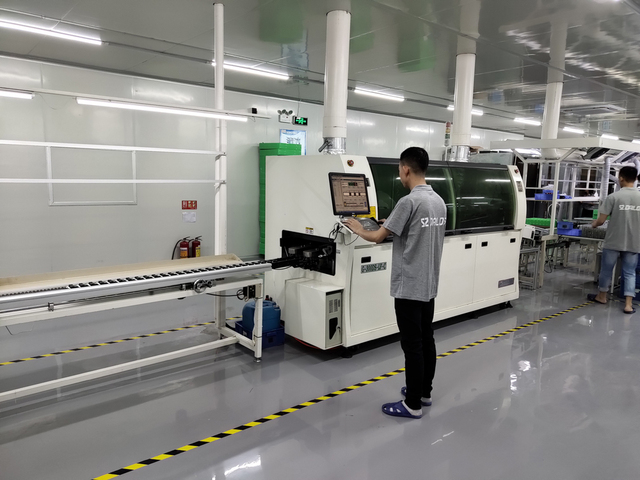
- In-house firmware development and PCB SMT (Surface Mount Technology) lines
Correlate production capacity claims with order fulfillment history, targeting suppliers with demonstrated batch consistency and traceability systems.
Transaction Safeguards
Utilize secure payment structures such as irrevocable LC at sight or third-party escrow services contingent upon product verification. Prioritize partners offering pre-shipment inspection rights and warranty terms covering both mechanical actuators and electronic controllers. Prototype validation is critical—require functional samples tested over 10,000 operational cycles before scaling procurement.
What Are the Best Window Command Suppliers?
No supplier data is available for window command systems. The current market landscape lacks verifiable manufacturers meeting baseline criteria for facility size, certification transparency, and export readiness. Procurement teams should consider redefining search parameters to include suppliers of related subsystems—such as linear actuators, smart louver controls, or IoT-enabled HVAC dampers—that may adapt existing platforms for window automation applications.
Performance Analysis
In the absence of direct suppliers, buyers must conduct cross-industry benchmarking. Evaluate potential candidates based on their experience in precision motion control, wireless mesh networking reliability, and compliance with building code requirements for emergency egress and storm resistance. Engage engineering consultants to assess compatibility between proposed command systems and structural window framing materials (e.g., aluminum, uPVC, timber). Early-stage technical collaboration becomes essential when no established supplier ecosystem exists.
FAQs
How to verify window command supplier reliability?
Validate certifications through official databases maintained by notified bodies. Request factory audit reports conducted by independent firms, focusing on quality management systems (ISO 9001), environmental controls, and component traceability. Scrutinize customer references from completed commercial installations, particularly in high-humidity or coastal environments where corrosion resistance is critical.
What is the average sampling timeline?
Custom window command prototypes typically require 30–45 days for design finalization, component sourcing, and initial build. Standardized models—if available from adjacent product lines—may reduce sampling to 20 days. Add 7–14 days for international air freight depending on destination region.
Can suppliers ship window command systems worldwide?
Shipping feasibility depends on supplier export status. Manufacturers with experience in global logistics will provide Incoterms (FOB, CIF, DDP), customs documentation, and packaging compliant with ISTA 3A standards. Confirm voltage compatibility (12V DC, 24V AC, etc.) and inclusion of region-specific plug types or terminal blocks.
Do manufacturers provide free samples?
Free samples are uncommon due to the complexity of window command units. Most suppliers charge a sample fee equivalent to 50–70% of unit cost, partially or fully reimbursed upon placement of bulk orders (typically MOQ ≥ 50 units). Waivers may apply for large-scale projects with confirmed installation timelines.
How to initiate customization requests?
Submit detailed technical requirements including stroke length, load capacity, input voltage, signal type (analog, digital, wireless), and enclosure rating (IP54 minimum recommended). Include dimensional drawings and integration schematics. Leading developers respond with feasibility assessments within 5 business days and provide CAD models and control interface specifications within 10 days.





