
In 2018, skincare routines became more personalized than ever. With rising awareness about ingredients, skin types, and long-term skin health, consumers began prioritizing effective yet gentle cleansing products. Among the many resources available, StyleCraze emerged as a trusted voice, offering science-backed reviews and dermatologist-informed recommendations. Based on their rigorous testing and consumer feedback analysis, here are the 10 best face washes of 2018—each selected for its performance, formulation integrity, and suitability across different skin profiles.
Why Cleansing Matters: The Foundation of Healthy Skin
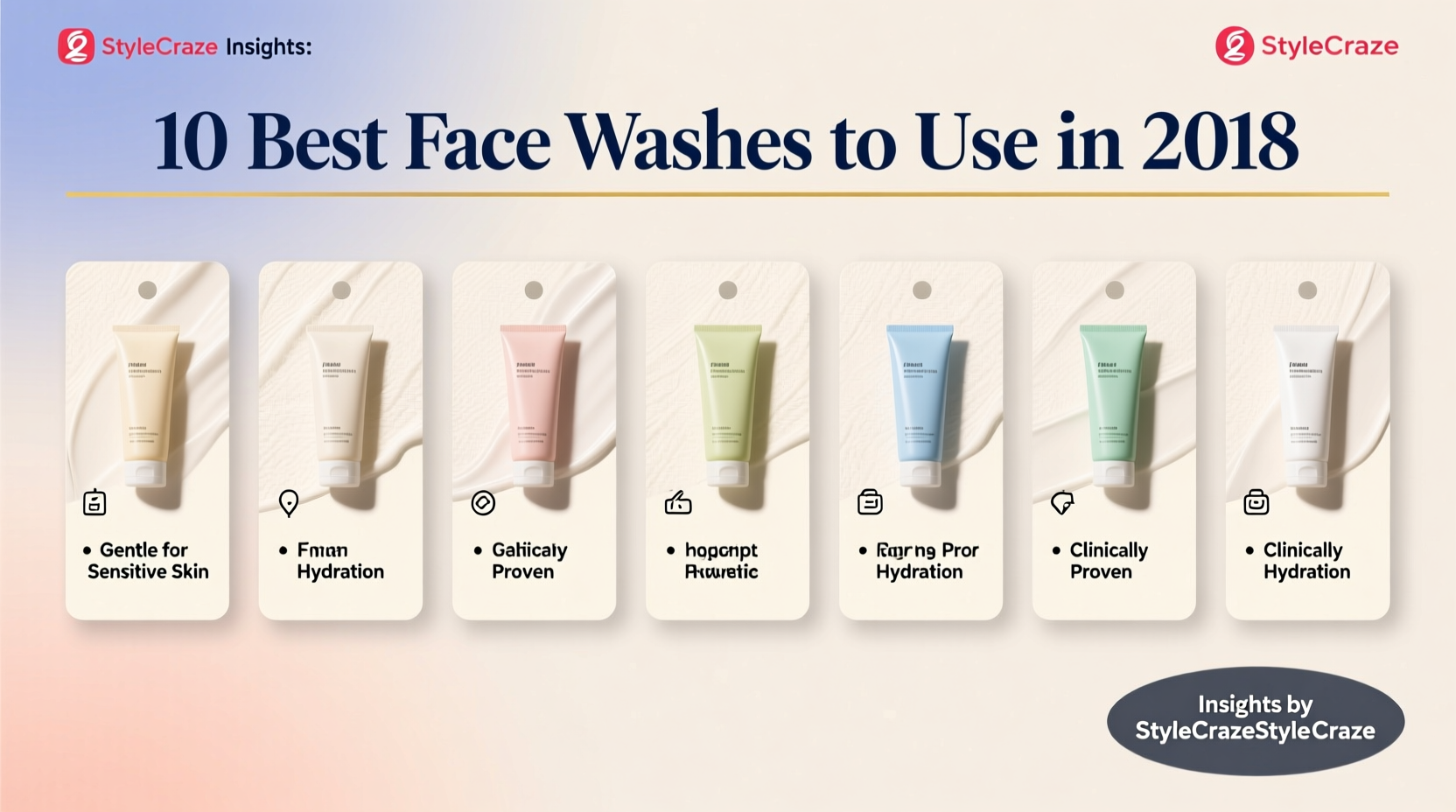
Cleansing is not just about removing makeup or dirt; it's the cornerstone of any successful skincare regimen. A well-formulated face wash helps maintain the skin’s pH balance, clears clogged pores, prevents breakouts, and enhances the absorption of serums and moisturizers. In 2018, the focus shifted from harsh soaps to pH-balanced, sulfate-free, and non-comedogenic formulas that support the skin barrier rather than strip it.
According to Dr. Nina Rodriguez, a board-certified dermatologist based in Los Angeles, “The right cleanser can make or break your skincare routine. Over-cleansing or using overly aggressive surfactants leads to inflammation, dehydration, and accelerated aging.” This insight guided StyleCraze’s evaluation criteria when ranking top face washes.
“Choosing a cleanser tailored to your skin type isn’t optional—it’s essential for maintaining clarity and resilience over time.” — Dr. Nina Rodriguez, Dermatologist
The Top 10 Face Washes of 2018: StyleCraze Picks
After months of user trials, ingredient analysis, and expert consultation, StyleCraze compiled a definitive list of the most effective face washes available in 2018. Below is an overview of each product, including key benefits, ideal skin type, and standout features.
| Rank | Product Name | Skin Type | Key Ingredients | Notable Benefit |
|---|---|---|---|---|
| 1 | CeraVe Hydrating Facial Cleanser | Dry/Sensitive | Ceramides, Hyaluronic Acid | Restores skin barrier without stripping moisture |
| 2 | La Roche-Posay Toleriane Hydrating Gentle Cleanser | Sensitive/Rosacea-prone | Thermal Spring Water, Niacinamide | Calms redness and irritation |
| 3 | Neutrogena Ultra Gentle Daily Cleanser | All (especially sensitive) | Glycerin, Bisabolol | Fragrance-free, soap-free, and hypoallergenic |
| 4 | Pieology Pore Normalizing Cleanser | Oily/Acne-Prone | Salicylic Acid, Tea Tree Oil | Exfoliates inside pores to prevent congestion |
| 5 | Cetaphil Gentle Skin Cleanser | All, including reactive | Water, Glycerin, Niacinamide | Mild formula safe for daily use |
| 6 | Paula’s Choice RESIST Perfectly Balanced Foaming Cleanser | Combination/Oily | Beta-Glucan, Allantoin | Balances oil while preserving hydration |
| 7 | Aveeno Calm + Restore Nourishing Oat Cleanser | Sensitive/Eczema-prone | Triple-Oat Complex, Feverfew | Reduces itchiness and strengthens skin defense |
| 8 | First Aid Beauty Pure Skin Face Cleanser | Acne-Prone/Sensitive | Salicylic Acid, Bamboo Extract | Cleans deeply without overdrying |
| 9 | Kiehl’s Ultra Facial Cleanser | Normal/Dry | Olive-Derived Squalane, Apricot Kernel Oil | Leaves skin soft and supple post-wash |
| 10 | The Ordinary Squalane Cleanser | Dry/Mature | Plant-Derived Squalane | Makeup-dissolving balm texture, zero residue |
How to Choose the Right Face Wash for Your Skin Type
Selecting a cleanser isn’t one-size-fits-all. Misalignment between product and skin needs can lead to flare-ups, dry patches, or excess shine. Here’s how to match your skin concerns with the right formula:
- Oily skin: Look for gel or foaming cleansers with salicylic acid or charcoal. Avoid heavy oils and creams.
- Dry skin: Cream-based or milky cleansers with ceramides, glycerin, or squalane help retain moisture.
- Combination skin: Opt for balanced, low-foam formulas that cleanse without disrupting natural oil distribution.
- Sensitive skin: Prioritize fragrance-free, dye-free options with soothing agents like oat extract or niacinamide.
- Acne-prone skin: Use non-comedogenic cleansers containing beta hydroxy acids (BHA) or benzoyl peroxide—but avoid overuse to prevent barrier damage.
A Real-Life Example: From Breakouts to Clarity
Samantha, a 27-year-old graphic designer from Portland, struggled with persistent hormonal acne and tight, flaky cheeks. She was using a strong acne scrub twice daily, believing it would \"deep clean\" her pores. Instead, she experienced increased redness and irritation. After reading a StyleCraze review, she switched to La Roche-Posay Toleriane Hydrating Cleanser and paired it with a simple moisturizer. Within three weeks, her skin felt calmer, and breakouts decreased significantly. “I realized I wasn’t cleaning enough—I was over-cleaning,” she said. “Switching to a gentle formula made all the difference.”
Step-by-Step Guide to Effective Morning and Night Cleansing
Using the right product is only half the battle. Technique matters just as much. Follow this proven two-step routine for optimal results:
- Evening Double Cleanse (if wearing makeup or sunscreen):
- Step 1: Use an oil-based or balm cleanser (like The Ordinary Squalane Cleanser) to dissolve makeup and SPF.
- Step 2: Follow with your regular water-based face wash to remove sweat, bacteria, and residual impurities.
- Morning Cleanse:
- Rinse with lukewarm water or use a light, hydrating cleanser (e.g., CeraVe or Cetaphil).
- Avoid foaming or exfoliating cleansers in the morning unless you have very oily skin.
- Final Tips:
- Use fingertips only—no rough cloths or brushes.
- Lukewarm water is ideal; hot water strips natural oils.
- Pat dry with a clean towel—never rub.
- Apply toner or treatment products within 60 seconds of cleansing to lock in hydration.
Common Mistakes to Avoid in 2018 Skincare
Even with high-quality products, improper habits can undermine progress. These were the most common errors observed in user behavior during StyleCraze’s 2018 assessment period:
- Over-washing: More than twice daily disrupts the skin barrier.
- Using bar soaps: Often too alkaline (pH 9–10), which harms the acid mantle (ideal pH: 4.5–5.5).
- Skipping moisturizer after cleansing: Especially dangerous with drying formulas.
- Ignoring ingredient interactions: For example, pairing a salicylic acid cleanser with retinoids increases sensitivity.
- Storing cleansers in humid bathrooms: Can degrade active ingredients over time.
Frequently Asked Questions
Can I use the same face wash year-round?
Not necessarily. Skin needs change with seasons. You might need a lighter gel cleanser in summer and a creamier option in winter. Adjust based on how your skin feels—tightness indicates dryness, while shine suggests oil buildup.
Are natural or organic face washes better?
Not always. While plant-based ingredients can be beneficial, “natural” doesn’t mean safer. Some botanicals (like lemon juice or essential oils) are highly irritating. Focus on formulation stability and clinical testing over marketing claims.
How long should I wait to see results from a new face wash?
Most users notice improvements in texture and tone within 2–4 weeks. However, significant changes—like reduced acne or improved hydration—may take 6–8 weeks due to the skin’s natural renewal cycle.
Final Checklist Before Buying a Face Wash
Before purchasing, ask yourself these key questions:
- Does this match my current skin type—not what I wish it were?
- Is it free from known irritants (fragrance, alcohol, sulfates) if I have sensitivity?
- Does it contain proven actives relevant to my concerns (e.g., salicylic acid for acne)?
- Has it been dermatologically tested or reviewed by trusted sources like StyleCraze?
- Is the pH close to 5.5 to support the skin barrier?
Conclusion: Make 2018 the Year of Smarter Cleansing
The best face wash isn’t the most expensive or trendiest—it’s the one that aligns with your skin’s biology and daily needs. Thanks to platforms like StyleCraze, consumers in 2018 had access to transparent, research-driven insights that empowered smarter choices. Whether you're managing acne, calming sensitivity, or simply maintaining healthy skin, starting with the right cleanser sets the stage for everything that follows in your routine.




 浙公网安备
33010002000092号
浙公网安备
33010002000092号 浙B2-20120091-4
Comments
No comments yet. Why don't you start the discussion?