
When a recipe calls for “one small onion,” it may seem like a minor detail—but this humble ingredient is foundational to flavor development in cuisines around the world. From soups and stews to salsas and stir-fries, the small onion plays a critical role in building depth, aroma, and complexity. Understanding how to select, prepare, and apply a small onion can elevate everyday meals from flat to flavorful. Unlike vague terms such as “a handful” or “to taste,” specifying a small onion offers measurable guidance, yet many home cooks overlook its culinary significance. This guide explores the science, technique, and practical wisdom behind using a small onion effectively—ensuring consistency, balance, and professional-level results in your kitchen.
Definition & Overview
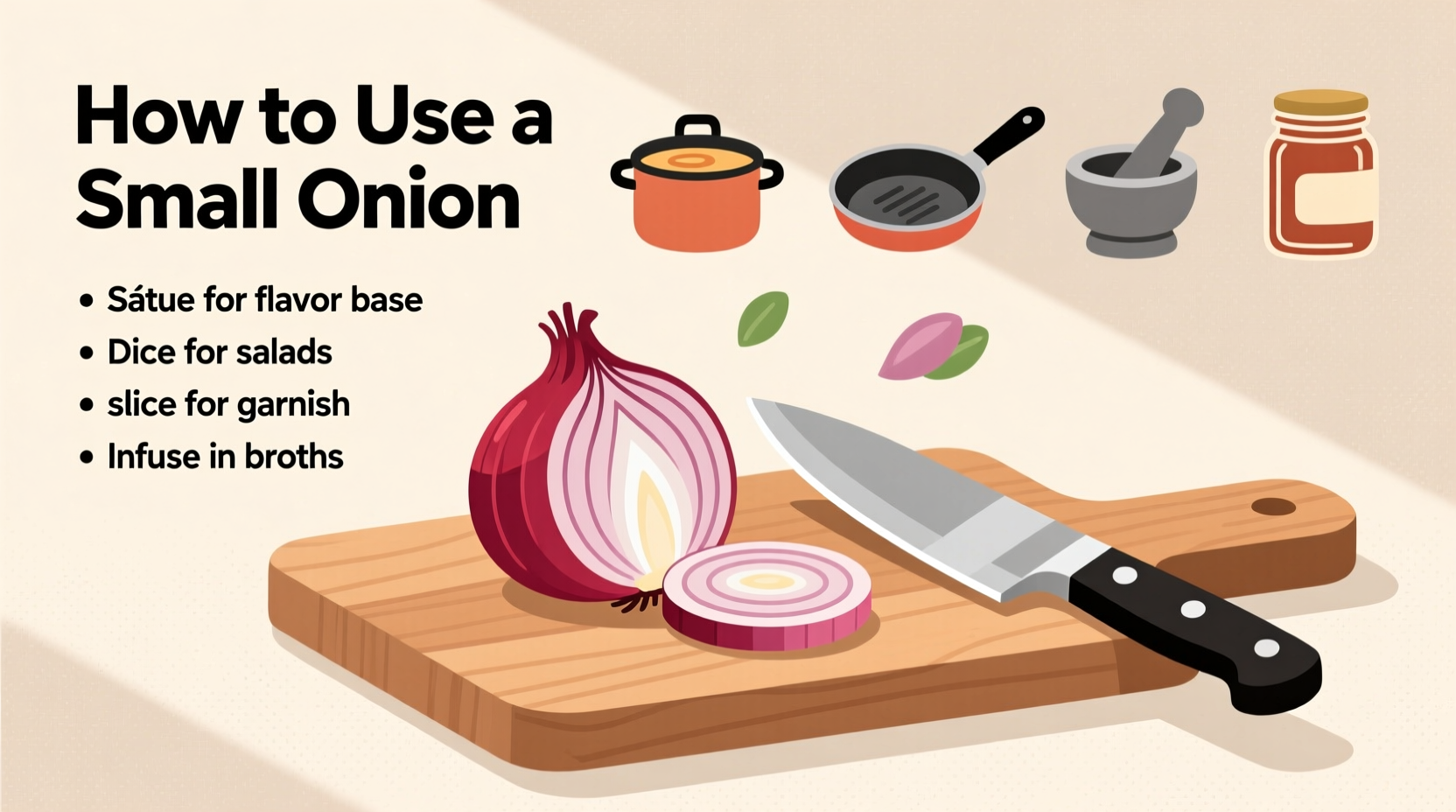
A small onion typically refers to a mature bulb of *Allium cepa*, commonly known as the dry bulb onion, measuring approximately 2 inches (5 cm) in diameter and weighing between 70 to 100 grams (2.5 to 3.5 ounces). It falls at the lower end of the standard size range for onions, which are categorized as small, medium, or large based on culinary convention rather than strict botanical classification. While often yellow in color, small onions can also be white, red, or sweet varieties depending on availability and regional use.
Onions belong to the *Alliaceae* family and have been cultivated for over 5,000 years, originating in Central Asia before spreading globally due to their hardiness, storability, and potent flavor-enhancing properties. In modern cooking, a small onion serves primarily as an aromatic base—sautéed early in the cooking process alongside garlic, celery, or carrots to form the flavor foundation of countless dishes. Its relatively mild pungency compared to larger onions makes it ideal for recipes where subtlety is key, particularly in delicate sauces, dressings, or children’s meals.
Key Characteristics
| Characteristic | Description |
|---|---|
| Size & Weight | Approx. 2 inches (5 cm) in diameter; 70–100 g (2.5–3.5 oz) |
| Flavor Profile | Sharp when raw, sweetens significantly when cooked; less sulfurous than larger onions |
| Aroma | Pungent when cut, releasing volatile sulfur compounds; mellows with heat |
| Color | Varies: yellow (most common), white, red, or sweet (e.g., Vidalia) |
| Culinary Function | Aromatic base, thickener (when softened), flavor layering agent |
| Shelf Life | 3–4 weeks at room temperature in a cool, dark, dry place; longer if refrigerated but not ideal |
| Water Content | ~89%, contributing to steam release during sautéing |
Practical Usage: How to Use a Small Onion in Cooking
The value of a small onion lies not just in its presence, but in how it's used. When properly incorporated, it enhances without dominating. Here are several proven methods for maximizing its impact across different cooking styles:
1. As an Aromatic Base (Soffritto, Mirepoix, Holy Trinity)
In French, Italian, and Cajun cuisines, onions are combined with other vegetables to create the essential flavor base of a dish. A small onion pairs perfectly with one stalk of celery and one medium carrot (mirepoix), or with green bell pepper and celery (Cajun holy trinity). Finely diced and gently cooked in fat (butter, oil, or bacon drippings), these aromatics undergo slow caramelization, developing rich umami notes without browning excessively.
“Never rush the sweat. A small onion takes 8–10 minutes over medium-low heat to fully release its moisture and sweeten. That patience pays off in depth.”
— Chef Elena Ruiz, Culinary Instructor, San Francisco Cooking School
2. In Sauces and Stews
Add a small onion, finely chopped or grated, to tomato sauce, chili, or beef stew. The low water volume relative to larger onions prevents excess dilution while still providing body. For smoother textures, sauté and blend into the final product, or tie the whole peeled onion in cheesecloth and remove before serving—a technique used in classic French braises.
3. Raw Applications
When used raw, a small onion contributes brightness and bite. Slice paper-thin for tacos, salads, or ceviche. Soak in cold water for 10 minutes to reduce sharpness, especially useful with red or yellow varieties. One small onion yields about ¾ cup of diced pieces—ideal for garnishing four servings of soup or mixing into tuna or chicken salad.
4. Roasting and Caramelizing
Roast a small onion whole alongside potatoes or meats. Cut in half, drizzle with olive oil, season with thyme, and roast at 400°F (200°C) for 25–30 minutes until tender and golden. Alternatively, slice thinly and caramelize slowly for sandwich toppings or French onion soup base. Due to its size, a small onion requires only 20–25 minutes to fully caramelize—less time than larger bulbs, reducing risk of burning.
5. Knife Skills: Dicing a Small Onion Efficiently
- Trim the root end slightly, leaving it intact to hold layers together during cutting.
- Cut in half from pole to pole (stem to root).
- Peel both halves and lay flat-side down on the cutting board.
- Make vertical cuts toward, but not through, the root end.
- Cross-cut horizontally, then slice perpendicular to create even dice.
- Discard the root nub after dicing.
Pro Tip: Chill the onion for 20 minutes before cutting to reduce tear-inducing gas release. Use a sharp knife—dull blades crush cells, increasing irritant dispersion.
Variants & Types of Small Onions
Not all small onions are the same. Size intersects with variety, each offering distinct culinary advantages:
- Yellow Onion (Small): Most versatile; high in sulfur, develops deep sweetness when cooked. Ideal for soups, gravies, and roasts.
- White Onion (Small): Crisper and milder than yellow; preferred in Mexican cuisine for salsas and fresh preparations.
- Red Onion (Small): Vibrant color and moderate bite; excellent raw in salads, sandwiches, or pickled applications.
- Sweet Onion (e.g., Vidalia, Walla Walla – Small Specimens): Naturally higher sugar content, very low acidity. Best used raw or lightly grilled; prone to over-browning if cooked too long.
- Pearl Onions (True Miniature): Not technically \"small onions\" but worth noting—these are immature bulbs, often used whole in stews or glazed dishes. Typically 1 inch or smaller.
Choosing the right type depends on the desired outcome. For example, a small red onion adds visual appeal to a grain bowl, while a small yellow onion builds better background flavor in a curry.
Comparison with Similar Ingredients
Home cooks often substitute onions inconsistently because related alliums look similar but behave differently. Below is a comparison clarifying distinctions:
| Ingredient | Size Relative to Small Onion | Flavor Difference | Best Used When… |
|---|---|---|---|
| Shallot | Smaller (often sold in clusters) | Milder, garlicky-sweet; more nuanced | Delicate sauces, vinaigrettes, butter sauces |
| Green Onion (Scallion) | Longer but thinner bulb | Much milder; green parts add freshness | Garnishes, stir-fries, Asian dishes |
| Leek | Larger overall, but white part ≈ small onion | Sweeter, grassier; requires thorough cleaning | Cream soups, quiches, braises |
| Large Onion | Up to 3x bigger | More pungent, releases more liquid | Bulk cooking, stocks, long simmers |
| Garlic Clove | Far smaller | Intensely aromatic, spicy when raw | Flavor accent, never direct replacement |
Note: Shallots are sometimes used as a refined substitute for small onions in fine dining, but they lack the structural bulk needed for dishes relying on onion mass (e.g., meatloaf filler).
Practical Tips & FAQs
How much does one small onion yield?
One small onion produces approximately:
- ¾ cup finely diced
- ½ cup minced
- ¼ cup grated (useful for blending into meatballs or sauces)
- 6–8 thin rings (for burgers or frying)
Can I substitute a medium onion for a small one?
Yes, but adjust quantity. Use two-thirds of a medium onion (about 150g) to match the volume and flavor impact of one small onion. Overuse leads to overpowering sharpness or excess moisture.
What’s the best way to store a small onion?
Store unpeeled in a cool, dark, well-ventilated area—never in plastic bags or near potatoes, which emit moisture and ethylene gas that promote spoilage. Peeled onions can be refrigerated in an airtight container for up to 10 days; cut onions last 5–7 days.
Are frozen onions usable?
Yes, but texture changes. Frozen small onions become soft upon thawing, making them suitable only for cooked dishes (soups, sauces, casseroles). They cannot be used raw. To freeze: peel, dice, spread on a tray, freeze individually, then transfer to a bag.
How do I reduce onion breath or odor?
Eat parsley, apples, or mint after consuming raw onions. To remove smell from hands, rub with stainless steel under running water or use lemon juice. For cutting boards, clean with baking soda and vinegar.
Is a small onion healthier than a large one?
Nutritionally, per gram, all dry onions are similar: low in calories (~40 kcal per 100g), rich in vitamin C, B6, potassium, and antioxidants like quercetin. A small onion provides fewer total nutrients simply due to size, but its concentrated use helps control sodium by enhancing flavor naturally.
Can I grow small onions at home?
Yes. Plant onion sets (bulblets) in spring for harvest in summer. Harvest early for scallion-style use or let mature partially for small bulb production. Varieties like ‘Red Baron’ or ‘Stuttgarter’ work well in containers.
Storage Checklist:
✔ Keep whole, dry, and away from light
✔ Do not refrigerate unless cut
✔ Avoid storing near apples or bananas
✔ Use within 3–4 weeks for peak quality
Expert Application: Case Study – Building Flavor in Vegetable Soup
Consider a simple vegetable soup recipe designed to serve four. A chef might begin by sweating one small onion, diced, in olive oil with two minced garlic cloves and one chopped carrot. After 8 minutes, the onion turns translucent and sweet. Adding broth and vegetables follows. The result? A balanced, layered taste profile where no single element dominates. If a large onion were used instead, excess water would dilute the broth, requiring longer reduction time and risking bitterness if overcooked. The precision of “one small onion” ensures consistent texture, flavor integration, and cooking time—critical in both home and commercial kitchens.
Summary & Key Takeaways
The small onion is far more than a casual ingredient—it is a calibrated tool for flavor engineering. Recognizing its size, composition, and behavior under heat allows cooks to achieve predictable, restaurant-quality results. Whether building a savory base, adding crunch to a salad, or enriching a stew, the small onion delivers efficiency and elegance in equal measure.
- A small onion measures ~2 inches in diameter and weighs 70–100g.
- It functions primarily as an aromatic, forming the backbone of global cuisines.
- Yellow, white, red, and sweet types offer different strengths—choose based on application.
- Dice finely for even cooking; always sweat slowly to develop sweetness.
- Substitute thoughtfully—shallots and leeks differ significantly in flavor and function.
- Store properly to extend shelf life and maintain crispness.
- Use precise equivalents when scaling recipes up or down.
Next time a recipe calls for “one small onion,” treat it not as an afterthought, but as a deliberate choice—one that shapes the entire character of the dish. Master its use, and you master the art of foundational cooking.




 浙公网安备
33010002000092号
浙公网安备
33010002000092号 浙B2-20120091-4
Comments
No comments yet. Why don't you start the discussion?