
Choosing the right LEGO set for your child can feel overwhelming. With hundreds of themes, skill levels, and price points, it’s easy to make a purchase that ends up collecting dust—or worse, causes frustration. The key lies in aligning the set with your child’s developmental stage, attention span, and passions. When done right, LEGO becomes more than just a toy; it nurtures creativity, problem-solving, and fine motor skills. This guide breaks down how to select the perfect set by evaluating age appropriateness, complexity, theme relevance, and long-term value.
Understand Age and Skill Level Appropriateness
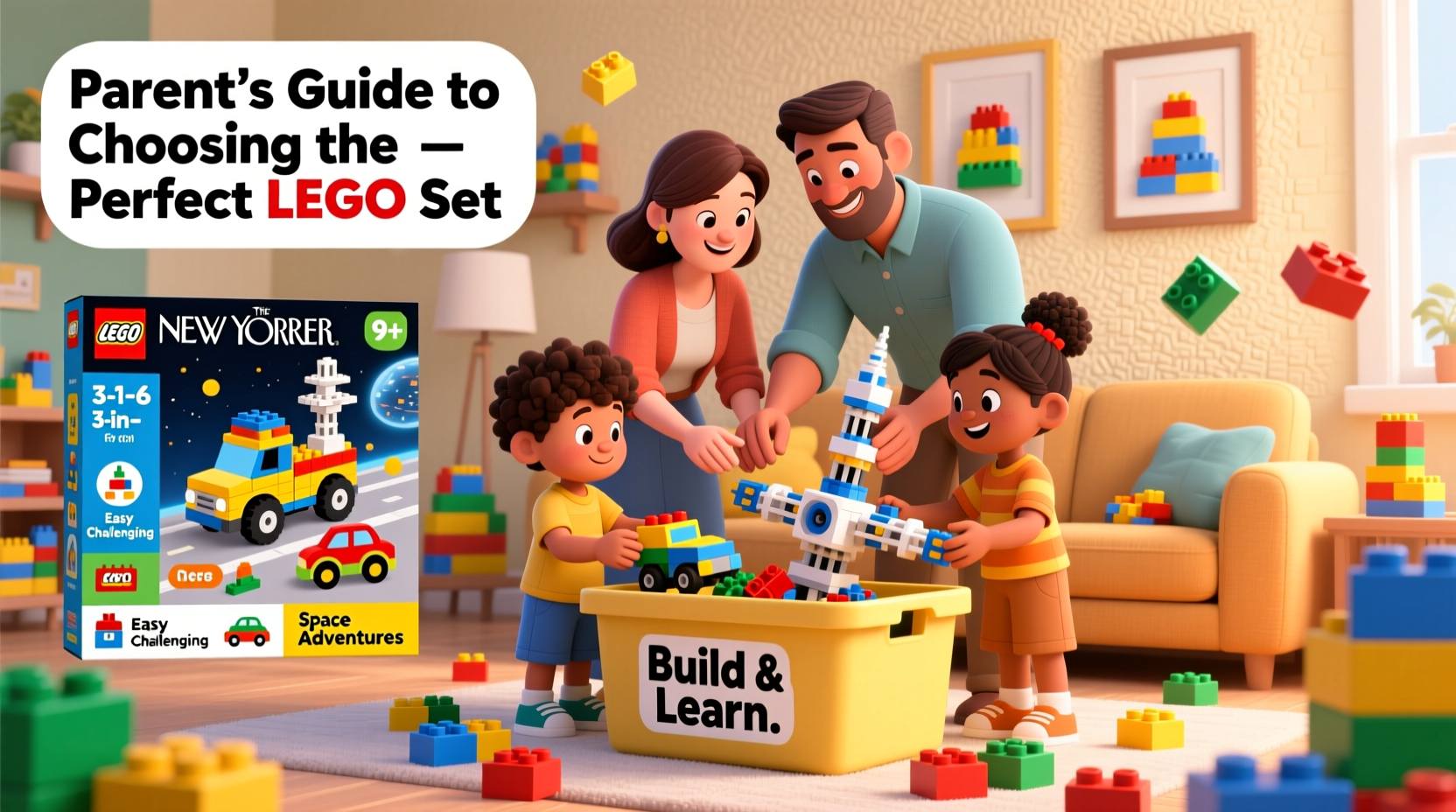
LEGO categorizes sets by age, but these labels are often broad. A deeper understanding of your child’s cognitive and physical development ensures a better match. Children under 3 benefit from larger, safer pieces like LEGO DUPLO, which prevent choking hazards and support early construction play. For ages 4 to 7, LEGO Juniors and Creator 3-in-1 sets offer guided builds with fewer steps and visual instructions tailored to emerging readers.
Children aged 8 to 12 typically handle standard LEGO sets with 200–600 pieces. These require reading instructions, patience, and spatial reasoning. Sets labeled 9+ or 10+ may involve intricate mechanisms or small parts, so assess whether your child has demonstrated focus and dexterity in similar activities. Teens and older builders might enjoy Technic, Architecture, or Adult Collector series—complex builds that reward precision and persistence.
Match Themes to Your Child’s Interests
A child engaged by the theme is far more likely to complete the build and return to it. Observe what captures their imagination: vehicles, animals, fantasy worlds, or real-world structures. LEGO offers themed lines across nearly every interest category.
- City and Vehicles: Realistic fire trucks, police stations, and space rovers appeal to kids who love action and practical scenarios.
- Star Wars, Marvel, or Harry Potter: Licensed themes excite fans of movies and storytelling. These sets often include minifigures and dramatic play elements.
- Creator and Modular Buildings: Open-ended sets encourage imaginative redesigns and suit artistic or independent thinkers.
- Technic: Geared toward STEM-minded children, these sets feature working suspension, gears, and motors—ideal for future engineers.
- Friends and DOTS: Designed with inclusive storytelling and customization, these resonate with children interested in social play and personal expression.
“Kids learn best when they’re emotionally invested. A LEGO set tied to a favorite character or hobby transforms building into meaningful play.” — Dr. Laura Bennett, Child Development Specialist
Assess Build Complexity and Instruction Clarity
The number of pieces isn’t the only indicator of difficulty. Consider instruction design, part variety, and structural complexity. Younger builders benefit from color-coded bags, step-by-step visuals, and compartmentalized packaging. Advanced sets may have dozens of pages of dense diagrams, requiring sustained focus.
Look for features that support learning:
- Numbered bags that correspond to instruction booklets
- Clear diagrams with zoomed-in views of tricky connections
- Progress markers or milestone builds within larger kits
If your child struggles with multi-step processes, choose sets with shorter builds or modular designs that allow partial completion without discouragement.
Step-by-Step Guide to Evaluating a LEGO Set Before Purchase
- Check the recommended age range on the box and compare it to your child’s maturity, not just their birthday.
- Review the piece count—under 100 for ages 3–5, 200–500 for ages 6–9, 500+ for older children.
- Examine the instruction sample online (via LEGO’s website) to assess clarity and pacing.
- Identify included minifigures or moving parts—these boost engagement and replay value.
- Read customer reviews, especially those from parents of children with similar ages or interests.
Balance Cost and Long-Term Value
LEGO sets vary widely in price—from $10 for small polybags to over $300 for flagship models. While budget matters, consider the cost per use. A $60 set played with daily for months offers better value than a flashy $100 set abandoned after one build.
To maximize longevity:
- Choose sets that allow rebuilding into alternative models (e.g., Creator 3-in-1).
- Prioritize open-ended themes that integrate with existing collections.
- Select durable themes (like City or Classic) that won’t feel “outgrown” quickly.
| Age Group | Recommended Line | Avg. Piece Count | Price Range | Best For |
|---|---|---|---|---|
| 1.5–5 years | DUPLO | 10–100 | $15–$40 | Motor skills, imaginative play |
| 4–7 years | LEGO Juniors / Disney | 50–200 | $20–$50 | Beginner builders, story-based play |
| 6–9 years | Creator, City, Friends | 200–600 | $30–$80 | Balanced challenge, creative expansion |
| 9–14 years | Technic, Star Wars, Marvel | 500–1500 | $50–$150 | Skill development, fandom engagement |
| 15+ years | Architecture, Ideas, Adult Collectors | 1000+ | $100–$300+ | Detail-oriented builds, display value |
Real Example: Choosing the Right Set for an 8-Year-Old Builder
Sophie, an 8-year-old animal lover, had built several small LEGO sets but struggled with longer builds. Her parents wanted something engaging but not overwhelming. They avoided the popular Star Wars Millennium Falcon (over 1,000 pieces) and instead chose the LEGO Creator 3-in-1 Dolphin Rescue (set #31117), a 304-piece kit featuring sea life, a research boat, and a hidden island cave.
The set was visually appealing, matched her interest in marine animals, and offered three different builds to extend playtime. The instructions were clear, divided into three color-coded bags, allowing Sophie to complete one section per day. She proudly displayed the finished models and later combined them with her older LEGO City sets for imaginative storytelling. The choice supported her skill level while encouraging growth—without causing frustration.
Frequently Asked Questions
Can my child use regular LEGO bricks with DUPLO sets?
No—standard LEGO bricks are smaller and do not securely connect to the underside of DUPLO pieces. However, DUPLO figures and accessories are safe for older children to incorporate into imaginative play alongside traditional sets.
How do I know if a set is too advanced?
If your child shows signs of frustration—skipping steps, forcing pieces, or abandoning the build—it may be too complex. Look for sets with lower piece counts or simpler mechanisms. You can always save advanced sets for birthdays or holidays as aspirational goals.
Are third-party LEGO-compatible sets worth considering?
While some brands offer lower-cost alternatives, they often lack the durability, precision, and safety standards of genuine LEGO. For consistent quality and compatibility with existing collections, original LEGO products are recommended—especially for younger children.
Final Checklist Before Buying
- ✅ Is the age rating aligned with my child’s actual ability, not just their age?
- ✅ Does the theme reflect their current interests or hobbies?
- ✅ Are the instructions clear and segmented for easier progress tracking?
- ✅ Does the set include interactive elements (minifigures, moving parts, rebuild options)?
- ✅ Can it integrate with our existing LEGO collection?
- ✅ Is the price justified by long-term play value and durability?
Conclusion: Build Confidence One Brick at a Time
Selecting the ideal LEGO set isn’t about finding the biggest or most popular model—it’s about matching the right challenge to your child’s curiosity. The perfect set inspires pride, fuels creativity, and grows with them. Whether it’s a DUPLO farm for a toddler or a detailed spaceship for a preteen, each brick laid is a step toward confidence, focus, and imaginative thinking. Take the time to assess skill, interest, and usability. Your thoughtful choice could spark a lifelong passion for building, problem-solving, and invention.




 浙公网安备
33010002000092号
浙公网安备
33010002000092号 浙B2-20120091-4
Comments
No comments yet. Why don't you start the discussion?