
Deciding to leave Twitter is more than just a digital detox—it’s a conscious choice about privacy, mental well-being, and data control. While deactivating your account temporarily removes your presence, only permanent deletion ensures your data is fully erased from Twitter’s systems after a grace period. This guide walks you through the entire process with precision, helping you back up your data, understand the consequences, and securely erase your digital footprint.
Why Permanently Delete Your Twitter Account?
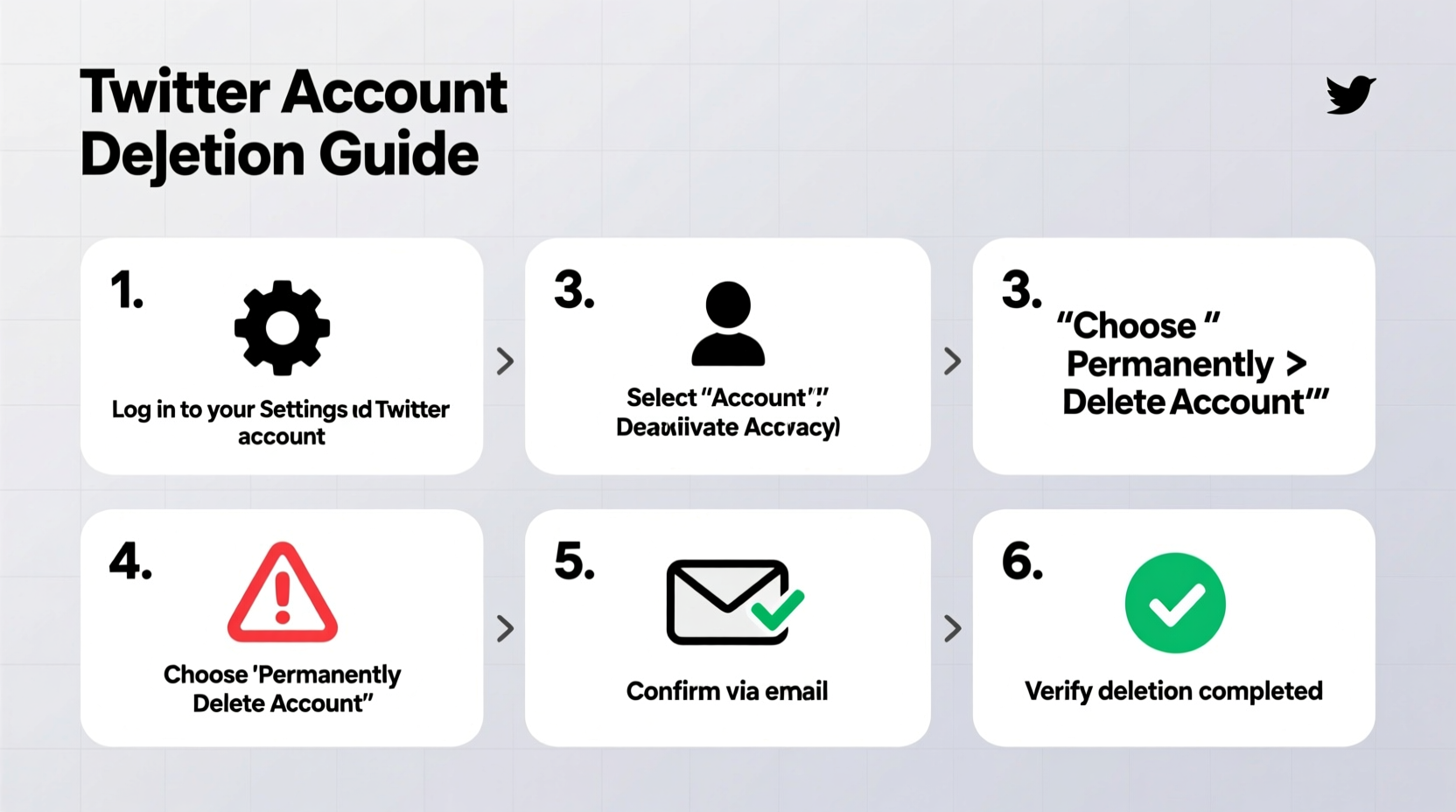
People choose to delete their Twitter accounts for many reasons: reducing screen time, escaping online toxicity, protecting personal information, or consolidating social media use. Unlike temporary deactivation, permanent deletion initiates a 30-day waiting period during which your account remains recoverable. After that window, Twitter deletes your data from its production and backup systems—though some public interactions like retweets or replies may persist on others’ timelines.
According to Dr. Lena Patel, a digital wellness researcher at Stanford University:
“Taking control of your digital presence by deleting inactive or stressful platforms can significantly improve focus and emotional balance.” — Dr. Lena Patel, Digital Wellness Researcher
Step-by-Step Guide to Permanent Deletion
Follow this sequence carefully to ensure a safe and irreversible removal of your Twitter account.
- Log in to your Twitter account using your preferred browser. Avoid logging in via third-party apps for this process.
- Navigate to Twitter’s Deactivation Page.
- Review the warning message explaining what happens when you delete your account.
- Click “Deactivate @yourusername” to proceed.
- Enter your password to confirm identity.
- Select a reason for leaving (optional).
- Click “Deactivate” one final time.
You’ll receive a confirmation email. From this point, your account enters a 30-day grace period. During this time, logging in will cancel the deletion. If you don’t log in, your account and associated data will be permanently removed.
Before You Delete: Essential Preparations
Deleting your account erases years of content unless you act first. Take these steps before initiating deletion.
Download Your Twitter Archive
Twitter allows you to download all your data, including tweets, direct messages (if enabled), media, and follower lists. To request your archive:
- Go to Settings & Privacy > Your account > Download an archive of your data.
- Click “Request data”.
- Wait for the email notification (can take minutes to hours).
- Download the .zip file containing JSON files, images, videos, and metadata.
This archive is crucial for preserving memories, professional portfolios, or legal records. Note that DMs are only included if you’ve enabled the feature in settings.
Save Important Content Manually
The archive may not render perfectly readable without technical tools. For critical tweets or threads:
- Screenshot key posts.
- Copy-paste text into a document.
- Export tweet threads using third-party tools like TweetDeck or free archiving services (use caution with permissions).
Data Retention: What Gets Deleted and What Doesn’t
Understanding what vanishes—and what might remain—is vital for managing expectations.
| Item | Deleted Permanently? | Notes |
|---|---|---|
| Your profile, username, bio | Yes | Becomes available for others to claim after 30 days. |
| Tweets and replies | Yes | Removed from timeline and search. |
| Direct Messages (sent) | Yes (from your side) | Recipients still retain copies on their end. |
| Media uploads (photos/videos) | Yes | Only if hosted on Twitter’s servers. |
| Mentions, RTs, quote tweets by others | No | Third-party content stays visible. |
| Email address and phone number | Yes | Disassociated from Twitter systems. |
Mini Case Study: Sarah’s Digital Exit Strategy
Sarah, a freelance writer, used Twitter for five years to promote her work. Over time, she noticed increased anxiety from constant notifications and negative interactions. She decided to leave—but not before securing her content.
She began by downloading her Twitter archive and spent a weekend extracting her most impactful threads into a personal blog. She notified her followers via a pinned farewell tweet and deactivated her account. Thirty days later, she confirmed no recovery was possible. Her mental clarity improved within weeks, and she redirected her time to writing long-form articles.
Her experience underscores the importance of preparation and intentionality. Leaving Twitter isn’t failure—it’s often a strategic reset.
Checklist: Safely Delete Your Twitter Account
- ✅ Back up your Twitter archive
- ✅ Save important tweets and media manually
- ✅ Update linked accounts using Twitter login
- ✅ Unsubscribe from Twitter notifications and emails
- ✅ Log in via desktop browser to start deletion
- ✅ Confirm deactivation with password
- ✅ Avoid logging in during the 30-day window
- ✅ Verify deletion by searching your @username after 30+ days
Frequently Asked Questions
Can I reuse my Twitter username after deletion?
No—you cannot reclaim your username automatically after deletion. Once deleted, it becomes available for anyone else to register after a short period.
Will people know I deleted my account?
When someone visits your profile after deletion, they’ll see “This account doesn’t exist.” There is no official notification sent to followers.
What happens to my tweets quoted or retweeted by others?
Quote tweets and retweets remain visible on others’ profiles even after your account is gone. The original tweet disappears, but the republished content persists.
Conclusion: Take Control of Your Digital Life
Deleting your Twitter account permanently isn’t just about closing an app—it’s about reclaiming autonomy over your time, attention, and personal data. With the right preparation, the process is straightforward and secure. By backing up your content, understanding what stays and what goes, and following the correct steps, you can exit with confidence.




 浙公网安备
33010002000092号
浙公网安备
33010002000092号 浙B2-20120091-4
Comments
No comments yet. Why don't you start the discussion?