
Blurry vision after inserting contact lenses is more than just a minor annoyance—it can signal underlying issues with lens fit, material, or ocular health. While occasional blurriness might resolve quickly, persistent or worsening symptoms should not be ignored. Millions of people rely on contact lenses for clear vision, yet many experience discomfort or visual disturbances they assume are normal. The truth is, consistent blurriness is not something you should adapt to. Understanding the causes and knowing when to consider switching contact lens brands can make a significant difference in both comfort and long-term eye health.
Common Causes of Blurry Vision After Wearing Contacts
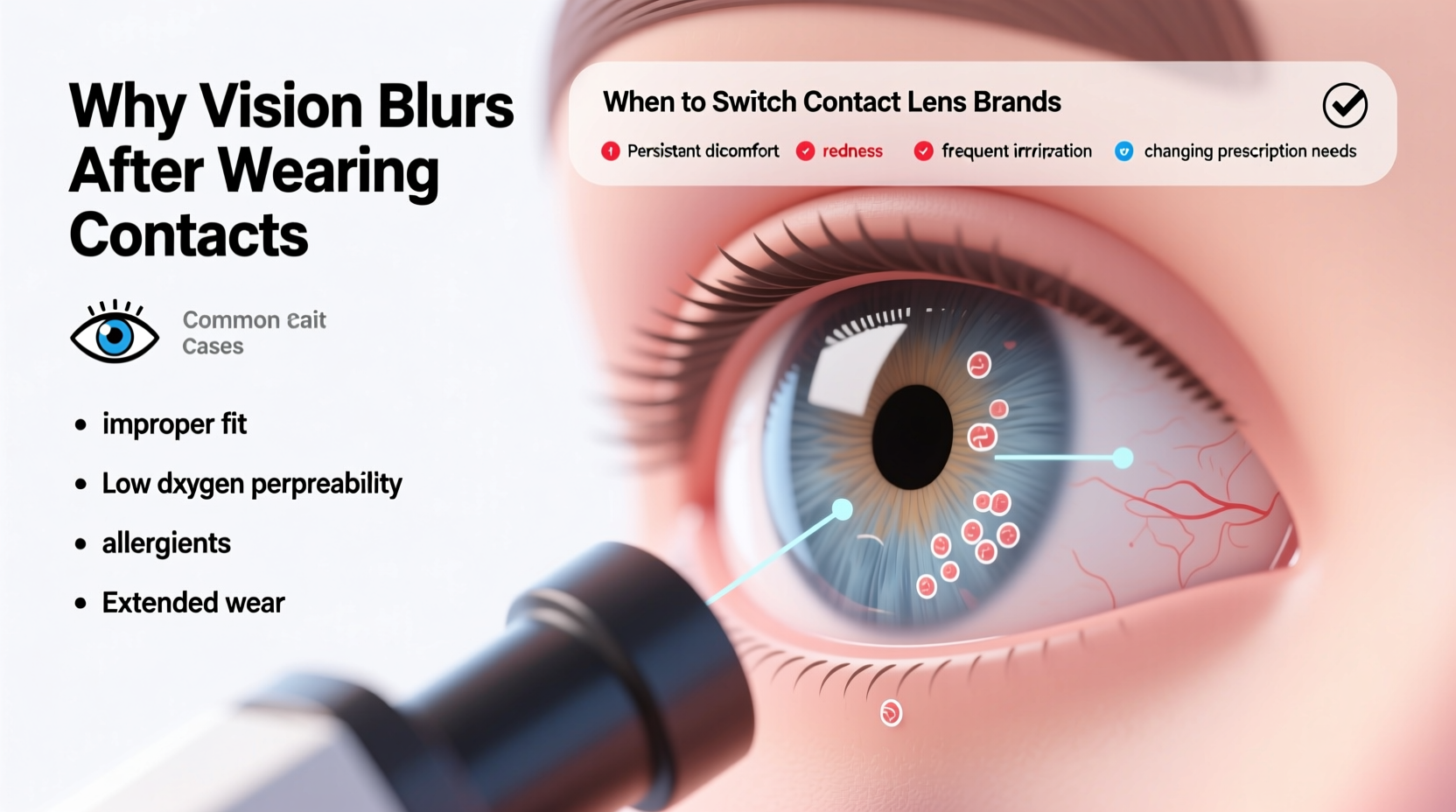
Several factors can contribute to blurry vision immediately after or during contact lens wear. Identifying the root cause is essential before deciding whether a brand change is necessary.
- Lens Dehydration: Soft contact lenses absorb moisture from the tear film. If the lenses have low water content or you’re in a dry environment (like an air-conditioned office), they may dehydrate, leading to distorted vision.
- Poor Lens Fit: Contacts that are too tight or too loose on the cornea can move improperly, causing inconsistent focus and blur, especially when blinking.
- Protein or Lipid Buildup: Over time, deposits from tears accumulate on lenses, reducing oxygen flow and optical clarity—even with proper cleaning.
- Dry Eyes: Contact lens wear often exacerbates dry eye syndrome. Insufficient tear production leads to a disrupted tear film, resulting in fluctuating vision.
- Incorrect Prescription: A prescription that’s outdated or inaccurately measured can cause chronic blurriness, glare, or halos.
- Corneal Swelling (Edema): Lenses that restrict oxygen transmission may cause mild corneal swelling overnight, leading to morning blur that clears slowly.
When Blurriness Is Normal vs. When It’s a Warning Sign
Some degree of adjustment is expected when starting a new pair of contacts or after extended wear. However, distinguishing between temporary adaptation and concerning symptoms is crucial.
It’s typically normal to experience slight blurriness for the first 10–20 seconds after insertion as the lens settles. Similarly, vision may fluctuate slightly at the end of a long day due to fatigue and reduced tear production. But if blurriness persists beyond a few minutes, worsens over time, or is accompanied by other symptoms, it may indicate a problem.
“Persistent blurriness, especially if it affects one eye more than the other, warrants evaluation. It could point to irregular astigmatism, keratoconus, or improper lens movement.” — Dr. Lena Patel, Optometrist and Cornea Specialist
Symptoms That Signal a Need for Professional Evaluation
- Blurred vision that doesn’t improve within 5 minutes of lens insertion
- Burning, stinging, or foreign body sensation
- Redness or bloodshot eyes
- Increased light sensitivity or glare
- Frequent need to remove lenses due to discomfort
How to Determine If It’s Time to Switch Contact Lens Brands
Not all contact lenses are created equal. Even if your current brand worked well initially, changes in your lifestyle, environment, or ocular health may necessitate a switch. Here are key indicators that it’s time to explore alternative brands.
1. Chronic Dryness and Discomfort
If your eyes feel gritty or tired by midday despite using rewetting drops, your current lenses may not be optimized for moisture retention. Newer silicone hydrogel lenses offer superior oxygen permeability and better hydration.
2. Inconsistent Visual Clarity
Fluctuating vision throughout the day—clear in the morning but hazy by afternoon—often points to dehydration or poor lens design. Toric or custom-fit lenses may be needed for astigmatism, which standard spherical lenses can’t fully correct.
3. Frequent Lens Deposits
If you notice cloudiness or residue even after cleaning, your lens material may attract protein buildup more readily. Some materials are more resistant to deposits than others.
4. Lifestyle Changes
Spending more time in front of screens, traveling frequently, or living in arid climates can increase dry eye risk. Daily disposable lenses are often ideal in these cases, as they eliminate buildup and require no maintenance.
5. Age-Related Eye Changes
After age 40, many people develop presbyopia and may benefit from multifocal or hybrid lenses. Continuing with the same brand out of habit may compromise visual performance.
Step-by-Step Guide to Safely Switching Contact Lens Brands
Switching brands isn’t as simple as picking up a different box at the pharmacy. Your eyes need time to adjust, and professional guidance ensures safety and effectiveness.
- Consult Your Eye Care Provider: Schedule a comprehensive eye exam. Discuss your symptoms and request a contact lens evaluation.
- Request a Trial Pair: Most optometrists provide sample lenses for testing. Wear them during typical conditions (e.g., work, screen time) to assess comfort and clarity.
- Monitor Symptoms for 3–5 Days: Track any changes in vision, dryness, or irritation. Note the time of day symptoms occur.
- Evaluate Visual Stability: Does vision stay clear? Are there fewer fluctuations? Is night driving easier?
- Confirm Prescription Compatibility: Ensure the new brand supports your exact prescription, including cylinder and axis values if you have astigmatism.
- Gradually Transition (If Needed): For sensitive eyes, alternate days between old and new lenses to ease adaptation.
- Update Your Prescription: Once satisfied, get a formal updated prescription for the new brand.
Comparison Table: Features to Consider When Switching Brands
| Feature | Why It Matters | Recommended Options |
|---|---|---|
| Oxygen Permeability (Dk/t) | Higher oxygen flow reduces corneal swelling and dryness | Silicone hydrogel lenses (e.g., Air Optix, Biofinity) |
| Water Content | Low water lenses retain moisture better in dry environments | 55% or lower for dry climates; higher for humid areas |
| Lens Replacement Schedule | Dailies reduce infection risk; monthlies require strict hygiene | Dailies for convenience; monthlies for cost efficiency |
| Surface Treatment | Smooth, wettable surfaces resist deposits and improve comfort | Lenses with plasma coating or digital surface optimization |
| Base Curve & Diameter | Must match corneal curvature for stable fit | Customized based on corneal topography if needed |
Real-Life Example: Sarah’s Experience with Blurry Vision and Brand Switching
Sarah, a 32-year-old graphic designer, had worn the same monthly soft lenses for nearly a decade. Over time, she noticed her vision becoming increasingly foggy by mid-afternoon, especially when working on detailed illustrations. She assumed it was due to screen fatigue and tried using more eye drops. However, the blur persisted, and she began experiencing mild redness and burning.
At her annual eye exam, her optometrist discovered early signs of dry eye disease exacerbated by her lenses’ moderate oxygen transmissibility. Sarah was switched to daily silicone hydrogel disposables with a high Dk/t rating. Within two days, her morning clarity lasted all day, and the burning sensation disappeared. Her doctor explained that years of protein buildup and marginal oxygen flow had gradually compromised her comfort and vision—a common issue among long-term contact lens wearers who don’t reassess their lens choice.
Checklist: Signs You Should Consider a Different Contact Lens Brand
- ☑ Vision remains blurry more than 5 minutes after insertion
- ☑ You frequently need rewetting drops (more than 2–3 times daily)
- ☑ Lenses feel dry or “sticky” by midday
- ☑ You see halos or glare around lights, especially at night
- ☑ Your eyes appear red or irritated after lens wear
- ☑ You’ve experienced recent lifestyle or environmental changes
- ☑ It’s been over a year since your last contact lens evaluation
- ☑ You’re over 40 and noticing difficulty with near vision
Frequently Asked Questions
Can wearing the wrong contact lens brand damage my eyes?
Yes. Poorly fitting or low-oxygen lenses can lead to corneal neovascularization (growth of blood vessels into the cornea), microbial keratitis, or permanent changes in corneal shape. Always use lenses prescribed specifically for your eyes.
How often should I re-evaluate my contact lens brand?
At minimum, have a contact lens evaluation annually. If you experience discomfort, vision changes, or dryness, schedule an appointment sooner. Eye needs evolve with age, environment, and screen usage.
Are daily disposable lenses worth the extra cost?
For many, yes. Dailies eliminate cleaning routines, reduce infection risk, and provide fresher vision daily. They’re especially beneficial for people with allergies, dry eyes, or busy lifestyles. The long-term cost of treating eye complications far exceeds the price difference.
Conclusion: Prioritize Clarity, Comfort, and Long-Term Eye Health
Blurry vision after wearing contacts isn’t something to simply endure. It’s a signal—one that could point to dehydration, poor fit, outdated prescriptions, or advancing dry eye. With advancements in lens materials and designs, solutions exist for nearly every visual challenge. Whether you’ve worn contacts for months or decades, staying proactive about your eye health means being open to change. Don’t hesitate to discuss brand alternatives with your eye care provider. Clear, comfortable vision isn’t a luxury—it’s a necessity. Take control today, and give your eyes the care they deserve.




 浙公网安备
33010002000092号
浙公网安备
33010002000092号 浙B2-20120091-4
Comments
No comments yet. Why don't you start the discussion?