
Running for the U.S. House of Representatives is one of the most direct ways to influence national policy and serve your community at the federal level. While the process may seem daunting—especially for first-time candidates—it is entirely achievable with careful planning, adherence to legal requirements, and a focused campaign strategy. This guide breaks down the journey into clear, actionable steps: from confirming your eligibility to launching a competitive campaign.
Step 1: Confirm Your Eligibility
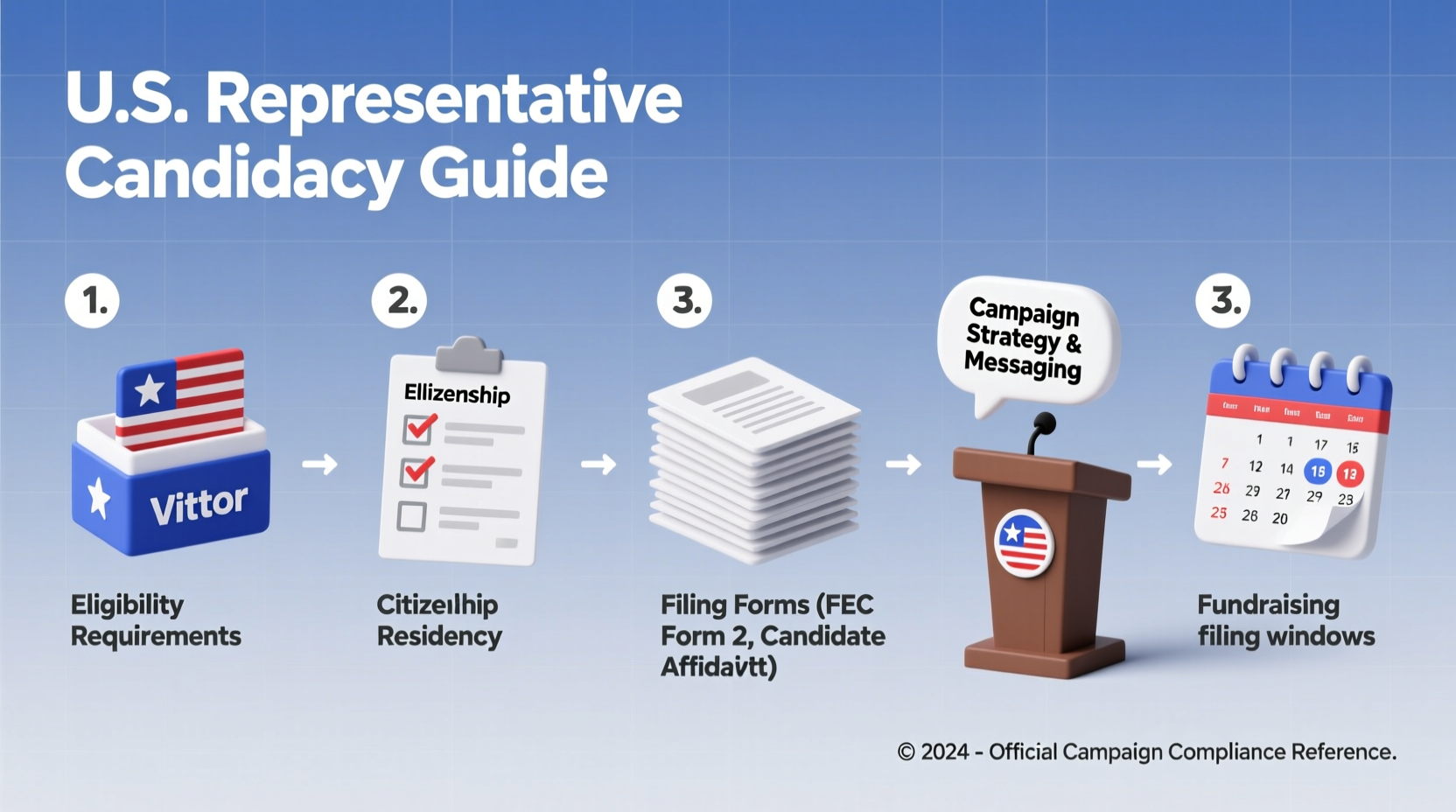
The U.S. Constitution sets three basic qualifications for serving in the House of Representatives:
- You must be at least 25 years old.
- You must have been a U.S. citizen for at least seven years.
- You must be an inhabitant of the state you seek to represent at the time of election.
Note that while the Constitution does not require residency within the specific congressional district, most candidates live in the district they intend to represent to build credibility and demonstrate commitment.
Step 2: Research Your District and Understand the Landscape
Before filing any paperwork, invest time in understanding the congressional district you plan to run in. Key factors include demographics, key industries, voter turnout history, and current political leanings.
Use resources like:
- The U.S. Census Bureau’s American Community Survey
- Your state’s board of elections website
- OpenSecrets.org for campaign finance trends
- Local newspapers and community organizations
Understanding issues that matter to voters—such as healthcare access, infrastructure, or education—will shape your platform and messaging.
“Candidates who listen first and speak second tend to connect more authentically with voters.” — Maria Thompson, Political Strategist and Former Campaign Manager for Congressional Races
Step 3: File the Necessary Paperwork
Filing to run for Congress involves both federal and state-level requirements. The two primary documents are:
- Statement of Candidacy (Form 2) – Filed with the Federal Election Commission (FEC).
- Certification of Candidacy – Submitted to your state’s election authority, often the Secretary of State.
Deadlines vary by state but typically fall several months before the primary or general election. Most states require signatures from registered voters within the district to qualify for the ballot.
| Document | Filed With | Deadline Range | Key Requirements |
|---|---|---|---|
| Form 2 (FEC) | Federal Election Commission | Within 15 days of raising/spending $5,000 | Name, party affiliation, office sought |
| Statement of Candidacy (State) | State Election Office | Varies by state (often Jan–Apr) | Voter signatures, filing fee, or both |
| Form 1 (Committee Formation) | FEC | Within 10 days of forming committee | Designate campaign treasurer |
Step 4: Build Your Campaign Infrastructure
A successful campaign requires more than a compelling message—it needs organization. Start by establishing the foundational elements:
Campaign Committee
You must form a principal campaign committee and file Form 1 with the FEC. This entity will manage donations, expenditures, and reporting.
Treasurer
Appoint a qualified treasurer responsible for financial oversight. They’ll ensure all contributions and spending comply with federal law.
Platform Development
Clarify your core positions on national and local issues. Keep messages concise, values-driven, and tailored to district concerns.
Team Assembly
- Field Organizer: Manages volunteers and door-to-door outreach.
- Communications Director: Handles press releases, social media, and messaging.
- Data Manager: Maintains voter databases and tracks engagement.
“Your campaign is only as strong as the team behind it. Invest in people who believe in your mission—not just your name.” — James Reed, Former Deputy Campaign Manager, U.S. House Race, Ohio-12
Step 5: Fundraising and Financial Compliance
Federal law limits individual contributions to $3,300 per election (primary and general are separate) as of 2024. You must report all contributions over $200, including donor name, address, occupation, and employer.
To raise funds effectively:
- Host small-dollar donor events ($25–$100 tickets).
- Launch an online donation portal via ActBlue (for Democrats) or WinRed (for Republicans), or use standalone platforms like Anedot.
- Apply for matching funds if available under state public financing programs (e.g., New York City, Maryland).
File regular reports with the FEC—quarterly or monthly depending on activity. Late or inaccurate filings attract scrutiny and fines.
Mini Case Study: A First-Time Candidate’s Path to the Ballot
Sarah Lin, a public school teacher from Colorado’s 7th District, decided to run after her school lost funding for arts programs. At 28, she met constitutional requirements and lived in the district for over a decade.
She began by attending local Democratic Party meetings and collecting 1,200 petition signatures—exceeding the 1,000 required. She filed Form 2 with the FEC in February, formed her campaign committee, and raised $75,000 in the first quarter through virtual town halls and neighborhood canvassing.
Her focus on education and affordable housing resonated with suburban voters. Though she didn’t win the primary, she gained visibility and laid groundwork for future runs. Her story underscores that even non-traditional candidates can launch viable campaigns with preparation and persistence.
Practical Campaign Tips for Maximum Impact
Winning a congressional race demands strategic outreach. Consider these proven tactics:
Door-to-Door Canvassing
Face-to-face conversations remain one of the most effective methods for persuasion and identifying supporters.
Digital Engagement
Use targeted Facebook and Google ads to reach specific demographics. Post regularly on Instagram, X (formerly Twitter), and TikTok to engage younger voters.
Media Outreach
Write op-eds for local papers. Request interviews with radio stations and community podcasts. Media coverage builds name recognition without ad costs.
Coalition Building
Partner with labor unions, faith groups, environmental organizations, or veterans’ associations. Their networks amplify your reach.
“Visibility matters. If voters haven’t heard your name five times by Election Day, they’re likely to skip your row on the ballot.” — Lena Pruitt, Campaign Consultant, Midwest Strategies Group
Checklist: Running for U.S. Representative
- ✅ Confirm eligibility: age 25+, 7+ years citizenship, state resident
- ✅ Research your district’s demographics and key issues
- ✅ File FEC Form 2 and establish campaign committee (Form 1)
- ✅ Submit state candidacy form with required signatures/fee
- ✅ Appoint a campaign treasurer and set up accounting system
- ✅ Develop a clear platform and campaign messaging
- ✅ Launch fundraising efforts with online tools and events
- ✅ Begin voter outreach: phone banking, canvassing, social media
- ✅ File all FEC reports on schedule
- ✅ Prepare for debates and public appearances
FAQ
Can I run as an independent or third-party candidate?
Yes. While most representatives are Democrats or Republicans, independents and third-party candidates can appear on the ballot. However, signature requirements are often higher, and ballot access rules vary significantly by state.
Do I need prior political experience?
No. Many members of Congress began their careers outside politics—as teachers, veterans, small business owners, or nonprofit leaders. What matters most is your connection to the community and ability to communicate a vision.
How much money do I need to run a competitive campaign?
There’s no fixed amount. Some races cost under $100,000; others exceed $1 million. Focus on efficient spending: volunteer-driven outreach often outperforms expensive ads. The average winning House candidate spent about $1.7 million in 2022 (OpenSecrets data).
Conclusion
Running for U.S. Representative is a bold step toward meaningful public service. From meeting constitutional requirements to building a grassroots movement, each phase demands discipline and authenticity. The path is open to ordinary citizens with extraordinary commitment. Whether you're advocating for healthcare reform, economic justice, or climate action, your voice matters. Start today: research your district, file the right forms, and begin the conversation with your neighbors. Democracy thrives when more people step forward to lead.




 浙公网安备
33010002000092号
浙公网安备
33010002000092号 浙B2-20120091-4
Comments
No comments yet. Why don't you start the discussion?