
Waking up feeling refreshed isn’t just about how many hours you sleep—it’s also about how you wake. The device that pulls you from deep slumber can significantly influence your morning alertness, mood, and cognitive performance. While smartphones dominate modern life, dedicated alarm clocks—both analog and digital—are experiencing a quiet resurgence among sleep-conscious individuals. But when it comes to waking up feeling truly fresh, does the type of clock matter? Is there a real difference between analog and digital alarm clocks in supporting a gentler, more natural awakening?
The answer lies not just in technology, but in biology, psychology, and environmental design. This article explores the subtle yet meaningful distinctions between analog and digital alarm clocks, evaluates their impact on sleep quality and morning alertness, and offers practical guidance for choosing the right tool to support a rejuvenating start to your day.
The Science of Waking Up Feeling Fresh
Feeling fresh upon waking depends on multiple factors: sleep cycle alignment, light exposure, noise levels, and psychological readiness. Abrupt awakenings—especially during deep sleep stages—can trigger grogginess, disorientation, and elevated stress hormones like cortisol. This phenomenon, known as sleep inertia, can last from minutes to over an hour and impair memory, decision-making, and motor skills.
A well-designed wake-up routine minimizes sleep inertia by aligning alarms with lighter sleep phases and using stimuli that ease the brain into consciousness. Light and sound are two primary tools used by alarm clocks to facilitate this transition. However, the way these signals are delivered—and perceived—varies dramatically between analog and digital devices.
“Your environment at wake-up time sets the tone for your entire day. A harsh beep or bright flash can spike stress levels before you’ve even opened your eyes.” — Dr. Lena Patel, Sleep Neurologist at Boston Sleep Institute
Analog Alarm Clocks: Simplicity, Rhythm, and Reduced Stimulation
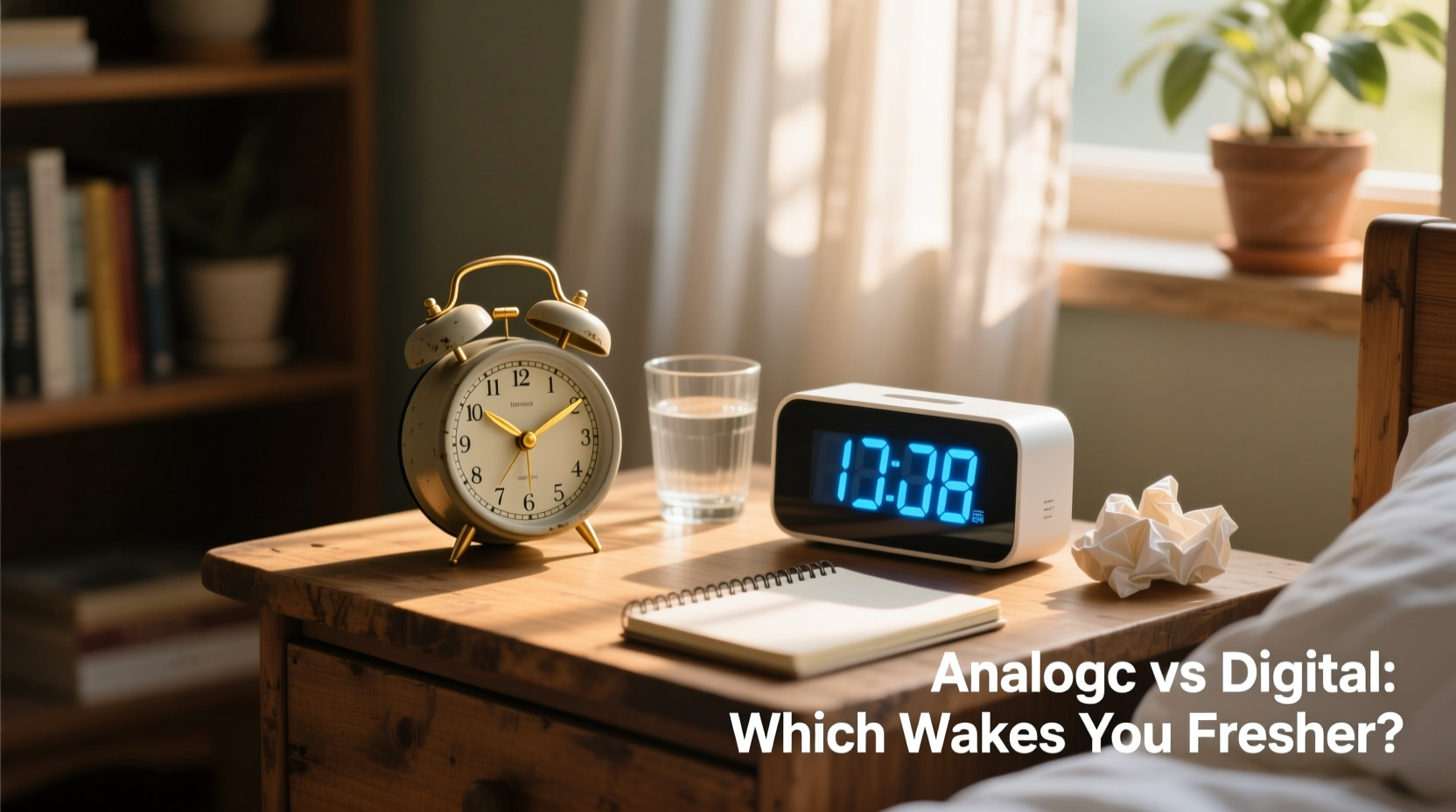
Analog alarm clocks use mechanical or quartz movements to display time with rotating hands. Their alarms typically produce a gradual ticking sound and a physical bell or buzzer that rings when triggered. Though often seen as outdated, analog clocks offer distinct advantages rooted in sensory moderation and behavioral psychology.
One key benefit is reduced visual stimulation. Unlike digital displays that emit blue or white LED light—even at low brightness—analog clocks are passive. They reflect ambient light rather than generate it. This absence of emitted light supports melatonin regulation, especially if you check the time during nighttime awakenings. Studies show that even small amounts of blue light suppress melatonin, delaying return to sleep and fragmenting rest.
The sound profile of analog alarms also differs. Many produce a progressive ring—starting soft and building in intensity—rather than an immediate jolt. Some models feature “gradual chime” mechanisms that mimic natural auditory transitions, such as birdsong or church bells, helping the brain shift gently from sleep to wakefulness.
Digital Alarm Clocks: Precision, Features, and Controlled Light
Digital alarm clocks use electronic displays (LCD, LED, or OLED) to show time numerically. They often include advanced features like adjustable alarm tones, snooze functions, backlighting, and integration with sunrise simulation or smart home systems. These capabilities make them powerful tools for personalized wake-up experiences—but they come with trade-offs.
The most significant concern is light emission. Even clocks with dimmed screens emit some level of blue-enriched light, which can interfere with circadian rhythms if viewed during nighttime awakenings. However, newer models address this issue with red or amber backlights, which have minimal impact on melatonin. Red light, in particular, is considered sleep-friendly because it doesn’t suppress melatonin production as strongly as blue or white light.
Digital clocks also allow for programmable alarm patterns, including nature sounds, FM radio, and gradual volume increases. Some high-end models simulate sunrise by slowly brightening a built-in lamp over 15–30 minutes, mimicking dawn and triggering natural cortisol release. Research shows that light-based wake-up systems can reduce sleep inertia and improve morning mood compared to abrupt auditory alarms.
Comparing Key Features: Analog vs Digital
| Feature | Analog Clock | Digital Clock |
|---|---|---|
| Light Emission | None (passive display) | Low to moderate (LED/LCD); red-light options available |
| Alarm Sound | Mechanical ring or chime; often gradual | Beeps, melodies, radio, customizable volume ramp-up |
| Sleep-Friendly Design | High (no light, minimal distraction) | Variable (depends on model and settings) |
| Smart Features | Rare | Common (Wi-Fi, voice control, sleep tracking) |
| Impact on Melatonin | Negligible | Potential suppression if blue/white light is used at night |
| Effectiveness in Reducing Sleep Inertia | Moderate (with gradual chime) | High (with sunrise simulation and sound ramping) |
Real-World Example: Sarah’s Transition to a Digital Sunrise Clock
Sarah, a 34-year-old project manager, struggled with chronic morning fatigue despite sleeping seven to eight hours. She used a basic digital clock with a loud beep alarm and often woke up startled, heart racing. After reading about circadian health, she switched to a digital sunrise alarm clock with a red-light display and gradual audio ramp.
Within two weeks, she reported feeling more alert within minutes of waking. “I don’t jump out of bed anymore—I feel like I’m being invited into the day,” she said. Her reliance on caffeine dropped, and her focus during morning meetings improved. A follow-up sleep diary showed fewer nighttime awakenings, likely due to reduced anxiety about checking the time under bright light.
Sarah’s experience illustrates how intentional design in digital clocks—specifically light color and sound progression—can transform the wake-up experience. However, it also highlights the importance of user behavior: she kept the clock face turned away at night and avoided pressing buttons unless fully awake.
Choosing Based on Your Sleep Personality
Not all sleepers benefit equally from the same type of alarm clock. Your ideal choice depends on your sleep habits, sensitivity to light and sound, and bedroom environment.
- If you’re light-sensitive or wake frequently at night: An analog clock is likely the better option. Its lack of emitted light prevents melatonin disruption and reduces temptation to check the time obsessively.
- If you struggle with deep sleep inertia or seasonal affective disorder (SAD): A digital sunrise clock with light therapy features may provide significant benefits. The simulated dawn helps regulate cortisol and improves mood upon waking.
- If you rely on multiple alarms or need smart integrations: Digital clocks with snooze customization, app connectivity, or voice assistants offer greater flexibility.
- If you value simplicity and mindfulness: An analog clock supports a low-tech, intentional bedroom culture—free from digital distractions and notifications.
Action Checklist: How to Optimize Your Wake-Up Experience
- Assess whether your current clock emits blue or white light at night.
- Replace any bright digital displays with red-amber alternatives or switch to analog.
- Choose an alarm tone that starts softly and increases gradually.
- Position your clock so you don’t see the display when lying down.
- Consider adding a sunrise simulation feature if you wake in darkness.
- Limit screen exposure (phones, tablets) at least one hour before bed.
- Test different wake-up times aligned with 90-minute sleep cycles.
Step-by-Step: Transitioning to a Fresher Morning Routine
Switching from a disruptive wake-up method to a refreshing one requires more than just changing clocks—it involves rethinking your entire pre-morning environment. Follow this timeline to create lasting change:
- Week 1: Audit Your Current Setup
Observe how you wake. Do you feel startled? Groggy? Check what kind of light your clock emits and how loud the alarm is. Note how often you hit snooze. - Week 2: Eliminate Blue Light Sources
Turn off or cover any devices emitting blue light. Replace digital clocks with red-light or analog versions. Use blackout curtains to maintain darkness until wake time. - Week 3: Introduce Gradual Awakening
Set your alarm to begin 10–15 minutes before you need to rise, using either a progressive sound or simulated sunrise. Allow your body to wake naturally within this window. - Week 4: Reinforce with Behavior
Place your clock across the room to force movement. Open blinds immediately upon rising. Drink water and expose yourself to natural light within five minutes of getting up.
This phased approach allows your circadian system to adapt gradually, reducing resistance and improving long-term adherence.
Frequently Asked Questions
Can an analog clock help me sleep better even if I don’t look at it?
Yes. Even if you don’t consciously check the time, the mere presence of a glowing digital display can subconsciously increase arousal levels. The brain remains sensitive to light cues during sleep. An analog clock eliminates this source of photic stress, promoting deeper, less fragmented rest.
Are digital sunrise alarms worth the cost?
For individuals who wake before sunrise, especially in winter months, sunrise simulation can be highly beneficial. Clinical studies show improvements in alertness, mood, and energy levels comparable to low-dose light therapy. If you experience morning sluggishness or seasonal depression, the investment may pay off in daily well-being.
Is the ticking of an analog clock disruptive?
It depends on the individual. Some people find the steady tick-tock rhythm soothing, similar to white noise. Others perceive it as intrusive, particularly in very quiet rooms. If considering an analog clock, opt for a “silent sweep” model with no audible tick, commonly found in Japanese quartz designs.
Final Thoughts: It’s Not Just the Clock—It’s the System
The debate between analog and digital alarm clocks isn’t about declaring a universal winner—it’s about matching technology to human needs. Analog clocks excel in minimizing sensory intrusion and fostering a calm sleep sanctuary. Digital clocks, especially advanced models, offer precision and biological alignment through light and sound engineering.
Ultimately, the best alarm clock is one that supports your natural rhythms, reduces stress at wake-up, and integrates seamlessly into a holistic sleep hygiene practice. Whether you choose the quiet elegance of an analog face or the intelligent design of a digital sunrise system, the goal remains the same: to wake not with a shock, but with intention.




 浙公网安备
33010002000092号
浙公网安备
33010002000092号 浙B2-20120091-4
Comments
No comments yet. Why don't you start the discussion?