
In an era dominated by smartwatches that track heart rates, monitor sleep, and sync with smartphones, the persistence of mechanical watches might seem like nostalgia clinging to relevance. Yet, analog watch enthusiasts continue to champion these intricate timepieces—not as relics, but as living artifacts of engineering, artistry, and personal expression. For those who appreciate them, a mechanical watch is not merely a tool to tell time; it’s a statement, a companion, and often, a lifelong heirloom.
The resurgence of interest in mechanical watches over the past two decades has defied technological trends. While digital convenience reigns supreme in most aspects of life, a growing community of collectors, hobbyists, and connoisseurs finds deeper meaning in the subtle tick of a balance wheel, the visible gears beneath a sapphire caseback, and the ritual of winding a timepiece by hand. This article explores why mechanical timepieces still matter—culturally, emotionally, and technically—and how they continue to captivate a dedicated global audience.
The Soul of Engineering: What Makes Mechanical Watches Unique
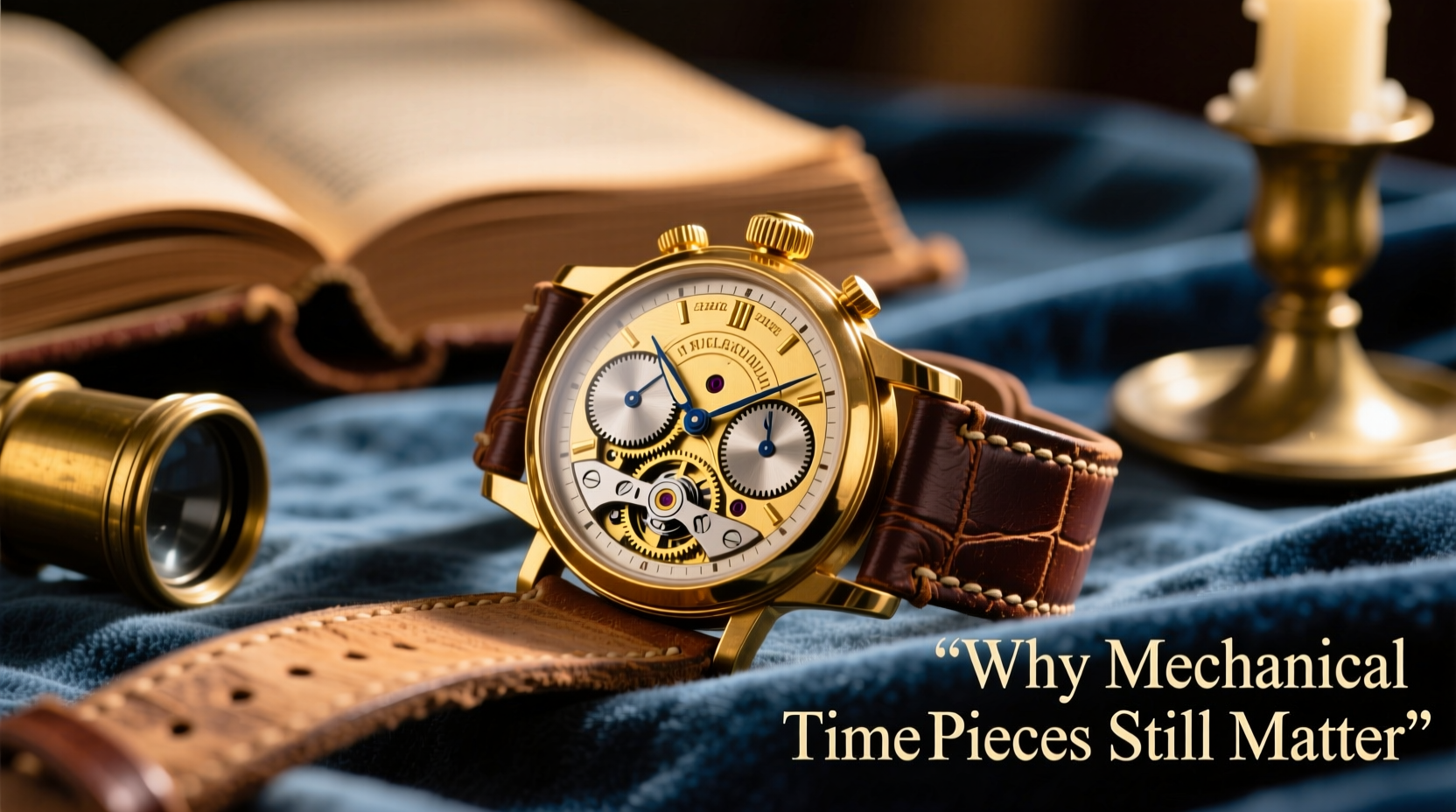
At the heart of every mechanical watch lies a marvel of micro-engineering. Unlike quartz or digital watches powered by batteries and circuits, mechanical watches operate through a complex system of springs, gears, levers, and escapements. The energy stored in a wound mainspring is gradually released through a series of regulated movements, powering the hands around the dial with astonishing precision—given the absence of electronic components.
There are two primary types: manual-wind and automatic (or self-winding) watches. Manual watches require daily or every-other-day winding by turning the crown. Automatics harness the motion of the wearer’s wrist through a rotating rotor, which winds the mainspring automatically. Both types exemplify human ingenuity, with some high-complication pieces containing over 500 individual parts, each machined to tolerances measured in micrometers.
“Mechanical watches represent the pinnacle of miniaturized mechanics. You’re holding a machine on your wrist that operates without electricity, yet keeps time with remarkable consistency.” — Dr. Hans Meier, Horology Historian, Swiss Institute of Time Studies
The appeal isn’t just technical—it’s emotional. Owners often describe a deep connection to their watches, feeling the heartbeat of the movement against their skin. That tactile intimacy, combined with the knowledge that no two watches behave exactly alike due to slight variations in lubrication, temperature, and wear, gives each piece a unique personality.
Craftsmanship as Art: The Human Touch Behind Every Movement
While mass-produced quartz watches can be assembled in seconds by machines, fine mechanical watches are often finished by hand. In Switzerland, Germany, and Japan, skilled artisans spend hundreds of hours assembling, adjusting, and decorating movements. Techniques like perlage (circular graining), Geneva stripes, chamfering, and hand-beveling transform functional components into visual poetry.
This dedication to craft elevates mechanical watches beyond utility. Brands like Patek Philippe, A. Lange & Söhne, and Jaeger LeCoultre invest heavily in preserving traditional techniques while innovating within strict parameters of precision and durability. Even independent watchmakers—individuals working alone in small ateliers—produce timepieces that sell for tens of thousands of dollars based solely on originality and mastery.
The slow, deliberate process of creating a single watch stands in stark contrast to our fast-paced world. It’s this slowness—this resistance to disposability—that resonates deeply with enthusiasts. Owning a mechanical watch becomes an act of mindfulness, a deliberate choice to engage with time rather than race against it.
Why Enthusiasts Choose Mechanical Over Digital
For many, the decision to wear a mechanical watch isn’t about accuracy alone. Quartz watches, especially those with thermocompensation, are far more precise. But precision isn’t the only measure of value. Analog watch enthusiasts cite several reasons why mechanical timepieces remain irreplaceable:
- Emotional resonance: A mechanical watch often marks milestones—graduations, promotions, anniversaries. Its longevity makes it a vessel for memory.
- Design heritage: Many models have evolved over decades with minimal changes, creating continuity across generations.
- Investment potential: Limited editions and vintage pieces from Rolex, Omega, and Audemars Piguet frequently appreciate in value.
- Detachment from technology: Wearing a mechanical watch offers a rare break from constant connectivity and notifications.
- Tactile engagement: The ritual of winding, setting the time, and hearing the soft ticking fosters a physical relationship with the object.
A Real Connection: A Collector’s Journey
Take the story of Daniel Reyes, a software engineer from Portland who inherited his grandfather’s 1957 Jaeger LeCoultre Memovox. Initially indifferent to watches, Daniel was drawn in when he learned the piece had been worn during the Apollo program era and featured one of the first alarm complications for pilots. After restoring it, he began researching horology, attending meetups, and eventually acquiring a vintage Rolex Submariner.
“It started as curiosity,” Daniel says. “But now, winding my watch every morning feels like a moment of grounding. I’m not just checking the time—I’m connecting with history, with craftsmanship, with something bigger than myself.”
His experience mirrors that of countless others who find in mechanical watches a counterbalance to the ephemeral nature of digital life.
Preserving the Legacy: How to Care for a Mechanical Watch
Owning a mechanical watch comes with responsibility. Unlike digital devices that fail and get replaced, these instruments are meant to last generations—if properly maintained. Here’s a practical guide to ensuring your timepiece endures:
Step-by-Step Maintenance Routine
- Wear it regularly: Especially for automatic watches, consistent motion keeps lubricants distributed and prevents drying.
- Service every 5–7 years: A full service includes disassembly, cleaning, re-lubrication, and adjustment. Skipping this risks wear and water resistance failure.
- Store properly when not in use: Use a soft pouch or watch box. For automatics, consider a winder if you rotate multiple pieces.
- Avoid magnetic fields: Speakers, phones, and laptops can magnetize the hairspring, causing timing inaccuracies.
- Check water resistance annually: Even if not used for swimming, seals degrade over time.
| Care Practice | Recommended Frequency | Risk of Neglect |
|---|---|---|
| Full Service | Every 5–7 years | Internal wear, oil degradation, loss of accuracy |
| Water Resistance Test | Annually | Moisture damage, fogging, corrosion |
| Winding (Manual) | Daily or as needed | Watch stops, needs resetting |
| External Cleaning | Monthly | Dirt buildup, tarnished finish |
Frequently Asked Questions
Are mechanical watches less accurate than digital ones?
Yes, generally. A standard mechanical watch may gain or lose 5–10 seconds per day, whereas a quartz watch might deviate by less than a second per month. However, high-end chronometer-certified movements (like COSC-certified Rolex or Omega pieces) maintain tighter tolerances, typically within -4/+6 seconds per day. For enthusiasts, minor variance is part of the charm—a sign of organic operation, not a flaw.
Can I wear my mechanical watch every day?
Absolutely. Modern mechanical watches are built for daily wear. Stainless steel cases, sapphire crystals, and robust movements handle shocks, moisture, and regular use well. Just ensure it’s serviced periodically and avoid extreme impacts (e.g., hammering nails or intense sports).
Do mechanical watches hold their value?
Some do exceptionally well. Iconic models like the Rolex Daytona, Audemars Piguet Royal Oak, or Patek Philippe Nautilus often appreciate, especially in stainless steel with original documentation. Most watches depreciate initially, but proper care and rarity can turn them into long-term assets.
The Enduring Appeal: Why Mechanical Timepieces Still Matter
Mechanical watches endure because they offer something technology cannot replicate: soul. In a world where time is abstracted into numbers on screens, reduced to milliseconds in data streams, the mechanical watch reclaims time as something tangible, rhythmic, and personal. It doesn’t just display time—it embodies it.
They also represent a quiet rebellion against disposability. While smartphones become obsolete in three years, a well-maintained watch from the 1960s can still function perfectly today. That continuity creates a bridge between eras, allowing a father to pass a watch to his son, or a collector to own a piece once worn by a pilot in World War II.
Moreover, the culture around mechanical watches fosters community. From online forums like Reddit’s r/Watches to local meetups and brand-sponsored events, enthusiasts share knowledge, stories, and admiration. This shared passion transcends borders and generations, united by a love for precision, beauty, and permanence.
Checklist: Building Your First Mechanical Watch Collection
- ✅ Define your budget (entry-level: $500–$2,000; mid-tier: $2,000–$10,000)
- ✅ Research reputable brands (Tudor, Hamilton, Seiko, Oris, Longines)
- ✅ Decide between vintage and modern (vintage offers character; modern ensures reliability)
- ✅ Prioritize service history and authenticity (especially for pre-owned)
- ✅ Start with a versatile model (e.g., field watch, diver, or dress watch)
- ✅ Join a watch community for advice and support
- ✅ Schedule your first service after purchase if buying vintage
Conclusion: Keep Time, Not Just Track It
Mechanical watches matter because they remind us that time is more than data—it’s experience, memory, and presence. They invite us to slow down, to appreciate the intricacies of design, and to carry a piece of human achievement on our wrists. For analog watch enthusiasts, these timepieces are not outdated; they are timeless.




 浙公网安备
33010002000092号
浙公网安备
33010002000092号 浙B2-20120091-4
Comments
No comments yet. Why don't you start the discussion?