
In 2025, the wristwatch has evolved beyond a mere timekeeping device—it's a statement. Whether worn for function, status, or personal expression, the choice between analog and digital is no longer just technical. It’s aesthetic, cultural, and deeply symbolic. While digital watches offer precision and connectivity, analog timepieces continue to dominate conversations about elegance and tradition. But which truly tells time more stylishly in today’s world?
The answer isn’t binary. Style is subjective, context-dependent, and influenced by evolving norms in fashion, technology, and professional culture. Yet certain patterns have emerged as we move deeper into the post-smartphone era—where wearing a watch at all signals intentionality. This article examines how both analog and digital watches perform on the metric of style in 2025, considering design language, social perception, craftsmanship, and real-world wearability.
The Enduring Elegance of Analog Watches
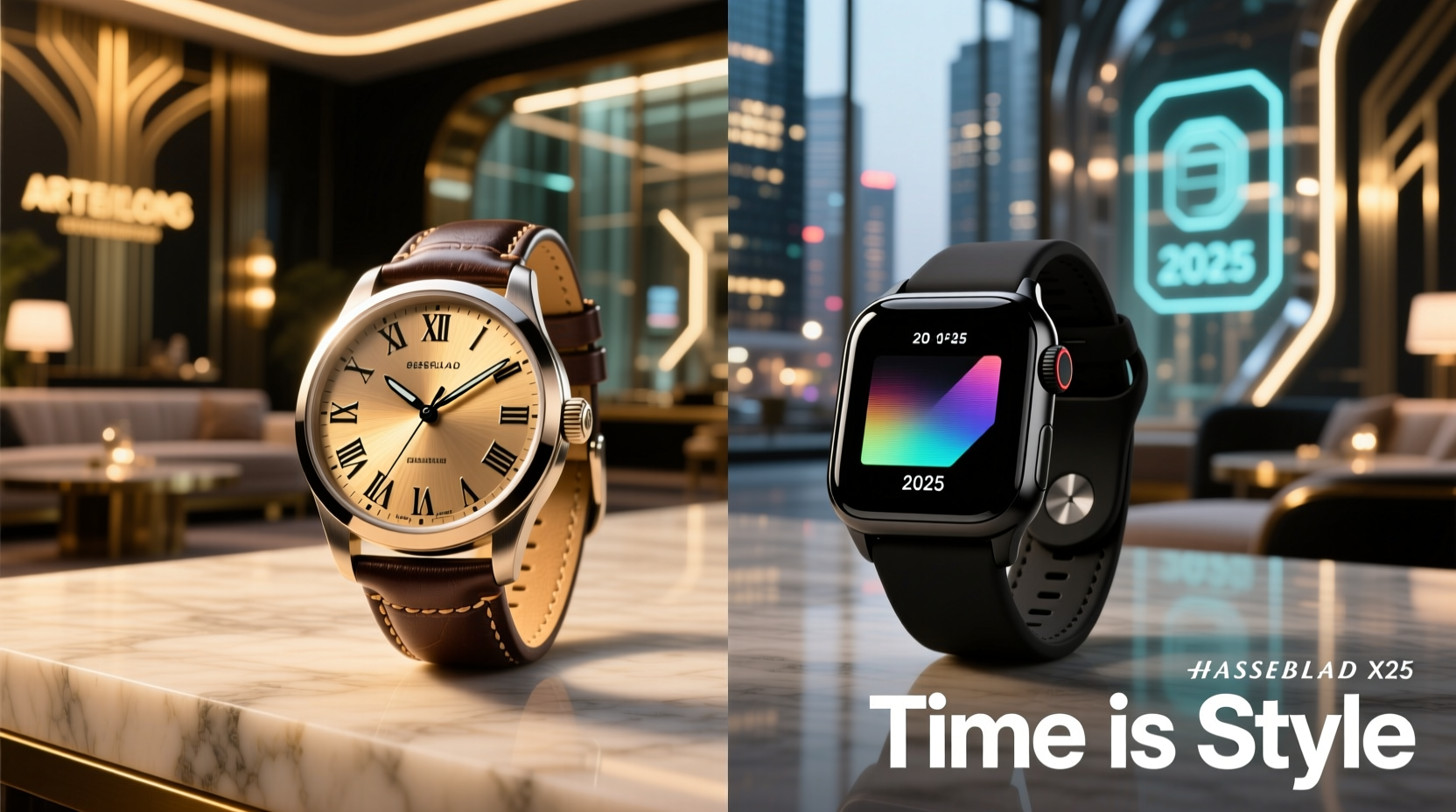
Analog watches remain the default choice when \"style\" is the priority. Their circular dials, sweeping hands, and intricate detailing echo centuries of horological tradition. In boardrooms, formal events, and high-end social circles, an analog watch—especially a mechanical one—is often seen not just as an accessory, but as a symbol of discipline, patience, and appreciation for craft.
Designers continue to refine analog aesthetics with slimmer profiles, minimalist dials, and sustainable materials. Brands like Nomos Glashütte, Junghans, and even heritage giants such as Omega and Patek Philippe are releasing models that blend vintage inspiration with modern minimalism. These designs resonate particularly well with younger professionals who value understated luxury over loud branding.
“Time told through motion—the sweep of a second hand—creates a rhythm that numbers can’t replicate. That’s where elegance lives.” — Daniel Reeves, Horology Curator at the London Design Museum
The tactile experience also contributes to perceived sophistication. The weight of a stainless steel case, the click of a crown winding a mechanical movement, the subtle sheen of a sunburst dial—all feed into a sensory narrative that digital displays struggle to match.
The Rise of Stylish Digital Timepieces
Digital watches were once dismissed as utilitarian—plastic-cased tools for athletes and engineers. But in 2025, that perception is shifting. Advances in display technology, material quality, and interface design have elevated digital watches into the realm of considered fashion objects.
Modern digital watches now feature sapphire crystal covers, titanium housings, and OLED screens with customizable watch faces that mimic classic analog layouts—or embrace futuristic typography. The Casio G-Shock MR-G series, Garmin’s MARQ collection, and hybrid smartwatches from Withings demonstrate that digital doesn’t mean disposable.
Moreover, digital watches excel in environments where clarity and utility matter. A pilot, diver, or outdoor adventurer gains genuine functional advantage from a digital readout. And increasingly, those roles are being celebrated in mainstream fashion—think techwear, urban exploration aesthetics, and military-inspired streetwear.
For Gen Z and younger Millennials, digital watches represent authenticity and purpose. They’re less about signaling wealth and more about aligning with values: efficiency, transparency, and readiness. In this light, a sleek digital watch isn’t cold—it’s honest.
Digital Design Innovations Enhancing Style
- Always-on e-Ink displays that mimic paper-like finishes without glare.
- Customizable interfaces allowing users to switch between retro pixel fonts and clean sans-serif numerals.
- Solar charging integrated subtly into face design, eliminating frequent battery changes.
- Mono-case construction using aerospace-grade aluminum for seamless, sculptural forms.
Comparative Analysis: Analog vs Digital in Key Style Dimensions
| Style Factor | Analog Watch | Digital Watch |
|---|---|---|
| Formal Wear Suitability | Excellent – widely accepted in conservative settings | Limited – only select premium models fit formal contexts |
| Minimalist Appeal | Strong – especially with clean dials and thin cases | Very Strong – sharp lines and uncluttered numeric displays |
| Craftsmanship Perception | High – mechanical movements convey artistry | Moderate – engineering admired, but less romanticized |
| Versatility Across Outfits | Broad – works from suits to casual shirts | Niche – best with athleisure, techwear, or utilitarian looks |
| Longevity & Timelessness | Proven – many analog designs unchanged for decades | Evolving – risk of looking outdated due to tech cycles |
| Personal Expression | Classic – through brand, movement, and finish | Dynamic – via custom faces, backlight colors, modes |
This comparison reveals that analog watches still hold dominance in traditional measures of style, particularly around formality and emotional resonance. However, digital watches lead in adaptability, innovation, and alignment with contemporary subcultures that prize individuality and performance.
A Real-World Perspective: Two Professionals, Two Choices
Case Study: Marcus, 34 – Investment Banker
Marcus wears a slim Jaeger LeCoultre Master Ultra Thin to client meetings. “It’s not just about telling time,” he says. “It’s about showing I respect tradition—and attention to detail. No one blinks at a digital watch in finance unless it’s a Richard Mille with a digital module, and even then, it’s controversial.”
Case Study: Lena, 29 – UX Designer & Urban Cyclist
Lena opts for a Garmin Epix Gen 2 with a matte black titanium bezel. “I want something that survives rain, shows my route, and doesn’t look like I’m trying too hard. My watch tells me when my next meeting starts, tracks my steps, and glows red during night rides. That’s stylish to me—because it works.”
Their choices reflect a broader cultural split: analog for legacy and refinement, digital for integration and intent. Neither is objectively more stylish; each serves a different definition of what style means today.
How to Choose Based on Your Lifestyle (Step-by-Step Guide)
Selecting the right watch for style in 2025 requires self-awareness. Follow this sequence to make an intentional decision:
- Assess your daily environments. Do you attend formal meetings, work remotely, or spend time outdoors? If professionalism dominates, lean analog. If activity and mobility define your days, consider digital.
- Define your personal aesthetic. Are you drawn to vintage tailoring, Scandinavian minimalism, or cyberpunk-inspired gear? Analog complements the first two; digital amplifies the third.
- Evaluate maintenance tolerance. Mechanical analog watches require regular servicing. Digital watches need software updates and battery replacements. Which commitment feels more natural?
- Test visibility needs. Is quick readability in sunlight or darkness critical? Digital excels here, especially with backlit screens.
- Consider long-term value. High-end analog watches often appreciate or retain value. Most digital watches depreciate faster, though limited editions (e.g., Casio Premium Line) are becoming collectible.
- Try before you buy. Wear both types for a week. Note compliments, usability, and emotional response. Style isn’t just external—it’s how the object makes you feel.
Expert Insights on the Future of Wristwatch Style
Horologists and designers agree: the future isn’t about analog versus digital, but about convergence. “We’re seeing ‘analog-first’ smartwatches with hidden notifications and ‘digital-soul’ hybrids that use mechanical hands to show data,” notes Clara Nguyen, product designer at Fossil Group.
Meanwhile, independent makers are experimenting with electro-mechanical movements—like the Tinman Clockworks Chrono Complication—that use digital sensors to drive analog displays. These innovations blur the line, suggesting that by 2027, the distinction may fade entirely.
“The most stylish watch in five years won’t be analog or digital. It’ll be the one that disappears into your life while enhancing it.” — Aris Thorne, Futurist & Wearable Tech Analyst
Frequently Asked Questions
Can a digital watch be considered luxurious?
Yes. Luxury is increasingly defined by materials, exclusivity, and craftsmanship—not just mechanics. Models like the Hublot Big Bang Integrated Full Carbon or the Breitling Emergency II command five-figure prices and are built in limited runs. Their digital functionality enhances their prestige rather than detracting from it.
Are analog watches becoming obsolete?
No. While smartwatches dominate the wearable market, dedicated analog timepieces are experiencing a renaissance among collectors and style-conscious consumers. Production of mechanical watches rose 12% globally in 2024 (according to Federation of the Swiss Watch Industry), driven by demand in Asia and North America.
Is it okay to wear a digital watch to a wedding?
Context matters. At a beachside ceremony or informal gathering, a refined digital watch like a Casio Edifice Bluetooth model is acceptable. For black-tie or traditional weddings, an analog piece remains the safer, more respectful choice.
Final Verdict: Which Tells Time More Stylishly in 2025?
If style is measured by tradition, emotional depth, and universal recognition, the analog watch wins—by a narrow margin. Its timeless design language, connection to craftsmanship, and versatility across social codes give it enduring relevance.
However, if style is defined by authenticity, innovation, and contextual intelligence, the digital watch is rapidly closing the gap. In niches ranging from urban exploration to sustainable tech, digital timepieces express a forward-looking sensibility that resonates powerfully in 2025.
The most stylish way to tell time today isn’t tied to hands or digits. It’s about intention. Choosing a watch that reflects your values, supports your lifestyle, and brings you quiet satisfaction—that’s the true hallmark of style.
Your Move: Define What Style Means to You
The debate between analog and digital will continue, but the power lies in your wrist. In 2025, the most stylish person in the room isn’t the one with the most expensive watch—but the one whose watch feels like a natural extension of who they are.
Explore options. Try on different styles. Ask yourself: Does this watch serve me? Does it speak for me? When you find the answer, you’ll know you’ve found not just a timepiece, but a part of your identity.




 浙公网安备
33010002000092号
浙公网安备
33010002000092号 浙B2-20120091-4
Comments
No comments yet. Why don't you start the discussion?