
As the holiday season rolls around, one small but telling tradition continues to evolve: the choice of a tree topper. Once dominated by angels, stars, and the ever-classic nutcracker, the modern Christmas tree is now seeing an influx of unexpected figures—Goku perched proudly atop a fir, or Sailor Moon glowing from the highest branch. This shift isn’t just decorative; it reflects deeper cultural currents, particularly among Generation Z. Raised in a digital-first world where anime has transitioned from niche interest to mainstream influence, many young adults are redefining holiday symbolism through characters that shaped their childhoods. But how does this trend compare to the enduring appeal of the traditional nutcracker? And what does it say about identity, nostalgia, and evolving traditions?
The Cultural Evolution of Holiday Symbols
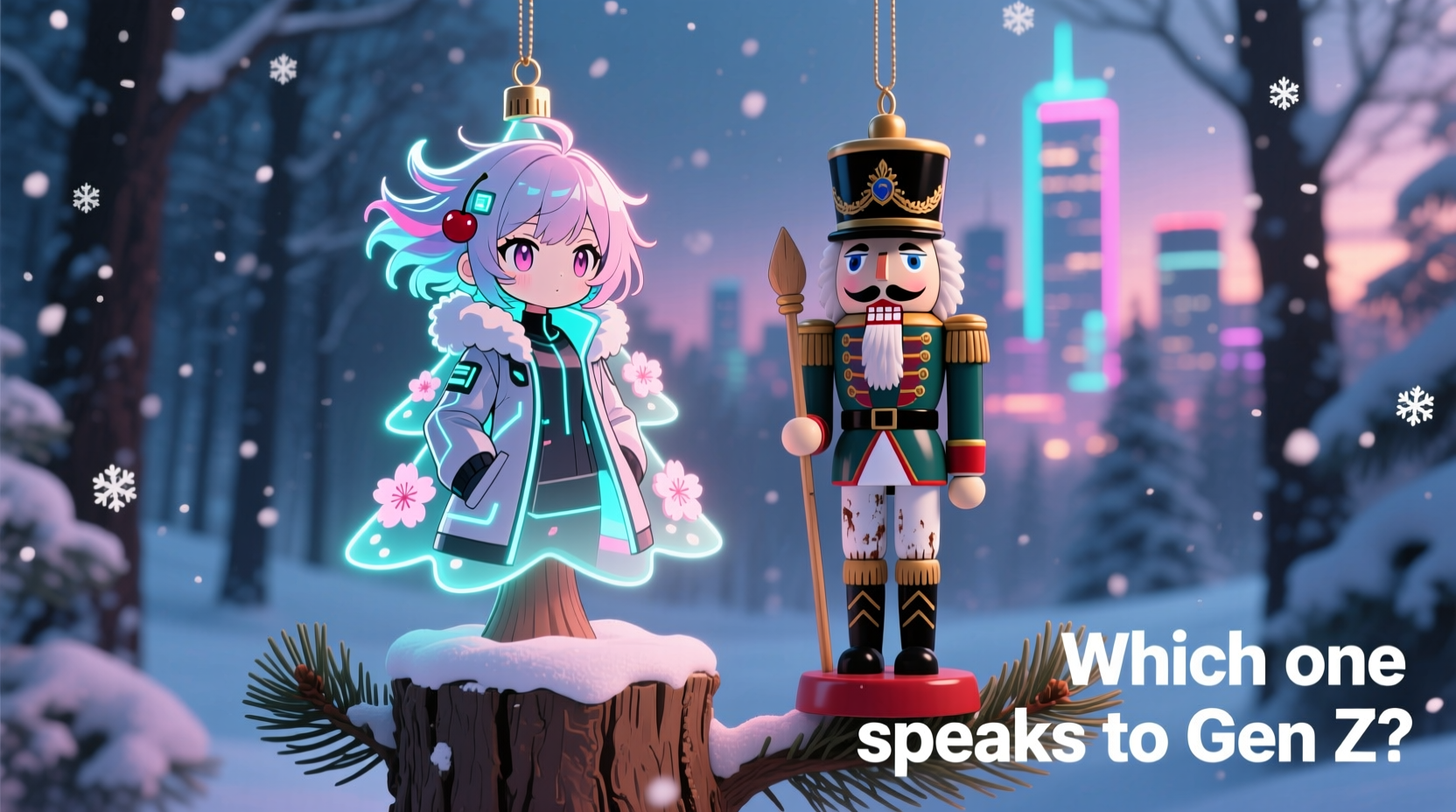
Holiday decorations have never been static. They evolve alongside generational values, global influences, and media consumption. The nutcracker, for instance, gained widespread popularity in the West through Tchaikovsky’s 1892 ballet *The Nutcracker*, later cemented in American culture via annual performances and televised adaptations. Its militaristic charm, Slavic design, and association with whimsical fantasy made it a festive staple throughout the 20th century.
For decades, the nutcracker symbolized order, protection, and tradition—its stern gaze guarding the tree like a sentinel of holiday cheer. It was passed down through families, often hand-carved or collected as part of seasonal décor. But for Gen Z, born between 1997 and 2012, these symbols carry less emotional weight. Many didn’t grow up attending ballets or watching VHS tapes of *The Nutcracker* on loop. Instead, their formative stories were animated series streamed on demand—Attack on Titan, My Hero Academia, Naruto, and Death Note.
This generational pivot isn’t merely about preference—it’s about representation. Where older generations found meaning in European folklore and classical music, Gen Z connects more deeply with narratives rooted in personal struggle, self-discovery, and resilience—themes central to much of modern anime. Choosing an anime character as a tree topper isn’t whimsy; it’s an act of identity affirmation.
Why Anime Characters Resonate with Gen Z
To understand the rise of anime toppers, one must first acknowledge anime’s transformation from subculture to global phenomenon. According to a 2023 report by Statista, over 60% of U.S. viewers aged 18–24 regularly watch anime, with platforms like Crunchyroll and Netflix reporting record engagement. Series such as Demon Slayer have grossed hundreds of millions at the box office, while collaborations between anime franchises and major brands—from Uniqlo to Louis Vuitton—signal cultural legitimacy.
For Gen Z, anime characters are more than entertainment—they’re companions through adolescence. Characters like Naruto Uzumaki, who overcame isolation and prejudice to become a leader, mirror the struggles many young people face with mental health, belonging, and self-worth. When fans place Naruto at the top of their tree, they aren’t just decorating—they’re honoring a figure who represented perseverance during difficult times.
Moreover, anime offers diversity in representation rarely seen in traditional Western holiday icons. From strong female leads like Bulma and Revy to non-binary-coded characters such as Haku from Spirited Away, anime provides inclusive archetypes that resonate with a generation prioritizing authenticity and individuality.
“Gen Z doesn’t just consume culture—they personalize it. Placing an anime character on a tree is both a nostalgic gesture and a declaration of identity.” — Dr. Lena Tran, Cultural Anthropologist, University of California, Irvine
A Closer Look: Anime vs. Nutcracker Toppers
To assess which topper holds greater relevance today, it helps to compare them across key dimensions: cultural significance, availability, customization, and emotional resonance.
| Criteria | Anime Character Topper | Nutcracker Topper |
|---|---|---|
| Cultural Relevance (Gen Z) | High – tied to widely consumed media | Moderate to Low – associated with older traditions |
| Emotional Connection | Personal, often tied to coming-of-age experiences | Familial, linked to intergenerational rituals |
| Customization Options | Extensive – fan-made, LED-lit, articulated figures | Limited – mostly traditional wood or ceramic designs |
| Market Availability | Growing – available on Etsy, Amazon, convention merch | Widespread – department stores, holiday shops |
| Inclusivity & Representation | High – diverse races, genders, body types | Low – typically white, male, militaristic figures |
| Sustainability Trends | Emerging – 3D-printed, reusable resin models | Mixed – wooden versions eco-friendly, mass-produced ones less so |
The data suggests that while nutcrackers remain accessible and familiar, anime toppers offer something increasingly valued by younger consumers: personal relevance. They allow individuals to merge holiday tradition with contemporary pop culture, creating spaces that feel authentically theirs.
Real Example: A Tokyo-Inspired Tree in Austin, Texas
Take the case of Jordan Kim, a 23-year-old graphic designer in Austin. Every December, Jordan transforms their living room into a fusion of Japanese winter aesthetics and Western holiday elements. Their 2023 centerpiece? A six-foot Fraser fir topped with a custom-made, glow-in-the-dark rendition of Studio Ghibli’s No-Face from Spirited Away.
“I didn’t grow up with nutcrackers,” Jordan explains. “But I watched *Spirited Away* when I was ten, right after my parents divorced. That movie helped me process feeling lost. Now, putting No-Face up there—it’s like thanking my younger self for getting through it.”
Jordan’s tree includes origami ornaments, fairy lights mimicking fireflies, and a playlist blending Mariah Carey with Joe Hisaishi’s film scores. Friends describe it as “unexpected but deeply meaningful.” For Jordan, the act of decorating isn’t about adherence to tradition—it’s about curating a space that reflects their journey.
This kind of personalized celebration is becoming more common. Retailers have taken note: Home Depot launched a limited \"Anime Holidays\" collection in 2022, while Target featured a “Pop Culture Trees” display during the 2023 season, including official Demon Slayer and Pokémon toppers.
How to Choose the Right Topper for Your Audience
Whether you're decorating for yourself, hosting Gen Z guests, or managing a retail display, understanding your audience’s values can guide your choice. Here’s a step-by-step approach to making a meaningful selection:
- Assess the primary audience. Are they family-oriented traditionalists, or younger, media-savvy individuals?
- Evaluate emotional significance. Does the household have ties to ballet, German heritage, or military symbolism (nutcracker strengths)? Or do they identify strongly with anime, gaming, or Japanese culture?
- Consider inclusivity. Will the topper reflect the diversity of those celebrating? Anime often wins here due to broader character representation.
- Check durability and safety. Ensure the topper is lightweight, flame-retardant, and securely attachable—especially important for tall or artificial trees.
- Allow for coexistence. You don’t have to choose one over the other. Some families rotate annually or use dual toppers—one traditional, one modern.
Checklist: Building a Gen Z-Friendly Holiday Display
- ✅ Incorporate at least one pop culture reference meaningful to younger guests
- ✅ Prioritize sustainability—opt for reusable or recyclable décor
- ✅ Offer interactive elements (QR codes linking to character backstories, playlists)
- ✅ Balance novelty with warmth—avoid overly commercial looks
- ✅ Invite input from younger family members in the decorating process
- ✅ Include a mix of old and new traditions to bridge generational gaps
FAQ: Understanding the Shift in Holiday Symbolism
Are anime tree toppers considered disrespectful to holiday traditions?
Not inherently. Traditions evolve, and many families view anime toppers as an extension of personal storytelling rather than a rejection of heritage. As long as the intent is celebratory and inclusive, such choices are generally welcomed, especially in multicultural or blended households.
Where can I find high-quality anime character toppers?
Official merchandise is available through retailers like Crunchyroll, Hot Topic, and Amazon. For unique pieces, Etsy hosts numerous artisans crafting custom 3D-printed or hand-painted figures. Always verify licensing to support creators and avoid counterfeit goods.
Can I combine both anime and nutcracker elements in one display?
Absolutely. Some decorators place a nutcracker at the base of the tree and an anime character at the top—symbolizing a bridge between past and present. Others alternate themes yearly, turning decoration into a shared ritual of reflection.
The Future of Holiday Decor: Personalization Over Prescription
The growing popularity of anime toppers signals a broader shift in how holidays are experienced. Gen Z is less interested in prescribed traditions and more invested in meaningful, customizable celebrations. This generation values authenticity over uniformity, emotional truth over performative festivity.
As anime continues to permeate fashion, language, and social discourse, its presence in seasonal spaces feels natural, even inevitable. The nutcracker isn’t disappearing—but its dominance is being recontextualized. Much like vinyl records or film cameras, it’s becoming a curated choice rather than a default.
What matters most is not which figure sits at the apex of the tree, but what that figure represents. Is it duty? Nostalgia? Joy? Identity? For many young people, an anime character embodies all of these. In a world where belonging can feel elusive, seeing a beloved hero crowned in tinsel offers a quiet reassurance: You are seen. Your story matters.
“Tradition isn’t about preserving the ashes, but keeping the fire alive. Sometimes, that fire burns brightest in new forms.” — Margot Henderson, Historian of Modern Rituals
Final Thoughts: Celebrate What Feels True
The debate between anime characters and nutcrackers isn’t really about taste—it’s about whose stories we choose to elevate during our most reflective times of year. For Gen Z, the answer increasingly leans toward characters who grew with them, who faced impossible odds and kept going, who looked different and still belonged.
If you're considering a change in your holiday décor, start small. Add one anime-inspired ornament. Play a soundtrack from a favorite series. Ask a younger relative what character they’d want at the top—and listen to why.




 浙公网安备
33010002000092号
浙公网安备
33010002000092号 浙B2-20120091-4
Comments
No comments yet. Why don't you start the discussion?