
For many, home fragrances are essential to creating a welcoming atmosphere. The warm glow of a candle or the subtle scent from a reed diffuser can transform a space. But for people living with asthma, that same sensory comfort may come at a cost. Scented products—whether burned, heated, or passively dispersed—can release volatile compounds into the air, potentially triggering respiratory symptoms. This raises an important question: are fragrance diffusers truly a safer alternative to candles for asthmatics?
Asthma is a chronic condition affecting over 260 million people worldwide, characterized by inflamed airways that react strongly to environmental triggers. Common culprits include pollen, dust mites, smoke—and increasingly recognized—indoor air pollutants like those emitted by scented candles and diffusers. As awareness grows, so does the demand for low-irritant fragrance solutions. To make informed choices, it's crucial to understand how these products work, what they emit, and which poses fewer risks.
Understanding Asthma Triggers in Indoor Air
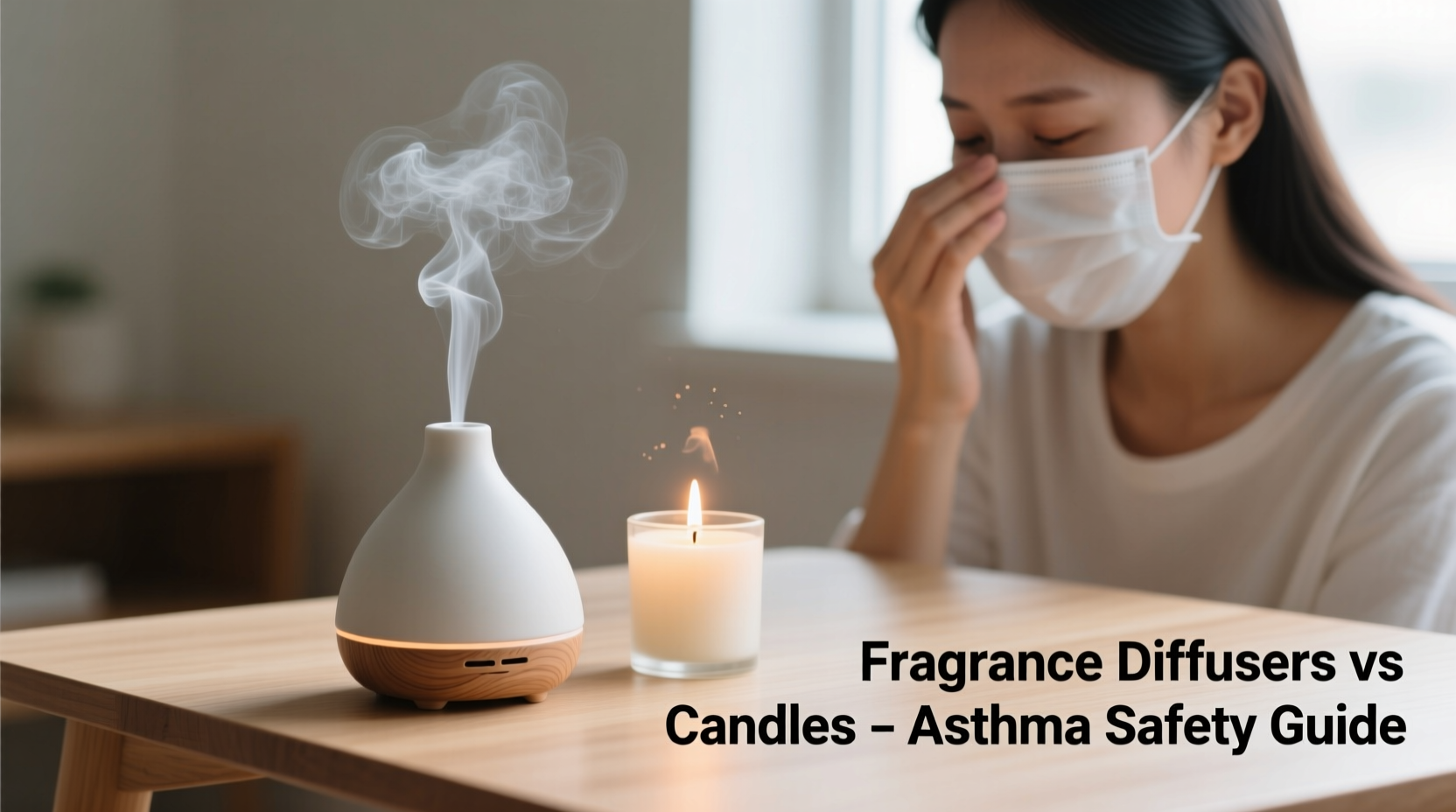
The indoor environment plays a significant role in asthma management. According to the U.S. Environmental Protection Agency (EPA), indoor air can be two to five times more polluted than outdoor air. For someone with asthma, even low levels of airborne irritants can provoke coughing, wheezing, shortness of breath, or chest tightness.
Scented candles and fragrance diffusers both introduce aromatic compounds into this enclosed space. However, the way they release these substances differs significantly:
- Candles rely on combustion—burning wax and wick—to vaporize fragrance oils. This process generates soot, ultrafine particles, and volatile organic compounds (VOCs) such as benzene and toluene, known respiratory irritants.
- Fragrance diffusers, particularly reed or passive types, operate without heat or flame. They use capillary action to draw liquid fragrance up through reeds and slowly evaporate it into the air. While still releasing VOCs, they avoid combustion byproducts.
This fundamental difference makes diffusers inherently less aggressive in terms of particulate emissions—but not necessarily harmless.
“Any product that adds fragrance to the air has the potential to affect individuals with sensitive airways. Combustion-based sources like candles are generally higher risk, but unscented environments remain safest for severe asthmatics.” — Dr. Lena Patel, Pulmonologist and Allergy Specialist
Comparing Emissions: Candles vs. Diffusers
To assess safety, it’s necessary to compare what each method releases into the breathing zone. The table below summarizes key differences:
| Factor | Scented Candles | Fragrance Diffusers |
|---|---|---|
| Combustion Byproducts | Yes – soot, carbon monoxide, benzene | No |
| Particulate Matter (PM2.5) | High during burning | Negligible |
| Volatile Organic Compounds (VOCs) | Moderate to high (from wax + fragrance) | Low to moderate (from fragrance only) |
| Formaldehyde Release | Possible (especially paraffin-based) | Rare, unless fragrance contains formaldehyde-releasing agents |
| Ozone Production | None directly, but secondary reactions possible | None |
| Ventilation Dependency | Critical – poor ventilation increases exposure | Recommended – reduces concentration buildup |
The data shows that while neither option is completely inert, diffusers eliminate several high-risk factors associated with combustion. No open flame means no soot, reduced fire hazard, and lower emission of harmful gases. Still, the fragrance oil itself remains a concern—many contain synthetic compounds that can act as allergens or irritants regardless of delivery method.
Types of Diffusers and Their Safety Profiles
Not all diffusers are created equal. Understanding the different technologies helps identify which might be most suitable for sensitive individuals:
- Reed Diffusers – Use porous reeds to absorb scented oil and release it gradually. No electricity, heat, or misting involved. Generally the safest type for asthmatics due to slow, controlled dispersion.
- Ultrasonic Diffusers – Often used for essential oils, these create a fine mist using water and vibration. While popular, the aerosolized particles can carry irritants deeper into the lungs, increasing risk for some.
- Evaporative (Fan-Driven) Diffusers – Use a fan to blow air across a pad or cartridge soaked in fragrance. Faster scent distribution but can increase airborne particle load.
- Heat-Based Diffusers – Warm fragrance oil to accelerate evaporation. Though flameless, heating can alter chemical composition, potentially creating new irritants.
For people with asthma, reed diffusers typically present the lowest risk profile. Their passive nature limits sudden spikes in fragrance concentration, allowing better control over exposure.
Real Example: Managing Asthma in a Shared Apartment
Consider Sarah, a 34-year-old marketing professional with mild persistent asthma. She shares a one-bedroom apartment with her partner, who enjoys scented products. After experiencing increased nighttime coughing, she tracked her symptoms and noticed a pattern: episodes spiked on evenings when candles were lit or electric diffusers ran in the living room.
Working with her pulmonologist, Sarah implemented changes:
- Replaced paraffin candles with beeswax alternatives (burned only with open windows).
- Switched to a single reed diffuser with a light, non-floral scent placed near the front door—away from sleeping and lounging areas.
- Introduced an air purifier with a HEPA and activated carbon filter.
Within three weeks, her rescue inhaler use dropped from 4–5 times weekly to once. Her peak flow readings improved by 12%. While individual results vary, this case illustrates how small adjustments in fragrance use can yield measurable health benefits.
Choosing Safer Fragrance Options
If eliminating all scents isn't practical, selecting lower-risk products is the next best step. Not every \"natural\" or \"organic\" label guarantees safety—some plant-derived oils are potent allergens. The goal is to minimize respiratory irritation while maintaining a pleasant environment.
Checklist: Selecting Asthma-Friendly Fragrance Products
- ✅ Opt for fragrance-free or lightly scented options whenever possible.
- ✅ Choose reed diffusers over candles or misting diffusers.
- ✅ Look for phthalate-free, paraben-free, and dye-free formulations.
- ✅ Avoid floral, musk, or “fresh linen” synthetic fragrances—common irritants.
- ✅ Prefer natural essential oils like lavender or eucalyptus—but test cautiously, as even these can trigger reactions.
- ✅ Use intermittent exposure: rotate diffusers weekly and allow scent-free days.
- ✅ Keep rooms well-ventilated; open windows regularly.
- ✅ Monitor symptoms and keep a log to identify problematic scents.
Transparency matters. Reputable brands disclose ingredients either on packaging or via online databases. Avoid products listing only “fragrance” without specifics, as this often hides dozens of undisclosed chemicals protected under trade secret laws.
Step-by-Step Guide: Transitioning to Low-Risk Scenting
Switching from traditional candles to asthma-conscious alternatives doesn’t have to be abrupt. Follow this timeline to reduce risk gradually:
- Week 1: Audit Current Products
Inventory all scented items in your home—candles, diffusers, plug-ins, air fresheners. Note locations and usage frequency. - Week 2: Eliminate High-Risk Items
Remove paraffin candles, gel fuels, and spray air fresheners. Replace them with non-combustion alternatives or remove entirely. - Week 3: Introduce One Reed Diffuser
Place a single diffuser in a low-traffic area. Use a neutral or mildly herbal scent. Observe for any respiratory changes over 7 days. - Week 4: Add Ventilation & Filtration
Install an air purifier with activated carbon to capture VOCs. Open windows daily for cross-ventilation. - Ongoing: Rotate and Monitor
Limit continuous use. Allow 2–3 scent-free days per week. Track symptoms and adjust accordingly.
This phased approach allows the body time to respond and gives households flexibility to adapt without sacrificing comfort.
Frequently Asked Questions
Can essential oil diffusers trigger asthma attacks?
Yes, despite being “natural,” many essential oils—including tea tree, peppermint, and citrus—are volatile and can irritate airways. When aerosolized by ultrasonic diffusers, tiny oil droplets can penetrate deep into the lungs, posing a greater risk than passive diffusion. Use with caution and discontinue if symptoms arise.
Are soy or beeswax candles safe for asthmatics?
They’re safer than paraffin but not risk-free. While they produce less soot and fewer toxins, the act of burning still releases particulates and VOCs. Wicks treated with metals (like lead or zinc) can also emit harmful fumes. If used, ensure 100% cotton wicks, burn in ventilated spaces, and limit duration to under one hour.
What’s the safest way to fragrance a home for someone with asthma?
The safest option is no added fragrance. However, if desired, passive reed diffusers with minimal, disclosed ingredients—used intermittently in well-ventilated areas—are the least likely to cause issues. Alternatively, simmering citrus peels or cinnamon sticks in water provides temporary, controllable scent without synthetic additives.
Conclusion: Prioritizing Respiratory Health Without Sacrificing Comfort
The choice between fragrance diffusers and candles isn’t just about preference—it’s a matter of respiratory safety for millions with asthma. While diffusers, especially passive reed types, offer a cleaner, combustion-free alternative, they are not universally safe. The presence of fragrance itself remains a potential trigger.
Ultimately, the best strategy combines informed product selection, proper ventilation, and personal symptom tracking. Small changes—like switching from a nightly candle ritual to a discreet reed diffuser or embracing scent-free zones—can significantly improve quality of life.
Every household deserves to feel inviting, but not at the expense of breathing freely. By choosing wisely and listening to your body, you can maintain a pleasant home environment while protecting your lung health.




 浙公网安备
33010002000092号
浙公网安备
33010002000092号 浙B2-20120091-4
Comments
No comments yet. Why don't you start the discussion?