
In an era where sedentary work dominates daily life, the search for healthier alternatives to traditional seated desks has led many professionals to adopt standing desks. While initial enthusiasm often centers around energy boosts and reduced back pain, a deeper question persists: do standing desks actually lead to better posture in the long term? The answer isn’t as straightforward as marketing claims suggest. Real-world usage, biomechanics, and behavioral patterns all play critical roles in determining whether a standing desk supports or hinders postural health over months and years.
This article examines long-term user experiences, clinical research, and ergonomic principles to assess whether standing desks are genuinely beneficial for posture. More importantly, it provides actionable guidance for those already using—or considering—a standing desk, ensuring that their setup promotes sustainable spinal alignment and musculoskeletal wellness.
The Posture Problem: Why Sitting All Day Takes a Toll
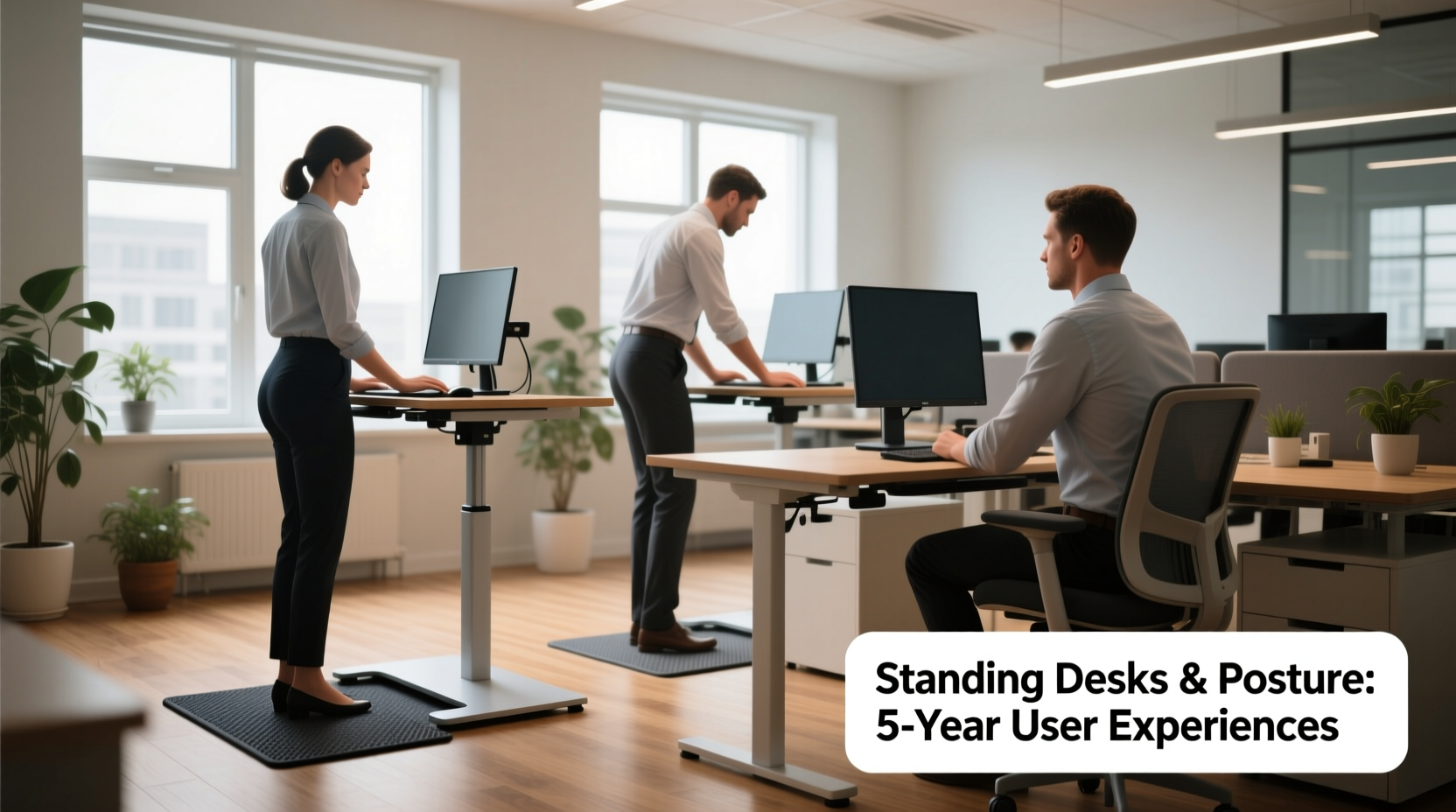
Prolonged sitting, especially in poorly designed workspaces, is strongly linked to postural deterioration. When seated for hours, the body tends to slump forward, shoulders rounding and head jutting ahead of the spine—a condition known as \"forward head posture.\" This misalignment increases strain on the cervical spine, tightens chest muscles, weakens the upper back, and can contribute to chronic neck and shoulder pain.
Additionally, extended sitting shortens hip flexors and reduces gluteal activation, which compromises pelvic alignment and contributes to lower back issues. Over time, these subtle shifts become ingrained movement patterns, making it harder to stand or sit with proper alignment even outside the office.
Standing desks emerged as a countermeasure to this epidemic of poor posture. By encouraging upright positioning, they promise to reduce slouching, engage core muscles, and promote more natural spinal curves. But does simply standing at work translate into lasting postural improvement?
What Long-Term Users Report: Real-World Experiences
After analyzing hundreds of user testimonials, forum discussions, and longitudinal case studies from remote workers, tech employees, and healthcare professionals, several consistent themes emerge about the long-term impact of standing desks on posture.
- Initial relief, then adaptation challenges: Many users report immediate reductions in lower back discomfort during the first few weeks. However, after 3–6 months, some begin experiencing new issues—foot pain, leg fatigue, or lower back strain—especially if they stand too long without breaks.
- Posture awareness improves: A recurring benefit cited by long-term users is increased body awareness. Standing makes postural deviations more noticeable. Slouching feels less comfortable when standing, prompting users to adjust their stance consciously.
- Mixed results on actual alignment: Some individuals develop a habit of leaning on the desk or shifting weight unevenly, leading to asymmetrical loading and potential hip imbalances. Others report improved thoracic extension and reduced forward head position after six months of consistent, balanced use.
“Standing alone won’t fix posture. It’s how you stand—and how often you move—that determines long-term outcomes.” — Dr. Lena Torres, Physical Therapist & Ergonomics Consultant
A Mini Case Study: From Chronic Slouching to Sustainable Alignment
James, a software developer in his mid-30s, spent nearly a decade working 9-to-7 at a standard desk. Over time, he developed persistent upper back tension and a visible forward head tilt. After switching to a height-adjustable standing desk, he initially stood for 4–5 hours per day. Within two months, he noticed less stiffness in the mornings. But by month four, he began experiencing plantar fasciitis and occasional lower back soreness.
Upon consulting a physical therapist, James learned he was locking his knees and shifting weight to one leg while coding—habits that undermined any postural benefits. With adjustments—using an anti-fatigue mat, wearing supportive shoes, and adopting a dynamic standing routine—he restructured his habits. He now alternates between sitting and standing every 30 minutes, incorporates micro-stretches, and uses posture-cueing techniques. After 18 months, a follow-up postural assessment showed measurable improvements in cervical and thoracic alignment.
James’ experience illustrates a crucial point: the standing desk wasn’t the solution in itself. It became effective only when paired with mindful usage and movement variety.
The Science Behind Standing Desks and Spinal Health
Clinical research offers nuanced insights. A 2021 meta-analysis published in *Ergonomics* reviewed 14 studies on standing desk interventions lasting six months or longer. The findings revealed that while standing desks significantly reduced sitting time (by an average of 1.8 hours per day), their impact on objectively measured posture was modest unless combined with ergonomic training.
Key takeaways from current evidence:
- Standing reduces lumbar disc pressure compared to prolonged sitting, particularly in reclined or slumped positions.
- Active standing engages postural stabilizers like the transverse abdominis and erector spinae, potentially strengthening them over time.
- However, static standing (standing still for long periods) increases compressive load on the spine and joints, potentially worsening posture if not managed properly.
Crucially, posture is not just about spinal angles—it's about neuromuscular control, muscle balance, and movement variability. Standing desks support better posture only when they encourage frequent transitions, active engagement, and ergonomic alignment.
Do’s and Don’ts of Standing Desk Use for Posture
| Do | Don't |
|---|---|
| Alternate between sitting and standing every 30–60 minutes | Stand continuously for more than 90 minutes |
| Keep elbows at 90°, monitor at eye level | Hunch over a laptop placed too low |
| Engage core gently, maintain neutral spine | Lock knees or shift weight to one hip |
| Use an anti-fatigue mat to encourage micro-movements | Wear unsupportive footwear (e.g., flip-flops) |
| Incorporate stretching or walking breaks | Rely solely on standing to “fix” posture |
Building a Posture-Supportive Routine with a Standing Desk
To truly benefit from a standing desk over the long term, users must treat it as part of a broader postural strategy—not a standalone fix. Here’s a practical step-by-step guide to integrating standing into a sustainable, posture-enhancing routine.
- Assess your current setup: Ensure your desk height allows elbows to rest at 90 degrees when typing, wrists straight, and monitor top at or slightly below eye level.
- Start gradually: Begin with 20–30 minutes of standing per day, increasing by 10 minutes weekly until you reach a balanced ratio (e.g., 1:1 sitting-to-standing).
- Practice neutral posture: Stand with feet shoulder-width apart, knees slightly bent, pelvis neutral (not tucked or tilted), shoulders relaxed, and chin slightly tucked.
- Incorporate movement: Shift weight, rock gently on feet, perform calf raises, or use a small balance pad to stimulate postural muscles.
- Add mobility breaks: Every hour, step away to stretch the chest, hips, and hamstrings—areas commonly tightened by both sitting and standing.
- Listen to your body: Pain is a signal, not a challenge. If you feel foot, knee, or back discomfort, reassess your form, footwear, or duration.
Checklist: Is Your Standing Desk Helping Your Posture?
- ✅ Monitor is at eye level
- ✅ Keyboard and mouse within easy reach (no reaching forward)
- ✅ Feet flat on floor or anti-fatigue mat
- ✅ No leaning on desk edge
- ✅ Alternating between sitting and standing throughout the day
- ✅ Wearing supportive footwear (or barefoot on a cushioned mat)
- ✅ Taking movement breaks every 60 minutes
- ✅ Feeling energized, not fatigued, at the end of the day
Common Misconceptions About Standing Desks and Posture
Despite growing popularity, several myths persist about standing desks and their effects on posture.
- Myth: Standing all day is healthier than sitting.
Reality: Both prolonged sitting and prolonged standing carry risks. The ideal is movement variability. - Myth: A standing desk will automatically improve your posture.
Reality: Poor standing posture (e.g., slouching while upright) can be just as harmful as poor sitting posture. - Myth: You need expensive accessories to benefit.
Reality: While anti-fatigue mats and ergonomic chairs help, the most important factor is consistent, mindful usage.
Posture is a behavior, not a position. No desk configuration can compensate for hours of immobility or lack of body awareness. The true value of a standing desk lies in its ability to interrupt sedentary patterns and create opportunities for better alignment—if used intentionally.
Frequently Asked Questions
Can standing desks cause back pain?
Yes, if used incorrectly. Standing too long without support, wearing improper footwear, or maintaining poor alignment (e.g., overarching the lower back) can lead to increased spinal strain. Back pain from standing desks is usually due to overuse or improper setup, not the concept itself.
How much should I stand each day for better posture?
There’s no universal rule, but research suggests alternating every 30–60 minutes is optimal. Aim for 2–4 hours of total standing time during an 8-hour workday, distributed in intervals. The goal is movement diversity, not maximizing standing duration.
Do standing desks help with rounded shoulders?
Indirectly. Standing can make slouched positions less comfortable, prompting correction. However, reversing rounded shoulders requires targeted exercises (e.g., scapular retractions, thoracic mobility drills) and consistent postural cues. A standing desk supports this process but doesn’t replace it.
Conclusion: Standing Desks as Tools, Not Cures
Are standing desks better for posture in the long term? The evidence suggests they can be—but only when used wisely. They are not magic solutions; they are tools that, when integrated into a holistic approach to movement and ergonomics, can support better postural habits.
Long-term success depends not on standing more, but on standing smarter. That means combining adjustable workstations with regular position changes, body awareness, and strength training. It means recognizing that posture is dynamic, influenced by everything from footwear to stress levels to daily activity patterns.
If you’re using a standing desk, evaluate whether it’s truly improving your alignment—or merely replacing one static posture with another. Adjust your routine, invest in education, and prioritize motion over fixed positions. The best posture is not one you hold, but one you can move in and out of with ease.




 浙公网安备
33010002000092号
浙公网安备
33010002000092号 浙B2-20120091-4
Comments
No comments yet. Why don't you start the discussion?