
Timeshares have long been a polarizing topic in the world of vacation ownership. For some, they represent decades of predictable holiday comfort. For others, they are financial traps—difficult to use, harder to sell, and nearly impossible to escape. The question “Are timeshares a scam?” isn’t black and white, but it’s not baseless either. While not all timeshare programs are inherently fraudulent, many operate with high-pressure sales tactics, misleading promises, and contracts that favor the resort over the buyer. Understanding the truth behind timeshares—and how to navigate them wisely—is essential before signing any agreement.
The Reality Behind Timeshares: Not Always a Scam, But Often Problematic
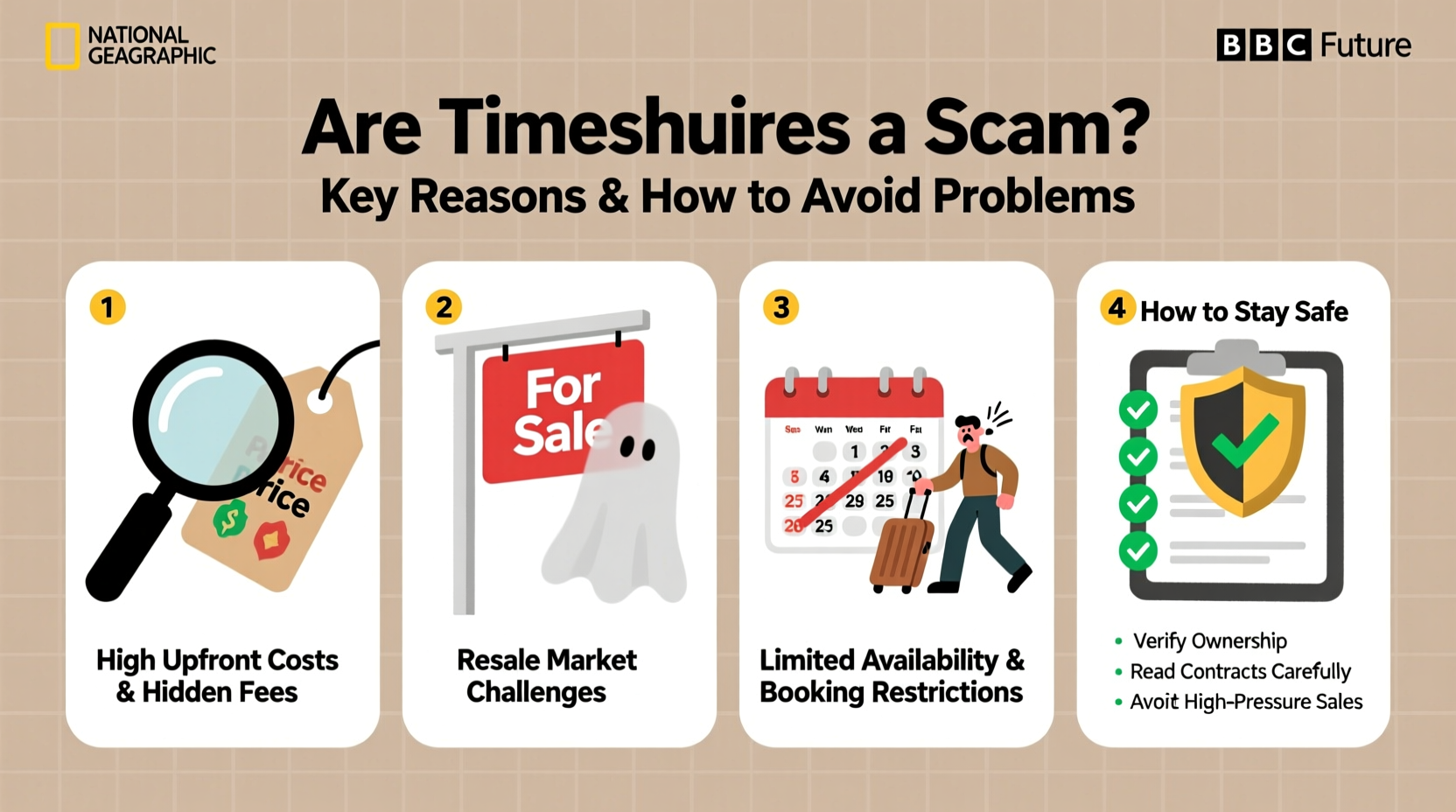
A timeshare is a shared ownership model where multiple individuals purchase the right to use a vacation property for a specific period each year. These arrangements can take the form of deeded ownership, right-to-use contracts, or points-based systems through networks like RCI or Interval International. In theory, timeshares offer consistent vacation access at a fixed cost. However, the reality often diverges from the pitch.
The core issue lies in misaligned incentives. Sales representatives are frequently paid on commission and trained to emphasize benefits while downplaying risks. Many buyers report being misled about resale value, maintenance fee increases, and flexibility of booking. According to a 2023 report by the American Resort Development Association (ARDA), only 15% of new timeshare owners fully understand their contract terms at the time of purchase.
“Many timeshare buyers aren’t scammed by illegal acts—they’re misled by omission. What’s not said during the sales presentation matters more than what is.” — Mark Reynolds, Consumer Travel Advocate
Key Reasons People Feel Timeshares Are a Scam
While outright fraud is rare, several recurring patterns contribute to the perception that timeshares are deceptive:
- Aggressive Sales Tactics: Buyers are often lured with free meals, show tickets, or discounted stays, only to be subjected to hours-long presentations where refusal feels socially awkward.
- Hidden or Escalating Fees: Maintenance fees rise annually, sometimes doubling over a decade. Special assessments for renovations or emergencies can appear unexpectedly.
- Limited Flexibility: Promised \"easy exchanges\" through international networks often come with blackout dates, extra fees, and low availability.
- Resale Value Myth: Most timeshares depreciate rapidly. Reselling typically yields pennies on the dollar, if a buyer can be found at all.
- Difficulty Exiting: Contracts last 20–99 years, and cancellation options are narrow. Third-party exit companies may charge thousands and fail to deliver.
How to Avoid Timeshare Problems: A Step-by-Step Guide
Not all timeshare experiences are negative. Some families enjoy decades of reliable vacations through well-managed resorts. The difference often comes down to preparation and realistic expectations. Follow these steps to protect yourself:
- Research the Developer: Stick to reputable brands like Marriott Vacation Club, Hilton Grand Vacations, or Hyatt Residence Club. Check BBB ratings and consumer reviews.
- Read the Contract Thoroughly: Pay attention to maintenance fee caps, usage rules, and cancellation rights. Look for clauses allowing arbitration instead of court litigation.
- Understand the Exit Strategy: Know your rescission period (typically 3–10 days after signing). Ask about donation, deed-back, or resale options later.
- Budget for Long-Term Costs: Estimate 20-year maintenance fees using historical data. Assume a 3–5% annual increase.
- Test the Exchange System: Before buying into a points program, try booking a comparable resort during peak season to assess availability.
Do’s and Don’ts of Timeshare Ownership
| Do | Don't |
|---|---|
| Verify all verbal promises in writing | Rely on what the sales agent says without documentation |
| Negotiate lower initiation fees or bonus weeks | Assume the first price offered is final |
| Join owner-only forums for real user feedback | Trust only glossy brochures and promotional videos |
| Use your week consistently or rent it out | Let usage go to waste year after year |
| Consult a real estate attorney before signing | Sign under pressure or emotional manipulation |
Real Example: Sarah’s Timeshare Experience
Sarah and her husband attended a \"free weekend\" at a Florida resort. After a four-hour presentation, they were convinced that a $18,000 timeshare would save them money over ten years. The salesperson claimed maintenance fees would never exceed $800 annually and promised easy global exchanges.
Five years later, their fees had risen to $1,450 per year. They missed two vacations due to work conflicts and couldn’t exchange their week because of limited inventory. When they tried to resell, a broker quoted a $5,000 listing fee—more than the resale value. It took three years and legal assistance to donate the unit to a charity program, ending the obligation.
Sarah’s story is common. Her regret wasn’t the vacation itself—it was the lack of transparency and long-term planning.
Frequently Asked Questions
Can I cancel my timeshare after signing?
Yes, but only within the rescission period, which varies by state (usually 3–10 days). After that, cancellation becomes extremely difficult and expensive. Some developers offer buyback programs, but these are rare.
Are there legitimate timeshare resale companies?
A few exist, but most operate in a gray market. Be cautious of firms charging upfront fees. Legitimate resale platforms list your unit for a commission only upon sale. Research thoroughly and check FTC warnings.
Is renting my timeshare a good idea?
Yes. Renting out unused weeks can offset maintenance costs and maintain usage activity, which some clubs require. Use trusted platforms like RedWeek or Timeshare Users Group to find verified renters.
Checklist: Before Buying a Timeshare
- ✅ Attend the presentation with a clear goal: gather information, not buy
- ✅ Ask for a full copy of the contract and public offering statement
- ✅ Research the developer’s reputation and history of fee increases
- ✅ Confirm the rescission period and cancellation process
- ✅ Calculate total 20-year ownership cost (purchase + estimated fees)
- ✅ Test the reservation system with a sample booking request
- ✅ Consult a neutral financial advisor or attorney
Conclusion: Make an Informed Decision
Calling all timeshares a “scam” oversimplifies a complex industry. While many operate ethically, the business model is inherently prone to consumer dissatisfaction due to long-term commitments, rising costs, and limited liquidity. The key to avoiding regret is education, skepticism, and patience. If you choose to buy, do so with eyes wide open—not under the influence of a high-pressure sales environment.




 浙公网安备
33010002000092号
浙公网安备
33010002000092号 浙B2-20120091-4
Comments
No comments yet. Why don't you start the discussion?