
For multi-cat households, managing litter box hygiene is one of the most persistent challenges pet owners face. With more cats comes more waste, stronger odors, and increased maintenance demands. Traditional litter boxes quickly become overwhelmed, leading to unpleasant smells and potential behavioral issues like inappropriate elimination. Automatic litter boxes offer a modern solution—designed to sift waste, seal in odors, and minimize daily upkeep. But not all models perform equally well when multiple cats are involved. The right system must handle high traffic, separate clumps efficiently, and incorporate advanced odor control features. This guide explores top-performing automatic litter boxes tailored for homes with two or more cats, focusing on those that excel at reducing odor through smart design, sealing technology, and filtration systems.
Key Features to Look for in Multi-Cat Automatic Litter Boxes
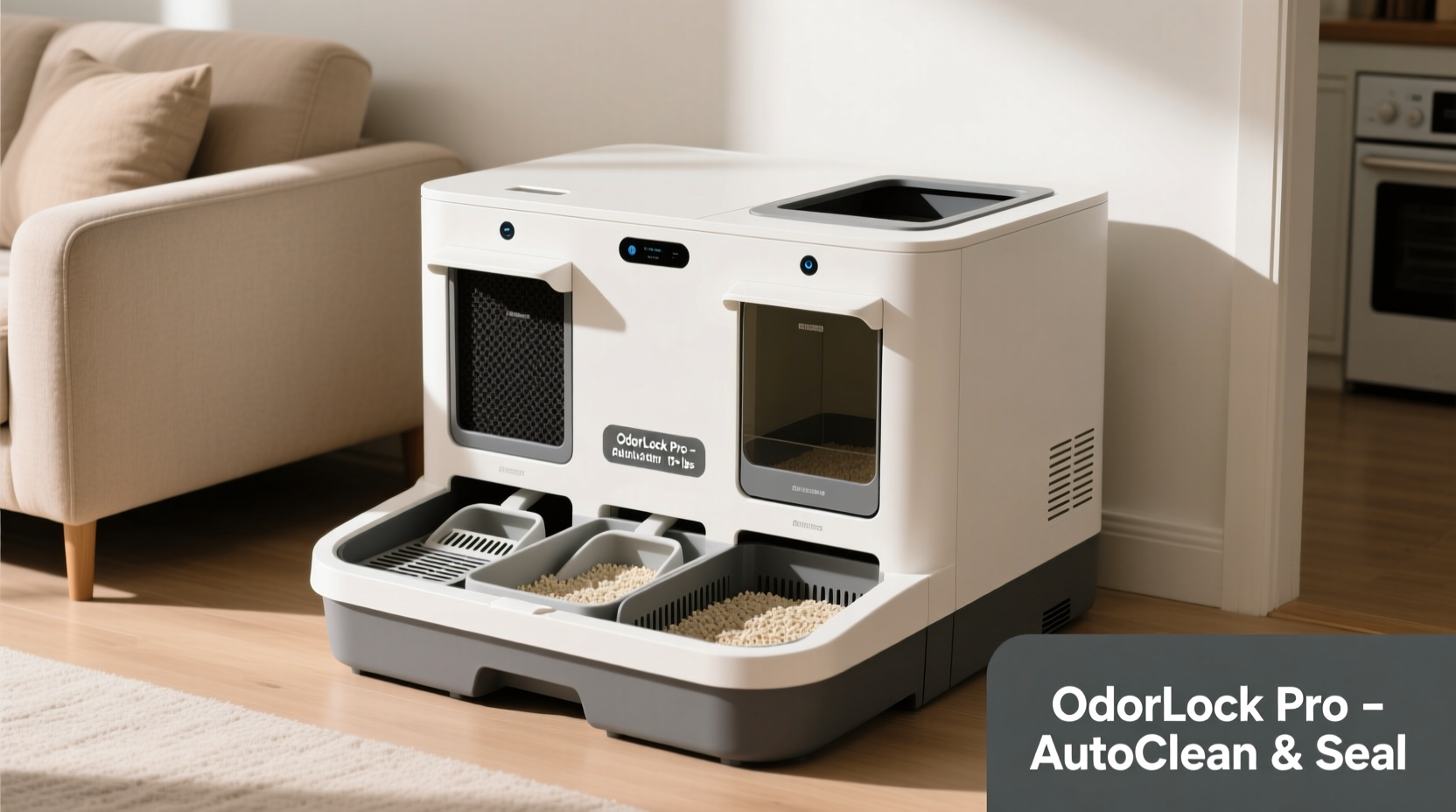
When selecting an automatic litter box for multiple cats, performance under pressure is essential. A unit designed for single-cat use may struggle with frequent access, delayed cleaning cycles, or inadequate waste capacity. The ideal model balances automation, durability, and odor management. Here are the critical factors to evaluate:
- High Waste Capacity: Larger waste drawers or sealed pods can go longer between cleanings, crucial when several cats contribute throughout the day.
- Rapid Cycle Time: Fast reset times (under 7 minutes) ensure the box is ready for the next cat without delays.
- Odor-Sealing Design: Fully enclosed units with carbon filters, tight lids, or disposable waste compartments trap smells before they escape.
- Dual Sensors: Advanced weight and motion sensors prevent false triggers and improve reliability in busy environments.
- Large Entryways: Wide openings accommodate cats of different sizes and reduce territorial hesitation.
- Quiet Operation: Noise-sensitive cats may avoid loud mechanical boxes, so low-decibel motors are preferable.
Top 5 Automatic Litter Boxes for Multiple Cats with Superior Odor Control
The following models stand out based on real-world performance, user feedback, and independent testing. Each has been evaluated for its ability to manage multiple feline users while minimizing odor dispersion.
| Model | Cats Supported | Odor Control Features | Waste Capacity | Price Range |
|---|---|---|---|---|
| Litter-Robot 4 Open Air | 2–4 | Carbon filter, top-exit design, sealed waste drawer | Holds up to 2 weeks (for 2 cats) | $699 |
| PetSafe ScoopFree Ultra | 2–3 | Crystal litter (naturally absorbent), covered tray, odor-lock lid | Up to 30 days per tray | $249 + trays |
| Omega Paw Roll'n Clean | 2–3 | Enclosed roll design, minimal dust, no electronics | Manual emptying required weekly | $50 |
| Tidy Cats Breeze Litter Box System | 2–4 | Floor-level tray with odor-absorbing pads, low-dust pellets | Pads last 1 week; pellets last 1 month | $40–$60 |
| Self-Cleaning Litter Box by CatGenie | 2–4 | Washable granules, built-in water wash & drying cycle, sewage-connected disposal | Zero solid waste storage – flushed automatically | $699 + installation |
Litter-Robot 4 Open Air
This premium option uses a globe-shaped sifting mechanism that isolates waste into a sealed bottom drawer. Its Open Air design improves airflow while maintaining odor containment via a replaceable carbon filter. With Whisper Quiet technology and auto-reset within 7 minutes, it handles multiple cats efficiently. The app-enabled version allows remote monitoring, which is helpful for tracking usage patterns across several pets.
PetSafe ScoopFree Ultra
A fully automatic, tray-based system using non-clumping crystal litter that absorbs urine and suppresses ammonia odors naturally. After each use, a rake buries waste under fresh crystals and deposits it into a covered compartment. The entire tray is replaced monthly, eliminating scooping and deep cleaning. Ideal for homes where convenience outweighs recurring costs.
Omega Paw Roll'n Clean
A budget-friendly, manual self-cleaning box with no electricity required. Simply roll the unit to sift clumps into a hidden chamber. Its compact, enclosed design limits odor spread and suits smaller spaces. While not automated, its simplicity makes it reliable and easy to maintain across multiple cats.
Tidy Cats Breeze System
This dual-component system uses low-dust, biodegradable pellets and disposable floor-level pads that absorb liquid and neutralize odor. Solid waste sits on top and is easily removed. The lack of a tall barrier makes it accessible for older or mobility-impaired cats. Since there’s no motor, noise isn’t an issue, and replacement components are widely available.
CatGenie Self-Washing Box
The only automatic box that flushes waste like a toilet. It uses reusable granules cleaned with water and gentle detergent, then dried internally. Connected to a water line and drain (or portable reservoir), it eliminates solid waste entirely—meaning no odor from stored waste. Setup requires more effort, but long-term hygiene and odor control are unmatched.
“Automatic litter boxes can significantly reduce household odor in multi-cat homes, especially when paired with sealed waste systems and carbon filtration.” — Dr. Lena Patel, DVM, Feline Behavior Consultant
Step-by-Step Guide to Implementing an Automatic Litter Box in a Multi-Cat Home
Introducing a new litter box system requires planning, especially when multiple cats are involved. Follow this timeline to ensure smooth adoption and optimal performance:
- Week 1: Research and Purchase
Select a model based on your space, number of cats, and odor concerns. Read reviews focused on multi-cat households. - Week 2: Set Up in a Neutral Location
Place the new box in a quiet corner away from food and foot traffic. Allow cats to investigate it without turning it on (if applicable). - Days 1–3: Manual Introduction
Guide each cat into the box after meals or naps. Reward calm behavior with treats. For electronic models, keep power off initially to reduce intimidation. - Day 4: Activate Automation
Turn on sensors and run test cycles. Monitor reactions. Some cats may need gradual exposure over several days. - Week 3: Monitor Usage and Adjust
Check the app (if available) or physical indicators to confirm all cats are using the box. Address avoidance by adding a second box or adjusting placement. - Ongoing: Maintenance Schedule
Empty waste drawers weekly (or as recommended), replace carbon filters monthly, and clean surfaces regularly to prevent bacterial buildup.
Real-World Example: Managing Odor in a 4-Cat Apartment
Sarah, a cat owner in Seattle, struggled with persistent ammonia smells despite daily scooping. Her four cats—a mix of seniors and energetic kittens—used a single traditional box, which became saturated within hours. She invested in the Litter-Robot 4 Open Air after reading about its odor-sealing capabilities. Within a week, she noticed a dramatic drop in ambient litter smell. The sealed waste drawer prevented odor leakage, and the carbon filter captured residual particles. She placed the unit in a laundry room with a door she could close during cleaning cycles. To further reduce competition, she kept a second Omega Paw box as a backup. After three months, Sarah reported no accidents, improved air quality, and less time spent on litter maintenance. “It paid for itself in sanity,” she said.
Expert Tips and Best Practices for Odor Reduction
Beyond choosing the right box, how you maintain it plays a major role in odor control. Consider these strategies:
- Use clumping, low-dust litter: Even in automatic boxes, litter quality matters. Premium clumping formulas form tighter seals around waste, reducing gas release.
- Replace carbon filters monthly: Over time, filters lose effectiveness. Mark your calendar or set phone reminders.
- Deep clean every 2–4 weeks: Wash the bowl and rake mechanism with mild soap and water to prevent bacterial film that amplifies odor.
- Ventilate the room: Use an exhaust fan or air purifier with a HEPA and carbon filter to capture airborne particles.
- Avoid scented litters: Artificial fragrances can irritate cats’ sensitive noses and mask problems rather than solving them.
Checklist: Optimizing Your Multi-Cat Litter Setup
- ☐ Choose a high-capacity automatic box rated for your number of cats
- ☐ Install in a quiet, accessible location with good airflow
- ☐ Use unscented, clumping litter compatible with the system
- ☐ Add a carbon filter and replace it monthly
- ☐ Introduce the box gradually with positive reinforcement
- ☐ Monitor usage to ensure all cats adapt successfully
- ☐ Maintain a regular cleaning schedule for the unit and surrounding area
- ☐ Keep a backup litter box available during transition
Frequently Asked Questions
Do automatic litter boxes really reduce odor better than manual ones?
Yes, when designed with odor control in mind. Models that seal waste immediately, use carbon filtration, or flush solids eliminate the primary sources of smell—exposed urine and feces. In contrast, even daily-scooped traditional boxes leave residual waste that emits gases over time.
Can one automatic box handle three or more cats?
It depends on the model and usage patterns. High-end units like the Litter-Robot 4 or CatGenie are engineered for 3–4 cats, provided they have sufficient cycle time and waste capacity. However, veterinary behaviorists recommend having one box per cat plus one extra, regardless of automation, to prevent territorial disputes.
Are there health risks if the box doesn’t clean properly?
Yes. Lingering waste promotes bacterial growth and ammonia buildup, which can irritate cats’ respiratory systems and lead to urinary tract infections. Consistent, thorough cleaning—whether manual or automatic—is essential for feline health.
Conclusion: Breathe Easier with the Right Solution
Living with multiple cats shouldn’t mean resigning yourself to constant litter odor and endless scooping. Modern automatic litter boxes offer powerful tools to reclaim your home’s freshness and simplify daily care. By selecting a model designed for high-volume use and equipped with effective odor-sealing features, you create a cleaner, healthier environment for both pets and people. Whether you choose the fully flushing CatGenie, the reliable Litter-Robot, or the cost-effective Breeze system, the key is matching the technology to your household’s needs. Combine smart equipment with proper placement, maintenance, and feline psychology, and you’ll see results fast. Take the first step today—your nose (and your cats) will thank you.




 浙公网安备
33010002000092号
浙公网安备
33010002000092号 浙B2-20120091-4
Comments
No comments yet. Why don't you start the discussion?