
Chopping tomatoes efficiently is a fundamental skill in both home and professional kitchens. Whether you're preparing a fresh salsa, dicing for a salad, or building layers in a stew, tomatoes present a unique challenge: their high water content, soft flesh, and slippery skin can make clean, consistent cuts difficult. Many cooks waste time wrestling with mushy results or uneven pieces because they’re using the wrong tool—or worse, improvising with inadequate equipment. The right tool not only speeds up prep but also preserves texture, minimizes juice loss, and ensures uniformity critical for even cooking and professional presentation. This guide examines the most effective tools available, evaluates their performance across tomato types and cutting styles, and provides practical recommendations tailored to real kitchen workflows.
Definition & Overview
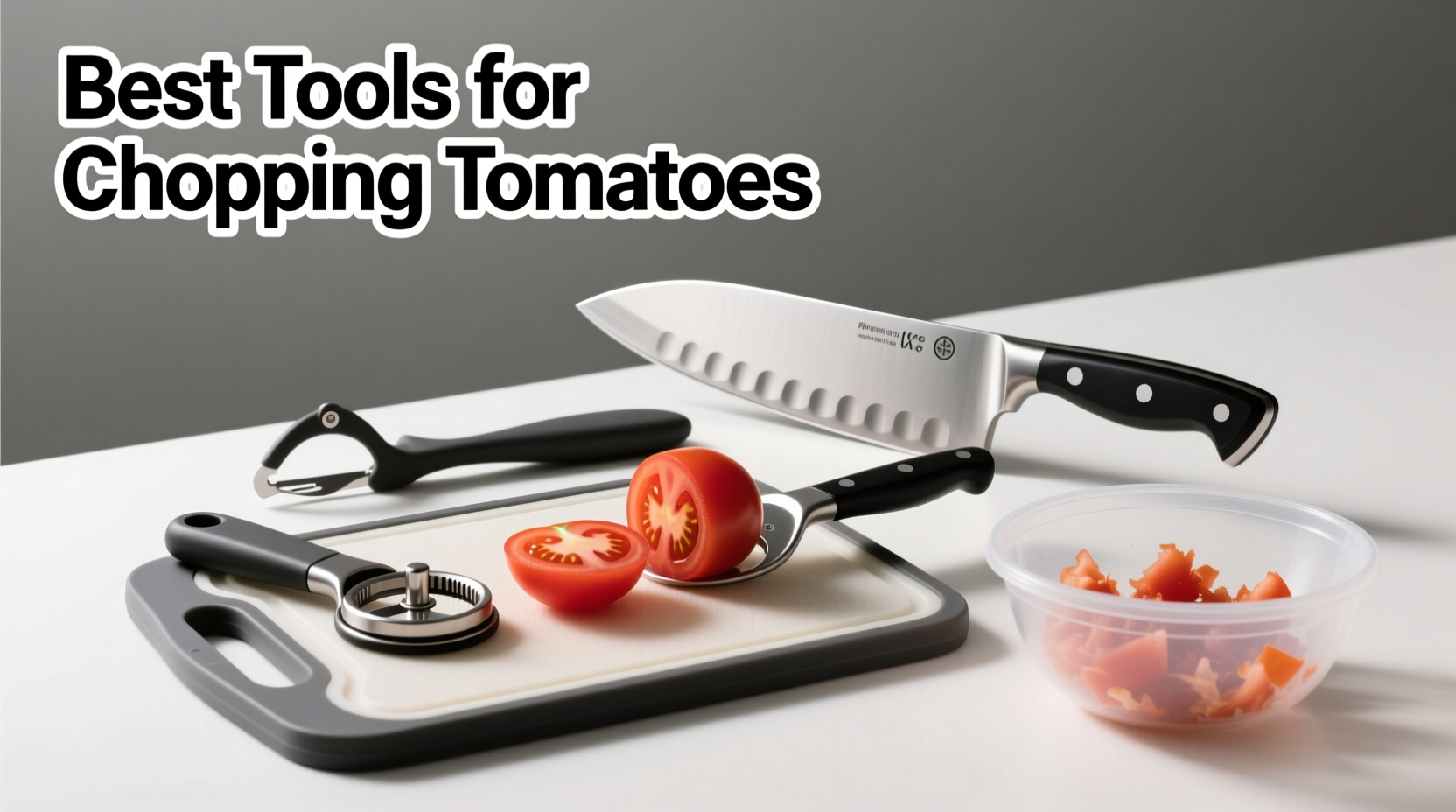
Tomatoes are botanically classified as berries and culinarily treated as vegetables. Native to western South America, they were domesticated by Mesoamerican cultures and introduced to Europe in the 16th century. Today, they are a cornerstone of global cuisine, appearing in raw preparations like bruschetta and pico de gallo, cooked applications such as sauces and soups, and preserved forms including sun-dried and canned variants.
From a culinary standpoint, \"chopping\" refers to cutting food into small, relatively uniform pieces. For tomatoes, this can range from rough dicing for sauces to fine mincing for garnishes. Unlike denser vegetables such as carrots or onions, tomatoes require tools that balance sharpness with control to avoid crushing rather than slicing. The ideal chopping method maintains cell integrity, reducing excess liquid release while achieving desired size and consistency.
Key Characteristics of Tomatoes Affecting Chopping
The physical properties of tomatoes directly influence which tools perform best. These characteristics vary by variety but generally include:
| Characteristic | Description |
|---|---|
| Flesh Texture | Soft and juicy; prone to bruising and fragmentation under pressure. |
| Skin Toughness | Varies—thin on cherry tomatoes, thicker on beefsteak; affects grip and slip resistance. |
| Seed Gel Content | High moisture content around seeds; can cause slippage during cutting. |
| Shape & Size | Ranges from spherical (cherry) to oblate (roma); impacts stability on the board. |
| Culinary Function | Determines required cut precision—e.g., fine dice for salsas vs. rough chop for sauces. |
These factors mean that blunt blades, serrated edges without support, or overly aggressive tools often fail, producing pulpy results instead of clean segments.
Essential Tools for Chopping Tomatoes
No single tool universally excels across all tomato types and tasks. However, several stand out based on blade design, ergonomics, and functional versatility.
1. Chef’s Knife (8–10 inch)
A high-quality chef’s knife remains the gold standard for precise tomato work. Its broad blade offers knuckle clearance, while the curved edge enables a rocking motion ideal for repetitive chopping. When sharpened properly, it slices through skin and flesh cleanly without applying downward pressure that ruptures cells.
Best for: Dicing large tomatoes (beefsteak, heirloom), julienning, and fine mincing.
Technique tip: Use a claw grip with the non-dominant hand, aligning knuckles behind the blade. Cut vertically first, then rotate and cross-chop for dice. Avoid sawing motions.
2. Santoku Knife
The Japanese-inspired santoku features a shorter, lighter blade (typically 5–7 inches) with a flat edge and narrow spine. Its hollow-ground sides reduce adhesion, helping prevent sticking—a significant advantage when dealing with wet tomato surfaces.
Best for: Medium-sized tomatoes (such as Roma or vine-ripened), especially when speed and minimal cleanup are priorities.
Limitation: Less leverage for thick-skinned or oversized specimens compared to a full-length chef’s knife.
3. Paring Knife (3–4 inch)
While not suited for bulk chopping, a paring knife shines in detailed tasks: coring, deveining, or segmenting cherry tomatoes. Its pointed tip allows precision cuts near stems and cores, minimizing waste.
Best for: Prepping cherry, grape, or campari tomatoes where individual handling is necessary.
Pro Tip: Core tomatoes before chopping. Insert the paring knife at an angle around the stem scar to remove the tough calyx and attached fibers, which improves texture and appearance in finished dishes.
4. Serrated Utility Knife
A 5- to 6-inch serrated knife uses toothed edges to grip and pierce tomato skin without compressing the interior. Once past the skin, the saw-like action separates flesh cleanly. Unlike straight-edge knives, it performs well even when slightly dull.
Best for: Sandwich slicing, halving cherry tomatoes, or situations where frequent sharpening isn’t feasible.
Caveat: Not ideal for fine dicing due to limited rocking motion and potential for jagged edges.
5. Tomato Slicer Gadgets (Manual Press Models)
Devices like the OXO Good Grips Tomato Slicer or Progressive PL810 use parallel stainless steel wires or blades to cut multiple slices simultaneously. Designed specifically for round fruits, they stabilize the tomato while pressing it through fixed cutting planes.
Best for: Uniformly slicing medium to large tomatoes into 6–8 pieces rapidly—ideal for salads, sandwiches, or grilling prep.
Drawbacks: Limited adaptability; ineffective for irregular shapes or partial cuts. Requires washing after each use.
6. Food Mill (for Pulping, Not Chopping)
Though not a chopping tool per se, a food mill deserves mention for processing cooked tomatoes into smooth sauces while removing skins and seeds. It operates by forcing softened tomatoes through a perforated disk via a rotating crank.
Best for: Preserving summer harvests, making passata, or creating silky soups without blenders.
Variants & Types: Matching Tool to Tomato Variety
Different tomato cultivars demand different approaches. Using the correct tool enhances yield, texture, and safety.
| Tomato Type | Texture Profile | Recommended Tool(s) | Why It Works |
|---|---|---|---|
| Beefsteak | Large, juicy, soft with thick walls | Chef’s knife, serrated utility knife | Broad blade controls size; serrations prevent slipping on wet surface |
| Roma/Plum | Firm, low-moisture, dense flesh | Santoku, chef’s knife | Clean slicing with minimal seed gel spillage; holds shape during dicing |
| Cherry/Grape | Small, taut skin, high burst potential | Paring knife, tomato slicer, serrated utility | Precision point access; fast halving without rolling |
| Heirloom | Inconsistent shape, fragile flesh, variable ripeness | Sharp chef’s knife, paring knife for prep | Requires gentle, adaptive cutting; avoid force |
| Green (Unripe) | Dense, firm, acidic | Chef’s knife, santoku | Behaves more like bell pepper—responds well to straight-edge slicing |
Selecting the appropriate tool based on variety prevents unnecessary damage and optimizes prep time. For example, attempting to dice cherry tomatoes with a chef’s knife risks injury due to instability, whereas a dedicated mini-slicer or sharp paring knife delivers safer, faster results.
Comparison with Similar Ingredients: Why Tomatoes Are Unique
Many assume that tools for onions or peppers work equally well for tomatoes. While there is overlap, key differences affect performance.
- Onions: Firmer structure allows aggressive rocking cuts; moisture is contained until cell rupture. A chef’s knife dominates here.
- Peppers: Thick walls and hollow interior enable stable, flat-surface cutting. Serrated edges offer no advantage unless skin is particularly waxy.
- Tomatoes: Combine external slipperiness with internal fragility. Require tools that initiate clean penetration (sharp or serrated) and maintain lateral stability during slicing.
Unlike cucumbers or zucchini—which have rigid exteriors and predictable grain—tomatoes lack structural consistency once cut, making post-initial slice control essential.
\"The difference between a good tomato chop and a failed one often comes down to the first quarter-inch of the cut. If the blade doesn't penetrate cleanly, everything collapses.\" — Chef Elena Ruiz, Culinary Instructor, San Francisco Cooking School
Practical Usage: Step-by-Step Techniques
Even the best tools fail without proper technique. Follow these proven methods for optimal results.
Dicing Large Tomatoes (Beefsteak/Roma)
- Lay the tomato on its side and trim off the stem end with a paring knife.
- Cut the tomato in half horizontally.
- Place each half cut-side down. Slice into planks lengthwise, spacing according to desired dice size (¼”, ½”, etc.).
- Rotate and make perpendicular cuts to create cubes.
- Use the side of the knife blade to sweep diced pieces into a bowl, minimizing handling.
Tool used: Chef’s knife with sharp edge. Keep fingers tucked using the claw grip throughout.
Halving Cherry Tomatoes
- Place tomatoes in a row on the cutting board.
- Use a serrated utility knife or paring knife to slice through multiple tomatoes at once.
- Alternatively, use a plastic tomato splitter grid (a lid with embedded wires) placed over a bowl and press down firmly.
This method reduces rolling and increases safety, especially when processing large batches.
Mincing for Salsa or Relish
- Dice tomatoes finely using a chef’s knife.
- Sprinkle with salt and let sit 5 minutes to draw out excess moisture.
- Drain in a fine-mesh strainer, pressing gently with a spoon.
- Return to bowl and mix with other ingredients.
Pre-draining prevents watery final products and concentrates flavor.
Efficiency Hack: Prep multiple tomatoes of the same type consecutively. Maintain workflow by keeping your dominant hand on the knife and using the non-dominant hand to feed new tomatoes onto the board.
Advanced Options: Specialty Equipment Worth Considering
For frequent cooks or those managing volume—such as catering, meal prepping, or preserving—specialty gear may justify the investment.
Electric Tomato Slicers
Commercial-grade models like the Berkel 500T use adjustable wire arrays to slice dozens of tomatoes per minute. Home versions exist but are niche. Best suited for farmers’ market vendors or home canners processing bushels.
Multi-Blade Mandoline with Adjustable Guard
A mandoline equipped with replaceable blades (straight, crinkle, julienne) can produce uniform tomato slices when used carefully. Always engage the food holder to protect fingers.
Note: Only use on firm tomatoes. Overripe specimens will disintegrate under pressure.
Practical Tips & FAQs
Should I peel tomatoes before chopping?
Peeling is optional and depends on application. Skins add fiber and color but can become tough in cooked sauces. Blanch tomatoes (score an 'X' on the bottom, boil 30 seconds, ice bath) to loosen peels easily.
How do I keep chopped tomatoes from getting soggy?
Minimize exposure time and drain excess juice if needed. Store in sealed containers lined with paper towels to absorb moisture. Never refrigerate unless holding longer than 2 hours—cold temperatures degrade texture rapidly.
Can I use a food processor to chop tomatoes?
Not recommended. Even pulse settings tend to puree rather than chop, due to the fruit’s delicate structure. Exceptions include very short pulses for coarse salsas, but results are inconsistent.
What’s the safest way to chop slippery tomatoes?
Ensure your knife is sharp—dull blades slip more. Use a non-slip cutting board (rubber-backed or damp towel underneath). Work slowly until confident. Consider using a tomato-specific slicer for repetitive tasks.
How often should I sharpen my knife?
Honing with a steel weekly maintains edge alignment. Full sharpening every 2–3 months (or when slicing requires noticeable pressure) restores the bevel. Regular maintenance extends tool life and improves safety.
Are ceramic knives good for tomatoes?
Ceramic blades stay sharp longer and resist staining, making them excellent for acid-rich foods like tomatoes. However, they are brittle and can chip if dropped or used on hard surfaces. Ideal for light-duty slicing but not heavy chopping.
Can I substitute one knife for another?
Yes, within limits. A serrated bread knife can halve tomatoes in a pinch, but lacks precision. A steak knife works for emergencies but compromises control. Invest in purpose-built tools for regular use.
Storage & Shelf Life of Chopped Tomatoes
Once cut, tomatoes begin deteriorating immediately. Enzymatic activity and microbial growth accelerate at room temperature.
- Freshly chopped (uncooked): Lasts 1–2 days in an airtight container in the refrigerator. Place a paper towel at the bottom to absorb exudate.
- Cooked into sauce: Up to 5 days refrigerated, 6 months frozen.
- Freezing raw chopped tomatoes: Possible, but expect mushy texture upon thawing. Best reserved for cooked applications like soups or stews.
To preserve freshness, chop tomatoes as close to serving time as possible. Delay salting until just before mixing to minimize early moisture release.
Summary & Key Takeaways
Efficient tomato chopping hinges on matching the right tool to the tomato type and intended use. While a sharp chef’s knife remains indispensable for most tasks, specialized options—from paring knives to manual slicers—offer advantages in speed, safety, and consistency. Understanding the structural challenges posed by high water content and fragile flesh allows cooks to choose equipment that enhances performance rather than fights against physics.
Key points to remember:
- A sharp chef’s knife provides the greatest versatility for dicing and slicing.
- Serrated edges excel at initial skin penetration without crushing.
- Paring knives are essential for precision work on small tomatoes.
- Gadgets like wire-based slicers save time when processing batches.
- Technique matters as much as tool choice—proper grip, coring, and draining improve outcomes.
- Never use blenders or food processors for true chopping; they liquefy.
- Store chopped tomatoes properly to maintain quality and food safety.
Mastering tomato prep starts with respect for the ingredient. Choose your tool wisely, keep it sharp, and handle each tomato according to its nature—not every one deserves the same approach. With practice, what once seemed messy and slow becomes swift, controlled, and satisfying.




 浙公网安备
33010002000092号
浙公网安备
33010002000092号 浙B2-20120091-4
Comments
No comments yet. Why don't you start the discussion?