
High-fidelity audio doesn’t have to come with a luxury price tag. While some believe that great sound requires six-figure investments, many of today’s most satisfying listening experiences are built on thoughtful, cost-conscious decisions. With the right approach, it's entirely possible to assemble a system that delivers rich detail, deep dynamics, and emotional resonance—all for under $1,500. The key lies not in spending more, but in spending wisely: prioritizing performance-per-dollar components, optimizing your environment, and understanding where compromises matter least.
This guide walks through how to build a compelling audiophile-grade setup without draining your savings. From sourcing used gear to fine-tuning room acoustics, every decision is aimed at maximizing sonic return on investment.
Start with Your Listening Environment
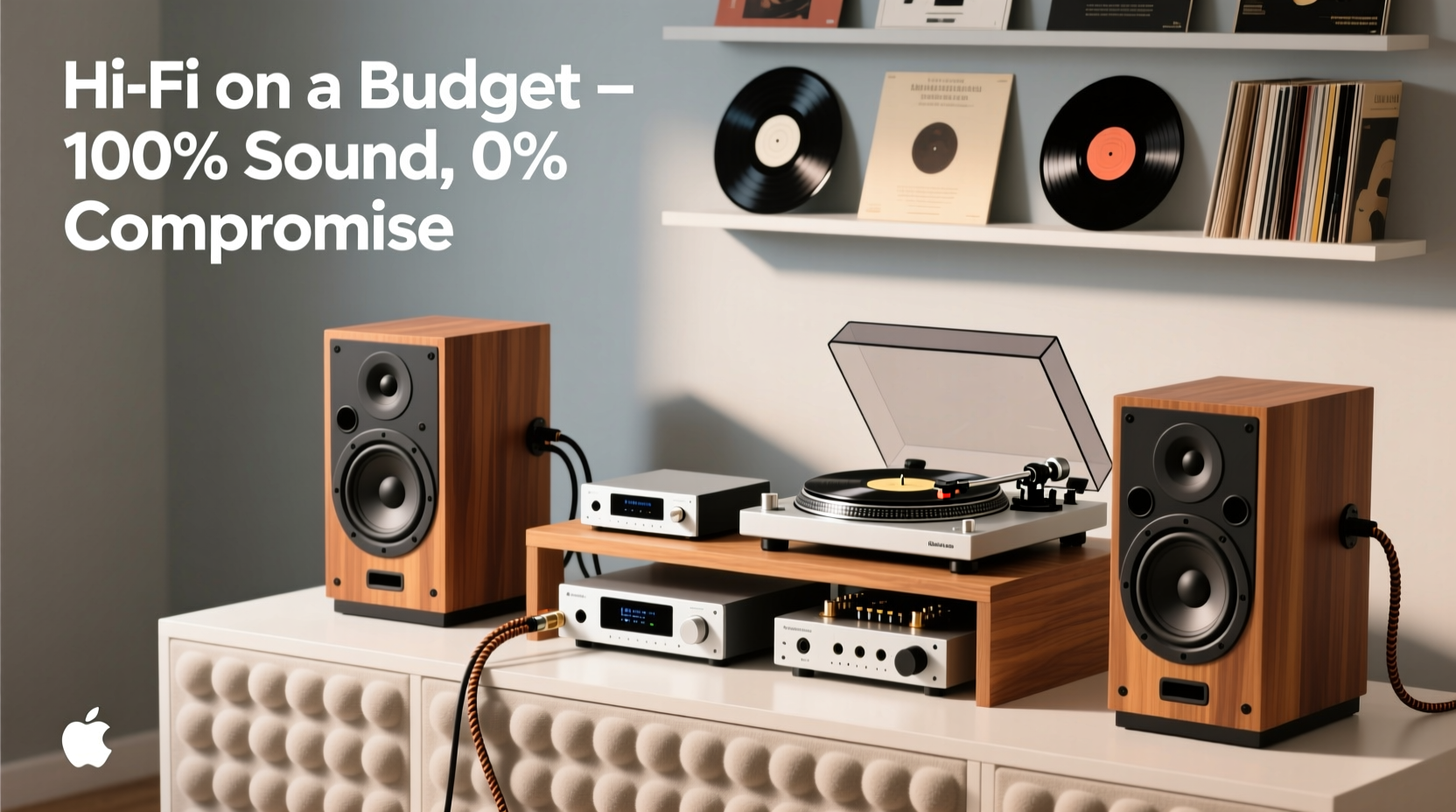
No amount of high-end equipment can overcome poor room acoustics. A carpeted bedroom with soft furnishings often outperforms a concrete loft when it comes to natural sound balance. Reflections, standing waves, and background noise shape what you hear far more than minor differences between amplifiers or cables.
Before investing in gear, assess your space:
- Room size: Smaller rooms amplify bass issues; larger ones may need diffusion.
- Furniture layout: Avoid symmetrical speaker-wall distances that create echo nodes.
- Background noise: Turn off HVAC systems or appliances during critical listening.
A simple change—like adding thick curtains, using area rugs over hardwood, or angling speakers slightly inward (toe-in)—can dramatically improve clarity. These tweaks cost little or nothing but deliver results comparable to expensive acoustic panels.
Choose Components That Deliver Real Performance Gains
The heart of any Hi-Fi system rests on three pillars: source, amplifier, and speakers. Budget constraints mean trade-offs, but intelligent selection ensures each dollar contributes directly to better sound.
Speakers: The Most Important Investment
If building on a tight budget, allocate the largest share—ideally 40–50%—to speakers. They’re the final transducers of sound and have the greatest impact on tonal accuracy, imaging, and realism. Bookshelf models from reputable brands like KEF, Q Acoustics, or Wharfedale offer excellent value.
Used marketplaces are goldmines. Well-maintained pairs of older KEF LS50s or Tannoy Mercury V2s can be found for half their original retail price. Look for signs of cosmetic wear only—avoid units with torn surrounds or distorted cabinets.
Amplification: Integrated Over Separates
For budget builds, an integrated amplifier offers superior value. Modern models combine preamp, power amp, and sometimes even DACs and phono stages in one chassis. Brands like Yamaha, Cambridge Audio, and Marantz produce reliable, musically engaging amps under $600.
Consider models with built-in Bluetooth aptX HD or Wi-Fi streaming if digital convenience matters. This eliminates early investment in separate streamers or network players.
Source: Quality Files Matter More Than You Think
No system sounds better than its weakest link—and often, that’s the source material. Streaming services vary widely in fidelity. Spotify Free uses ~96 kbps Ogg Vorbis, while Tidal HiFi and Qobuz offer lossless FLAC up to 24-bit/192 kHz.
“Even modest gear reveals dramatic improvements with true high-resolution sources.” — David Pritchard, Audio Engineer & Mastering Specialist
Invest time in curating a local library of lossless rips from your CD collection or purchase DRM-free downloads. A $50 USB thumb drive loaded with ALAC or FLAC files will outperform a $2,000 turntable paired with compressed MP3s.
Smart Shopping: Where to Buy and What to Avoid
New isn’t always better. In fact, most audio gear depreciates slowly and retains performance over decades. Buying used from trusted sources unlocks access to premium components at mass-market prices.
| Purchase Method | Pros | Cons | Best For |
|---|---|---|---|
| Used Marketplaces (eBay, Audiogon) | Up to 50% off retail, matured components | Risk of damage, no warranty | Speakers, tube amps, vintage receivers |
| Refurbished Direct from Manufacturer | Warranty included, tested performance | Limited selection | DACs, streamers, modern electronics |
| New from Big Retailers | Full support, returns easy | Premium pricing, lower performance per dollar | Cables, accessories, entry-level bundles |
| Local Classifieds / Facebook Marketplace | Inspect before buying, negotiate price | Geographic limits, potential scams | Floorstanding speakers, bulky items |
Avoid overspending on cables, power conditioners, or exotic feet. These rarely yield audible benefits in budget systems. Focus instead on core components and proven upgrades like isolation pads or proper speaker stands.
Step-by-Step Guide to Building Your System
Follow this timeline to methodically construct a capable, satisfying Hi-Fi setup over several months—even on a modest income.
- Week 1–2: Define Goals and Space
Decide what kind of music you want to enjoy and identify your primary listening location. Measure the room and sketch a rough layout. - Week 3–4: Research Entry-Level Gear
Identify 2–3 speaker candidates under $500 and compatible integrated amps. Read reviews from trusted sources like Stereophile, SoundStage!, or Head-Fi forums. - Month 2: Acquire First Component (Speakers)
Purchase a pair of used or refurbished bookshelf speakers. Test them with your current device via auxiliary input. - Month 3: Add Amplifier
Buy an integrated amp with line inputs and, if desired, a phono stage for future turntable use. - Month 4: Upgrade Source Path
Switch to a lossless streaming service or rip CDs. Use a smartphone or laptop as transport until ready for dedicated streamer. - Month 5: Optimize Placement and Room
Experiment with speaker position, add absorption materials, and ensure symmetry between left/right channels. - Month 6+: Expand Thoughtfully
Only after living with the system should you consider additions—like a subwoofer for deeper bass, or a turntable if vinyl appeals.
This gradual approach prevents buyer’s remorse and allows real-world evaluation before further investment.
Real Example: A $1,200 High-Performance Setup
Meet Alex, a college graduate living in a studio apartment who wanted immersive classical and jazz playback without overspending. Over five months, he assembled a system focused on transparency and musical engagement.
- Speakers: Used Q Acoustics 3020i ($320)
- Amplifier: Refurbished Cambridge Audio AXA35 ($450)
- Source: Smartphone + Tidal HiFi subscription ($20/month)
- Accessories: DIY speaker stands from PVC pipe and sand ($40), secondhand interconnects ($25)
- Total: $855
He later added a U-Turn Orbit Plus turntable ($279) with Ortofon OM10 cartridge, bringing total to $1,134. Using free room calibration apps and fabric wall hangings, he tamed early reflections. Friends assumed his system cost thousands.
“I thought I’d need to wait years to hear music this clearly,” Alex said. “But once I stopped chasing brand names and focused on synergy, everything clicked.”
Budget Do’s and Don’ts
To reinforce smart decisions, here’s a concise checklist summarizing best practices.
✅ Prioritize speaker quality over flashy features
✅ Buy used from reputable sellers with clear photos
✅ Invest in proper speaker placement and room treatment
✅ Use lossless streaming or locally stored high-res files
✅ Wait to buy accessories until core system is complete
❌ Skip expensive cables—use well-shielded basics
❌ Avoid \"audiophile-only\" marketing terms like \"sonic holography\"
❌ Never upgrade blindly—listen critically before spending more
FAQ
Can I build a true audiophile system for under $1,000?
Absolutely. While flagship performance remains out of reach, modern entry-level gear—especially when bought used—delivers startling clarity and emotional involvement. Many reviewers use sub-$1,500 systems for daily evaluation. The threshold for “high fidelity” has dropped significantly in the past decade.
Is vinyl worth including in a budget build?
Vinyl adds charm and ritual, but introduces mechanical complexity. A turntable under $400 needs careful setup and occasional maintenance. If analog appeal drives you, start with a plug-and-play model like the Fluance RT81 or Audio-Technica AT-LP60X. Otherwise, prioritize digital sources first—they’re cheaper, quieter, and easier to integrate.
Should I upgrade my amp or speakers first?
Always upgrade speakers first. They do the hardest job—converting electrical signals into physical sound waves. Even a modest amp driving great speakers will outperform a powerful amp stuck with inefficient or poorly designed drivers. Once you’ve maximized speaker potential, then consider refining amplification.
Conclusion: Great Sound Is Accessible
The myth that audiophilia demands wealth persists only because marketing favors extravagance over substance. In truth, the most rewarding systems are often those born from patience, research, and attentive listening. By focusing on what truly affects sound—speakers, room, and source—you bypass unnecessary expenses and cultivate deeper appreciation.
You don’t need exotic woods, glowing tubes, or five-figure price tags to experience music as it was meant to be heard. Start small. Listen deeply. Improve gradually. Let your ears—not ads or influencers—guide your journey.




 浙公网安备
33010002000092号
浙公网安备
33010002000092号 浙B2-20120091-4
Comments
No comments yet. Why don't you start the discussion?