
In today’s fast-paced world, productivity is often worn like a badge of honor. We measure our worth by how much we accomplish in a day, how quickly we respond to emails, and how little downtime we allow ourselves. But beneath the surface of constant motion, many people are quietly struggling—not with a lack of motivation, but with exhaustion that masquerades as laziness. The truth is, what feels like procrastination or apathy might actually be your mind signaling that it's time to stop, rest, and recover.
Burnout and laziness may appear similar on the outside—both can lead to missed deadlines, low energy, and disengagement—but they stem from entirely different causes and require vastly different responses. Mislabeling burnout as laziness not only delays healing but also deepens feelings of guilt and inadequacy. Understanding the distinction isn’t just about semantics; it’s about self-preservation.
The Hidden Epidemic: What Burnout Really Is
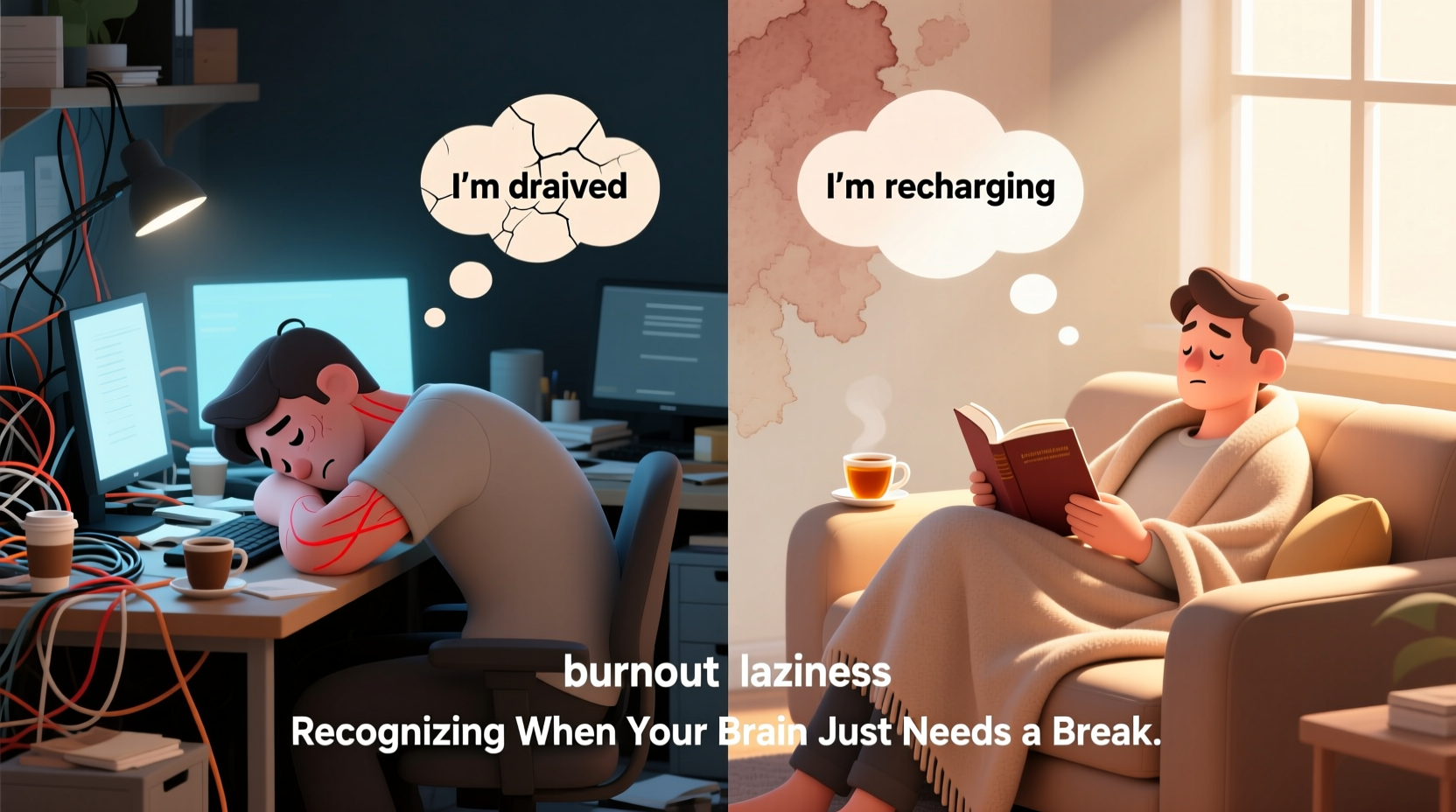
Burnout isn’t simply being tired after a long week. It’s a prolonged state of emotional, physical, and mental exhaustion caused by chronic stress—especially unrelenting work-related pressure without adequate recovery. The World Health Organization (WHO) officially recognized burnout as an occupational phenomenon in 2019, defining it by three key dimensions:
- Feelings of energy depletion or exhaustion
- Increased mental distance from one’s job, or feelings of negativism or cynicism related to work
- Reduced professional efficacy
Unlike laziness, which implies a voluntary avoidance of effort, burnout develops over time. It creeps in silently, often masked by high performance at first. People experiencing burnout frequently push through fatigue because they fear falling behind, only to find themselves unable to function at even basic levels later on.
Dr. Christina Maslach, a pioneer in burnout research, explains:
“Burnout is not a personal failure. It’s a systemic issue—a mismatch between individuals and their work environment. When demands consistently outweigh resources, people don’t get lazy; they get depleted.” — Dr. Christina Maslach, Psychologist and Burnout Researcher
Laziness: A Misunderstood Label
Laziness is often used as a moral judgment rather than a clinical condition. In reality, true laziness—choosing consistent idleness despite having the capacity and opportunity to act—is rare. More often, what we call “lazy” behavior is actually a symptom of something deeper: anxiety, depression, lack of purpose, or yes—burnout.
Consider this: someone who used to thrive under tight deadlines now avoids opening their inbox. They skip meetings, delay tasks, and feel guilty doing so. On the surface, it looks like disinterest or laziness. But if that same person once worked 60-hour weeks without complaint, the shift suggests not a character flaw, but a breaking point.
Laziness lacks intent. Burnout lacks energy. One is rooted in choice; the other in depletion.
How to Tell the Difference: Key Indicators
Distinguishing between burnout and laziness requires honest self-assessment. Here’s a breakdown of behaviors and underlying causes to help you identify what you’re really dealing with.
| Indicator | Signs of Burnout | Signs of Laziness |
|---|---|---|
| Motivation Level | Once highly motivated, now emotionally drained | Consistently indifferent to goals or outcomes |
| Energy Levels | Chronic fatigue, even after rest | Energy available but not directed toward tasks |
| Emotional State | Irritability, numbness, hopelessness | Contentment or mild indifference |
| Self-Perception | Guilt, shame, feeling like a failure | No strong emotional reaction to inaction |
| Work History | History of high performance and overcommitment | Pattern of avoiding responsibility |
| Response to Rest | Temporary relief, but symptoms return quickly | No significant change—rest doesn’t alter behavior |
If you see patterns of past dedication, emotional strain, and physical symptoms like headaches or insomnia, burnout is far more likely than laziness.
A Real-Life Example: Sarah’s Story
Sarah was a project manager at a tech startup known for her reliability. For two years, she volunteered for extra assignments, answered emails at midnight, and rarely took vacation days. Her team admired her drive—until she started missing deadlines.
At first, she told herself she was just “slacking.” She tried to snap out of it with caffeine, to-do lists, and self-criticism. But nothing worked. She’d sit at her desk for hours, unable to focus. Even simple tasks felt overwhelming. Colleagues began to whisper that she had “lost her edge” or “gotten lazy.”
After collapsing from exhaustion during a presentation, Sarah sought therapy. She was diagnosed with severe burnout. What looked like laziness was actually her nervous system shutting down after years of overwork. With medical leave, therapy, and strict boundaries, she gradually recovered. Today, she advocates for mental health awareness in high-pressure workplaces.
Sarah’s story illustrates a common trajectory: high achiever → silent suffering → collapse → misdiagnosis as laziness. The real problem wasn’t her work ethic—it was the absence of sustainable rhythms.
What Your Brain Needs: A Recovery Roadmap
When burnout sets in, willpower won’t fix it. You can’t think your way out of a physiological stress response. Recovery requires intentional, structured rest. Here’s a step-by-step approach to help your brain heal.
- Pause, Don’t Punish
Stop blaming yourself. Acknowledge that your body and mind are responding to prolonged stress. This isn’t weakness—it’s protection. - Assess the Damage
Ask: How long have I been operating in survival mode? What are my physical symptoms (e.g., trouble sleeping, digestive issues)? Am I relying on stimulants or sedatives to cope? - Set Immediate Boundaries
Block time for rest. Say no to non-essential tasks. Turn off notifications after 7 PM. Protect your sleep like your life depends on it—because it does. - Reintroduce Pleasure Without Purpose
Do things solely for enjoyment: walk in nature, listen to music, doodle. These activities aren’t “productive,” but they rewire the brain’s reward system. - Seek Support
Talk to a therapist, coach, or trusted friend. Isolation worsens burnout. Verbalizing your experience reduces its power. - Gradually Rebuild Capacity
After 1–2 weeks of true rest, reintroduce work in small doses. Use the 50/10 rule: 50 minutes of focused work, followed by 10 minutes of complete disengagement.
Action Plan: Recognizing and Responding to Burnout
Use this checklist to evaluate your current state and take meaningful action.
- ✅ I’ve been feeling exhausted most days for over two weeks
- ✅ I dread tasks I used to enjoy
- ✅ My concentration has significantly declined
- ✅ I’m more irritable or emotionally numb than usual
- ✅ I’ve stopped caring about my performance
- ✅ I feel guilty when I’m not working—even during rest
- ✅ I rely on coffee, sugar, or screens to keep going
- ✅ I’ve withdrawn from friends or family
If you checked three or more, you may be experiencing burnout. Take the following steps:
- Schedule a full day completely free of work or obligations.
- Write down everything you’ve accomplished in the past year—remind yourself of your value beyond output.
- Speak to a healthcare provider about your symptoms.
- Plan a digital detox weekend—no email, no calls, no social media.
- Create a “recovery routine”: fixed sleep times, daily movement, and scheduled worry windows.
Frequently Asked Questions
Can burnout happen even if I love my job?
Absolutely. Passion doesn’t protect against burnout. In fact, people who deeply care about their work are often more vulnerable because they’re willing to sacrifice their well-being for it. Love for your job can fuel overwork, especially without boundaries.
How long does it take to recover from burnout?
There’s no fixed timeline. Mild burnout may resolve in a few weeks with proper rest. Severe cases can take months—or longer if systemic changes aren’t made. Recovery isn’t linear; expect setbacks and celebrate small wins.
Is it possible to prevent burnout entirely?
While no one is immune, you can drastically reduce your risk by building resilience habits: regular breaks, realistic goal-setting, emotional check-ins, and saying no when necessary. Prevention starts with recognizing early warning signs before crisis hits.
Listen to Your Mind—It’s Trying to Save You
The human brain wasn’t designed for constant output. It evolved to alternate between effort and restoration. When you feel stuck, unmotivated, or mentally blank, don’t assume you’ve become lazy. Pause and consider: Could this be your mind’s way of enforcing a break you never gave yourself?
Rest is not a reward for finishing everything. It’s a requirement for sustaining anything. The ability to recognize burnout isn’t a sign of fragility—it’s a mark of wisdom. It means you’re paying attention to the subtle signals before they become emergencies.
You don’t need to earn rest. You need it because you’re human.




 浙公网安备
33010002000092号
浙公网安备
33010002000092号 浙B2-20120091-4
Comments
No comments yet. Why don't you start the discussion?