
As the holiday season approaches, twinkling Christmas lights transform homes into festive displays. But managing their on-off cycles manually—especially across multiple strands or outdoor setups—can quickly become a chore. Enter smart plugs: small, Wi-Fi-enabled devices that turn ordinary lamps and light strings into intelligent, automated features. When used correctly, smart plugs offer a powerful, cost-effective way to streamline your holiday lighting without lifting a finger after setup.
From scheduling precise on and off times to syncing with sunset and sunrise, smart plugs bring convenience, safety, and energy savings to seasonal décor. More than just a gadget trend, they represent a shift toward smarter, more intentional home management during one of the busiest times of the year.
How Smart Plugs Work with Holiday Lighting
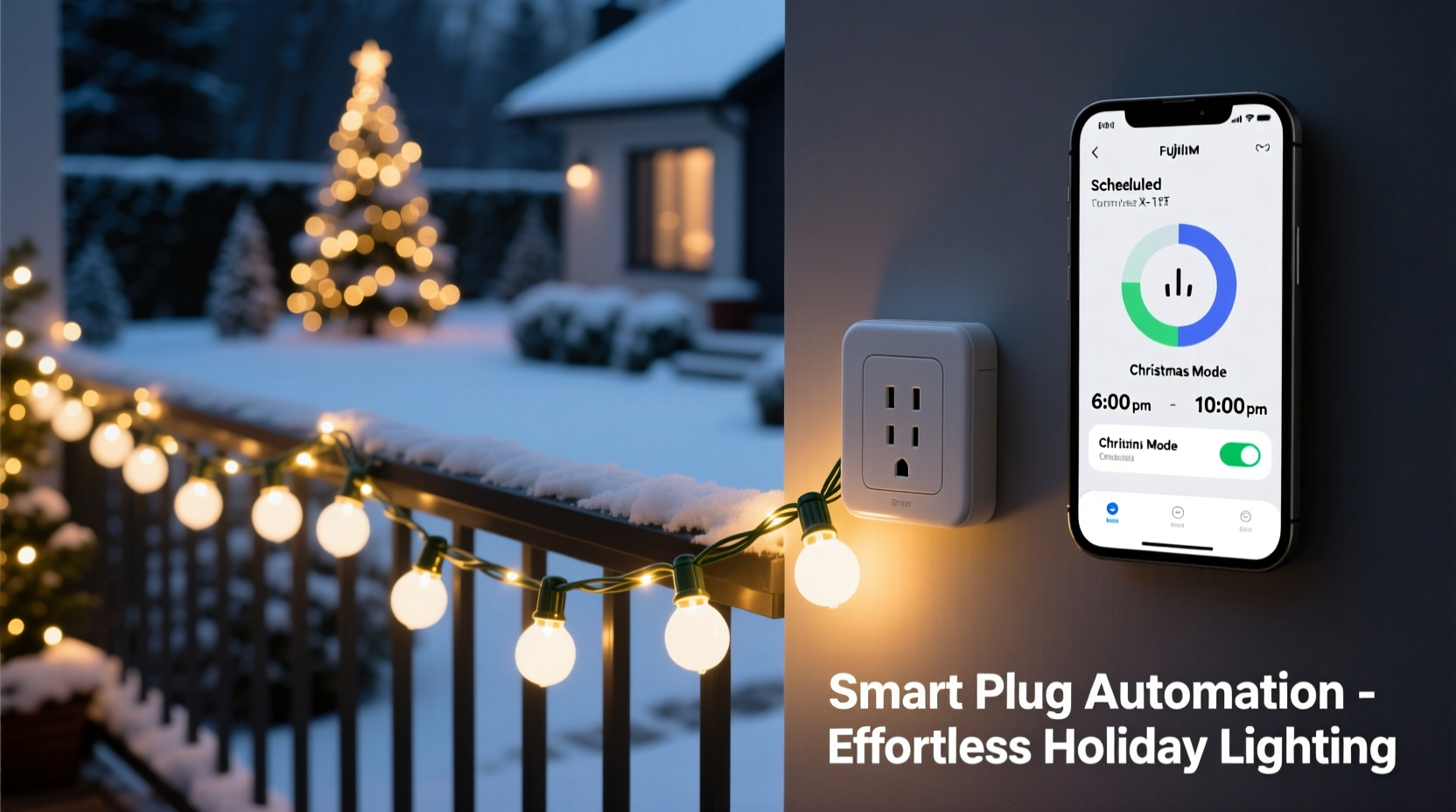
A smart plug acts as a bridge between your standard electrical outlet and any plugged-in device—like string lights, illuminated reindeer, or indoor tree lights. Once connected to your home Wi-Fi network and paired with a mobile app (such as Kasa, Smart Life, or Google Home), you gain remote control over when power is delivered to the device.
The real value emerges when automation comes into play. Instead of remembering to flip a switch each evening, you can program your smart plug to:
- Turn lights on at dusk or a specific time every day
- Shut them off at midnight or when you typically go to bed
- Activate only on certain days (e.g., weekends or during vacation)
- Respond to voice commands via Alexa or Google Assistant
This level of control eliminates guesswork and ensures your display shines during peak viewing hours while conserving energy during idle periods.
Benefits of Automating Christmas Lights with Smart Plugs
Switching from manual to automated control offers several tangible benefits, especially during the hectic holiday season.
Energy Efficiency and Cost Savings
Leaving Christmas lights on all night may create ambiance, but it also increases electricity usage. According to the U.S. Department of Energy, decorative lighting can account for up to 1% of total residential electricity consumption during December. While that may seem minor, it adds up—especially with older incandescent bulbs.
Smart plugs prevent unnecessary runtime by limiting operation to desired windows—say, 5 PM to 11 PM. Some models even track energy usage, letting you see exactly how much power your lights consume over time. This data helps identify inefficient setups and informs future upgrades to LED or solar-powered alternatives.
Enhanced Safety
Electrical fires related to holiday lighting are rare but serious. The National Fire Protection Association (NFPA) reports an average of 70 home fires per year caused by decorative lights. Overheating, frayed wires, and extended use contribute to these incidents.
Automated shutoffs reduce risk by ensuring lights aren’t left unattended for long durations. If you forget to turn them off before leaving town or going to sleep, the smart plug enforces discipline. Many modern smart plugs also feature surge protection and thermal cutoff mechanisms, adding another layer of security.
Remote Management and Flexibility
Imagine being able to test your display from work, adjust timing while traveling, or surprise guests by turning lights on remotely. With a smartphone and internet connection, you can toggle, schedule, or troubleshoot your entire lighting system from anywhere.
This flexibility is invaluable for people who travel during the holidays or host last-minute gatherings. No need to rush home in winter weather just to activate the lights.
“Smart home technology isn’t about luxury—it’s about peace of mind. Knowing your lights follow a safe, efficient schedule lets families focus on what really matters: celebrating together.” — David Lin, Smart Home Integration Consultant
Setting Up Your Automated Christmas Lighting System
Getting started with smart plugs doesn’t require technical expertise. Follow this step-by-step guide to build a reliable, automated lighting setup in under an hour.
- Purchase compatible equipment: Choose UL-listed smart plugs rated for indoor or outdoor use depending on placement. Look for models with app support, scheduling, and voice assistant compatibility.
- Install safely: Plug the smart plug into a grounded outlet. Avoid daisy-chaining multiple high-wattage devices unless the plug specifies multi-load support.
- Connect to Wi-Fi: Download the manufacturer’s app and follow pairing instructions. Ensure your router provides strong signal strength near the plug location.
- Plug in your lights: Attach your Christmas light strand to the smart plug. Test functionality using the app’s manual on/off button.
- Create schedules: Set daily routines based on local sunset times or preferred viewing hours. For example: “Turn on at 5:00 PM, turn off at 11:00 PM.”
- Add exceptions if needed: Disable lights on Christmas Day after morning festivities or skip activation during power-saving days.
- Test and refine: Run a dry cycle for two evenings to confirm reliability and brightness impact.
Comparison: Manual vs. Smart Plug Control
| Feature | Manual Control | Smart Plug Automation |
|---|---|---|
| On/Off Convenience | Requires physical access or timers | Remote or scheduled control via app |
| Energy Usage | Often left on longer than needed | Optimized runtime reduces waste |
| Safety | Depends on user memory | Automatic shutoff minimizes fire risk |
| Flexibility | Low—changes require manual adjustment | High—adjust anytime, anywhere |
| Setup Time | Minutes | 30–60 minutes (initial configuration) |
| Long-Term Value | Limited to seasonal use | Reusable year-round for other devices |
While manual switches and mechanical timers have served well in the past, smart plugs outperform them in precision, adaptability, and integration potential. Plus, once installed, the same plug can manage coffee makers, fans, or lamps in the new year.
Real-World Example: A Suburban Family’s Holiday Upgrade
The Thompson family in Portland, Oregon, has always gone all-out for Christmas. Their home features over 2,000 lights across the roofline, trees, and driveway. In previous years, someone had to remember to turn the display on around 5 PM and off by midnight—a task that often fell through during busy weeks.
Last November, they invested in four outdoor smart plugs ($15–$25 each). They grouped lights by zone (front yard, roof, porch, tree) and assigned each to its own plug. Using the Kasa app, they created a unified schedule synced to local sunset times, which change gradually throughout December.
They also enabled geofencing so lights would turn on automatically when the first family member arrived home after dark. During a week-long ski trip, they monitored the system remotely and turned everything off midweek to save energy—then reactivated it the night before returning.
“We didn’t spend a single evening worrying about whether we’d forgotten to turn the lights on,” said Sarah Thompson. “And our electric bill barely budged compared to last year.”
Best Practices and Common Pitfalls
To get the most from your smart plug setup, keep these do’s and don’ts in mind.
| Do’s | Don’ts |
|---|---|
| Use weatherproof enclosures for outdoor plugs | Expose indoor-rated plugs to rain or snow |
| Check maximum load ratings before plugging in | Overload a single plug with too many strands |
| Update firmware regularly for security and performance | Ignore app notifications or update prompts |
| Group devices by room or theme in the app | Mix unrelated devices under vague names like “Plug 1” |
| Use naming and color-coding for easy identification | Assume all smart plugs work with all voice assistants |
One common mistake is assuming all smart plugs are created equal. Cheaper models may lack scheduling features, fail under heavy loads, or disconnect from Wi-Fi during storms. Investing in reputable brands—even if slightly more expensive—pays off in reliability and customer support.
FAQ: Common Questions About Smart Plugs and Christmas Lights
Can I use one smart plug for multiple light strands?
Yes, as long as the total wattage does not exceed the smart plug’s maximum load (typically 1,800 watts for 15A outlets). Most LED Christmas lights draw very little power (under 10 watts per 100 bulbs), so bundling several strands is usually safe. Always check manufacturer specifications and avoid overloading extension cords.
What happens if my Wi-Fi goes down?
If your internet connection fails, scheduled automations may stop working until service resumes. However, most smart plugs maintain local control—if the plug was already on, it stays on until manually switched or powered down. Some advanced models support local execution (via Matter or Thread), allowing schedules to run without cloud access.
Are smart plugs safe for outdoor Christmas lights?
Only if they are specifically rated for outdoor use. Outdoor smart plugs are sealed against moisture and built with durable materials. Never use an indoor-only model outside, even under cover. Pair with a GFCI-protected outlet for added safety.
Maximizing Year-Round Value
While Christmas is the ideal time to set up smart plugs, their usefulness extends far beyond December. After the holidays, repurpose them to automate:
- Indoor lamps for security while traveling
- Coffee makers for weekday mornings
- Fans or space heaters with timed operation
- Chargers to prevent overcharging
- Humidifiers or air purifiers on nightly schedules
The initial investment—usually $15–$30 per plug—quickly pays for itself through reduced energy bills and improved convenience. Unlike dedicated smart lighting systems, smart plugs work with your existing décor, requiring no rewiring or replacement of beloved light sets.
Final Checklist: Setting Up Your Smart Plug Lighting System
- ✅ Choose UL-certified smart plugs suitable for indoor/outdoor use
- ✅ Verify total wattage of connected lights is within plug limits
- ✅ Install plugs in accessible, protected locations away from standing water
- ✅ Connect to a stable Wi-Fi network and complete app setup
- ✅ Name and organize devices in the app for easy control
- ✅ Program daily on/off schedules aligned with sunset/sunrise
- ✅ Test automation for three consecutive nights
- ✅ Enable voice control or geofencing if desired
- ✅ Monitor energy usage and adjust schedules as needed
- ✅ Store packaging and manuals for post-holiday reuse
Conclusion
Automating your Christmas lighting with smart plugs is more than a tech upgrade—it’s a practical solution that enhances safety, saves energy, and simplifies holiday prep. Whether you're managing a modest window display or a full-yard spectacle, the ability to schedule, monitor, and control lights remotely brings peace of mind during a busy season.
The setup process is straightforward, the cost is low, and the benefits last well beyond New Year’s Eve. As smart home ecosystems grow, starting with something as simple as a smart plug lays the foundation for greater automation and efficiency in the future.




 浙公网安备
33010002000092号
浙公网安备
33010002000092号 浙B2-20120091-4
Comments
No comments yet. Why don't you start the discussion?