
Using body lotion on your face might seem like a harmless shortcut when your facial moisturizer runs out. After all, both products aim to hydrate the skin. But appearances can be deceiving. The skin on your face is fundamentally different from the skin on your body—thinner, more sensitive, and exposed to environmental stressors daily. Applying the wrong product can lead to breakouts, irritation, or long-term damage. Understanding when it’s risky—and when it might be acceptable—is essential for maintaining healthy, balanced skin.
Why Facial and Body Skin Are Not the Same
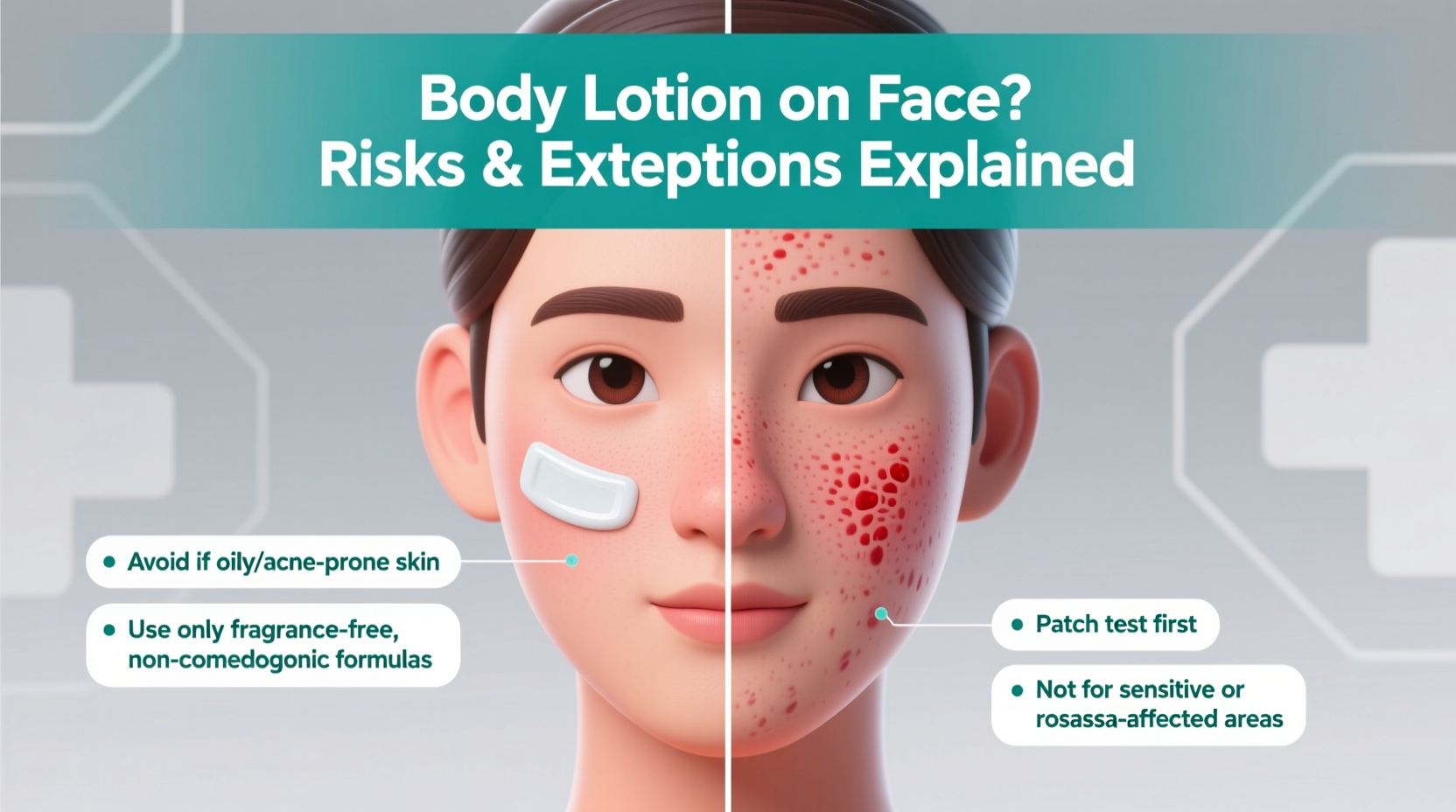
The skin on your face is about 0.12 mm thick, compared to roughly 0.5 mm on areas like the back or arms. This structural difference makes facial skin more permeable and reactive. It also contains a higher concentration of sebaceous (oil) glands, particularly in the T-zone (forehead, nose, and chin), which increases susceptibility to clogged pores and acne.
Additionally, facial skin is constantly exposed to UV radiation, pollution, temperature changes, and cosmetic products. These factors demand specialized care. Body skin, by contrast, is tougher, less sensitive, and generally doesn’t require the same level of refinement in formulation.
“Facial skin is biologically distinct—it's more delicate and metabolically active than body skin. Using body products on the face ignores these critical differences.” — Dr. Lena Patel, Board-Certified Dermatologist
Risks of Using Body Lotion on Your Face
Body lotions are designed for durability and deep hydration, often using heavier oils, occlusives, and fragrances. While effective on limbs and torso, these ingredients can cause several issues when applied to the face:
- Clogged pores (comedogenicity): Many body lotions contain oils like coconut oil or shea butter in high concentrations, which can block pores and trigger acne, especially in those with oily or acne-prone skin.
- Irritation and sensitivity: Fragrances and preservatives common in body formulas (e.g., parabens, methylisothiazolinone) are frequent culprits behind redness, itching, and contact dermatitis on facial skin.
- Disruption of skin barrier: Overly rich formulations may overwhelm the face’s natural moisture balance, leading to excess oil production or dehydration as the skin tries to compensate.
- Increased sun sensitivity: Some body lotions include ingredients that increase photosensitivity. Without adequate SPF protection, this raises the risk of hyperpigmentation or sun damage.
When It Might Be Acceptable—Exceptions and Alternatives
While general guidelines discourage using body lotion on the face, there are limited exceptions—especially for individuals with dry, mature, or non-acne-prone skin. In certain situations, short-term or cautious use may be tolerable:
- Emergency hydration: If you’re traveling and run out of facial moisturizer, a small amount of fragrance-free, hypoallergenic body lotion can serve as a temporary fix—provided it doesn’t contain known irritants.
- Nighttime use on dry skin: Mature or very dry skin types may tolerate richer textures at night. A pea-sized amount of a simple, oil-based body cream (like plain petroleum jelly or ceramide-rich formulas) can provide occlusion without immediate risk—especially if applied over a lightweight serum.
- Body lotions marketed for multiple uses: Some brands formulate multi-purpose moisturizers specifically designed for both face and body. These are typically free of fragrance, dyes, and heavy comedogenic ingredients.
Still, even in these cases, long-term use is not recommended. The face needs targeted nutrition—ingredients like hyaluronic acid, niacinamide, and peptides—that most body lotions lack.
Key Differences Between Face and Body Moisturizers
| Feature | Facial Moisturizer | Body Lotion |
|---|---|---|
| Texture | Lightweight, fast-absorbing (gels, serums, lotions) | Thicker, greasier (creams, balms) |
| Active Ingredients | Hyaluronic acid, ceramides, antioxidants, SPF | Heavy emollients (shea butter, mineral oil), basic humectants |
| Fragrance | Often fragrance-free or lightly scented | Frequently heavily perfumed |
| Comedogenic Rating | Low (non-comedogenic) | Variable (often high due to oils) |
| pH Level | Matched to facial skin (~4.5–5.5) | Less precise, may disrupt acid mantle |
| SPF Inclusion | Common in daytime formulas | Rare unless labeled as “body sunscreen” |
This comparison underscores why substitution isn’t just inconvenient—it can compromise skin health. Facial moisturizers are engineered for precision; body lotions prioritize coverage and economy.
Mini Case Study: Sarah’s Breakout Crisis
Sarah, a 28-year-old office worker, ran out of her usual facial moisturizer during a busy week. She reached for her go-to body cream—a popular brand enriched with shea butter and lavender scent—figuring it would do the job overnight. Within three days, she developed clusters of small, painful bumps along her jawline and cheeks.
After visiting a dermatologist, she learned the body lotion had clogged her pores and triggered folliculitis—an inflammation of hair follicles caused by trapped bacteria and oils. Switching back to a non-comedogenic facial moisturizer and using a gentle salicylic acid cleanser helped clear the condition in two weeks. Her takeaway? “Just because it feels soft on my arms doesn’t mean it belongs on my face.”
How to Choose the Right Moisturizer for Your Face
Selecting the appropriate facial moisturizer involves understanding your skin type and concerns. Here’s a step-by-step guide to help you make an informed decision:
- Identify your skin type: Is it oily, dry, combination, sensitive, or normal? Oily skin benefits from gel-based, oil-free formulas. Dry skin may need creams with ceramides or squalane.
- Look for key ingredients: Hyaluronic acid draws moisture into the skin; niacinamide reduces redness and regulates oil; glycerin acts as a humectant. Avoid alcohol denat, synthetic fragrances, and sulfates if prone to irritation.
- Check for SPF in daytime products: A broad-spectrum SPF 30+ should be part of your morning routine—even in moisturizers—to prevent photoaging and pigmentation.
- Read labels carefully: Terms like “non-comedogenic,” “hypoallergenic,” and “dermatologist-tested” offer some assurance, though they aren’t regulated. Review full ingredient lists whenever possible.
- Patch test new products: Apply a small amount to your jawline or behind the ear for 48 hours to monitor for adverse reactions before full-face application.
Checklist: Can You Safely Use This Body Lotion on Your Face?
Before applying any body product to your face, ask yourself these questions:
- ❌ Does it contain fragrance or artificial dyes? → High risk of irritation.
- ❌ Is coconut oil or cocoa butter near the top of the ingredient list? → Likely comedogenic.
- ✅ Is it labeled “fragrance-free” and “non-comedogenic”? → Safer, but still not ideal.
- ✅ Does it contain beneficial ingredients like ceramides or glycerin? → May support barrier function.
- ✅ Have I done a patch test and observed no reaction after 48 hours? → Proceed with caution.
If you answered “no” to the first two and “yes” to the last three, limited use might be acceptable—but only temporarily.
FAQ
Can I use baby lotion on my face instead of body lotion?
Baby lotions are generally milder and less fragranced than adult body lotions, making them a better option in a pinch. However, many still contain potential allergens like lanolin or essential oils. While safer than standard body lotions, they are not formulated for adult facial skin and shouldn’t replace dedicated facial moisturizers long-term.
What happens if I accidentally use body lotion on my face once?
A single application is unlikely to cause lasting harm for most people. However, those with sensitive or acne-prone skin may experience mild breakouts or redness. Rinse it off gently with a mild cleanser and return to your regular routine. Monitor for reactions over the next 48 hours.
Are there any body lotions that double as facial moisturizers?
Yes—some minimalist, fragrance-free formulas are designed for full-body use, including the face. Examples include CeraVe Moisturizing Cream, Vanicream Daily Facial Moisturizer, and Eucerin Advanced Repair Lotion. Always verify the label indicates facial safety before use.
Conclusion: Make Informed Choices for Healthier Skin
Your face deserves more than a convenience-based skincare decision. While body lotion might seem like an easy substitute, its formulation often clashes with the unique needs of facial skin. From triggering acne to weakening the protective barrier, the risks outweigh the temporary comfort of hydration.
That said, knowledge empowers choice. In rare, controlled circumstances—such as emergency use or with specially formulated multi-use products—you may safely bridge the gap. But for consistent, long-term skin health, investing in a proper facial moisturizer tailored to your skin type is non-negotiable.




 浙公网安备
33010002000092号
浙公网安备
33010002000092号 浙B2-20120091-4
Comments
No comments yet. Why don't you start the discussion?