
As the holiday season approaches, many homeowners look for quick, damage-free ways to decorate their homes with festive lights. Command hooks are often marketed as a versatile, no-nail solution for hanging everything from coats to wreaths. But when it comes to supporting heavy Christmas light displays—especially outdoor strings that can stretch dozens of feet—their reliability becomes a serious concern. While convenient, using command hooks beyond their intended load capacity risks property damage, safety hazards, and ruined decorations. This article dives into the real capabilities of command hooks, how much weight they can actually bear, and what alternatives exist for securely hanging large-scale light installations.
Understanding Command Hook Ratings and Limitations
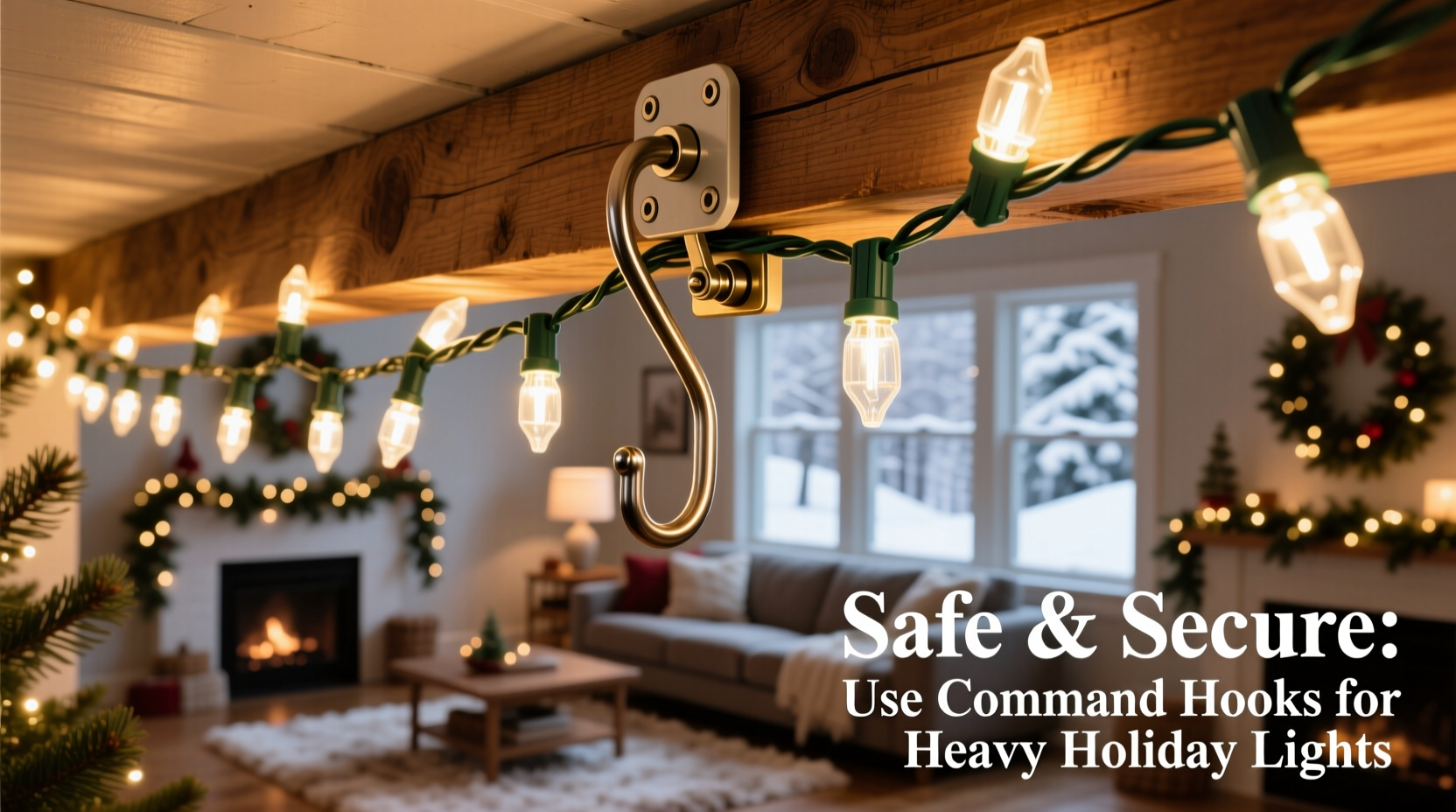
Command hooks come in various sizes and strengths, each designed for specific applications. The manufacturer typically rates them based on vertical pull (shear) strength and direct downward (tensile) strength. Most standard medium-sized command hooks support between 1 and 4 pounds per hook when applied correctly on ideal surfaces like clean, smooth painted drywall or tile.
However, several factors reduce this already modest capacity in real-world conditions:
- Surface type: Textured walls, stucco, or older paint may prevent proper adhesion.
- Temperature: Cold weather weakens adhesive performance; extreme heat can cause premature failure.
- Duration: Long-term exposure to sun, wind, or moisture degrades the bond over time.
- Weight distribution: Lights create dynamic loads—swaying in the wind adds stress not accounted for in static lab tests.
“Adhesive hooks are excellent for lightweight, temporary decor, but they’re not engineered for sustained structural support under variable environmental stress.” — David Langley, Building Safety Consultant and Home Renovation Specialist
A single string of mini LED lights might weigh only a few ounces, but larger C7 or C9 bulbs, especially when combined across multiple strands and extension cords, can easily exceed 10–15 pounds. When strung along eaves, gutters, or railings, the cumulative strain multiplies at each attachment point. Relying solely on command hooks in these scenarios pushes them far beyond safe operating limits.
When Command Hooks Might Work—And When They Won’t
There are limited situations where command hooks can be used safely for Christmas lights, but only if strict conditions are met.
Suitable Uses
- Hanging lightweight LED net lights over a small window or balcony railing.
- Indoor displays on smooth surfaces like glass, mirrors, or lacquered wood.
- Short runs (under 10 feet) of mini lights with minimal accessories.
Unsafe Applications
- Attaching lights to exterior siding, brick, or stucco without compatible backing.
- Supporting icicle lights longer than 6 feet per section.
- Using multiple strands daisy-chained together without additional support.
- Mounting near roof edges where snow accumulation increases load.
The danger isn’t just about immediate failure. A hook may hold for days or even weeks before slowly peeling away, causing lights to sag, tangle, or fall unexpectedly. This creates tripping hazards, electrical risks, and potential water ingress if wires are left exposed.
Step-by-Step: Assessing Your Light Display Needs
Before choosing any mounting method, evaluate your setup systematically. Follow this process to determine whether command hooks are viable—or if stronger solutions are required.
- Calculate total weight: Weigh one strand of your chosen lights, then multiply by the number of strands. Include extension cords and connectors.
- Map attachment points: Mark where you plan to place supports along eaves, windows, or railings.
- Determine spacing: Heavy-duty lighting should be supported every 12–18 inches; lighter strings every 24 inches.
- Inspect surface condition: Clean and dry all mounting areas. Test adhesion with a single hook first.
- Assess environmental exposure: Consider wind load, rain, snow, and temperature swings in your region.
- Decide on backup supports: Even if using command hooks, reinforce high-stress zones with clips or fasteners.
If your total display exceeds 5 pounds or involves outdoor mounting on non-ideal surfaces, command hooks alone are insufficient. Safer alternatives must be considered.
Better Alternatives for Heavy Christmas Light Displays
For large, permanent, or semi-permanent light installations, more robust systems offer greater reliability and peace of mind.
Gutter Clips and Roof Clips
These plastic or metal clips snap into gutters or slide under shingles without damaging roofing materials. Designed specifically for holiday lights, they distribute weight evenly and resist wind uplift. Most models cost less than $1 per clip and can be reused year after year.
Light Clips with Nails or Screws
Small plastic clips that attach with short brad nails or screws provide superior holding power. Use corrosion-resistant fasteners for outdoor use. Though they leave minor holes, repairs are simple with caulk or spackle after removal.
Cable Management Systems
For complex displays involving multiple circuits or animated sequences, consider installing low-profile raceways or cable channels. These protect wiring and allow easy access for maintenance while keeping everything neatly aligned.
Magnetic Hangers (for Metal Surfaces)
On steel soffits, downspouts, or garage doors, strong neodymium magnets can hold moderate weights without adhesives. Ensure magnets are coated to prevent scratching and rust.
| Mounting Method | Max Load Capacity | Best For | Removal Impact |
|---|---|---|---|
| Standard Command Hook | 1–4 lbs | Indoor, lightweight decor | Low (if surface is ideal) |
| Heavy-Duty Command Strip | Up to 8 lbs | Smooth walls, medium loads | Low–Moderate |
| Gutter Clip | 5–10 lbs per clip | Eaves, gutters, outdoor use | None |
| Nail/Screw Clip | 10+ lbs | Heavy displays, long-term setups | Minimal (small hole) |
| Magnetic Hanger | 3–7 lbs | Metal surfaces only | None |
Real Example: A Near-Failure on Elm Street
In suburban Denver, a homeowner installed an elaborate 300-bulb C9 display along their two-story home using only large command strips. The setup looked flawless the first week. By mid-December, unseasonably warm days followed by freezing nights caused repeated expansion and contraction of the adhesive. One evening during a windstorm, three sections detached simultaneously. Strands fell onto the front walkway and partially draped over a parked car, creating a tripping hazard and risking electrical contact with wet pavement.
Thankfully, no injuries occurred, but the homeowner spent hours rewiring and reinstalling with proper gutter clips. An electrician later confirmed that had the lights landed in a puddle, there could have been a shock risk due to compromised insulation from dragging on concrete.
This case highlights how environmental variables—even subtle ones—can undermine even well-intentioned installations. It also underscores the importance of redundancy and appropriate hardware selection.
Checklist: Safe Installation of Outdoor Christmas Lights
- ✅ Weigh your full light setup before purchasing mounts.
- ✅ Choose mounting hardware rated for at least 1.5x the expected load.
- ✅ Clean and dry all surfaces before applying adhesives.
- ✅ Install supports every 12–18 inches for heavy strings.
- ✅ Avoid daisy-chaining more than three light strands unless rated for it.
- ✅ Use UL-listed extension cords designed for outdoor use.
- ✅ Inspect connections weekly during the season.
- ✅ Remove lights promptly after the holidays to minimize weather exposure.
Frequently Asked Questions
Can I double up command hooks to increase weight capacity?
Doubling hooks does add some strength, but not linearly. Two hooks don’t necessarily support twice the weight due to uneven load distribution and shared stress on adjacent adhesive areas. Additionally, placing hooks too close together can compromise wall integrity. If extra support is needed, switch to a higher-rated system instead.
Are there waterproof command hooks for outdoor use?
Some command products are labeled for bathroom or outdoor use, featuring improved adhesives resistant to humidity. However, “weather-resistant” doesn’t mean “load-bearing in storms.” These perform better than standard versions but still fail under sustained wind or ice loading. Use them only for lightweight applications and always recheck bonds weekly.
What’s the safest way to hang lights on vinyl siding?
Vinyl siding has hidden grooves perfect for specialized clips that slide underneath panels without nails. These are widely available at hardware stores and provide secure, invisible support. Never rely on adhesive-only solutions on textured or flexible surfaces like vinyl, as they lack the rigidity needed for consistent bonding.
Conclusion: Prioritize Safety Over Convenience
While command hooks offer a tempting shortcut for holiday decorating, they are not a one-size-fits-all solution—especially when dealing with heavy Christmas light displays. Their convenience must be weighed against real risks of failure, damage, and danger. For small, indoor, or temporary arrangements, they work well. But for anything substantial, exposed to the elements, or spanning large distances, investing in proper mounting hardware pays off in safety, durability, and visual appeal.
The holidays should be joyful, not stressful. Take the time to assess your needs, choose the right tools, and install your lights with care. A few extra minutes planning now can prevent accidents later and ensure your display shines brightly all season long—without coming down prematurely.




 浙公网安备
33010002000092号
浙公网安备
33010002000092号 浙B2-20120091-4
Comments
No comments yet. Why don't you start the discussion?