
In an era where fast fashion floods our feeds and curated Instagram wardrobes showcase endless variety, a quiet counter-movement has taken root: the capsule wardrobe. Advocates swear by its simplicity—fewer clothes, less decision fatigue, more intentional living. On the other side of the spectrum lies maximalism, a celebration of color, texture, and personal expression through abundant clothing choices. But beyond aesthetics and ideology, a practical question emerges: Is owning fewer clothes truly sustainable in everyday life? For professionals juggling work events, parents managing school runs and social outings, or creatives expressing identity through style, the ideal wardrobe isn’t just about philosophy—it’s about function.
This article examines the practicality of the capsule wardrobe in contrast to maximalist dressing. It evaluates real-world challenges, lifestyle compatibility, financial implications, and psychological impacts to help you determine which approach—or hybrid—best serves your life.
The Rise of the Capsule Wardrobe: Simplicity as Strategy
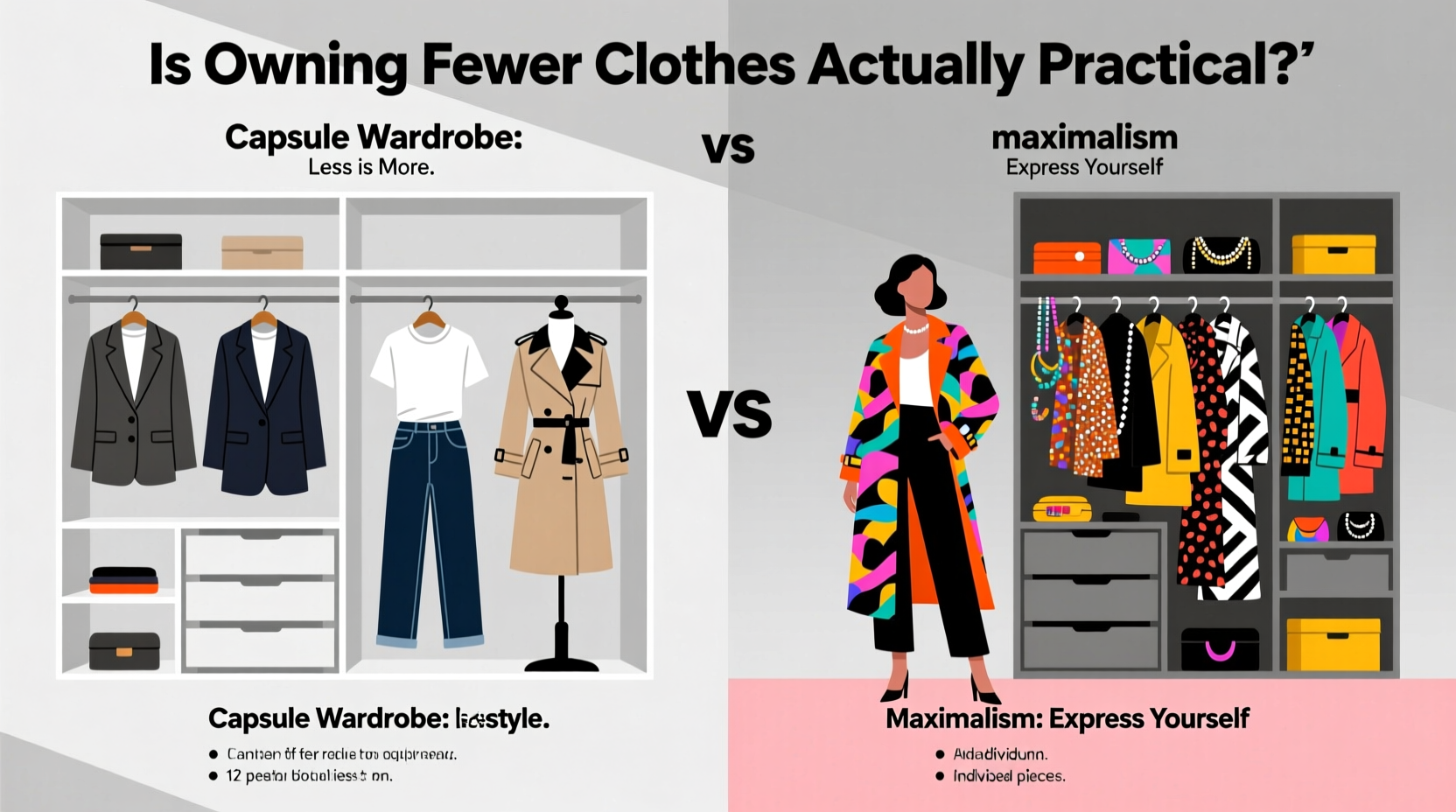
The concept of a capsule wardrobe was popularized in the 1970s by London boutique owner Susie Faux and later adopted by designer Donna Karan. It typically consists of 30–40 versatile, high-quality pieces that can be mixed and matched across seasons. The modern interpretation often includes neutral tones, timeless silhouettes, and a focus on sustainability.
Proponents argue that reducing wardrobe size leads to clearer self-expression, reduced shopping impulses, and greater ease in daily routines. Minimalism in fashion aligns with broader cultural shifts toward mindful consumption and environmental responsibility. Yet, while the theory is compelling, execution varies widely based on individual needs.
Maximalism: Fashion as Freedom and Identity
If the capsule wardrobe is a carefully edited novel, maximalism is a vibrant anthology—layered, bold, and unapologetically expressive. Maximalists embrace pattern mixing, seasonal trends, statement accessories, and emotional dressing. This approach thrives on spontaneity and individuality, often rejecting the idea that fashion should be restrained to be meaningful.
For many, clothing is not just utility but art and communication. A sequined jacket might boost confidence before a presentation; a vintage floral dress could honor family heritage. Maximalism resists one-size-fits-all solutions, arguing that personal joy and cultural expression matter as much as sustainability or efficiency.
Critics claim maximalism encourages overconsumption. However, many maximalists are deeply conscious curators—buying secondhand, repairing garments, and cherishing pieces for years. The distinction lies not in quantity alone, but in intentionality.
“Fashion is not just about covering the body—it’s about revealing the self. Reducing that to a formula risks flattening human complexity.” — Dr. Lila Chen, Cultural Anthropologist, Fashion & Identity Research Group
Practical Challenges of Owning Fewer Clothes
The appeal of a capsule wardrobe is strongest when viewed from a distance: fewer laundry loads, no clutter, effortless coordination. But daily life introduces variables that challenge this ideal.
- Weather Extremes: In regions with unpredictable or extreme climates, a limited wardrobe may lack appropriate layers or seasonal adaptability.
- Life Transitions: Job interviews, weddings, funerals, or travel require attire outside standard rotation. A capsule may need frequent adjustments.
- Social Expectations: Certain professions or communities value sartorial variety. Repeating outfits can be misinterpreted as lack of effort or status.
- Body Changes: Weight fluctuations, pregnancy, or medical conditions can render core pieces unusable, disrupting the system.
Additionally, the assumption that fewer clothes equal less stress overlooks the pressure some feel to “optimize” every outfit. For those already facing decision fatigue, the mental load of ensuring each piece is “perfectly justified” can become its own burden.
Comparative Analysis: Capsule vs Maximalist Wardrobe
| Aspect | Capsule Wardrobe | Maximalism |
|---|---|---|
| Time Efficiency | High – fewer choices streamline mornings | Variable – depends on organization habits |
| Cost Over Time | Moderate to high upfront, lower long-term spending | Can be high if impulse-driven; low if curated |
| Sustainability | Generally higher due to reduced consumption | Depends on sourcing (e.g., thrifted vs. fast fashion) |
| Emotional Satisfaction | Peace through order and clarity | Joy through creativity and variety |
| Lifestyle Flexibility | Lower – requires planning for deviations | Higher – adaptable to spontaneous needs |
| Maintenance | Easier to manage and rotate | Demanding without strong organizational systems |
This comparison reveals that neither approach is universally superior. Practicality depends on context: personality, profession, climate, budget, and access to care resources like laundry or tailoring.
A Realistic Middle Ground: The Hybrid Wardrobe
What if the answer isn’t choosing between extremes, but integrating strengths from both?
Consider the hybrid model: a foundational capsule of 25–35 core pieces (workwear, basics, go-to favorites) supplemented by a rotating collection of expressive, seasonal, or occasion-specific items. This structure offers stability without rigidity.
For example, Maria, a marketing director in Chicago, maintains a neutral-toned capsule for her office days—tailored trousers, silk blouses, structured blazers. Around it, she rotates bold scarves, colorful shoes, and statement coats sourced from local vintage shops. Her core stays consistent; her expression evolves. She spends less than she did during her fast-fashion phase, yet feels more stylish and confident.
This approach acknowledges that humans are both creatures of habit and seekers of novelty. It allows for routine efficiency while preserving room for joy, surprise, and growth.
Building Your Hybrid Wardrobe: A Step-by-Step Guide
- Assess Your Lifestyle Needs: Track what you wear for two weeks. Note frequency, occasions, and comfort levels.
- Define Your Core: Select 20–30 pieces worn most often and that mix well. Prioritize fit, fabric quality, and versatility.
- Identify Gaps: List missing elements (e.g., raincoat, evening dress) and plan to fill them thoughtfully.
- Create a Rotation System: Designate a portion of your closet (20–30%) for changeable pieces. Refresh seasonally or quarterly.
- Set Spending Boundaries: Allocate a percentage of your clothing budget to core pieces (70%) and expressive items (30%).
- Review Quarterly: Remove underused items, repair favorites, and reassess alignment with current life phases.
Expert Insight: What Sustainability Experts Say
Dr. Naomi Reed, a textile sustainability researcher at the Institute for Ethical Fashion, emphasizes that impact isn’t measured solely by garment count.
“The most sustainable item is the one already in your closet—worn, loved, and cared for. Whether you own 50 pieces or 200, longevity matters more than minimalism.” — Dr. Naomi Reed, Textile Sustainability Researcher
Her research shows that extending a garment’s life by just nine months reduces its carbon, water, and waste footprint by 20–30%. This reframes the debate: the goal isn’t fewer clothes per se, but better relationships with what we own.
Checklist: Is a Capsule Wardrobe Right for You?
Answer these questions honestly to assess fit:
- Do I wear the same 30% of my wardrobe 70% of the time?
- Do I feel overwhelmed by choice each morning?
- Is my closet disorganized or underutilized?
- Do I frequently buy duplicates of basics?
- Am I drawn to classic styles over trends?
- Do I have predictable daily routines (e.g., office job, school drop-off)?
- Am I willing to invest in higher-quality fabrics and tailoring?
If most answers are yes, a capsule or hybrid approach may enhance your daily experience. If not, maximalism—with structure—might serve you better.
Frequently Asked Questions
Can a capsule wardrobe work with kids or a messy lifestyle?
Yes, but with modifications. Opt for durable fabrics (cotton blends, denim, performance wool), include easy-care items, and allow for “utility zones” in your closet (e.g., rain boots, stain-resistant layers). Parents often find success with role-based capsules—separate sets for work, home, and play.
Isn’t maximalism wasteful by nature?
Not necessarily. Waste stems from disposal, not ownership. A maximalist who repairs, upcycles, swaps, or buys secondhand can have a smaller footprint than a capsule wearer who frequently replaces “timeless” pieces due to poor quality.
How do I avoid boredom with fewer clothes?
Focus on styling versatility. Learn basic draping, accessorizing, and layering techniques. A single dress can become five outfits with belts, jackets, jewelry, and footwear changes. Rotate accessories monthly to refresh your look without new purchases.
Conclusion: Practicality Lies in Alignment, Not Numbers
The debate between capsule wardrobes and maximalism often frames fashion as a moral choice—minimalism as virtuous, abundance as indulgent. But practicality isn’t dictated by garment count alone. It’s determined by how well your wardrobe supports your life: your time, energy, values, and sense of self.
For some, owning fewer clothes brings clarity, saves money, and reduces environmental harm. For others, a full closet is a toolkit for confidence, creativity, and cultural connection. The most practical wardrobe is not the smallest, nor the largest, but the one that works consistently—without guilt, friction, or constant revision.
Instead of chasing ideals, start where you are. Audit your current habits. Identify pain points. Experiment with structure. Blend strategies. Fashion should serve you, not the other way around.




 浙公网安备
33010002000092号
浙公网安备
33010002000092号 浙B2-20120091-4
Comments
No comments yet. Why don't you start the discussion?