
One of the most predictable—and yet frequently mishandled—interview questions is: “What are your greatest strengths and weaknesses?” While it seems straightforward, this question separates candidates who prepare thoughtfully from those who rely on clichés or vague responses. Done well, your answer builds credibility, demonstrates self-awareness, and aligns you directly with the role. Done poorly, it raises red flags about authenticity or lack of insight.
The key isn’t just listing traits but framing them strategically. Strengths should reflect job-relevant skills backed by evidence. Weaknesses must show honesty without undermining your qualifications—and ideally, reveal how you’re actively improving. This guide breaks down exactly how to structure compelling, authentic answers that win interviews.
Why This Question Matters More Than You Think
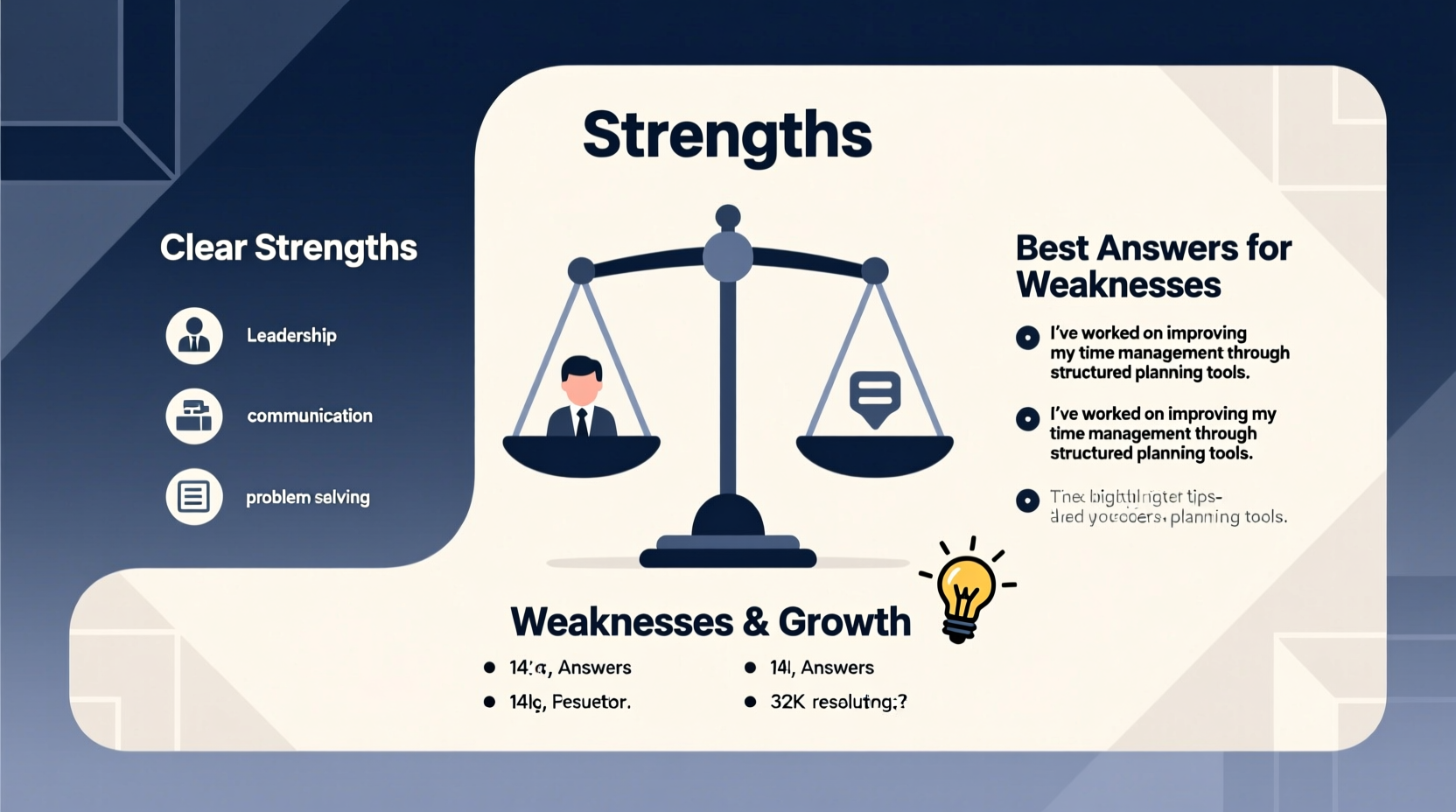
Interviewers don’t ask about strengths and weaknesses to catch you off guard. They use this question to assess three critical qualities:
- Self-awareness: Can you objectively evaluate your performance?
- Honesty: Are you willing to admit imperfection and grow?
- Cultural fit: Do your values and work style align with the team’s needs?
A strong response signals emotional intelligence and a growth mindset—traits consistently linked to long-term success in any role. As career coach Tina Schnier notes,
“Candidates who speak candidly about their development areas while showing proactive improvement stand out more than those who claim perfection.” — Tina Schnier, Executive Career Strategist
How to Structure Your Answer: The STAR-Light Method
You don’t need a full STAR (Situation, Task, Action, Result) format for this question—but borrowing elements ensures clarity and impact. Use what we call the **STAR-Light** approach:
- State the strength or weakness clearly.
- Tie it directly to the job requirements.
- Add a brief example or context.
- Reinforce how it contributes to your effectiveness.
This keeps answers concise, relevant, and grounded in reality—exactly what hiring managers want.
Best Strengths to Highlight (With Real Examples)
Choose strengths that are both genuine and strategically aligned. Avoid overused terms like “hardworking” or “team player” unless you can back them up with specificity. Instead, focus on competencies that solve real business problems.
| Strength | When to Use It | Example Response |
|---|---|---|
| Problem-Solving | Technical roles, operations, engineering | \"I thrive in identifying root causes. In my last role, I reduced system downtime by 30% by redesigning troubleshooting protocols.\" |
| Adaptability | Startups, fast-paced industries | \"When our product roadmap shifted suddenly, I reorganized team priorities within 48 hours, keeping us on track for launch.\" |
| Attention to Detail | Finance, legal, quality assurance | \"I caught a recurring billing error during an audit that saved the company $42K annually—now part of our monthly review checklist.\" |
| Communication | Client-facing, cross-functional roles | \"I bridge gaps between technical and non-technical teams. Last quarter, I translated complex data into clear visuals that helped secure stakeholder buy-in.\" |
Weaknesses That Won’t Cost You the Job
The biggest mistake candidates make is either denying they have weaknesses (“I’m a perfectionist”) or naming fatal flaws (“I struggle with deadlines”). The goal is to name a *real* area for growth—one that doesn’t disqualify you—and show active steps to improve.
Acceptable Weaknesses (With Improvement Plans)
- Delegating too slowly: \"Early in my leadership role, I held onto tasks because I wanted to ensure quality. I’ve since taken a delegation workshop and now use RACI charts to assign ownership clearly.\"
- Public speaking anxiety: \"Presenting to large groups used to unnerve me. I joined Toastmasters and now lead biweekly team updates confidently.\"
- Over-planning: \"I sometimes spend extra time preparing for meetings. I’ve adopted time-boxing techniques and now balance thoroughness with efficiency.\"
Mini Case Study: Turning a Weakness Into a Win
Sarah, a marketing manager, was interviewing for a senior role requiring frequent executive presentations. When asked about her weaknesses, she said:
“I used to avoid presenting to leadership due to nervousness. But after missing a promotion opportunity, I committed to improving. I enrolled in a communication course, practiced with mentors, and volunteered to lead QBRs. Over six months, I delivered 12+ presentations. My confidence grew—and so did my results. Feedback scores increased by 40%, and I was later asked to train others.”
The panel didn’t see a liability—they saw resilience, initiative, and measurable growth. Sarah got the offer.
Checklist: Preparing Your Strengths & Weaknesses Answers
Before your next interview, run through this checklist to ensure your answers are polished and persuasive:
- ✅ Reviewed the job description and matched 2–3 strengths to required skills
- ✅ Selected one developmental area that’s honest but not disqualifying
- ✅ Prepared a brief example for each strength (with quantifiable result if possible)
- ✅ Described concrete steps you’re taking to improve your weakness
- ✅ Practiced aloud to sound natural, not rehearsed
- ✅ Avoided clichés like “I work too hard” or “I care too much”
Frequently Asked Questions
How many strengths and weaknesses should I share?
Most interviewers expect 2 strengths and 1 weakness. Focus on quality, not quantity. One well-developed weakness with a growth plan is far better than listing three vaguely.
Can I use the same answer for every interview?
No. Tailor your strengths to the role. Emphasize collaboration for team-based jobs, autonomy for remote roles, and innovation for creative positions. Reuse frameworks, not scripts.
What if I get asked to rate myself on a scale?
If asked, “On a scale of 1–10, how would you rate your time management?” pick 7 or 8. Then explain: “I’d say an 8—I’m highly organized, but I’m refining how I handle urgent interruptions without derailing priorities.”
Final Tips for Interview Success
Authenticity wins. Hiring managers don’t expect perfection—they want someone who knows their value and is committed to growth. When discussing strengths, be confident but humble. When addressing weaknesses, be honest but solution-focused.
Remember: This question isn’t a trap. It’s an invitation to tell your professional story with depth and intention. The best answers don’t just answer the question—they position you as the obvious choice.
“The strongest candidates don’t hide their gaps—they show how they’re closing them.” — David Lin, Talent Acquisition Lead at TechForward Inc.
Take Action Today
Don’t wait until the interview to think about your strengths and weaknesses. Reflect now. Write down your top skills and one area you’ve improved in the past year. Craft a response using the STAR-Light method. Practice it until it feels natural.




 浙公网安备
33010002000092号
浙公网安备
33010002000092号 浙B2-20120091-4
Comments
No comments yet. Why don't you start the discussion?