
Recovery is no longer a luxury—it’s a necessity. Whether you're an elite athlete, weekend warrior, or someone committed to long-term health, what you do after exertion can define your progress. Among the most talked-about tools in modern recovery are cold plunges and ice baths. While often used interchangeably, they’re not identical. Understanding the subtle differences between a cold plunge and an ice bath isn’t just semantics; it impacts how quickly and effectively your body recovers.
Both methods leverage cryotherapy—using cold exposure to reduce inflammation, soothe sore muscles, and enhance circulation. But their construction, temperature control, immersion consistency, and practicality vary significantly. These distinctions influence physiological outcomes, user experience, and long-term adherence. This article breaks down the nuances, compares performance, and reveals which method may offer faster, more sustainable recovery benefits.
The Core Differences: Equipment, Temperature, and Experience
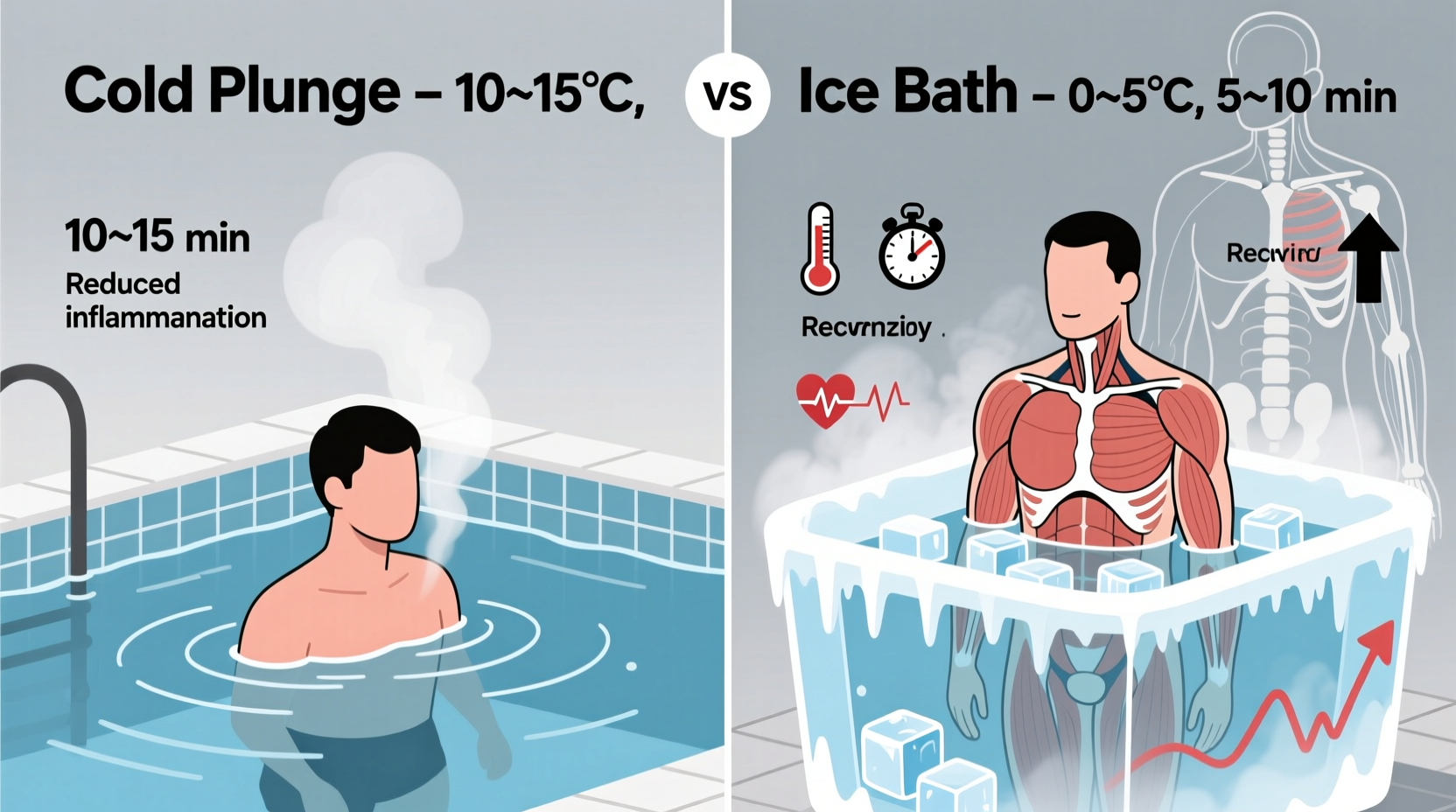
At first glance, stepping into icy water feels like stepping into icy water—end of story. But the source of that coldness, its stability, and how you interact with it shape the entire experience.
An ice bath traditionally refers to a tub—often a standard bathtub or large plastic container—filled with cold water and several bags of ice. The temperature fluctuates over time as the ice melts, starting near 50°F (10°C) and gradually warming unless replenished. Users typically sit with knees bent, limiting full submersion. It's low-tech, inexpensive, and accessible, but inconsistent.
A cold plunge, by contrast, is a dedicated unit—usually made of stainless steel, acrylic, or insulated composites—designed specifically for cold-water immersion. These units include built-in chillers that maintain a precise, user-set temperature (commonly between 39°F and 55°F / 4°C to 13°C). They allow full-body submersion up to the neck and eliminate the need for manual ice refills. Cold plunges are consistent, hygienic, and engineered for repeated use.
Temperature Control and Consistency
This is where the two methods diverge most critically. Ice baths rely on ambient cooling from melting ice. As the session progresses, the water warms, reducing therapeutic effect. A bath that starts at 50°F may rise to 58°F within 15 minutes—crossing the threshold where vasoconstriction weakens.
Cold plunges, equipped with compressors, actively maintain set temperatures throughout the session. This consistency ensures sustained peripheral vasoconstriction, a key mechanism in reducing muscle inflammation and metabolic waste buildup. For protocols requiring exact thermal dosing—such as those used in sports medicine—this precision matters.
Hygiene and Maintenance
Ice baths, especially makeshift ones, pose higher hygiene risks. Reusing water without filtration promotes bacterial growth. Even with cleaning, residual biofilm can accumulate in non-porous containers. Cold plunges, particularly high-end models, include filtration systems (similar to spas), UV sterilization, and automatic sanitation cycles, minimizing contamination risk.
From a practical standpoint, draining, scrubbing, and re-filling a tub daily is labor-intensive. Cold plunges automate much of this, making daily use feasible for serious practitioners.
Physiological Impact: What Science Says About Recovery Speed
The goal of post-exercise cold therapy is to accelerate recovery by modulating inflammation, reducing delayed onset muscle soreness (DOMS), and supporting nervous system reset. Both methods achieve this through similar pathways—but effectiveness depends on execution.
When the body is exposed to cold water, blood vessels constrict, pulling circulation toward the core. This reduces swelling in micro-tears caused by intense training. Upon exiting, vasodilation occurs—blood floods back into extremities, carrying oxygen and clearing lactate and inflammatory markers. This “pump” effect is central to perceived recovery.
“Cold water immersion is one of the most effective tools we have for acute recovery, but timing, temperature, and duration must be optimized.” — Dr. Emily Tan, Sports Physiologist, University of Colorado
Studies show that water temperatures between 45°F and 55°F (7–13°C) for 10–15 minutes yield optimal results for DOMS reduction. Temperatures below 45°F increase shock risk and may impair long-term adaptation if used chronically after strength training. Here, cold plunges excel—they allow fine-tuned control within the ideal range. Ice baths, unless monitored closely, often fall outside this window either initially (too cold) or later (too warm).
Neuromuscular Recovery and CNS Reset
Beyond muscles, cold exposure influences the central nervous system (CNS). Intense training fatigues neural pathways, slowing reaction time and coordination. Cold plunges, due to deeper immersion and consistent cold, trigger a stronger parasympathetic response—helping shift the body from “fight-or-flight” to “rest-and-recover” mode.
Full submersion in a cold plunge cools the torso and spine more effectively than a seated ice bath, enhancing vagal tone. This neurological reset can improve sleep quality and mental clarity within hours—critical for athletes with multiple daily sessions.
Comparison Table: Cold Plunge vs Ice Bath
| Feature | Cold Plunge | Ice Bath |
|---|---|---|
| Temperature Control | Precise, adjustable via chiller | Inconsistent, depends on ice melt |
| Water Quality | Filtration and sanitation systems | Manual cleaning required; higher contamination risk |
| Immersion Depth | Full-body, up to neck | Limited (typically waist or chest) |
| Setup & Maintenance | High initial cost; low daily effort | Low initial cost; high daily effort |
| Portability | Permanent or semi-permanent installation | Highly portable (e.g., kiddie pools) |
| Recovery Consistency | High—repeatable conditions | Variable—depends on preparation |
| Cost Over 2 Years | $2,500–$5,000 (unit + electricity) | $200–$400 (ice, tub, time) |
Real-World Application: A Case Study
Consider James R., a professional soccer player rehabbing from a hamstring strain. His recovery protocol includes daily cold immersion for 12 minutes at 50°F (10°C). At his club, he uses a commercial cold plunge with automated logging—temperature, heart rate variability (HRV), and session duration are tracked.
During off-season, he attempted replication at home using an inflatable tub and 10 lbs of ice. Initial temperature was 48°F, but after 8 minutes, it rose to 57°F. He reported less muscle tightness relief and poorer sleep quality during this period. When HRV data was compared, his autonomic balance improved 30% faster with the plunge versus the DIY bath.
The difference wasn’t just temperature—it was immersion depth and consistency. In the plunge, his glutes and lower back were fully submerged, areas missed in the shallow tub. This case illustrates that even small deviations from ideal conditions can slow recovery timelines.
Which Method Boosts Recovery Faster?
If speed and reliability are the goals, cold plunges hold a clear edge. Their ability to maintain optimal temperature, enable full-body immersion, and support hygiene leads to more effective, repeatable sessions. For athletes on tight recovery windows—such as those competing in tournaments or undergoing intense training blocks—this consistency translates to faster return-to-performance metrics.
However, \"faster\" doesn’t mean \"only.\" Ice baths remain highly effective when properly executed. A well-prepared ice bath with enough ice to sustain 12–15 minutes of cold exposure can deliver comparable short-term benefits. The key is discipline: measuring water temperature, using sufficient ice (typically 6–10 lbs for a standard tub), and limiting session length to avoid overexposure.
For general wellness users or those testing cold therapy, an ice bath is a smart starting point. But for anyone serious about recovery optimization—especially those using cold immersion 3+ times per week—a cold plunge becomes a worthwhile investment.
Step-by-Step Guide to Maximizing Recovery
- Choose Your Method: Decide based on frequency, budget, and space. Use an ice bath for occasional use; consider a plunge for regular practice.
- Set the Right Temperature: Aim for 45–55°F (7–13°C). Use a floating thermometer if no digital control is available.
- Time It Right: Enter within 15–30 minutes post-exercise for maximum inflammation modulation.
- Immerse Fully: Sit deep enough so water covers hips, glutes, and lower back. In a cold plunge, stand or sit to submerge up to the collarbones.
- Limit Duration: Stay in for 10–12 minutes max. Longer exposure increases shock risk without added benefit.
- Warm Up Gradually: After exiting, dry off and engage in light movement (walking, dynamic stretches) to promote circulation.
- Track Results: Monitor soreness levels, sleep quality, and performance metrics weekly to assess impact.
Common Mistakes That Slow Recovery
- Staying in too long: Exceeding 15 minutes can suppress beneficial inflammation needed for muscle adaptation.
- Using water that’s too cold: Below 40°F (4°C) increases risk of hypothermia and skin injury.
- Skipping post-immersion movement: Remaining sedentary after cold exposure limits blood flow rebound.
- Using cold therapy after strength training aimed at hypertrophy: Chronic use may blunt muscle growth by interfering with protein synthesis signals.
- Ignoring individual tolerance: Not everyone responds well to cold. Those with circulatory issues or Raynaud’s should consult a physician.
FAQ: Cold Plunge vs Ice Bath
Can I turn my bathtub into an effective ice bath?
Yes, but with limitations. Use a digital thermometer to monitor temperature, add 8–10 pounds of ice, and limit sessions to 10 minutes. Be aware that heat loss from the tub material and ambient air will cause warming. For best results, pre-chill the tub with cold water before adding ice.
Do cold plunges really recover you faster than ice baths?
In controlled conditions, yes. The combination of consistent temperature, full-body immersion, and reduced contamination allows for more reliable physiological responses. Studies tracking DOMS and HRV recovery show faster normalization with regulated cold exposure.
Is daily cold plunging safe?
For healthy individuals, daily use of 10–12 minutes at 50°F or above is generally safe. However, chronic daily use post-resistance training may interfere with long-term strength gains. Balance cold therapy with heat exposure and rest days for optimal adaptation.
Final Verdict: Precision Wins for Recovery Speed
While both cold plunges and ice baths reduce muscle soreness and support recovery, the cold plunge delivers faster, more predictable results. Its engineering eliminates variables that undermine efficacy—fluctuating temperatures, partial immersion, and hygiene concerns. For anyone serious about performance, consistency is recovery.
That said, accessibility matters. An ice bath done right is better than a cold plunge never purchased. Start where you are, prioritize correct technique, and upgrade when usage becomes routine.




 浙公网安备
33010002000092号
浙公网安备
33010002000092号 浙B2-20120091-4
Comments
No comments yet. Why don't you start the discussion?