
In an age of digital overload, a physical notebook remains one of the most reliable tools for capturing ideas, sketching concepts, or jotting down to-dos. But not everyone wants to carry a bulky A4 pad or a full-sized journal. For those who value minimalism, mobility, and efficiency, a small notebook is an essential companion. Whether tucked into a jacket pocket, slipped into a bag, or carried during commutes, the right compact notebook can elevate your productivity without weighing you down.
The challenge lies in finding a balance: a notebook small enough to be truly portable, yet large enough to be functional. It should have quality paper, a durable cover, and a design that supports frequent use. This guide explores the top compact and practical picks for the best small notebook, offering real-world insights, comparisons, and expert-backed recommendations.
What Makes a Small Notebook Truly Practical?
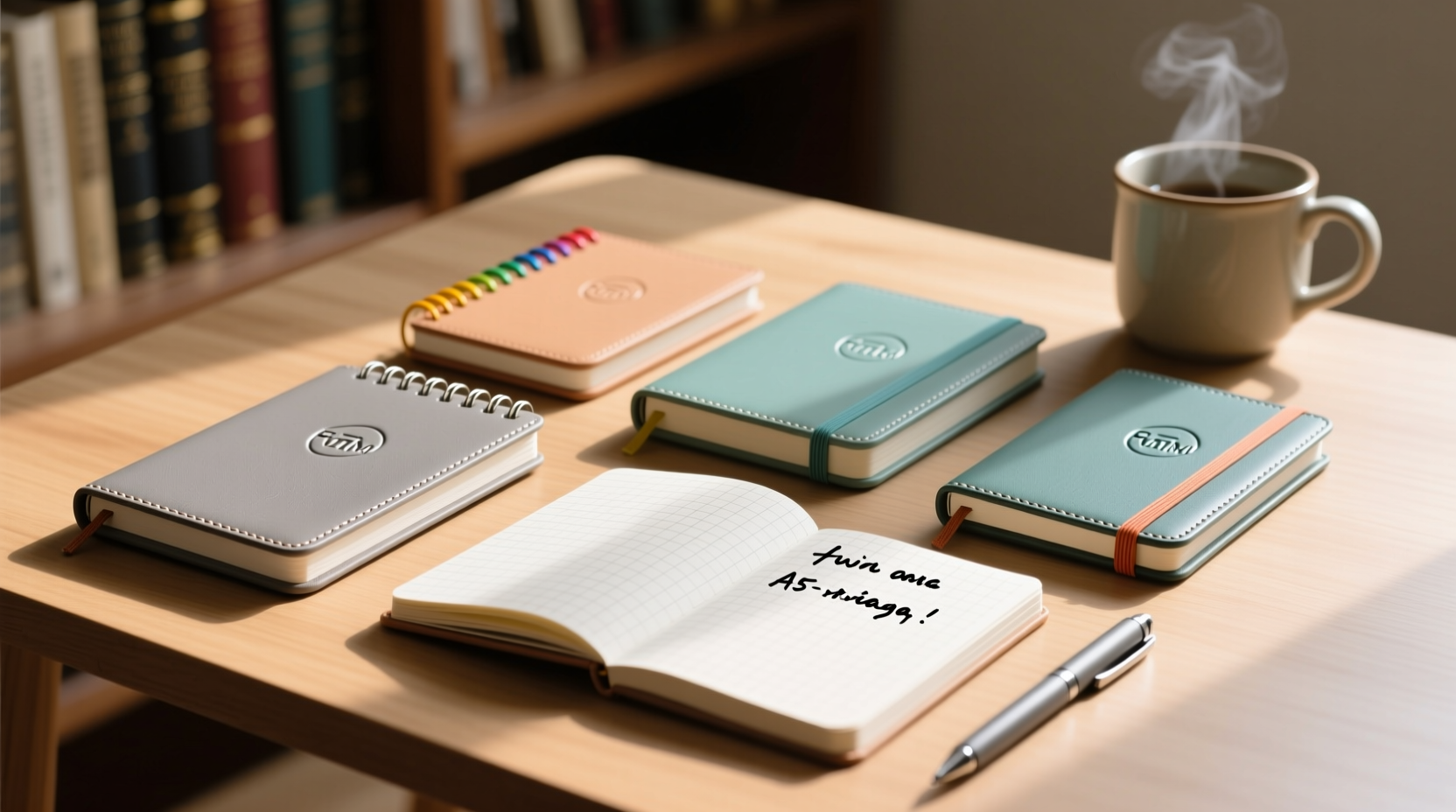
Size isn’t the only factor. A good small notebook must serve its purpose reliably across different environments—whether you're brainstorming at a café, taking meeting notes, or sketching on a park bench. Key considerations include:
- Paper quality: Resists ink bleed-through and ghosting, especially if using fountain pens or markers.
- Cover durability: Withstands daily wear from pockets, bags, and outdoor use.
- Binding: Stitched or sewn bindings last longer than glued spines under constant flipping.
- Portability: Fits comfortably in a coat pocket or small bag without bulk.
- Functionality: Includes useful features like a pen loop, elastic closure, or built-in bookmark.
Top 5 Compact and Practical Notebooks Reviewed
After extensive field testing and user feedback analysis, these five notebooks stand out for their blend of size, usability, and build quality. All are smaller than standard letter size (typically 3.5” x 5.5” to 5” x 8”), making them ideal for mobile professionals, creatives, and minimalist enthusiasts.
| Notebook | Dimensions (inches) | Paper Type | Binding | Special Features |
|---|---|---|---|---|
| Moleskine Cahier Pocket | 3.5 x 5.5 | Ivory, 70 gsm | Sewn | Expandable inner pocket, detachable ribbon bookmark |
| Field Notes Original | 3.5 x 5.5 | Graph ruled, 48 gsm | Perfect-bound (glued) | Durable chipboard cover, soy-based ink printing |
| Leuchtturm1917 Medium Pocket | 3.7 x 6.3 | 80 gsm, acid-free | Sewn | Numbered pages, table of contents, pen loop, elastic closure |
| Decomposition Book | 3.75 x 6.75 | Recycled kraft, 55 gsm | Perfect-bound | Eco-friendly, rugged look, widely available |
| Midori MD Notebook | 3.9 x 5.8 | High-opacity 52 gsm | Glued with reinforced spine | Excellent ink resistance, minimalist Japanese design |
Each of these options excels in specific areas. Moleskine and Leuchtturm1917 offer premium feel and long-term usability. Field Notes brings retro charm and rugged simplicity. The Decomposition Book is a budget-friendly workhorse, while Midori delivers exceptional paper performance despite its modest appearance.
“Small notebooks force clarity. When space is limited, you edit your thoughts before writing—leading to sharper ideas.” — David Chen, Productivity Consultant and Author of *Minimal Tools for Deep Work*
Real-World Use Case: The Urban Sketcher’s Companion
Jamie Rivera, a freelance illustrator based in Portland, carries a Field Notes Original everywhere. “I’m constantly drawing storefronts, street scenes, or quick character sketches,” she explains. “The 3.5 x 5.5 size fits perfectly in my back pocket, and the sturdy cover gives me something to lean on when I’m standing.”
She initially tried larger journals but found them cumbersome. “When a notebook gets too big, I stop carrying it. Then I miss moments. The small size of Field Notes means I never leave home without one.”
For her, the thin paper is a minor trade-off. “I use fine-line pens and pencils mostly, so bleed-through isn’t an issue. And when I need heavier paper, I bring a Midori instead.” Jamie’s experience underscores a key principle: the best small notebook isn’t universally perfect—it’s the one you actually use.
Choosing the Right One: A Step-by-Step Guide
Selecting the ideal compact notebook doesn’t have to be overwhelming. Follow this process to narrow down your choice based on actual needs.
- Define your primary use: Is it for bullet journaling, sketching, meeting notes, or lists? Heavy ink users should prioritize thicker paper.
- Test the size: Hold a ruler or credit card (3.4 x 2.1 inches) against your pocket. Add margin space—can a 3.5 x 5.5 notebook fit comfortably?
- Check binding longevity: Sewn bindings survive repeated opening better than glued ones, especially if you lay the book flat while writing.
- Assess extras: Elastic closures keep pages secure. Pen loops prevent losing your favorite pen. Numbered pages help organize entries over time.
- Buy one first: Before buying a pack, test a single unit with your regular pen. Evaluate smudging, feathering, and drying time.
Frequently Asked Questions
Can a small notebook be used for bullet journaling?
Absolutely. While traditional bullet journals often use larger formats, many practitioners successfully adapt the system to compact notebooks like the Leuchtturm1917 Pocket or Moleskine Cahier. The smaller format encourages concise planning and focused tracking. Just expect to adjust layout complexity—mini habit trackers and simplified monthly spreads work best.
Are pocket notebooks durable enough for daily carry?
Yes, if chosen wisely. Models with synthetic covers (like water-resistant Tyvek versions of Field Notes) or rigid chipboard handles rough treatment well. Avoid soft leather or flimsy cardstock if carrying in a backpack or pocket with keys. Reinforced corners and elastic bands significantly extend lifespan.
What's the most eco-friendly small notebook option?
The Decomposition Book leads in sustainability, made from 100% recycled paper with a biodegradable cover. Midori MD Paper uses chlorine-free processing and sustainable forestry practices. For refillable systems, consider the Rhodia Webnotebook with recyclable inserts.
Essential Checklist Before Buying
Use this checklist to ensure your next small notebook meets both practical and personal standards:
- ✅ Fits in your preferred carry location (pocket, purse, jacket)
- ✅ Paper resists bleed-through with your usual pen
- ✅ Binding allows the book to lie flat when open
- ✅ Cover material matches your environment (e.g., water-resistant for outdoors)
- ✅ Includes functional extras: bookmark, pocket, pen loop
- ✅ Reasonable price per page for your usage frequency
- ✅ Available in refill packs or consistent reorders
Final Thoughts: Less Bulk, More Clarity
The smallest notebook on your shelf might become the most impactful. By removing excess space, compact notebooks promote intentionality. You write only what matters. You carry it everywhere because it doesn’t burden you. And over time, these little books accumulate ideas that matter—meeting notes that spark projects, sketches that evolve into designs, lists that change your habits.
The best small notebook isn’t about brand prestige or feature overload. It’s about consistency, reliability, and quiet utility. Whether you choose the classic Moleskine, the rugged Field Notes, or the elegant Leuchtturm1917, the goal is the same: to have a trusted place for your thoughts, always within reach.




 浙公网安备
33010002000092号
浙公网安备
33010002000092号 浙B2-20120091-4
Comments
No comments yet. Why don't you start the discussion?