
A large capacity pencil case offers the potential to carry everything you need—but only if it’s organized effectively. Without a clear system, even the roomiest pouch can become a jumbled mess of pens, pencils, erasers, and specialty tools. The key isn’t just having space; it’s using it with intention. Whether you're a student managing multiple subjects, an artist carrying fine liners and blending tools, or a professional who needs quick access to drafting instruments, smart organization transforms utility. This guide delivers actionable strategies to turn your oversized pencil case from chaotic storage into a precision tool kit.
Assess Your Inventory and Usage Patterns
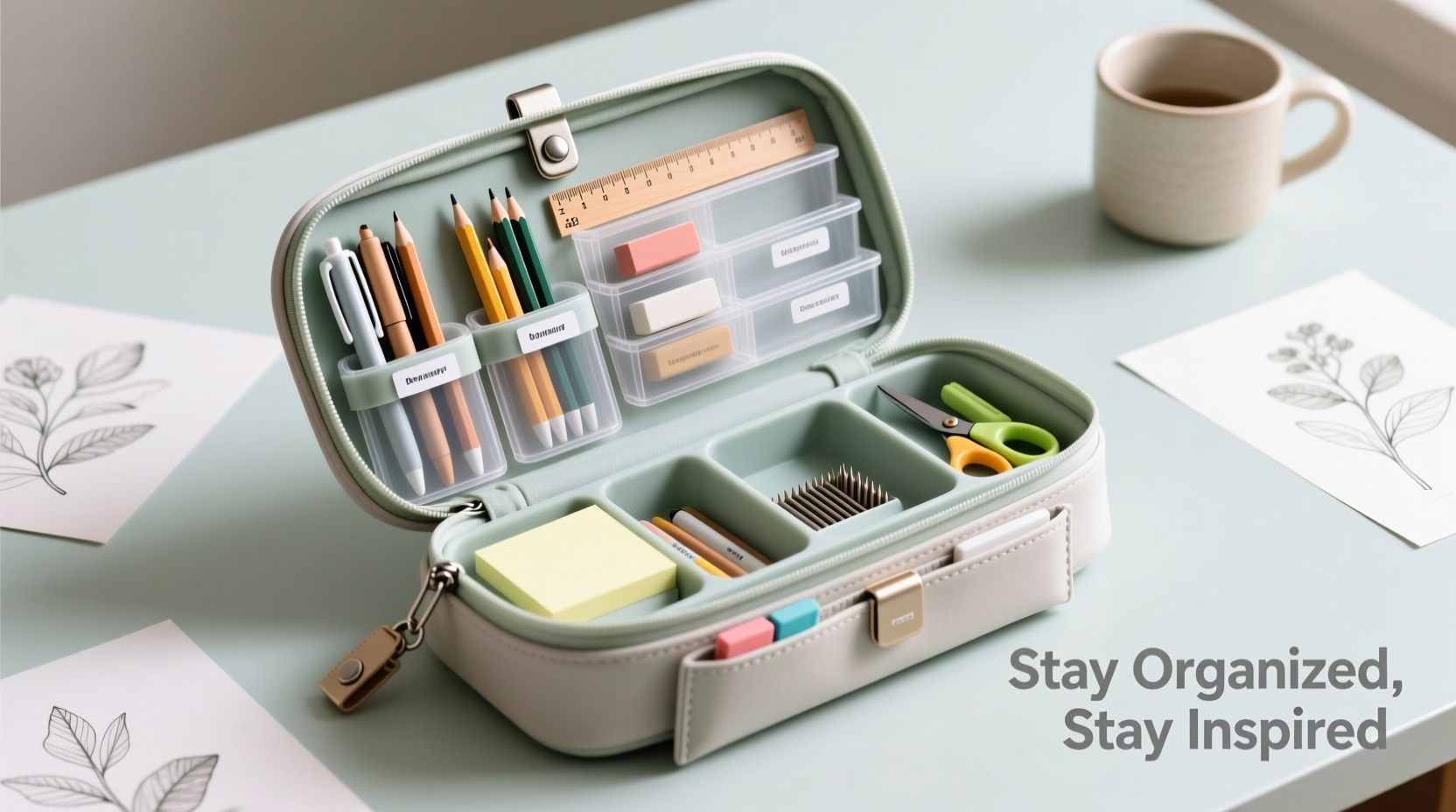
Before arranging anything, take inventory. Empty your pencil case completely and lay out every item. Categorize them by function: writing tools, coloring supplies, measuring instruments, correction items, and specialty tools like styluses or technical pens. Then ask: which items do you use daily? Which are occasional? This distinction is critical. Frequently used tools should be instantly accessible, while backups or rarely used items can occupy less convenient zones.
Consider usage frequency as a hierarchy. A student might prioritize mechanical pencils and highlighters over spare rulers. An illustrator may value fineliners and blending stumps more than standard pencils. By aligning organization with actual habits, you eliminate clutter without sacrificing preparedness.
Divide and Conquer with Internal Zones
Large pencil cases often lack internal structure, leading to disarray. Create designated zones using simple, low-cost dividers. You don’t need custom inserts—repurpose everyday items. Small fabric pockets from old electronics packaging, folded cardstock, or even cut-up plastic folders can act as partitions. For zippered cases, consider adhesive Velcro strips to secure dividers in place.
Organize zones by function:
- Front Zone: Daily-use pens, pencils, and erasers
- Middle Section: Highlighters, colored pencils, markers
- Back Compartment: Specialty tools (rulers, compasses, styluses)
- Side Pockets: Small consumables like lead refills or sticky notes
This spatial logic mimics the layout of a well-designed workspace—everything has a home, and nothing competes for attention.
“Organization isn’t about fitting more in—it’s about making what matters most effortless to reach.” — Lena Torres, Productivity Consultant
Maximize Vertical and Layered Space
Most users treat a pencil case as a flat container, but depth is an underutilized asset. If your case is deep enough, stack items vertically. Use small cardboard boxes or repurposed mint tins to create risers. Place frequently used items on top layers and reserve lower levels for backups. For cylindrical tools like markers or brush pens, store them upright in a cut-down toilet paper roll or a small cup-shaped organizer.
Another effective method is layering with foldable inserts. Sew or glue two fabric panels with elastic loops on one side and pen slots on the other. When folded, it fits neatly inside the case and doubles usable surface area. One side holds pens; the reverse can store scissors, USB drives, or a mini notepad.
Step-by-Step Guide: Optimizing Your Pencil Case in 5 Steps
Follow this sequence to transform your pencil case from cluttered to streamlined:
- Empty and Sort: Remove all contents and group by category and frequency of use.
- Declutter: Discard dried-out markers, broken leads, and duplicates you don’t need.
- Design Zones: Sketch a layout plan based on how you access tools during work or class.
- Build Structure: Insert DIY or purchased dividers, risers, or layered organizers.
- Load Strategically: Place high-use items at the front or top, with backups behind or below.
Reassess monthly. Needs change—exams end, projects shift—and your pencil case should adapt accordingly.
Smart Storage Solutions and Material Hacks
Different tools demand different handling. Fine-tip pens benefit from horizontal storage to prevent ink pooling. Colored pencils should be arranged tip-up to avoid breakage. Consider the material properties of both your tools and your case. Fabric cases allow slight compression and flexibility; hard-shell cases protect delicate tools but offer less moldable space.
Use elastic bands sewn inside the lid to hold long items like rulers. Magnetic strips (thin ones used in craft stores) can secure metal tools like tweezers or precision knives. For digital users, include a microfiber-lined pocket for stylus nibs or SD cards.
| Tool Type | Best Storage Method | Avoid |
|---|---|---|
| Fine Liners | Horizontal, capped, grouped by color family | Storing vertically tip-down |
| Colored Pencils | Upright in a divided tray or cup | Tossed loosely in bulk |
| Eraser & Correction Tape | Front-access slot or shallow pocket | Buried under heavier items |
| Rulers & Stencils | Flat against the back wall with elastic retention | Folded or bent in tight spaces |
| Refills & Leads | Small labeled containers or resealable bags | Loose in main compartment |
Real-World Example: The Art Student’s Transformation
Sophie, a third-year illustration student, struggled with her 20x10cm zipper pouch. It held over 50 items, but finding a specific brush pen took minutes. After applying zonal organization, she created three sections: drawing (pencils, erasers), inking (fineliners, dip pens), and touch-ups (blending stumps, white gel pens). She added a handmade insert with elastic loops and vertical compartments. She also introduced a “weekly purge” habit—removing dried tools and unused samples.
The result? Her prep time dropped from five minutes to under 30 seconds. More importantly, she stopped leaving tools behind because they were now visible and logically placed. Her classmates began adopting similar systems, proving that thoughtful organization scales across use cases.
Checklist: Optimize Your Pencil Case in One Sitting
Use this checklist to complete a full reorganization in under 30 minutes:
- ☐ Empty all contents onto a clean surface
- ☐ Discard broken, dried-out, or unnecessary items
- ☐ Group tools by function and frequency
- ☐ Sketch a layout plan with zones
- ☐ Gather dividers, trays, or DIY materials
- ☐ Install structural elements (risers, elastic bands, etc.)
- ☐ Load items according to priority and category
- ☐ Label zones for quick identification
- ☐ Test accessibility: Can you grab your most-used pen blindfolded?
- ☐ Schedule a monthly review date
Frequently Asked Questions
How do I prevent pens from leaking in my pencil case?
Store pens horizontally with caps securely fastened. Avoid temperature extremes—don’t leave your case in direct sunlight or freezing cars. For added protection, wrap the cap end with a small piece of masking tape to reinforce the seal.
Can I use a makeup organizer as a pencil case?
Absolutely. Many makeup organizers feature adjustable compartments, clear visibility, and durable zippers—ideal for stationery. Just ensure the material is sturdy enough to withstand repeated opening and closing, and that the interior won’t scratch delicate tools like fountain pens.
What’s the best way to clean a fabric pencil case?
Spot clean with a damp cloth and mild detergent. For deeper cleaning, hand wash in cold water and air dry flat. Never machine dry, as heat can warp shape and damage prints or linings.
Conclusion: Turn Chaos into Clarity
A large capacity pencil case is only as useful as its organization. With intentional zoning, smart use of vertical space, and regular maintenance, you can transform it into a highly functional extension of your workflow. The goal isn’t minimalism for its own sake—it’s efficiency through clarity. Every second saved searching for a missing pen is a second regained for creativity, learning, or focus.




 浙公网安备
33010002000092号
浙公网安备
33010002000092号 浙B2-20120091-4
Comments
No comments yet. Why don't you start the discussion?