
In an era where road incidents are increasingly disputed and insurance premiums continue to climb, many drivers are turning to technology for protection. Dual-channel dash cams—recording both front and rear views—are gaining popularity, but the question remains: Is the installation effort justified by the insurance benefits? For some, the answer lies in peace of mind. For others, it's about tangible financial outcomes when filing claims or disputing liability. This article explores whether the minor inconvenience of installing a front and rear dash cam translates into meaningful insurance advantages—and why, for most drivers, the answer is a resounding yes.
How Dash Cams Influence Insurance Claims
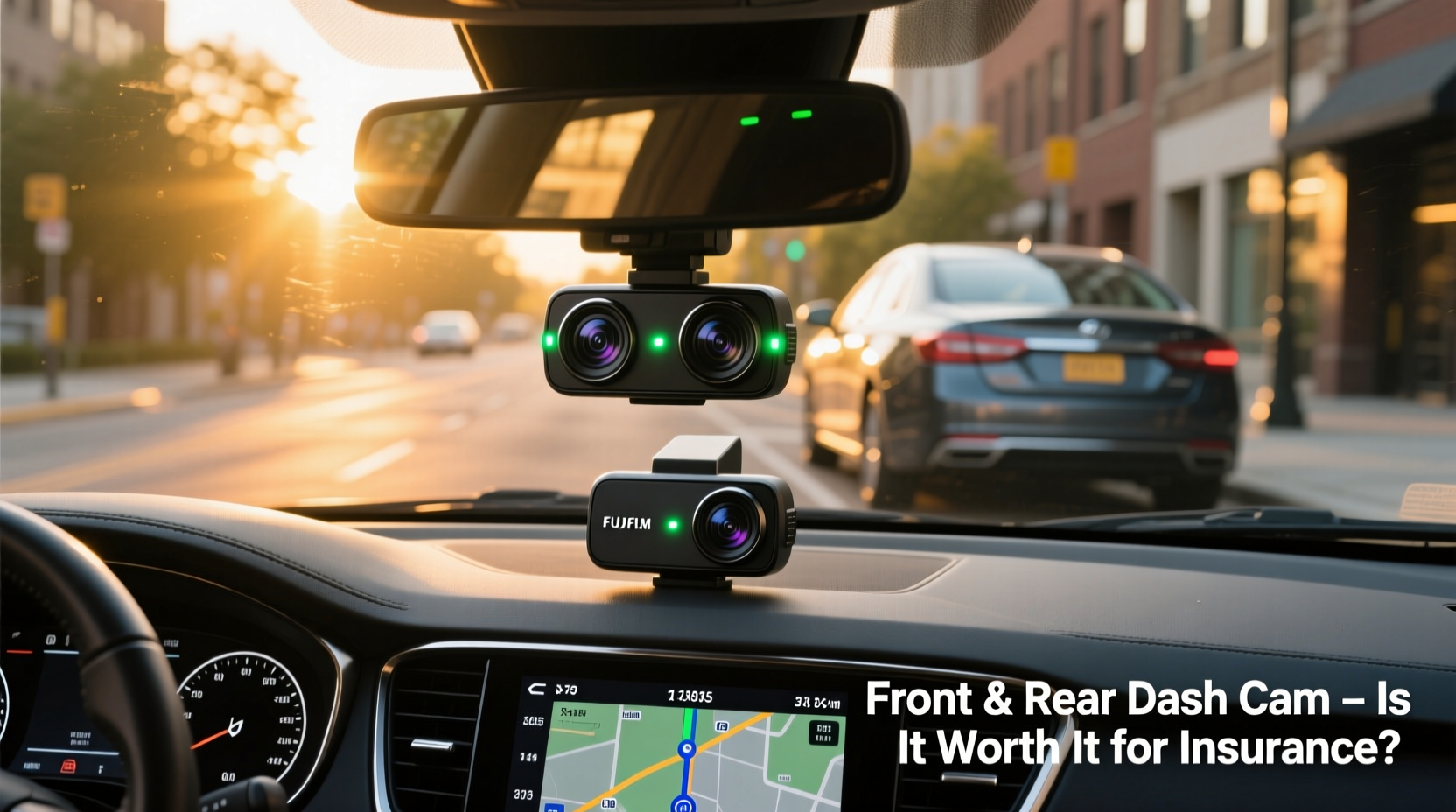
Dash cams serve as independent witnesses on the road. When an accident occurs, emotions run high, memories blur, and conflicting stories emerge. A dual-lens dash cam captures objective video evidence from both the front windshield and rear window, offering a comprehensive view of what actually happened. This footage can be pivotal during insurance investigations.
Insurance companies rely on evidence to determine fault. In no-fault states, video proof may not change who pays, but it can prevent fraudulent claims or inflated damages. In at-fault states, clear footage can expedite claim processing, reduce disputes, and even eliminate the need for lengthy negotiations.
“Video evidence from a dash cam can cut claim resolution time by up to 60% and significantly reduce fraudulent payouts.” — Mark Reynolds, Senior Claims Analyst at National Auto Insurance Group
Consider a rear-end collision where the other driver claims you braked suddenly without cause. With rear-facing footage, you can prove your brake lights activated appropriately and that the following vehicle failed to maintain distance. Front-facing video confirms traffic conditions, speed, and any contributing factors like sudden lane changes or debris.
The Real Cost vs. Benefit of Installation
One common hesitation around dash cams is the perceived hassle of installation. Running wires along the headliner and A-pillar, connecting to a power source, and ensuring discreet placement does require time—anywhere from 30 minutes to two hours for a DIY setup. However, this one-time effort yields long-term protection.
Most modern dual dash cams come with plug-and-play kits, adhesive mounts, and detailed instructions. Some models now offer wireless rear cameras or easy magnetic routing to minimize visible cabling. Professional installation services are also available at auto shops for $50–$100, making the process nearly effortless if budget allows.
Compare this to the potential cost of a single disputed accident. If a false claim leads to a premium increase of $400 per year over three years, that’s $1,200 in avoidable costs—far exceeding even professional installation fees. Add in rental car expenses, deductibles, and loss of no-claims bonuses, and the return on investment becomes undeniable.
When Installation Hassle Pays Off
- Parking lot incidents: Rear footage captures hit-and-runs or door dings when you're not present.
- Tailgating or aggressive drivers: Continuous recording provides evidence of dangerous behavior leading up to a crash.
- Fraudulent claims: Footage disproves staged accidents or false narratives about speed or right-of-way.
Insurance Discounts and Policy Benefits
While not all insurers currently offer direct discounts for dash cam ownership, several progressive providers are beginning to recognize their value. Companies like Progressive and State Farm have pilot programs that reward safe driving behavior, often verified through telematics or video data.
Even without formal discounts, documented clean driving records supported by dash cam footage can strengthen your position during policy renewal. Insurers may view you as lower risk if you proactively protect against false claims, potentially leading to better rates over time.
Additionally, some fleet insurance policies already mandate dash cams for commercial vehicles. The logic applies equally to personal use: reduced liability exposure equals reduced risk for the insurer.
| Benefit | With Dash Cam | Without Dash Cam |
|---|---|---|
| Claim Processing Time | Days (with video proof) | Weeks (investigation required) |
| Risk of Fraudulent Claim | Low (evidence available) | High (he-said-she-said) |
| Premium Impact After Disputed Accident | Minimal (if not at fault) | Potential increase |
| Legal Defense Support | Strong (visual timeline) | Reliant on witness statements |
Real-World Case: How a Dash Cam Saved $3,200 in Premiums
Jessica M., a 38-year-old teacher from Austin, Texas, was involved in a low-speed collision at a red light. The driver behind her claimed she slammed on the brakes without warning. He filed a claim citing whiplash and vehicle damage. Jessica’s insurance company initially leaned toward partial fault due to lack of witnesses.
Her front and rear dash cam told a different story. The footage showed steady traffic flow, no erratic braking, and the following vehicle approaching at high speed while distracted (driver seen looking down moments before impact). She submitted the video to her insurer within 24 hours.
Result: Full exoneration. No deductible paid, no premium increase, and the other party’s insurer covered repairs. More importantly, her five-year accident-free record remained intact—a factor that would have otherwise added $3,200 in higher premiums over the next three policy cycles.
This case underscores how a few minutes of footage can preserve years of responsible driving history.
Step-by-Step Guide to Installing a Front and Rear Dash Cam
While professional help is an option, most users can install a dual dash cam system in under an hour. Follow this sequence for a clean, functional setup:
- Choose your mounting positions: Front camera near the rearview mirror; rear camera aligned with license plate or tail lights.
- Test placement: Power the cameras temporarily via USB cable to ensure full coverage and no obstructions.
- Route the front cable: Start from the camera, tuck along the top of the windshield, then down the A-pillar into the dashboard.
- Connect to power: Plug into OBD-II port or hardwire to fuse box using a wiring harness (recommended for parking mode).
- Install rear camera: Mount securely, route cable along roof lining, down the rear pillar, and under carpet to the trunk or back seat.
- Connect rear cable to front unit: Most systems use a single sync cable linking both cameras.
- Secure loose ends: Use clips or adhesive ties to prevent rattling and maintain a factory-like appearance.
- Test recording: Drive a short route and verify both channels are capturing clear, synchronized footage.
Expert Recommendations and Industry Trends
Automotive safety experts increasingly advocate for dash cam adoption. According to the Insurance Institute for Highway Safety (IIHS), unverified claims account for nearly 20% of all auto fraud cases annually. Video evidence drastically reduces ambiguity.
“We’re moving toward a future where vehicle-based recording is standard, much like backup cameras. The data protects honest drivers and streamlines claims.” — Dr. Lena Patel, Transportation Safety Researcher at MIT
Some insurers are experimenting with usage-based policies that integrate dash cam analytics. These systems assess driving behavior—hard braking, phone use, night driving—and adjust premiums accordingly. While privacy concerns exist, opt-in programs offer lower rates for demonstrably safe drivers.
Moreover, dash cams are evolving beyond simple recording. Advanced models now include GPS tracking, Wi-Fi connectivity, cloud storage, and AI-powered incident detection. These features enhance reliability and make sharing footage with insurers faster and more secure.
Checklist: Is a Dual Dash Cam Right for You?
Use this checklist to evaluate whether investing in a front and rear dash cam aligns with your driving habits and insurance goals:
- ✅ Do you drive frequently in urban areas with heavy traffic?
- ✅ Have you been involved in a previous accident where fault was disputed?
- ✅ Are you concerned about false claims or insurance fraud?
- ✅ Do you park on the street or in crowded lots regularly?
- ✅ Would a premium increase significantly impact your budget?
- ✅ Are you willing to spend 1–2 hours on installation or $50–$100 for professional help?
If you answered “yes” to three or more, a dual dash cam is likely a smart investment.
Frequently Asked Questions
Do insurance companies accept dash cam footage as valid evidence?
Yes, most major insurers accept dash cam video as legitimate evidence. It must be unedited, timestamped, and clearly show the incident. Submitting footage early in the claims process strengthens your case and can lead to faster resolution.
Can a dash cam lower my insurance premium directly?
Currently, few insurers offer automatic discounts solely for dash cam use. However, preventing a surcharge after a not-at-fault accident effectively saves hundreds per year. As adoption grows, formal incentives are expected to expand.
Is it legal to record audio and video inside my car?
Laws vary by state. In one-party consent states, recording is legal if you are aware and agree. In two-party consent states (e.g., California, Massachusetts), recording audio without all parties’ knowledge may violate wiretapping laws. To stay compliant, disable audio recording or consult local regulations.
Conclusion: Small Effort, Lasting Protection
The brief effort required to install a front and rear dash cam pales in comparison to the long-term security it provides. From defending against false claims to preserving your insurance record, the benefits are both practical and financial. While no device can prevent every accident, a dash cam ensures you’re never left without proof when it matters most.
Modern driving comes with risks beyond your control—reckless drivers, ambiguous crashes, and rising insurance costs. Taking a proactive step like installing a dash cam shifts the balance back in your favor. It’s not just about convenience; it’s about accountability, clarity, and control.




 浙公网安备
33010002000092号
浙公网安备
33010002000092号 浙B2-20120091-4
Comments
No comments yet. Why don't you start the discussion?