
In boardrooms, client meetings, and high-stakes interviews, your appearance communicates before you speak. A well-chosen briefcase can silently signal competence, attention to detail, and professionalism. But when faced with a $200 generic model versus a $1,200 designer option, the real question isn’t just about aesthetics—it’s whether that premium translates into tangible value. Many assume that higher price equals better impression, but does it?
The answer depends on more than brand names or logos. It hinges on craftsmanship, longevity, material quality, and subtle social signaling in professional environments. This article dissects the real differences between designer and generic briefcases, evaluates their impact on perceived professionalism, and helps you determine if the investment is justified for your career stage and industry.
Material Quality and Longevity
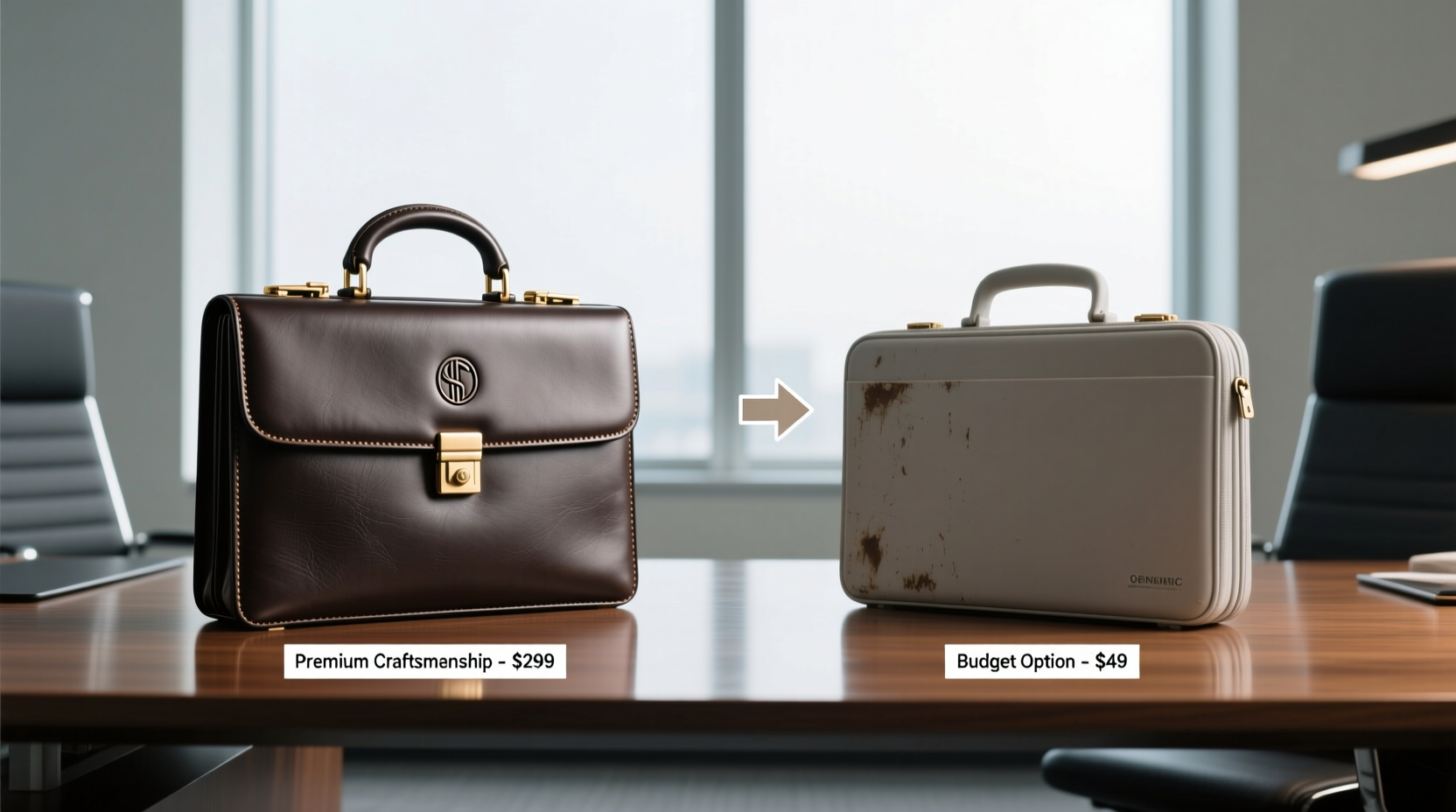
The most immediate difference lies in materials. Designer briefcases typically use full-grain or top-grain leather sourced from reputable tanneries. These leathers age gracefully, developing a rich patina over time while resisting cracks and dryness. In contrast, many generic models rely on bonded leather, synthetic polyurethane (PU), or low-grade cowhide that may peel, fade, or split within months of regular use.
Beyond the exterior, internal components matter. Designer brands often reinforce stress points like handles and corners with metal rivets or double stitching. Zippers are usually YKK or equivalent—industrial-grade hardware known for reliability. Generic options frequently use flimsy zippers prone to jamming and handles made from glued-on straps that detach under weight.
“Leather isn’t just about luxury—it’s about endurance. A well-made briefcase should outlast three jobs.” — Daniel Reeves, Corporate Wardrobe Consultant
Design, Functionality, and Professional Image
A briefcase isn’t merely storage; it’s part of your personal brand. Designer models prioritize ergonomics and thoughtful design: padded laptop compartments, RFID-blocking pockets, pen loops, business card slots, and balanced weight distribution. These details reduce friction in daily use and project intentionality.
Generic briefcases often sacrifice function for cost savings. Compartments may be poorly sized, lacking organization, or too shallow to securely hold documents. Over time, sagging interiors and misshapen silhouettes undermine even the sharpest suit.
Perception plays a critical role. In industries like law, finance, consulting, and executive leadership, accessories carry unspoken weight. A worn, peeling bag can subtly erode credibility, regardless of your expertise. Conversely, a refined, well-maintained briefcase reinforces authority—even without a visible logo.
Case Study: The Interview That Hinged on Details
James, a mid-level accountant applying for a senior role at a prestigious firm, arrived impeccably dressed. His resume was strong, his answers sharp. But during the final panel interview, one partner later admitted being distracted by James’s briefcase—a black PU model with frayed stitching and a broken clasp.
“It wasn’t a dealbreaker,” the partner said anonymously, “but it made me wonder: if he cuts corners here, where else might he?” James didn’t get the offer. A month later, he invested in a minimalist Italian leather briefcase. At his next interview—with a competing firm—he received two job offers within a week.
This isn’t about elitism. It’s about consistency. When every element of your presentation aligns with excellence, confidence follows—and so do opportunities.
Cost Per Use: The Hidden Math
At first glance, a $150 briefcase seems economical. But spread the cost over time, and the equation shifts. Consider this comparison:
| Feature | Designer Briefcase ($900) | Generic Briefcase ($180) |
|---|---|---|
| Average Lifespan | 5–7 years | 1–2 years |
| Daily Cost (5-year use) | $0.49/day | $0.99/day (if replaced twice) |
| Repair Frequency | Rare (leather conditioning only) | Every 6–12 months |
| Resale Value | Up to 40% (pre-owned market) | Negligible |
| Professional Perception | Consistently positive | Deteriorates over time |
When viewed through cost-per-use, the designer option often proves cheaper long-term. More importantly, it maintains its professional edge throughout its life cycle.
Industry Context Matters
Not all careers demand designer accessories. In creative fields, tech startups, or remote-first roles, functionality often outweighs formality. A sleek backpack or minimalist tote may be more appropriate than any briefcase.
However, in client-facing, traditional sectors—corporate law, investment banking, management consulting, government—the briefcase remains a symbol of preparedness. Here, subtlety wins. Opt for understated elegance: neutral colors (black, navy, dark brown), clean lines, minimal branding. A discreetly luxurious piece speaks louder than a flashy logo.
Checklist: Choosing the Right Briefcase for Your Career
Before making a purchase, ask yourself these questions:
- Does my industry expect formal accessories?
- Will I carry this daily for the next 3+ years?
- Does it fit my laptop, documents, and essentials without bulging?
- Is the shoulder strap adjustable and padded?
- Are interior materials water-resistant or protective?
- Can it pass airport security without removing the laptop?
- Does it feel balanced when fully loaded?
- Is the return policy or warranty reliable?
Frequently Asked Questions
Do people really notice what kind of briefcase I carry?
Yes—often subconsciously. Colleagues, clients, and hiring managers absorb visual cues quickly. While no one will comment on your bag outright, its condition and quality influence first impressions. A polished, durable briefcase signals care and consistency.
Can I find a high-quality briefcase without paying designer prices?
Absolutely. Brands like Bellroy, Tumi (at mid-tier levels), Fossil, and Samsonite Black Label offer excellent craftsmanship without luxury markups. Look for full-grain leather, reinforced corners, and lifetime warranties. These sit between generic and designer tiers but deliver 80% of the performance at half the cost.
Is vegan leather a viable alternative?
Some modern vegan leathers—like those made from cork, pineapple fiber (Piñatex), or mushroom-based materials—are durable and sustainable. However, most budget-friendly \"vegan leather\" is still PVC or PU, which cracks faster than genuine leather. If sustainability is a priority, research brands committed to innovation, such as Matt & Nat or Elvis & Kresse.
Final Verdict: Is the Extra Cost Worth It?
The answer isn’t universal. For early-career professionals or those in casual work environments, a well-reviewed mid-range briefcase may suffice. But for anyone building a reputation in a competitive, traditional field, the investment in a designer or premium-tier briefcase pays dividends—not just in durability, but in perception.
True professionalism isn’t about flaunting wealth. It’s about demonstrating respect—for your work, your clients, and yourself. A superior briefcase reflects that ethos. It lasts longer, performs better, and ages with dignity. Over five years, it may save money, reduce hassle, and quietly elevate your presence in every meeting.
If you’re serious about long-term career growth, the extra cost isn’t an expense. It’s an alignment of tools with ambition.




 浙公网安备
33010002000092号
浙公网安备
33010002000092号 浙B2-20120091-4
Comments
No comments yet. Why don't you start the discussion?