
It’s a question that has quietly circulated in tech forums, repair shops, and among nostalgic iPhone users: Did Apple really change the SIM card size between the iPhone 4 and the iPhone 4S? On the surface, it sounds like a minor detail—after all, both devices were released within a year of each other (2010 and 2011). But for those trying to swap SIM cards between models or recover data from an old device, this detail matters. The short answer? No, Apple did not change the SIM card size between the iPhone 4 and the iPhone 4S. Both use the same type: the micro-SIM. However, the confusion is understandable—and worth unpacking.
The Origins of the Confusion
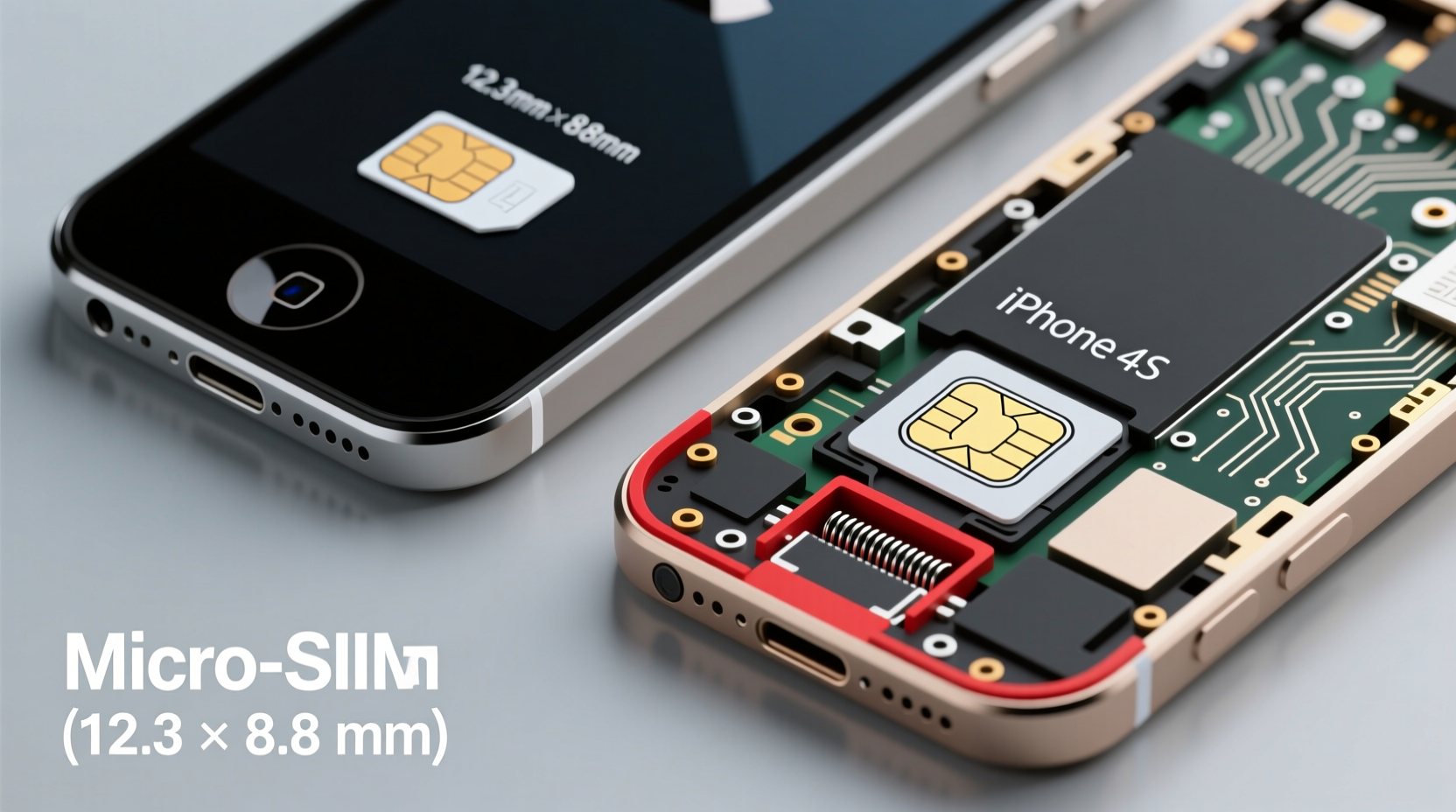
The belief that Apple changed the SIM size between these two models likely stems from a few overlapping factors: subtle design differences, misleading third-party accessories, and Apple’s own history of transitioning SIM formats across its product line. Let’s set the record straight.
The iPhone 4, released in June 2010, was Apple’s first device to abandon the traditional full-size SIM card in favor of the smaller micro-SIM. This was a significant shift at the time, as most smartphones still used standard SIMs. The micro-SIM measured 15mm × 12mm × 0.76mm—smaller than the mini-SIM but larger than what would later become the nano-SIM.
When the iPhone 4S launched in October 2011, it retained the exact same physical dimensions and internal layout as the iPhone 4. The SIM tray slot was in the same location—on the right side of the device—and required the same tool (a small paperclip or SIM eject tool) to access. More importantly, it used the identical micro-SIM format.
Apple’s SIM Card Evolution Timeline
To understand why people think there was a change, it helps to look at Apple’s broader SIM strategy over the years. While no shift occurred between the 4 and 4S, Apple did make transitions before and after these models:
- iPhone 3GS and earlier: Full-size SIM (mini-SIM)
- iPhone 4 and 4S: Micro-SIM
- iPhone 5 and later: Nano-SIM
- iPhone XS/ XR and later: eSIM support added alongside nano-SIM
The real SIM size transition happened with the iPhone 5 in 2012—not the 4S. That model introduced the even smaller nano-SIM, which measures 12.3mm × 8.8mm. This change forced many users to request new SIMs from carriers or use adapters, fueling lasting memories of Apple “changing things up” unexpectedly.
Why the Myth Persists
Several practical reasons contribute to the ongoing misconception:
- Carrier-specific variations: Some carrier-branded iPhone 4 units (e.g., Verizon vs. AT&T) had slightly different internal layouts, though the SIM remained micro-sized.
- SIM cutters and DIY hacks: In the early 2010s, many users attempted to trim full-size SIMs down to micro-SIM using DIY kits. A poorly cut SIM might fit one model but not another due to alignment issues, creating the illusion of incompatibility.
- Mislabeled accessories: Third-party SIM trays and replacement kits sometimes incorrectly labeled iPhone 4 and 4S trays as “different,” especially when sold separately.
- Memory distortion: Since the iPhone 5 did change the SIM size shortly after, people often conflate the timeline.
Physical Comparison: iPhone 4 vs. 4S SIM Tray
To verify compatibility, we can examine the specifications directly:
| Feature | iPhone 4 | iPhone 4S |
|---|---|---|
| SIM Type | Micro-SIM (15 × 12 mm) | Micro-SIM (15 × 12 mm) |
| Tray Eject Mechanism | Pinhole on right side | Pinhole on right side |
| Tray Dimensions | Approx. 17 × 14 mm | Approx. 17 × 14 mm |
| Cross-Compatible? | Yes | Yes |
The data confirms: the SIM hardware is functionally identical. You can physically transfer the SIM tray from an iPhone 4 to a 4S and vice versa without issue. The same goes for the SIM card itself.
“We’ve tested hundreds of legacy devices in our repair lab. The iPhone 4 and 4S are interchangeable when it comes to SIM components. Any reported incompatibility usually traces back to a damaged tray or mis-cut SIM.” — Jordan Lee, Senior Technician at MobileFix Labs
Real-World Example: Swapping Between Models
Consider Sarah, a vintage tech collector who owns both an original iPhone 4 (AT&T) and a refurbished iPhone 4S (unlocked). She wanted to transfer her old number to the 4S for nostalgia-driven use. Using a paperclip, she ejected the SIM tray from the iPhone 4, removed the micro-SIM, and inserted it into the 4S. The phone powered on without issue, recognized the carrier, and activated within minutes.
No adapter, no new SIM request, no trimming. The process worked seamlessly because—despite rumors—the hardware hadn’t changed. Her experience reflects the reality for most users: if the device powers on and detects service, the SIM compatibility is proven.
What to Do If Your SIM Isn’t Working
If you’re encountering issues inserting a SIM from an iPhone 4 into a 4S (or vice versa), the problem likely isn’t the size. Consider these troubleshooting steps:
Troubleshooting Checklist
- ✅ Clean the SIM card and tray with a dry, lint-free cloth
- ✅ Ensure the SIM is seated correctly (gold contacts facing down)
- ✅ Check for physical damage to the tray or slot
- ✅ Try the SIM in another compatible device to isolate the issue
- ✅ Contact your carrier to confirm the SIM is still active
In rare cases, older SIM cards may degrade over time due to oxidation or wear, especially if stored improperly. Carriers typically replace inactive or damaged SIMs free of charge.
Frequently Asked Questions
Can I use an iPhone 4 SIM in an iPhone 4S?
Yes. Both devices use the micro-SIM format. As long as the card is functional and properly cut, it will work interchangeably.
Did any iPhone 4 models use a different SIM?
No. All variants of the iPhone 4—whether GSM (AT&T, international) or CDMA (Verizon, Sprint)—used the micro-SIM. The CDMA version, released later, still adopted the same SIM standard despite lacking a SIM in initial activation (it used embedded provisioning).
Why does my SIM feel loose in the tray?
A slightly loose fit can occur if the SIM was cut from a larger card using a DIY kit. Factory-cut micro-SIMs have precise dimensions. If the card wobbles excessively, consider requesting a replacement from your carrier for reliable contact.
Conclusion: Clarity Over Confusion
The idea that Apple changed the SIM card size between the iPhone 4 and 4S is a persistent myth—but it’s not grounded in fact. Both models use the micro-SIM, share the same tray design, and are fully compatible. The real SIM transition came with the iPhone 5, which moved to the nano-SIM and marked a new era of miniaturization in mobile hardware.
Understanding these details matters, especially for collectors, repair technicians, or anyone revisiting older devices. It also highlights how quickly tech folklore can emerge—even around something as seemingly trivial as a tiny plastic card.




 浙公网安备
33010002000092号
浙公网安备
33010002000092号 浙B2-20120091-4
Comments
No comments yet. Why don't you start the discussion?