
When searching for recipes, spice blends, or even growing tips for hot peppers, you’ve likely encountered both “chilli” and “chili” in writing—and possibly wondered: are they interchangeable? Do they refer to different things? The answer lies not in botany or cuisine, but in language evolution and regional spelling conventions. Understanding the distinction between chilli and chili is essential for clear communication in cooking, especially when navigating international recipes, food labeling, or culinary discussions online. This article clarifies the origins, correct usage, and practical implications of these spellings across English-speaking regions, ensuring you can confidently interpret and use them in your kitchen.
Definition & Overview
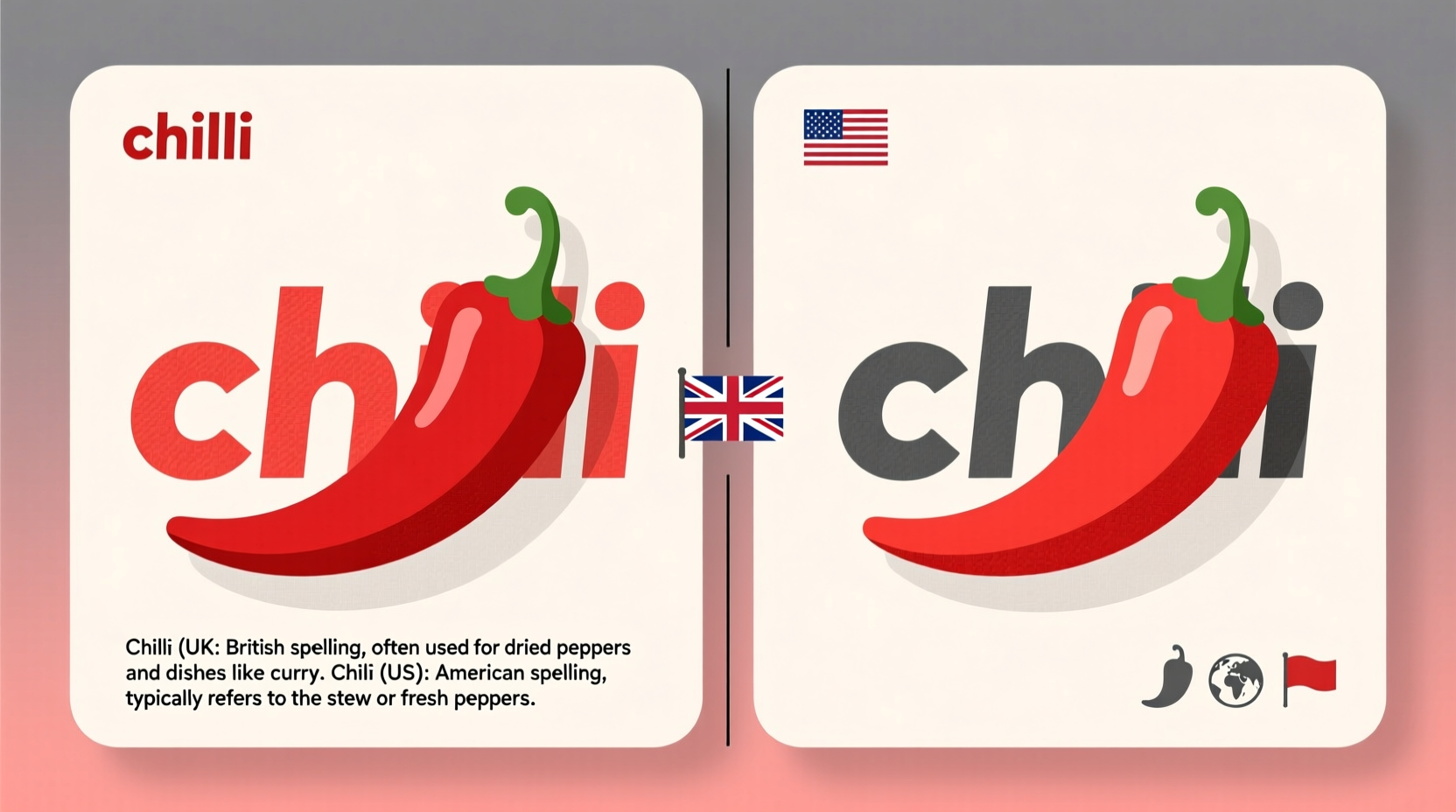
The word refers to the fruit of plants from the genus Capsicum, part of the nightshade family (Solanaceae), which includes bell peppers and tomatoes. These small, pungent pods contain capsaicin—the compound responsible for their heat—and have been cultivated for thousands of years, originating in Central and South America. Today, they are integral to cuisines worldwide, from Mexican salsas to Indian curries and Thai stir-fries.
Regardless of spelling, “chilli,” “chili,” and “chile” all denote the same biological entity: a hot pepper. However, the variation in orthography reflects linguistic adaptation as the spice spread globally through trade, colonization, and migration. The original Nahuatl (Aztec) word was chīlli, pronounced “chee-lee.” Spanish explorers adopted it as chile, preserving both sound and single ‘l’. As the word entered English, multiple spellings emerged based on pronunciation, regional preferences, and editorial standards.
Key Characteristics of the Capsicum Fruit
- Flavor Profile: Ranges from sweet and fruity (e.g., poblano) to intensely fiery (e.g., habanero); often with smoky, earthy, or citrusy undertones depending on variety and preparation.
- Aroma: Fresh varieties emit a bright, vegetal scent; dried forms develop deeper, woodsy, or roasted notes.
- Color & Form: Available in green, red, yellow, orange, purple, and brown; shapes vary from long and slender to short and lantern-like.
- Heat Level: Measured in Scoville Heat Units (SHU), ranging from 0 SHU (bell pepper) to over 2 million SHU (Carolina Reaper).
- Culinary Function: Adds heat, depth, color, and complexity to dishes; used fresh, dried, smoked, powdered, or fermented.
- Shelf Life: Fresh peppers last 1–3 weeks refrigerated; dried versions retain potency for 6–12 months if stored properly.
TIP: Always handle hot peppers with care. Wear gloves when cutting extremely spicy varieties, and avoid touching your face. Capsaicin oils can cause irritation to eyes and mucous membranes.
Variants & Types: How Spelling Reflects Form and Use
Beyond regional spelling differences, the form of the pepper significantly impacts its name and culinary role. Here are the most common types categorized by physical state and processing method:
Fresh Peppers
Harvested while immature (often green) or fully ripe (red, yellow, etc.). Common examples include jalapeño, serrano, cayenne, and Thai bird’s eye chilies.
Dried Whole Peppers
Dehydrated fruits that concentrate flavor and heat. Examples: ancho (dried poblano), guajillo, pasilla, and chipotle (smoked jalapeño).
Ground or Powdered Forms
Crushed dried peppers sold as spices. “Chili powder” in the U.S. often refers to a blend containing garlic, cumin, and oregano, whereas elsewhere it may mean pure ground chili.
Pepper Pastes & Sauces
Fermented or cooked preparations like gochujang (Korean), harissa (North African), or sriracha (Vietnamese-inspired).
Canned or Pickled Varieties
Preserved for convenience; chipotles in adobo sauce are a prime example.
| Form | Examples | Best Uses |
|---|---|---|
| Fresh | Jalapeño, Serrano, Scotch Bonnet | Salsas, salads, garnishes, stir-fries |
| Dried Whole | Ancho, Guajillo, Arbol | Mojo sauces, stews, rehydration for blending |
| Ground/Flakes | Cayenne, Aleppo, Korean gochugaru | Spice rubs, marinades, seasoning blends |
| Smoked | Chipotle, Smoked Paprika | Barbecue, beans, braises, dips |
| Fermented | Gochujang, Peri-Peri, Tabasco | Glazes, condiments, marinades |
Spelling Differences: Chilli vs. Chili – Regional Usage Explained
The choice between “chilli” and “chili” is primarily determined by geographic location and linguistic tradition—not meaning or type of pepper.
“Chilli” – British, Commonwealth, and International Standard
This double-'l' spelling is preferred in the United Kingdom, Australia, New Zealand, India, and many other Commonwealth countries. It aligns with traditional English phonetic patterns where doubling consonants helps preserve vowel sounds (e.g., “travel/travelled” vs. American “traveled”).
In these regions, “chilli” appears consistently across cookbooks, menus, grocery labels, and agricultural documentation. For instance, Australian supermarkets label products as “dried chilli flakes,” and UK recipe sites use “chilli con carne” rather than “chili.”
“Chili” – American English Standard
In the United States, “chili” (one 'l') is the dominant spelling. It gained popularity in the 19th century, particularly in Texas, where “chili con carne” became a cultural staple. Over time, “chili” came to represent both the meat-and-bean stew and the dried ground pepper used within it.
Notably, some purists argue that “chile” (pronounced “chil-lay”) should be reserved for the plant or fresh pepper, especially in Southwestern U.S. states like New Mexico, where Spanish influence remains strong. In this context:
- Chile: Refers to the actual pepper (e.g., “roasting green chiles”)
- Chili: Refers to the dish (e.g., “bowl of chili”)
However, this distinction is inconsistently applied outside academic or regional culinary circles.
Global Context and Digital Confusion
With the rise of global food media, confusion arises when readers encounter conflicting spellings. A British blogger might write about “spicy chilli oil,” while an American chef posts a recipe for “chili crisp.” Search engines treat them as near-synonyms, but consistency matters for clarity and SEO.
For writers and publishers, choosing one spelling and sticking to it improves readability and professionalism. Switching between “chilli” and “chili” within a single article undermines credibility and confuses non-native speakers.
“Language evolves with cuisine. Just as we adapt flavors across borders, so too do words shift shape. What matters isn’t whether you write ‘chili’ or ‘chilli,’ but that you understand the fire behind the word.” — Chef Elena Martinez, Culinary Linguist & Educator
Comparison with Similar Ingredients
To prevent misinterpretation, it’s important to distinguish “chilli/chili” from related—but distinct—ingredients.
| Term | What It Means | Common Misconception |
|---|---|---|
| Chili/Chilli | Hot pepper or dish made with peppers | Believed to be two different ingredients |
| Chile | Spanish-derived term for Capsicum; also country name | Confused with nation of Chile (no relation) |
| Chili Powder | In the U.S., usually a spice blend; elsewhere, ground chili | Assumed to be pure chili; may lack heat |
| Paprika | Made from mild, sweet peppers; can be smoked | Used interchangeably with chili powder despite lower heat |
| Pepper | Can refer to black peppercorns (Piper nigrum) or Capsicum | Ambiguous without context (e.g., “add pepper”) |
Practical Usage: How to Use Chilli/Chili in Cooking
Whether spelled with one 'l' or two, the application of chili in cooking follows universal principles rooted in balance, timing, and form.
Choosing the Right Form for Your Dish
Selecting the appropriate chili type enhances flavor without overwhelming. Consider these guidelines:
- Fresh chilies: Ideal for raw applications (pico de gallo), quick sautés, or infusions (oil, vinegar).
- Dried whole: Soak and blend into pastes or sauces for deep, layered heat (mole, curry base).
- Ground/flakes: Sprinkle during cooking or as finishing spice (on pizza, eggs, noodles).
- Smoked varieties: Add complexity to slow-cooked dishes like chili con carne, stews, or barbecue sauces.
Controlling Heat Levels
Not all chilies deliver equal fire. Use this tiered approach:
- Mild (0–5,000 SHU): Poblano, Anaheim, Hungarian wax — safe for children and spice-sensitive palates.
- Medium (5,000–30,000 SHU): Jalapeño, serrano, Fresno — versatile for everyday cooking.
- Hot (30,000–100,000 SHU): Cayenne, Tabasco — use sparingly; ideal for hot sauces.
- Extreme (100,000+ SHU): Habanero, ghost pepper, scorpion — handle with caution; best diluted in larger dishes.
Remember: seeds and white ribs contain the highest concentration of capsaicin. Remove them to reduce heat while retaining flavor.
Building Flavor Layers
Professional chefs layer chili at multiple stages:
- Early addition: Sauté chopped fresh or dried chili in oil to bloom flavors.
- Middle stage: Incorporate ground chili into spice mixes or tomato bases.
- Finishing touch: Drizzle chili oil or sprinkle crushed flakes for aroma and visual appeal.
PRO TIP: Toast dried chilies lightly in a dry pan before soaking. This enhances nuttiness and removes bitterness. Avoid burning—turn frequently and rely on fragrance.
Storage and Shelf Life Tips
Proper storage preserves potency and prevents spoilage.
Fresh Peppers
Store unwashed in the crisper drawer of your refrigerator in a perforated plastic bag. Use within 10 days for optimal freshness. For longer storage, freeze whole or sliced (blanching optional).
Dried Peppers & Powders
Keep in airtight containers away from light, heat, and moisture. Label with purchase date. Ground chili loses potency after 6 months; whole dried peppers last up to 1 year. Check for musty smell or clumping—signs of degradation.
Homemade Preparations
Chili oils infused with garlic require special care due to botulism risk. Refrigerate and consume within 1 week unless acidified (with vinegar). Fermented sauces like homemade gochujang can last months when properly sealed and stored cool.
Substitutions and Equivalents
Ran out of a specific chili? Use these substitutions without sacrificing integrity:
- 1 fresh jalapeño ≈ ¼ tsp cayenne powder ≈ ½ tsp pickled jalapeño brine
- 1 dried ancho ≈ 1 tbsp paprika + dash of cumin (for sweetness and depth)
- 1 tsp chili flakes ≈ ½ tsp crushed red pepper (common in Italian cooking)
Note: Substitutions alter texture and release rate of heat. Adjust gradually and taste as you go.
FAQs: Common Questions About Chilli/Chili Spelling and Use
Is one spelling more correct than the other?
No. Both “chilli” and “chili” are correct within their respective dialects. “Chilli” dominates in British English; “chili” in American English. Neither is universally “right”—context determines appropriateness.
Does the spelling affect the ingredient?
No. The spelling does not indicate a different species, heat level, or culinary use. It’s purely orthographic.
Why does the U.S. spell it “chili”?
The simplified spelling emerged in the 19th century, influenced by American English trends toward phonetic simplification (e.g., “color” vs. “colour”). The dish “chili con carne” cemented the spelling in Tex-Mex cuisine.
What is “chile” with an ‘e’?
“Chile” is the original Spanish spelling, still used in parts of the southwestern U.S., especially New Mexico. Some argue it should denote the plant, reserving “chili” for the stew.
Can I use “chili powder” anywhere I’d use ground chili?
Not always. In the U.S., “chili powder” is typically a blend including cumin, garlic, and oregano. Elsewhere, it may mean pure ground chili. Read labels carefully or substitute with known quantities of cayenne or paprika.
Are there official style guides for this?
Yes. The Associated Press Stylebook uses “chili,” while Oxford Dictionaries lists “chilli” as primary. Writers should follow house style or target audience norms.
Summary & Key Takeaways
The difference between “chilli” and “chili” is not botanical, culinary, or chemical—it’s linguistic. Both spellings refer to the same fiery fruit from the Capsicum genus, used globally to add heat, color, and complexity to food. The choice depends on regional English conventions:
- Use “chilli” when writing for UK, Australian, Indian, or broader Commonwealth audiences.
- Use “chili” for American audiences, especially in reference to the stew or commercial spice blends.
- Consider “chile” when emphasizing authenticity in Southwestern U.S. or Spanish-language contexts.
Regardless of spelling, understanding the form—fresh, dried, smoked, fermented—is far more critical than orthography. A well-balanced dish hinges on selecting the right chili type, managing heat levels, and applying it at the correct stage of cooking.
As global cuisine continues to blur borders, so too will language. But clarity begins with consistency. Choose your spelling, know your audience, and let the fire speak for itself.
Final Thought: Whether you call it chilli, chili, or chile—respect the heat, honor the history, and season with intention.




 浙公网安备
33010002000092号
浙公网安备
33010002000092号 浙B2-20120091-4
Comments
No comments yet. Why don't you start the discussion?