
In an age where smartphones buzz incessantly, social media feeds scroll endlessly, and work emails invade personal time, the idea of stepping away from screens has gained traction. Digital detox challenges—structured periods of reduced or eliminated technology use—are now promoted as a remedy for stress, burnout, and especially anxiety. But do they actually work? Or are they just another wellness trend with more hype than substance?
The answer isn’t simple. While many report feeling calmer after disconnecting, others find themselves restless or even more anxious without their devices. The truth lies in understanding not just the act of unplugging, but how we engage with technology, why it affects our nervous systems, and what kind of breaks lead to real mental relief.
The Science Behind Screen Time and Anxiety
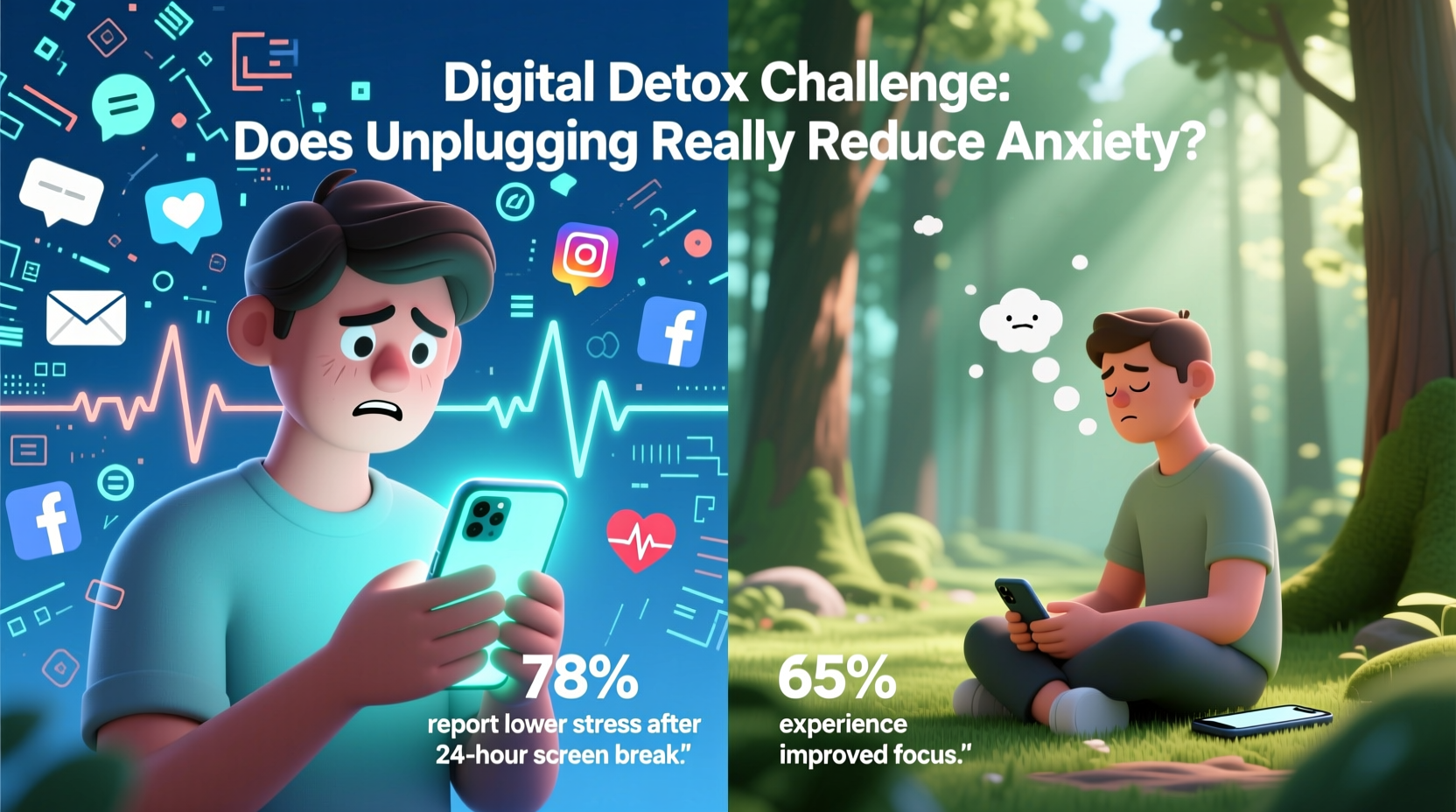
Research consistently links excessive digital consumption with increased levels of anxiety. A 2023 meta-analysis published in JAMA Psychiatry found that individuals who spent more than five hours daily on social media were twice as likely to report moderate to severe anxiety symptoms compared to those using it less than one hour per day. Notifications, algorithmic content designed to trigger emotional reactions, and constant comparison contribute to a state of low-grade hypervigilance—the brain remains subtly on high alert.
Neurologically, frequent screen use activates the amygdala, the brain’s fear center, while suppressing prefrontal cortex activity responsible for rational thinking and emotional regulation. Over time, this imbalance can make people more reactive to stressors—even minor ones—leading to chronic anxiety patterns.
“Our brains weren’t built to process endless streams of emotionally charged updates. When you're constantly reacting to pings and posts, your nervous system stays in fight-or-flight mode. That’s unsustainable.” — Dr. Lena Patel, Cognitive Behavioral Therapist and Digital Wellness Researcher
However, correlation doesn’t equal causation. Some people turn to screens because they’re already anxious, seeking distraction or connection. So, while reducing usage may help, it's not always the root cause.
Do Digital Detox Challenges Actually Reduce Anxiety?
Short-term digital detoxes—ranging from 24-hour resets to week-long fasts—can offer measurable benefits. A University of Pennsylvania study showed participants who limited social media to 30 minutes per day for three weeks reported significantly lower loneliness and depression scores. Similar outcomes emerge during organized detox programs like National Day of Unplugging or Screen-Free Week.
But success depends heavily on execution. Many people approach detox like a punishment: deleting apps abruptly, throwing phones into drawers, and cutting off communication cold turkey. This often backfires, triggering withdrawal symptoms such as irritability, restlessness, and heightened anxiety—what researchers call “technostress rebound.”
Effective detox isn't about elimination; it's about intentionality. Those who plan ahead, replace screen time with meaningful offline activities, and gradually reduce dependence tend to see lasting improvements in mood and focus.
A Real-Life Experiment: One Week Without Screens
Sarah, a 34-year-old graphic designer from Portland, decided to try a seven-day digital detox after months of sleep disruption and panic attacks. Her typical routine involved checking her phone within seconds of waking, scrolling Instagram during breakfast, and working late into the night under blue light.
She began by setting boundaries: no devices after 7 PM, turning off non-essential notifications, and informing colleagues she’d be offline Friday through Thursday. During the week, she replaced evening screen time with journaling, reading fiction, and walking in nature. She kept a notebook to track her mood each day.
By day three, Sarah noticed changes. “I was bored at first,” she admitted. “But then I started noticing things—the sound of birds outside my window, how good a book feels in my hands. My shoulders relaxed. I slept deeper.” By day six, her morning anxiety had dropped noticeably. She didn’t eliminate all worry, but the constant background hum of dread faded.
After re-engaging online, she adopted new habits: using grayscale mode on her phone, scheduling email checks twice daily, and keeping her bedroom device-free. Nine months later, she reports fewer anxiety episodes and improved concentration.
Sarah’s experience reflects a broader pattern: temporary disconnection works best when it leads to permanent behavioral shifts.
How to Structure an Effective Digital Detox (Step-by-Step Guide)
A well-planned detox increases the chances of reducing anxiety rather than amplifying it. Follow this six-step timeline to create a sustainable break from digital overload.
- Assess Your Current Usage (Day 1–2): Use built-in screen time trackers (iOS Screen Time or Android Digital Wellbeing) to log app usage, pick-up frequency, and notification volume. Identify which platforms drain energy versus add value.
- Set Clear Intentions (Day 3): Define your goal—is it reduced anxiety, better sleep, or improved focus? Write it down. Vague goals like “use less tech” rarely succeed.
- Create Replacements (Day 4): Plan alternative activities for high-usage times. If you usually scroll before bed, schedule reading or stretching instead. Fill the void with purposeful actions.
- Notify Key Contacts (Day 5): Let family, friends, or coworkers know about your upcoming detox. Provide alternative ways to reach you in emergencies (e.g., phone call only).
- Begin the Detox (Days 6–12): Start with a weekend or vacation period. Remove distracting apps, enable grayscale, or use a basic phone. Avoid total isolation—stay socially engaged offline.
- Reflect and Reintegrate (Day 13+): After the detox, review what changed. Which apps felt unnecessary? What did you enjoy doing instead? Gradually bring back tools mindfully, applying new limits.
Dos and Don’ts of Digital Detoxing
| Do | Don’t |
|---|---|
| Start small—try a 24-hour detox before attempting longer breaks | Quit all technology abruptly without preparation |
| Replace screen time with physical movement, creativity, or face-to-face interaction | Substitute screen time with passive TV binges |
| Use airplane mode or app blockers during focus periods | Rely solely on willpower without environmental supports |
| Keep a journal to track mood and behavior changes | Expect immediate transformation—change takes time |
| Reintroduce technology slowly with usage caps | Return to old habits immediately after the detox ends |
What Experts Recommend for Lasting Change
While short detoxes provide insight, long-term anxiety reduction comes from habit redesign. Psychologists emphasize “digital hygiene”—daily practices that prevent tech overload before it triggers stress.
- Morning delay: Wait at least 30 minutes after waking before touching your phone.
- No-phone zones: Designate areas like bedrooms or dining tables as tech-free.
- Notification triage: Turn off alerts for everything except direct messages and calls.
- Weekly audit: Every Sunday, review your screen time data and adjust accordingly.
“The most resilient people aren’t those who never use technology—they’re the ones who control their use, not the other way around.” — Dr. Marcus Chen, Director of Behavioral Health at Mindlight Institute
Checklist: Prepare for a Successful Digital Detox
- ✅ Track current screen time for two days
- ✅ Define your primary reason for detoxing (e.g., reduce anxiety, improve sleep)
- ✅ Choose a start date and duration (recommended: 48 hours minimum)
- ✅ Inform important contacts of your absence online
- ✅ Delete or disable distracting apps temporarily
- ✅ Prepare offline alternatives (books, puzzles, exercise gear)
- ✅ Set up a charging station outside the bedroom
- ✅ Commit to a post-detox reflection session
Frequently Asked Questions
Can a digital detox cure anxiety?
No single intervention \"cures\" anxiety, which is influenced by biological, psychological, and environmental factors. However, reducing compulsive tech use can significantly alleviate symptoms, especially when digital overstimulation contributes to nervous system dysregulation. It should complement—not replace—professional treatment when needed.
What if I feel more anxious when I unplug?
This is common, particularly for those accustomed to using devices as emotional crutches. Feelings of boredom, FOMO (fear of missing out), or emptiness may surface. These usually subside within 48 hours. To ease the transition, engage in grounding activities like walking, drawing, or talking with someone in person. If anxiety persists, consider shorter, more frequent breaks instead of long detoxes.
How often should I do a digital detox?
There’s no universal rule. Some benefit from quarterly 48-hour resets; others prefer monthly screen-free weekends. Listen to your body and mind. Signs you might need a break include difficulty concentrating, irritability when separated from your phone, disrupted sleep, or feeling emotionally drained after scrolling.
Conclusion: Unplugging Is Not the Goal—Awareness Is
Digital detox challenges aren’t magic cures, but they serve a vital purpose: they disrupt autopilot behavior and force us to examine our relationship with technology. For many, stepping away—even briefly—reveals how much mental space has been occupied by pings, feeds, and infinite refresh loops.
Reducing anxiety through unplugging isn’t about rejecting modern tools, but reclaiming agency. When done thoughtfully, a detox can reset attention spans, deepen presence, and restore emotional equilibrium. The ultimate goal isn’t to live without technology, but to use it without being used by it.




 浙公网安备
33010002000092号
浙公网安备
33010002000092号 浙B2-20120091-4
Comments
No comments yet. Why don't you start the discussion?