
Choosing a homeschooling curriculum grounded in Christian values is more than an academic decision—it’s a spiritual commitment. For families seeking to integrate biblical truth into daily learning, the right curriculum can shape not only knowledge but character. With dozens of options available, selecting one that aligns with your family’s beliefs, teaching style, and educational goals requires careful evaluation. This guide explores top Christian homeschool curricula, compares their strengths, and provides actionable insights to help you make an informed choice.
What Makes a Curriculum Truly Christian?
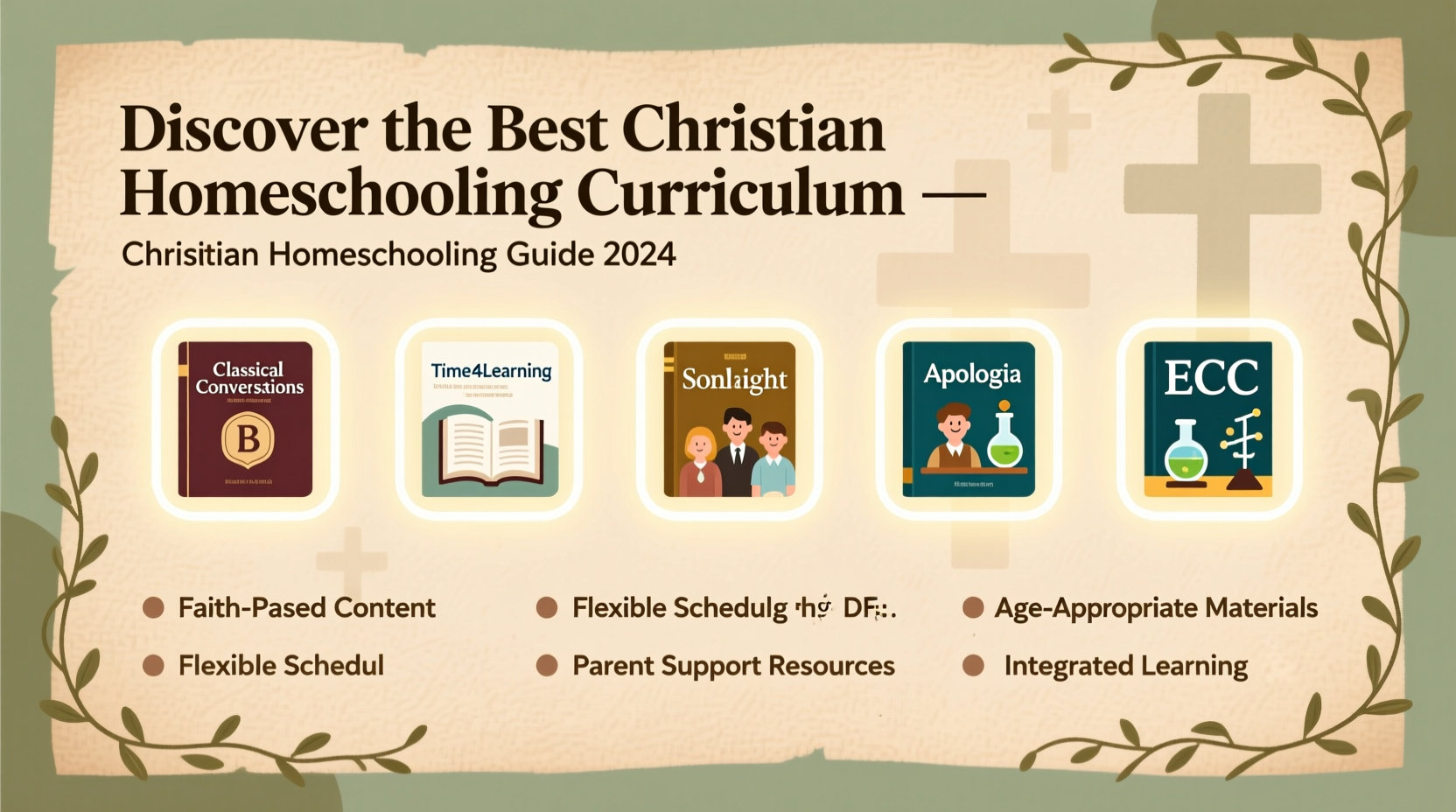
A genuinely Christian curriculum goes beyond adding Bible verses to math problems or scheduling weekly Scripture reading. It weaves a biblical worldview throughout every subject—showing how history reflects God’s sovereignty, how science reveals His design, and how literature explores moral truth through a redemptive lens.
Look for programs that:
- Present all subjects from a biblically integrated perspective
- Use creationist models in science (where applicable)
- Emphasize character development and discipleship
- Are developed by organizations or educators with clear doctrinal statements
“Education is never neutral. A Christian curriculum doesn’t just teach facts—it shapes hearts by showing students how all truth belongs to God.” — Dr. Karen Swallow Prior, Educator & Author
Top 5 Christian Homeschool Curricula Compared
The following programs are widely respected within the Christian homeschooling community for their academic rigor, biblical fidelity, and parent-friendly design.
| Curriculum | Grades Covered | Biblical Integration | Teaching Style | Best For |
|---|---|---|---|---|
| Abeka | K–12 | Strong (Baptist foundation) | Traditional, teacher-led | Families wanting structure and proven results |
| BJU Press (Bob Jones University) | K–12 | Very strong (conservative Protestant) | Classical approach with spiral review | Families valuing doctrinal clarity and academic challenge |
| Sonlight | Pre-K–12 | Moderate to strong (interdenominational) | Literature-rich, hands-on | Families who love reading and discussion-based learning |
| Mystery of History | 1–12 (History focus) | Strong (Christ-centered narrative) | Unit studies & timeline-based | Homeschoolers building history around Scripture |
| My Father’s World | Preschool–12 | Strong (creationist, missions-focused) | Unit study & Charlotte Mason blend | Families desiring global awareness and nature study |
How to Choose Based on Your Family’s Needs
No single curriculum fits every household. Consider these factors when making your selection:
1. Teaching Philosophy
Do you prefer structured lessons (like Abeka), flexible unit studies (like My Father’s World), or literature-based immersion (like Sonlight)? Your comfort level with planning and instruction should guide your pick.
2. Time Commitment
Some curricula require significant daily prep. BJU Press materials are thorough but can be time-intensive. Sonlight offers full lesson plans but demands consistent reading aloud. If you're managing multiple children, look for open-and-go formats.
3. Theological Alignment
Review each provider’s statement of faith. Abeka and BJU reflect conservative Baptist theology, while Sonlight welcomes a broader evangelical audience. Ensure the curriculum supports what you believe and teach at home.
4. Learning Styles
If your child learns best through storytelling, choose Sonlight. If they thrive on repetition and drills, Abeka may be ideal. Visual learners benefit from BJU’s colorful textbooks and teaching aids.
5. Long-Term Goals
Are you preparing for college, vocational training, or missions? BJU and Abeka offer robust high school transcripts recognized by most institutions. My Father’s World emphasizes service and discipleship, ideal for ministry-minded families.
Real Family Experience: The Thompsons’ Journey
The Thompsons began homeschooling in 2020 with a secular curriculum but felt something was missing. “Our kids were learning math and grammar, but we weren’t seeing growth in their understanding of God’s Word,” said Sarah Thompson, mother of four.
After researching options, they switched to Sonlight for grades 1–8 and paired it with Apologia Science for middle school. “Suddenly, history came alive as a story of redemption. Our kids started asking theological questions during read-alouds,” she shared.
The transition wasn’t seamless—Sonlight required more reading time than expected—but the family adjusted by involving older siblings in narration and using audiobooks. Three years later, they credit the curriculum with deepening both academic engagement and spiritual conversation at home.
Step-by-Step Guide to Selecting Your Curriculum
- Clarify your educational goals: Are you focused on academic excellence, discipleship, flexibility, or a combination?
- Assess your teaching style: Do you prefer scripted lessons or creative freedom?
- Determine budget: Full-grade kits can range from $150 to over $700 per year. Look for used co-ops or digital bundles to save.
- Request samples: Most publishers offer free trial units. Test one week of lessons across core subjects.
- Involve your children: Let older kids preview materials and give feedback on readability and interest.
- Start small: Begin with core subjects (Bible, math, language arts) and add electives gradually.
- Evaluate after one semester: Adjust or switch if pacing, workload, or worldview integration isn’t working.
Essential Checklist Before You Buy
- ✅ Does the curriculum include a clear biblical worldview in every subject?
- ✅ Is the teacher’s guide easy to follow and time-efficient?
- ✅ Are answer keys, schedules, and assessments included?
- ✅ Can it adapt to multiple grade levels for sibling teaching?
- ✅ Is there support available (online forums, customer service, video tutorials)?
- ✅ Does it meet your state’s homeschool requirements?
- ✅ Can you purchase individual subjects instead of full packages?
Frequently Asked Questions
Can I mix different Christian curricula?
Yes, many homeschoolers do. For example, use Abeka for math and spelling, Sonlight for history and reading, and Apologia for science. Just ensure the pacing and difficulty levels align across subjects.
Is online Christian curriculum a good option?
Yes—programs like Veritas Press Scholars Academy and Seven Sisters Homeschool offer live or self-paced online classes with strong biblical integration. These are ideal for parents who want expert instruction in challenging subjects like logic, rhetoric, or foreign languages.
How important is accreditation for a Christian curriculum?
Accreditation applies to schools, not curricula. Most homeschool families use unaccredited materials successfully. However, if college admission is a priority, choose curricula known for academic rigor and detailed recordkeeping (e.g., BJU Press or Kolbe Academy).
Final Thoughts: Building a Foundation That Lasts
Selecting a Christian homeschool curriculum is one of the most impactful decisions you’ll make as a parent-educator. It’s not merely about choosing textbooks—it’s about stewarding your children’s minds and hearts during formative years. The best curriculum will feel like an extension of your family’s mission: to raise young people who are intellectually equipped and spiritually grounded.
Whether you’re drawn to the discipline of Abeka, the warmth of Sonlight, or the depth of BJU Press, remember that consistency and relationship matter more than perfection. No curriculum teaches character like a parent praying with their child after a hard math lesson. No textbook replaces the moment a child sees God’s hand in a butterfly’s wings or a historical revival.




 浙公网安备
33010002000092号
浙公网安备
33010002000092号 浙B2-20120091-4
Comments
No comments yet. Why don't you start the discussion?