
Julius Caesar remains one of the most influential figures in world history—not only for his military conquests and political reforms but also for the enduring power of his words. Though many of the quotes attributed to him come from historical accounts, plays, and later interpretations, they continue to resonate across centuries. From leadership and courage to fate and ambition, Caesar’s sayings offer profound reflections on human nature and power. This article explores the most memorable quotes linked to Julius Caesar, unpacks their meanings, and reveals how they remain relevant today.
The Legacy of a Leader: Why Caesar’s Words Still Matter
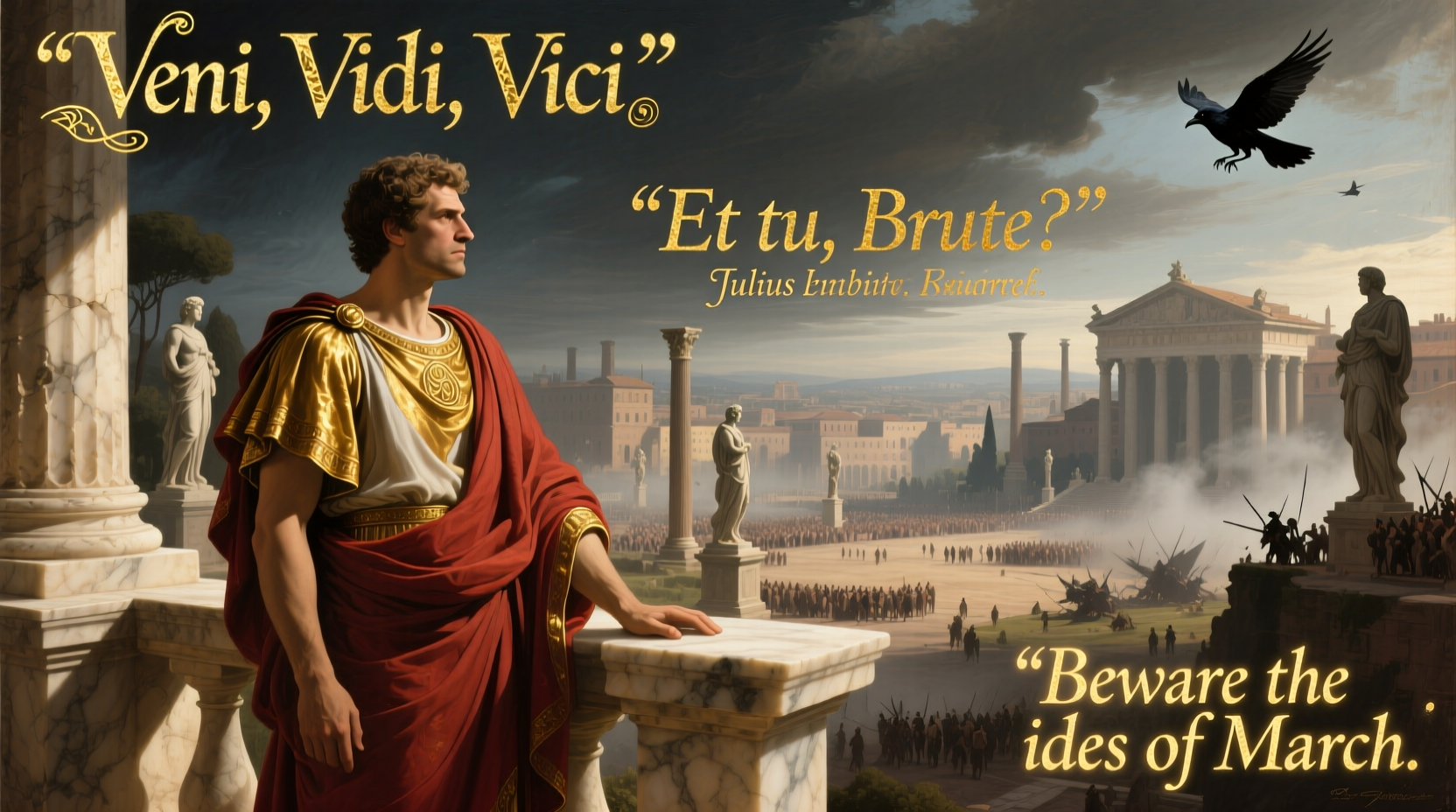
Caesar was more than a general or emperor—he was a master communicator. His ability to inspire troops, outmaneuver rivals, and shape public perception was rooted in clarity, confidence, and rhetorical precision. While no personal writings of his survive verbatim beyond works like *Commentarii de Bello Gallico*, much of what we know about his voice comes from contemporaries like Cicero, historians such as Suetonius, and dramatists like William Shakespeare, who immortalized his phrases in literature.
The staying power of these quotes lies not just in their dramatic flair, but in their psychological depth. They reflect timeless themes: decisive action, the unpredictability of fortune, and the burden of greatness. Whether you're seeking motivation, studying leadership, or exploring classical philosophy, Caesar’s words provide a window into the mind of a man who reshaped an empire.
Famous Quotes and Their Deeper Meanings
Below are some of the most iconic lines associated with Julius Caesar, along with historical context and modern interpretation.
\"Veni, vidi, vici.\" — \"I came, I saw, I conquered.\"
This concise declaration, sent to the Roman Senate after his swift victory over Pharnaces II of Pontus in 47 BCE, exemplifies Caesar’s confidence and efficiency. It wasn’t just a report—it was a statement of dominance. In modern terms, this quote is used to celebrate quick, decisive success. Entrepreneurs, athletes, and leaders often invoke it when overcoming challenges with minimal delay.
\"The die is cast.\" (Latin: \"Alea iacta est\")
Reportedly spoken by Caesar as he crossed the Rubicon River in 49 BCE—an act that initiated civil war—this phrase signifies irreversible commitment. By crossing with his army, Caesar violated Roman law and set himself against the Senate. Today, it’s used when someone makes a bold decision with no turning back. It reminds us that progress often demands risk.
\"Fortune favors the bold.\" (Latin: \"Fortes fortuna adiuvat\")
Though originally from the poet Virgil, this line is frequently linked to Caesar due to his daring campaigns. It captures his belief in proactive leadership. Rather than waiting for opportunity, he created it. In business and personal development, this mindset encourages initiative over hesitation.
\"It is better to create than to judge.\" – Attributed to Caesar
This lesser-known but powerful sentiment aligns with Caesar’s reformist agenda—from calendar reform to expanding citizenship. He valued action over criticism. For modern readers, it’s a call to contribute rather than merely critique.
Leadership Lessons from Caesar’s Philosophy
Caesar’s life offers a blueprint for effective leadership, and his words reinforce key principles still taught in management and strategy today.
- Decisiveness: Hesitation weakened rivals; Caesar struck fast. His Rubicon moment proves that timing and courage matter more than perfect conditions.
- Perspective Over Popularity: Caesar didn’t seek approval—he sought results. He restructured debt, rewarded veterans, and centralized power, often at the cost of elite favor.
- Presence and Charisma: Historical accounts describe his piercing gaze, calm demeanor, and ability to remember soldiers’ names—small details that built loyalty.
“Great men don’t wait for permission—they take responsibility.” — Adapted from Caesar’s actions, as noted by historian Adrian Goldsworthy
This insight, while not a direct quote, reflects the essence of Caesar’s approach. He didn’t ask the Senate to grant him authority; he acted as if he already had it, then justified it through success.
Practical Applications for Modern Life
You don’t need to lead an army to benefit from Caesar’s mindset. Consider how these ideas apply today:
| Caesar’s Principle | Modern Application |
|---|---|
| Veni, vidi, vici | Complete high-priority tasks swiftly to build momentum. |
| The die is cast | Commit fully to career changes, investments, or creative projects. |
| Fortune favors the bold | Apply for the job, pitch the idea, start the business—before you feel “ready.” |
| Create, don’t judge | Spend energy building solutions instead of focusing on flaws in existing systems. |
Expert Insights on Caesar’s Influence
Scholars continue to analyze Caesar’s rhetoric and its lasting cultural imprint. According to Dr. Mary Beard, renowned classicist:
“Caesar understood the theater of power. His words were never just communication—they were performance, designed to awe, intimidate, and inspire.” — Dr. Mary Beard, Classicist and Historian
This performative aspect explains why so many of his attributed lines are short, dramatic, and easily remembered. He crafted a persona of inevitability—a man destined to win.
Shakespeare further amplified this image in *Julius Caesar*, where fictionalized speeches elevate him to mythic status. Lines like “I am constant as the northern star” may not be historically accurate, but they capture how Caesar wanted to be seen—and how history remembers him.
Mini Case Study: A Startup Founder Inspired by Caesar
Consider Marcus Tran, founder of a tech startup in Berlin. Faced with investor hesitation, he recalled Caesar’s crossing of the Rubicon. Instead of waiting for funding, he launched a minimum viable product using personal savings and freelance work. Within six months, user growth forced investors to take notice.
“I realized I didn’t need permission to begin,” Tran says. “Like Caesar, I decided to act. ‘The die is cast’ became our team motto. We weren’t waiting—we were building.” The company secured seed funding within a year and now serves over 50,000 users.
This real-world example shows how ancient wisdom can fuel modern innovation when applied with conviction.
Actionable Checklist: Embody Caesar’s Mindset
To integrate Caesar’s principles into your daily life, follow this checklist:
- Identify one goal you’ve been delaying—then take the first step today.
- Replace self-doubt with decisive language. Say “I will” instead of “I might.”
- Write a “Veni, Vidi, Vici” journal entry weekly—documenting one task you completed with speed and focus.
- Audit your time: Are you spending more energy judging others’ work than creating your own?
- When facing fear, repeat: “The die is cast.” Commit and adjust later.
FAQ
Did Julius Caesar actually say all these quotes?
Some, like “Veni, vidi, vici” and “Alea iacta est,” are well-documented in ancient sources. Others, especially those from Shakespeare’s play, are dramatized. However, they reflect authentic aspects of his character and decisions.
What can modern leaders learn from Caesar’s downfall?
Despite his brilliance, Caesar’s assassination teaches the danger of perceived arrogance and isolation. Even the strongest leaders need allies. Balance confidence with humility and inclusivity.
How can I use these quotes in presentations or writing?
Use them sparingly and with context. For example, “Fortune favors the bold” works well in motivational talks, while “Veni, vidi, vici” suits summaries of rapid achievement. Always credit the origin when possible.
Conclusion: Speak with Purpose, Act with Courage
The words tied to Julius Caesar endure because they speak to universal ambitions: to lead, to conquer, to leave a mark. Whether uttered on a battlefield or crafted in silence, his quotes remind us that greatness begins with action. You don’t need an empire to wield influence—only the willingness to move forward when others hesitate.




 浙公网安备
33010002000092号
浙公网安备
33010002000092号 浙B2-20120091-4
Comments
No comments yet. Why don't you start the discussion?