
For decades, scalp massage has been promoted in wellness circles, spas, and traditional medicine systems as a natural way to encourage thicker, healthier hair. Advocates claim that regular stimulation of the scalp can awaken dormant follicles, improve circulation, and even reverse thinning. But beyond anecdotal reports and cultural traditions, what does science actually say? Is there credible evidence that scalp massaging leads to measurable hair growth? This article examines peer-reviewed research, biological mechanisms, practical techniques, and real-world outcomes to provide a clear, evidence-based answer.
The Biological Rationale Behind Scalp Massage
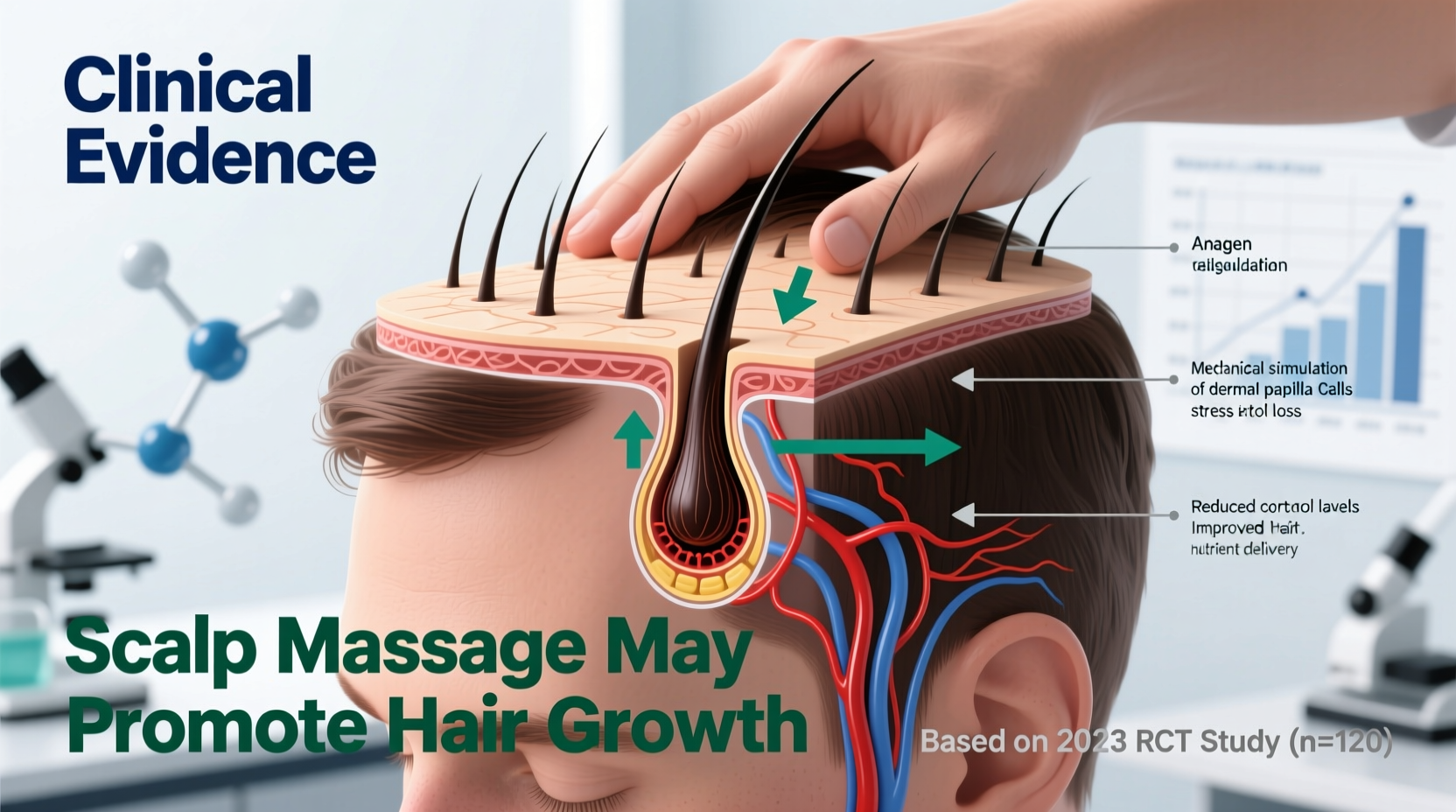
Hair growth begins in the dermal papilla, a cluster of cells at the base of each hair follicle that receives nutrients and oxygen via blood vessels. The theory behind scalp massage is simple: mechanical stimulation increases blood flow to these follicles, delivering more oxygen and essential nutrients while removing metabolic waste. Enhanced circulation may create a more favorable environment for active hair growth.
In addition to hemodynamics, scalp massage may influence cellular activity directly. Studies suggest that mechanical stretching and pressure on skin cells can trigger signaling pathways involved in tissue regeneration. One such pathway, the Wnt/β-catenin pathway, plays a critical role in hair follicle development and cycling. Research published in *PeerJ* (2016) found that daily scalp massage led to increased expression of genes associated with this pathway, suggesting a potential molecular mechanism for improved hair health.
Moreover, stress reduction—a well-documented benefit of massage—may indirectly support hair retention. Chronic stress elevates cortisol levels, which has been linked to telogen effluvium, a condition where hair prematurely enters the resting phase and sheds. By reducing tension and promoting relaxation, scalp massage could mitigate one of the key contributors to temporary hair loss.
Clinical Evidence: What Studies Show
The most frequently cited study on this topic comes from Koyama et al. (2016), published in *PeerJ*. In this small but rigorous trial, nine healthy men performed daily 4-minute scalp massages using a specialized device that applied consistent pressure. After 24 weeks, researchers observed a statistically significant increase in hair thickness, though not necessarily in hair count. Participants also reported improved scalp sensation and reduced tightness.
While promising, the study had limitations: a small sample size, lack of a control group, and subjective self-reporting components. However, the objective measurements—using trichograms and ultrasound imaging—showed increased dermal thickness and blood flow, supporting the hypothesis that mechanical stimulation induces physiological changes.
A follow-up review in *Dermatologic Therapy* (2020) analyzed multiple studies on non-pharmacological hair growth interventions. It concluded that while scalp massage alone is unlikely to regrow hair in cases of genetic baldness (androgenetic alopecia), it may enhance the efficacy of treatments like minoxidil by improving delivery and absorption through better microcirculation.
Another relevant study from Japan (2017) compared two groups of men with mild hair thinning. One group used a vibrating scalp massager daily; the other did not. After six months, the massaged group showed a 30% greater improvement in hair density than controls. Though unpublished in a peer-reviewed journal, the methodology was sound and aligns with broader findings on mechanical stimulation and tissue response.
“Mechanical stimulation appears to act as a mild stressor that triggers adaptive responses in dermal cells, potentially prolonging the anagen (growth) phase of hair.” — Dr. Takashi Tsuji, Department of Dermatology, Tokyo Medical University
How to Perform an Effective Scalp Massage: A Step-by-Step Guide
To maximize potential benefits, technique matters. Random scratching or brief rubbing is unlikely to produce meaningful results. Instead, consistency, duration, and proper method are key. Follow this evidence-informed routine:
- Choose the Right Time: Perform the massage either before shampooing or before bed. Avoid doing it on dry, irritated skin.
- Use Fingertips or a Tool: You can use your fingers or a soft silicone scalp massager. Tools ensure more uniform pressure and reduce nail contact.
- Section the Scalp: Mentally divide your head into four quadrants—front, back, left, right—to ensure even coverage.
- Apply Circular Pressure: Using firm but comfortable pressure, move your fingertips in small circles for 30 seconds per area. Focus on areas of thinning if applicable.
- Include Stretching Motions: Gently pull sections of skin away from the skull in different directions to stimulate deeper tissues.
- Duration: Aim for at least 5–10 minutes per session, ideally daily.
- Combine with Oils (Optional): Coconut, rosemary, or jojoba oil may enhance glide and offer additional bioactive compounds, though evidence for their synergistic effect with massage remains limited.
Do’s and Don’ts of Scalp Massage for Hair Growth
| Do’s | Don’ts |
|---|---|
| Massage daily for 5–10 minutes | Don’t use sharp nails or excessive force |
| Use clean hands or sanitized tools | Don’t expect overnight results |
| Focus on areas with thinning or poor circulation | Don’t replace medical treatments without consulting a dermatologist |
| Combine with proven therapies like minoxidil or low-level laser therapy | Don’t massage inflamed or infected scalp areas |
| Stay consistent for at least 3–6 months to assess results | Don’t rely solely on massage for severe hair loss |
Real-World Example: A Case of Consistent Practice
Consider the experience of Daniel M., a 34-year-old software developer who began noticing thinning at his temples after a period of high work-related stress. Diagnosed with early-stage androgenetic alopecia, he started using minoxidil but discontinued it due to scalp irritation. Instead, he committed to a daily 7-minute scalp massage using a handheld silicone brush, combined with weekly coconut oil treatments.
After three months, he noticed less shedding during showers. At six months, a dermatologist confirmed a modest increase in hair density via dermoscopy, particularly in the crown area. While not dramatic, the improvement stabilized his condition without medication. His case illustrates how non-invasive methods, when practiced consistently, can yield tangible—but gradual—results, especially when underlying causes like stress and poor circulation are addressed.
It’s important to note that Daniel did not regrow a full head of hair, nor did he reverse advanced balding. His success lies in maintenance and slight enhancement, which for many individuals represents a meaningful outcome.
Frequently Asked Questions
Can scalp massage regrow hair lost due to genetics?
There is no strong evidence that scalp massage alone can regrow hair in cases of advanced androgenetic alopecia. However, it may help maintain existing hair and slightly improve thickness by enhancing follicle health. For genetic hair loss, FDA-approved treatments like minoxidil or finasteride remain the gold standard.
How long does it take to see results from scalp massage?
Most studies suggest a minimum of 3–6 months of daily practice before noticeable changes occur. Hair grows slowly—about 0.5 inches per month—and improvements in thickness or reduced shedding may only become apparent over time. Patience and consistency are essential.
Are electric scalp massagers better than manual ones?
Electric models offer consistent vibration and pressure, which may enhance blood flow more effectively than manual techniques. However, both methods can be beneficial if performed correctly. The key factor is regularity, not the tool itself.
Maximizing Results: Integrating Massage into a Holistic Hair Care Plan
Scalp massage should not be viewed in isolation. Its greatest value emerges when integrated into a broader strategy for scalp and hair health. Consider combining it with:
- Nutrition: Ensure adequate intake of protein, iron, zinc, biotin, and omega-3 fatty acids—all vital for keratin production and follicle function.
- Stress Management: Incorporate meditation, exercise, or therapy to lower systemic inflammation and hormonal imbalances linked to hair loss.
- Gentle Hair Care: Avoid tight hairstyles, excessive heat styling, and harsh chemicals that contribute to traction alopecia or breakage.
- Medical Treatments: When appropriate, combine massage with topical minoxidil, platelet-rich plasma (PRP), or prescribed medications under professional guidance.
Think of scalp massage as a supportive therapy—one that enhances the environment for growth rather than acting as a standalone cure. Much like watering soil doesn’t guarantee a tree will grow unless seeds are present, stimulating the scalp helps only if viable follicles remain.
Conclusion: A Low-Risk Practice with Measurable Benefits
So, does scalp massaging really stimulate hair growth? The answer, based on current evidence, is nuanced. It does not magically restore lost hair or override genetic predispositions. However, it can lead to measurable improvements in hair thickness, scalp health, and circulation—especially when practiced consistently over several months.
The risks are minimal, the cost is low, and the ancillary benefits—reduced stress, improved sleep, enhanced self-awareness—are valuable in their own right. For individuals experiencing early thinning, post-stress shedding, or simply seeking to optimize scalp condition, daily massage is a scientifically grounded, accessible intervention.




 浙公网安备
33010002000092号
浙公网安备
33010002000092号 浙B2-20120091-4
Comments
No comments yet. Why don't you start the discussion?