
Finding your own phone number on an Android device should be simple—but surprisingly, it’s not always obvious where to look. Unlike iPhones, which often display the number clearly in settings, Android manufacturers handle this differently across brands and models. Whether you're setting up a new phone, verifying your identity on an app, or simply forgot your digits, knowing how to retrieve your number fast is essential. The good news? There are multiple built-in methods that require no third-party apps or complicated steps.
Why It’s Harder Than You Think
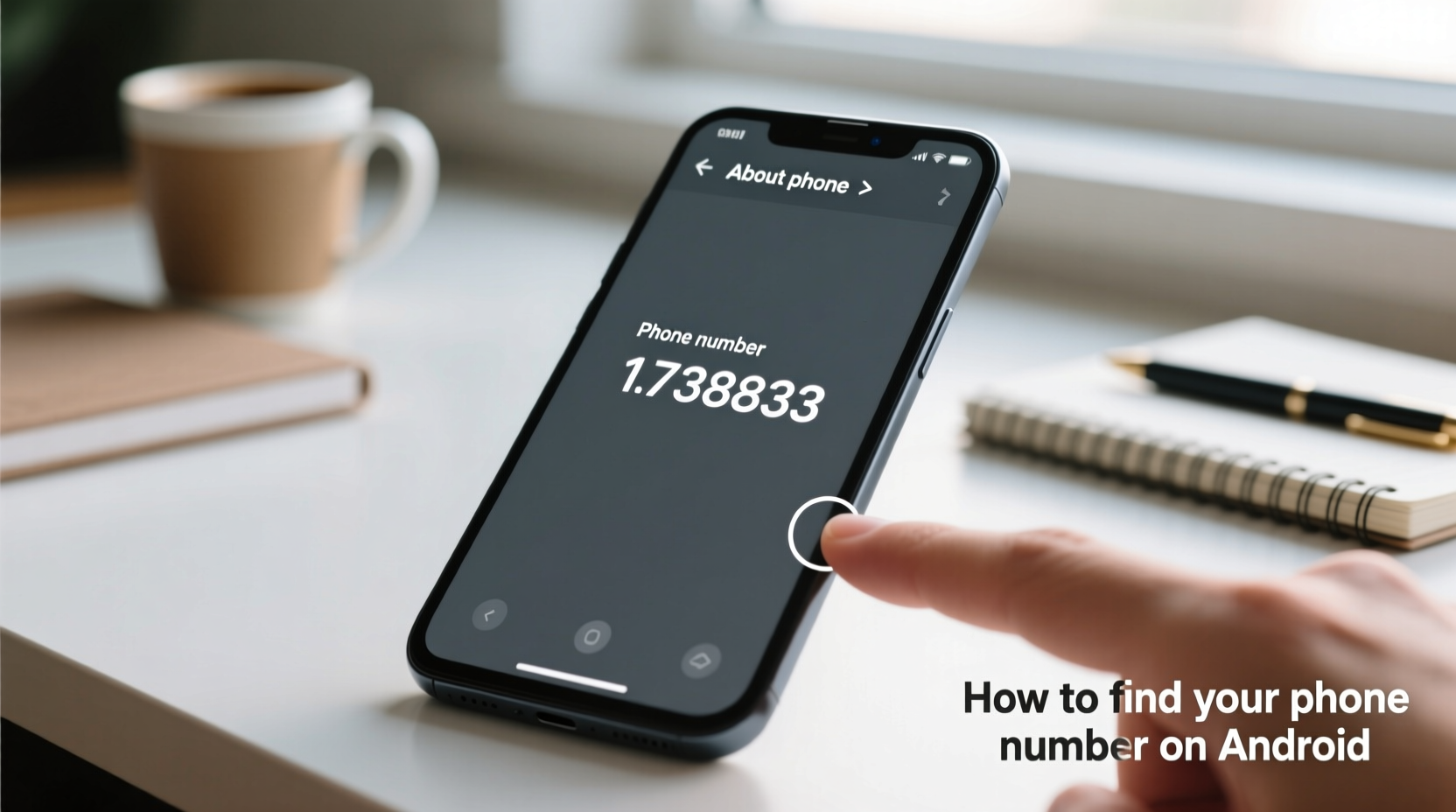
Android is an open ecosystem used by dozens of manufacturers—Samsung, Google, OnePlus, Xiaomi, and others—each with its own software interface. As a result, your phone number may not appear in the same place across devices. Some phones display it prominently; others hide it deep within menus or don’t show it at all unless provided by your carrier. This inconsistency leads many users to assume their number isn’t stored when, in fact, it is—just buried.
“Many users waste time downloading apps to find their number when the answer is already in their device settings.” — Raj Mehta, Mobile Support Specialist
Additionally, dual-SIM devices complicate things further, as both numbers must be distinguishable. But with the right approach, you can locate your number in under a minute—regardless of brand or model.
Step-by-Step: How to Find Your Number in Settings
The most reliable method uses your phone’s native settings. Follow this universal guide:
- Open the Settings app (gear icon).
- Scroll down and tap on About phone or About device.
- Look for an option labeled Status, Phone identity, or IMEI information.
- Select it, then scroll until you see My phone number, MSISDN, or Subscriber number.
If your number appears, copy or screenshot it. If not, don’t worry—your carrier might not have sent it to the device. Try alternative methods below.
Alternative Methods When Settings Fail
Sometimes, your number won’t appear in settings—even if you’re actively using the SIM. In those cases, use one of these proven alternatives:
1. Dial a Universal Code
Enter *#06# to pull up your IMEI number. While this doesn’t show your phone number, some carriers embed identifying info that customer service can trace back to your line. Alternatively, try carrier-specific codes:
- Verizon:
*# - AT&T: Dial
*#225#(short for \"MY ACCOUNT\") - T-Mobile: Text “SIM” to 6667 to receive your number via SMS
2. Check Your Carrier App
Most major carriers offer branded apps (My Verizon, My AT&T, T-Mobile ID). Log in—you’ll typically see your active number front and center. Even without logging in, some detect your number automatically via SIM authentication.
3. Use Google Voice (If Enabled)
If you’ve ever used Google Voice, your linked number appears in the app. Open Google Voice > Menu > Settings > Account > Linked Numbers. This won’t show your cellular number directly but helps verify associated lines.
4. Call or Text Yourself from Another Device
Borrow a friend’s phone or use a landline to call your Android. Your number will appear on the incoming call screen. Similarly, send a text to another device and check what number it came from.
5. Review Recent Messages or Call Logs
Open your messaging app and send a test message to someone (or view an old one). Tap on the conversation thread—the sender number is often visible. In your phone app, long-press a recent outgoing call log entry to see details including the number used.
Do’s and Don’ts: Best Practices Summary
| Do | Don’t |
|---|---|
| Check Settings > About phone > Status first | Assume your number is missing if not immediately visible |
| Use carrier-specific dial codes like *#225# | Download unverified “phone number finder” apps from the Play Store |
| Verify via outgoing call or text metadata | Rely solely on IMEI to determine your number |
| Log into your carrier’s official app | Share SIM details publicly or on unsecured websites |
Mini Case Study: Maria Finds Her Number Before a Job Interview
Maria recently switched to a budget Android phone and couldn’t find her number before a critical job interview. She needed to register for a video platform that required her mobile number for verification. After searching online and nearly downloading a third-party app, she remembered reading about carrier codes. She dialed *#225# on her AT&T device—and instantly received a text: “Your mobile number is (555) 123-4567.” Within seconds, she completed registration and joined the interview on time. No downloads, no risk, no hassle.
This real-world example shows how a simple code saved time and avoided potential security risks from shady apps.
Checklist: How to Locate Your Android Phone Number (Quick Reference)
- ✅ Open Settings > About phone > Status
- ✅ Look for “My phone number,” “MSISDN,” or “Subscriber number”
- ✅ Try dialing carrier-specific codes (*#225# for AT&T, *# for Verizon)
- ✅ Send a test message and check sender ID
- ✅ Use your carrier’s app (My Verizon, My AT&T, etc.)
- ✅ Call yourself from another phone
- ✅ Avoid downloading unknown number-finding apps
Frequently Asked Questions
Why doesn’t my phone number show up in settings?
Your number isn’t stored on the phone itself—it comes from your carrier. If they haven’t provisioned it correctly or your SIM isn’t fully activated, it may not appear. Contact your provider to confirm your number is registered to the SIM.
Are phone number finder apps safe?
Most are unnecessary and potentially risky. They often request excessive permissions (contacts, location, SMS) and may collect data. Stick to built-in methods or your carrier’s official tools instead.
Can I see my number without a SIM card?
No. Your phone number is tied to your SIM card. Without it, there’s no associated number. The IMEI will still appear, but that’s a device identifier, not a phone number.
Final Tips for Long-Term Access
Once you’ve found your number, save it somewhere secure. Consider adding it to your digital wallet, saving it in a password manager, or writing it down in a personal notebook. You can also create a contact labeled “My Number” in your phone with your digits—useful for quick reference later.
If you frequently switch devices or use temporary phones, linking your number to your Google account can help maintain continuity. While Google doesn’t store your number by default, syncing contacts ensures that once you’ve saved it, it travels with you across devices.
“Knowing your own number shouldn’t require guesswork. Understanding where to look saves time and protects your privacy.” — Lena Tran, Digital Literacy Educator
Conclusion
Finding your phone number on Android doesn’t need to be frustrating. With manufacturer variations and inconsistent labeling, it’s easy to feel stuck—but the tools are already on your device. From navigating settings to using carrier codes and self-verification tricks, you now have multiple reliable paths to your number. These methods work across brands, require no downloads, and keep your data private.




 浙公网安备
33010002000092号
浙公网安备
33010002000092号 浙B2-20120091-4
Comments
No comments yet. Why don't you start the discussion?