
Leopard print has long been misunderstood—dismissed by some as too bold or even garish. Yet in the hands of a discerning decorator, it becomes a symbol of confidence, warmth, and refined taste. When used thoughtfully, leopard print pillows can elevate a room from ordinary to effortlessly elegant. The key lies not in avoiding the pattern, but in mastering its integration. This guide reveals how to use leopard print pillows to add depth, texture, and quiet luxury to your interiors without overwhelming the space.
Why Leopard Print Works in Modern Interiors
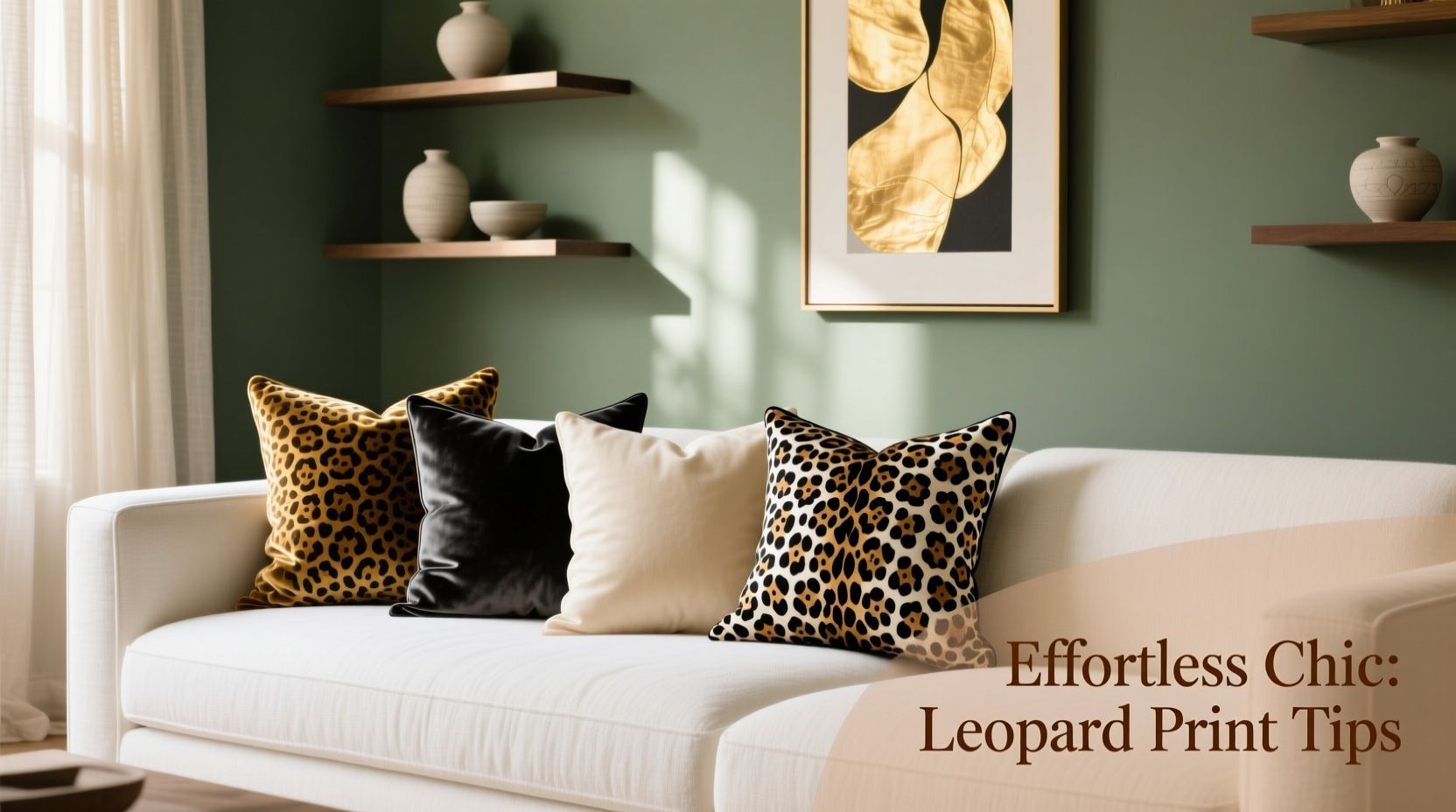
Far from being a relic of 1980s excess, leopard print has undergone a quiet renaissance in contemporary design. Its organic, animal-inspired pattern introduces movement and visual interest, mimicking the irregularities found in nature. Unlike rigid geometrics, leopard print feels alive—its soft brown, cream, and black tones grounding a space while adding subtle drama.
Interior designers increasingly favor muted or tonal leopard prints—think taupe-on-beige or charcoal-on-ivory—as these variations blend seamlessly into neutral palettes. The pattern’s versatility allows it to function like a textured solid when viewed from a distance, yet reveal character up close.
“Leopard is the new neutral. When chosen in the right scale and color, it adds warmth and dimension without competing.” — Clara Mendez, Interior Designer & Author of *Pattern Play*
Choosing the Right Leopard Print Pillow
Not all leopard prints are created equal. The sophistication of the final look hinges on selecting the right variation. Consider these three factors:
- Color Palette: Opt for earthy, desaturated tones rather than high-contrast black-and-white or neon-tinged versions. Cream-based prints with warm browns integrate more easily into layered schemes.
- Scale: Smaller, subtler prints tend to read as texture, making them ideal for formal or minimalist spaces. Larger scales work well in eclectic or bohemian rooms where bolder statements are welcome.
- Material: Velvet, linen-cotton blends, or washed silk give a luxurious hand-feel and diffuse light beautifully, enhancing the print’s softness.
Strategic Placement: Where to Style Leopard Print Pillows
The magic of leopard print lies in moderation and placement. A single pillow can act as an anchor; two can create rhythm. Here’s how to position them for maximum impact:
- Sofas and Sectionals: Place one leopard pillow at each end of a neutral-colored sofa, flanking solid cushions in complementary tones. This creates symmetry and draws the eye inward.
- Armchairs: Use a single leopard pillow on a tailored armchair to add personality without clutter. Pair with a wool throw in a matching neutral.
- Beds: Layer a leopard lumbar pillow over solid duvets or textured coverlets. Keep other bedding minimal to let the print shine.
- Reading Nooks: Combine with a woven basket and floor lamp to create a curated vignette that feels both cozy and intentional.
Mini Case Study: The Neutral Living Room Transformation
A Chicago-based client had a beige-toned living room that felt flat despite quality furniture. The space lacked focal points and visual energy. By introducing two camel-sized leopard print pillows in a soft taupe-on-cream palette—paired with a textured oatmeal throw and a blackened steel coffee table—the room gained depth and quiet sophistication. Guests consistently remarked on the “expensive-looking” detail, unaware it was the leopard print doing the heavy lifting.
Pairing Leopard Print with Other Textures and Patterns
Leopard print thrives in layered environments—but only when balanced correctly. Think of it as a bridge between solids and bolder patterns.
| Complementary Element | How to Use It | Example Combination |
|---|---|---|
| Solid Neutrals | Use as base layers (sofa, throw, rug) | Charcoal sofa + cream leopard pillow + ivory shag rug |
| Herringbone or Tweed | Add structure and contrast | Wool herringbone ottoman + leopard lumbar pillow |
| Floral Prints | Limited to one shared tone to avoid clash | Leopard in taupe + floral with taupe undertones |
| Geometrics | Keep scale small and colors aligned | Diamond-pattern pillow in brown/cream next to leopard |
Avoid pairing leopard with zebra, tiger, or other animal prints unless you're aiming for maximalism. Even then, limit it to one additional print and ensure a unifying element—such as a shared color or material—ties them together.
Do’s and Don’ts: Quick Reference Guide
- ✅ Is the color palette aligned with my room’s dominant tones?
- ✅ Am I using no more than two leopard pillows in one seating area?
- ✅ Are there enough solid or textural anchors to balance the pattern?
- ✅ Does the pillow complement, rather than compete with, other focal points?
- ✅ Is the fabric quality consistent with the rest of my decor?
| Do | Don’t |
|---|---|
| Use leopard print to ground a monochrome scheme | Match it exactly with another pattern |
| Layer with nubby wools, smooth linens, or brushed cottons | Place it in a room already filled with busy patterns |
| Treat it like a textured neutral | Use oversized prints in small rooms |
| Rotate pillows seasonally to keep the look fresh | Ignore lighting conditions when choosing the print |
Frequently Asked Questions
Can I use leopard print pillows in a minimalist space?
Absolutely. In minimalist interiors, a single leopard print pillow can serve as a deliberate accent—like a piece of art on a blank wall. Choose a small-scale print in soft tones and pair it with clean-lined furniture and matte finishes to maintain balance.
Are leopard print pillows outdated?
Not when styled with intention. Outdated perceptions stem from poorly executed uses—such as clashing colors or excessive quantities. Modern interpretations focus on subtlety, quality materials, and thoughtful placement, keeping the trend relevant and stylish.
How do I clean and maintain leopard print pillows?
Always check the care label. For most fabric types, spot cleaning with a mild detergent and damp cloth is sufficient. For removable covers, machine wash cold on gentle cycle. Air dry to prevent shrinkage and fading. Rotate pillows monthly to ensure even wear and sunlight exposure.
Final Thoughts: Embracing Pattern with Confidence
Styling leopard print pillows isn’t about following trends—it’s about cultivating a space that feels authentic, inviting, and quietly confident. The most sophisticated interiors aren’t devoid of pattern; they’re curated with purpose. A well-placed leopard pillow doesn’t shout; it whispers elegance.
Start small. Try one pillow in a low-traffic area. Observe how light interacts with it, how it complements your existing textures, and how it makes you feel when you enter the room. Over time, you’ll develop an instinct for when and where boldness enhances serenity.




 浙公网安备
33010002000092号
浙公网安备
33010002000092号 浙B2-20120091-4
Comments
No comments yet. Why don't you start the discussion?