
Boiling eggs is one of the simplest kitchen tasks—yet many people struggle with cracked shells, leaking whites, and unevenly cooked yolks. While it may seem trivial, cracked eggs can ruin both the appearance and texture of your final dish. Understanding why eggs crack during boiling and how to prevent it transforms this everyday task into a foolproof process. This guide dives into the science behind eggshell integrity, offers practical prevention strategies, and equips you with expert-backed methods to achieve consistently perfect boiled eggs.
Why Eggs Crack When Boiling: The Science Behind It
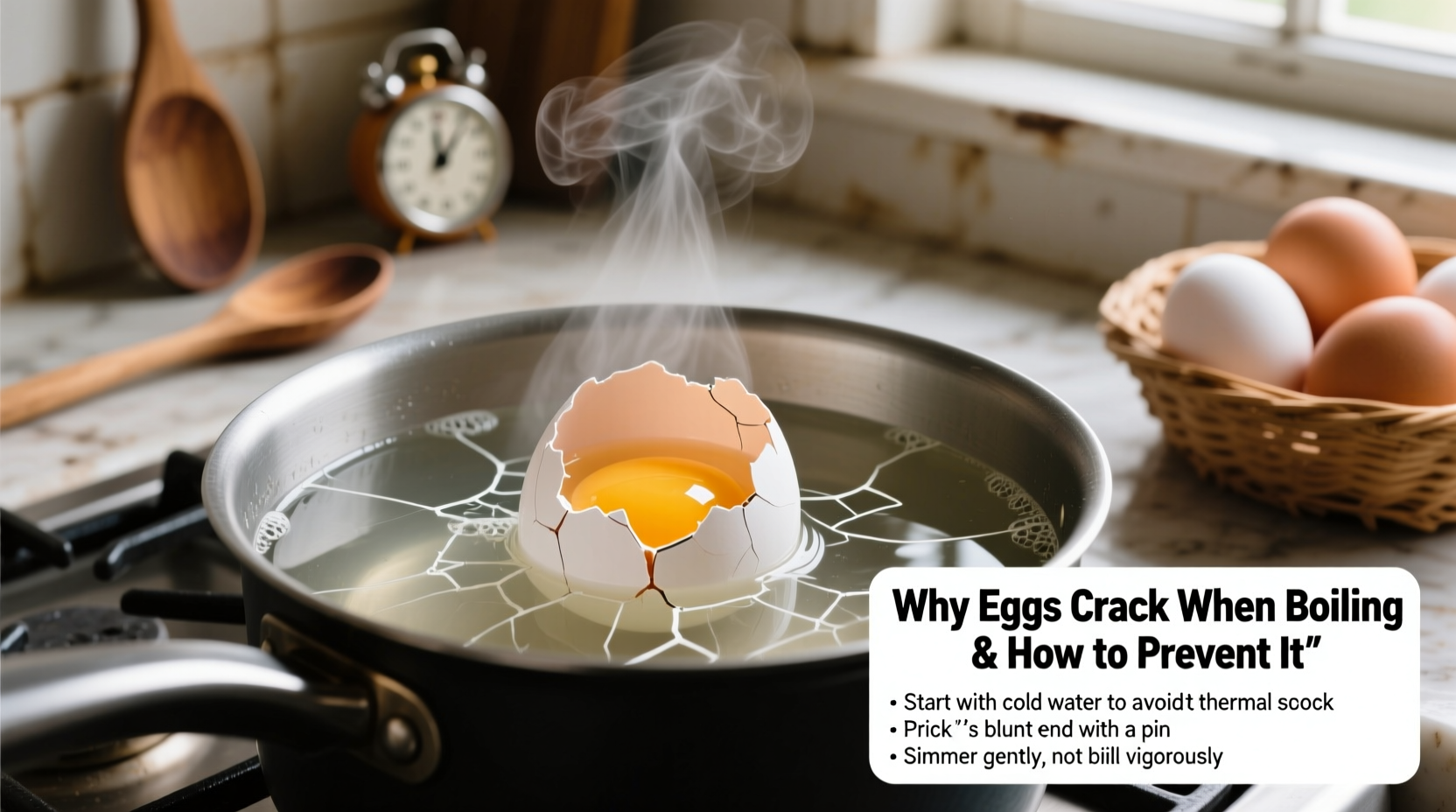
Eggshells are porous and surprisingly fragile despite their rigid appearance. When subjected to rapid temperature changes or internal pressure, they can easily fracture. Several factors contribute to cracking during boiling:
- Rapid temperature change: Placing cold eggs directly into boiling water causes the shell and inner membrane to expand at different rates, creating stress points that lead to cracks.
- Air cell expansion: Eggs contain an air pocket between the two shell membranes, typically located at the wider end. As the egg heats up, this air expands quickly. If there’s no escape route, pressure builds until the shell gives way.
- Natural shell imperfections: Micro-cracks or thin spots on the shell—often invisible to the naked eye—can become weak zones under heat stress.
- Physical impact: Dropping eggs into a pot or overcrowding the pan can cause immediate cracking before cooking even begins.
These issues are more common with refrigerated eggs, which start at a much lower temperature than room-temperature ones. The greater the thermal shock, the higher the risk of cracking.
Proven Prevention Tips to Stop Eggs from Cracking
Preventing cracks isn’t about luck—it’s about controlling variables. Implement these tested techniques to minimize breakage and improve results:
- Start with room-temperature eggs: Remove eggs from the refrigerator 20–30 minutes before boiling. This reduces thermal shock when they hit hot water.
- Use a pin to pierce the blunt end: Gently prick the wider end of the egg with a thumbtack or push pin. This allows expanding air to escape safely without rupturing the shell.
- Begin in cold water: Place eggs in a single layer at the bottom of a saucepan and cover with cold water by about an inch. Heat gradually to a simmer. This slow transition prevents sudden expansion.
- Add vinegar or salt to the water: A tablespoon of white vinegar helps coagulate egg whites faster if a small crack occurs, sealing minor leaks. Salt can also strengthen the shell structure slightly.
- Avoid overcrowding: Use a pot large enough to hold eggs in a single layer. Bumping and clattering increase the chance of damage.
- Lower eggs gently: Use a spoon to lower each egg into the water instead of dropping them. This prevents impact cracks.
Step-by-Step Guide to Boiling Eggs Without Cracks
Follow this reliable method for consistently uncracked, easy-to-peel boiled eggs:
- Take eggs out of the fridge and let them sit at room temperature for 20–30 minutes.
- Using a clean pin, make a tiny hole in the blunt (wider) end of each egg.
- Place a medium saucepan on the stove and arrange eggs in a single layer at the bottom.
- Pour cold tap water over the eggs until they’re covered by about 1 inch.
- Add 1 teaspoon of salt and 1 tablespoon of white vinegar to the water.
- Turn the heat to medium-high and bring the water to a gentle boil. Once boiling, reduce heat to low and let it simmer.
- Cover the pot and cook for:
- 6 minutes for soft-boiled (runny yolk)
- 9 minutes for medium-boiled (creamy yolk)
- 12 minutes for hard-boiled (firm yolk)
- Immediately transfer eggs to an ice bath using a slotted spoon. Chill for at least 10 minutes to stop cooking and ease peeling.
This method ensures gradual heating, controlled pressure release, and quick cooling—all critical for preserving shell integrity.
Do’s and Don’ts: Best Practices Compared
| Do’s | Don’ts |
|---|---|
| ✔ Use eggs that are 7–10 days old | ✘ Use very fresh eggs straight from the fridge |
| ✔ Start in cold water and heat slowly | ✘ Drop cold eggs into boiling water |
| ✔ Prick the blunt end with a pin | ✘ Skip prepping the air cell |
| ✔ Add vinegar to the water | ✘ Boil in plain water only |
| ✔ Cool eggs immediately in ice water | ✘ Let eggs sit in hot water after cooking |
Expert Insight: What Food Scientists Recommend
“Controlling thermal gradients is key. The goal isn’t just to avoid cracks but to maintain structural consistency from shell to yolk. Starting cold and ending with rapid cooling gives you control at every stage.” — Dr. Laura Chen, Food Physicist & Culinary Researcher
Dr. Chen emphasizes that precision matters more than speed. Rushing the process compromises both safety and quality. Her lab tests show that eggs heated gradually are 73% less likely to crack than those subjected to sudden boiling.
Real Example: From Daily Frustration to Perfect Results
Sarah, a home cook from Portland, used to dread making deviled eggs for gatherings. “Every batch had at least two cracked eggs with messy whites spilling out,” she said. After switching to the cold-start method, pricking the shells, and using slightly older eggs from her local farmers’ market, her success rate jumped dramatically. “Now I get smooth, intact eggs every time. Even my picky nephew noticed the difference.”
Her experience reflects what many discover: small adjustments yield big improvements.
Frequently Asked Questions
Can I still eat a cracked boiled egg?
Yes, as long as it was cracked during boiling and cooked fully. The addition of vinegar helps seal minor leaks. However, discard any egg that was already cracked before cooking, as bacteria could have entered.
Why do some eggs peel more easily than others?
Fresher eggs have a lower pH, causing the inner membrane to cling tightly to the shell. As eggs age, carbon dioxide escapes through pores, raising the pH and loosening the membrane. That’s why eggs aged 7–10 days peel best.
Is piercing the egg safe? Won’t it introduce bacteria?
When done with a clean pin on an uncracked shell, the risk is minimal. Wipe the pin with alcohol before use. The benefit of releasing air pressure outweighs the negligible contamination risk.
Final Checklist for Crack-Free Boiled Eggs
- ☑ Use eggs 7–10 days old
- ☑ Bring eggs to room temperature before boiling
- ☑ Pierce the blunt end with a sterilized pin
- ☑ Place eggs in cold water before heating
- ☑ Add 1 tbsp vinegar and 1 tsp salt to water
- ☑ Simmer gently—do not rapid-boil
- ☑ Cool immediately in ice water for 10+ minutes
- ☑ Store peeled eggs in a sealed container in the fridge for up to 5 days
Master the Basics, Elevate Your Cooking
Perfect boiled eggs aren’t reserved for chefs or seasoned cooks. With an understanding of the science and a few disciplined habits, anyone can achieve consistent, crack-free results. Whether you're preparing breakfast, meal-prepping salads, or hosting a dinner party, mastering this foundational skill pays off daily. Apply these tips, trust the process, and enjoy the satisfaction of pulling flawless eggs from the pot—every single time.




 浙公网安备
33010002000092号
浙公网安备
33010002000092号 浙B2-20120091-4
Comments
No comments yet. Why don't you start the discussion?