
Moving out of the United States is more than just booking a flight and packing your bags. Whether you're relocating for work, retirement, or a fresh start abroad, doing so legally and efficiently requires careful planning. From visa applications to tax compliance, every step must be handled with precision to avoid penalties, entry denials, or legal complications. This guide walks through the essential processes, timelines, and precautions to ensure your departure from the U.S. is seamless and fully compliant.
Understand Your Immigration Status and Exit Requirements
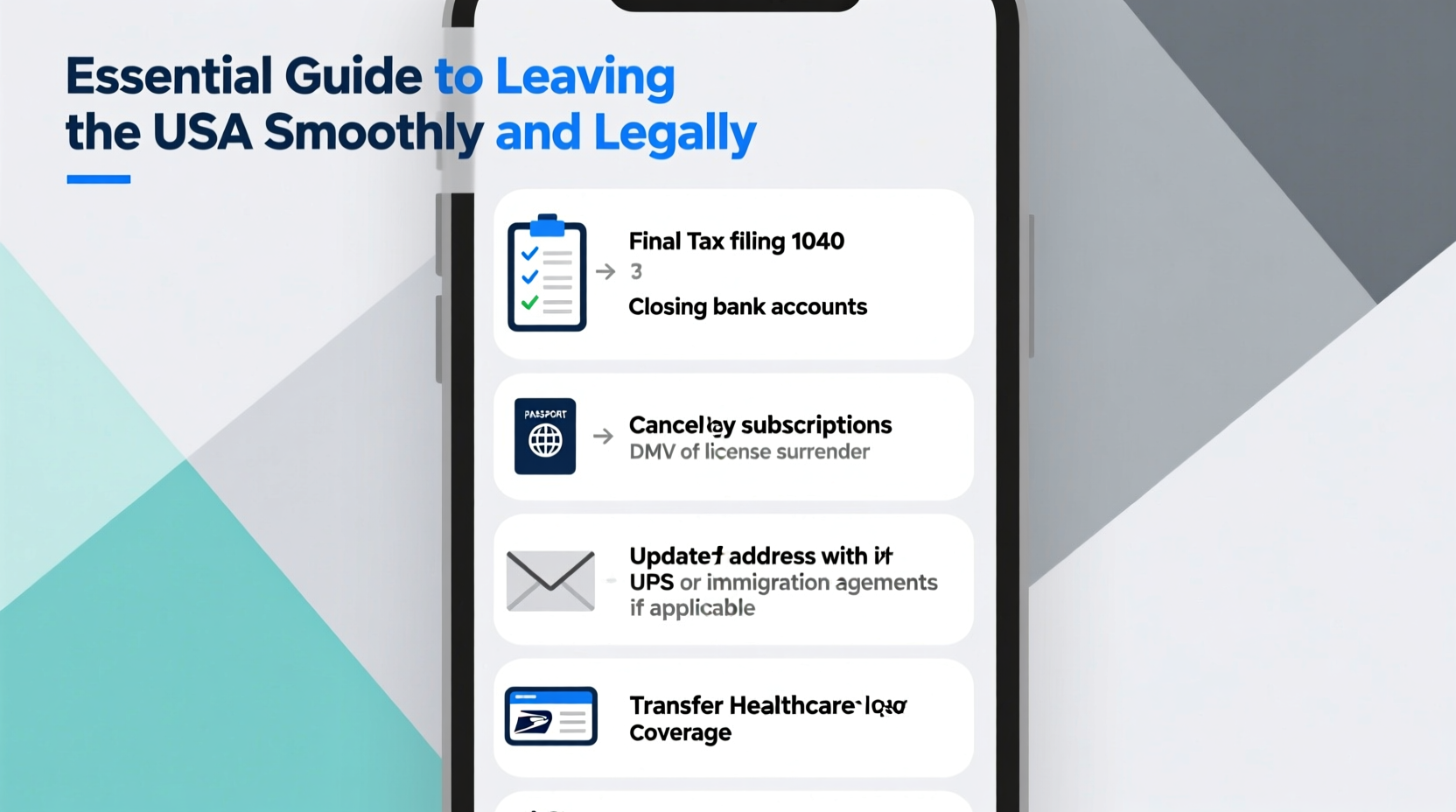
Your ability to leave the U.S. without future reentry issues depends largely on your current immigration status. U.S. citizens can exit freely but must maintain valid passports. Lawful permanent residents (green card holders) can also depart, but extended absences may jeopardize residency. Non-immigrant visa holders—such as those on H-1B, F-1, or J-1 visas—must ensure their status remains intact if they plan to return.
Before leaving, confirm:
- If your visa allows reentry (if applicable)
- The duration of your permitted stay abroad
- Whether your green card renewal or SB-1 returning resident application might be needed after long absences
“Abandoning your green card isn’t automatic, but living outside the U.S. for over a year without proper documentation can lead to denial at reentry.” — Maria Gonzalez, Immigration Attorney, AILA Member
Step-by-Step Timeline for a Smooth Departure
Leaving the country successfully involves coordination across legal, financial, and logistical domains. Follow this timeline to stay organized:
- 6–12 Months Before Departure: Research destination country’s visa requirements, healthcare access, housing options, and cost of living. Begin transferring funds or opening foreign bank accounts if necessary.
- 4–6 Months Out: Notify employers, schools, and service providers of your move. Cancel or suspend utilities, subscriptions, and memberships. Arrange for mail forwarding via USPS Form 1141.
- 3 Months Prior: Visit USCIS if you’re surrendering your green card voluntarily. File final tax returns or request extensions. Obtain certified copies of birth certificates, marriage licenses, and other vital documents.
- 1 Month Before: Confirm passport validity (must be valid for at least six months beyond entry date in most countries). Apply for visas where required. Pack essentials and ship belongings using licensed international movers.
- Final Week: Close U.S. bank accounts or designate a trusted contact. Deactivate SIM cards or switch to international plans. Double-check all travel documents are secured.
Tax Obligations Before Leaving the U.S.
The U.S. taxes based on citizenship and residency, not location. Even if you’re moving abroad permanently, you may still owe taxes unless you formally terminate your status.
For Green Card Holders: Filing Form I-407 (Record of Abandonment of Lawful Permanent Resident Status) triggers the end of tax residency. However, you may still need to file a final federal return and possibly a “sawyer affidavit” if subject to expatriation tax rules.
For U.S. Citizens: You must continue filing U.S. tax returns annually, regardless of residence. But you may qualify for exclusions like the Foreign Earned Income Exclusion (FEIE), which exempts up to $126,500 (2024) of foreign income.
| Status | Tax Filing Requirement After Move | Key Forms |
|---|---|---|
| U.S. Citizen | Annual IRS filing required | Form 1040, Form 2555 (FEIE) |
| Green Card Holder (leaving permanently) | Final return + expatriate statement if applicable | Form 1040-C, Form 8854 |
| Non-Resident Alien (exiting U.S.) | Departing alien tax clearance | Form 1040-C or 2063 |
Documentation Checklist for International Relocation
Missing paperwork can delay your move or block entry into your new country. Use this checklist to ensure nothing is overlooked:
- Valid passport (with blank visa pages)
- National ID from destination country (if applicable)
- Visa or residence permit approval letter
- Birth certificate (authenticated, possibly apostilled)
- Marriage/divorce certificates (translated if needed)
- Children’s school records and vaccination history
- Vehicle title and international driving permit
- Proof of health insurance or coverage
- Bank account details and reference letters from financial institutions
- Employment contract or proof of sufficient funds
Real Example: Moving from California to Portugal
Sarah Kim, a software engineer from San Diego, decided to relocate to Lisbon under Portugal’s D7 Passive Income Visa. She spent eight months preparing. First, she secured rental income from her California property and saved six months of living expenses. She obtained an apostille on her birth certificate and had her academic transcripts translated.
Six months before departure, she applied for the D7 visa at the Portuguese consulate in Los Angeles. She submitted proof of income, clean criminal record, and private health insurance valid in Europe. While waiting, she filed her final U.S. state tax return and arranged for mail forwarding.
Upon arrival, she registered with the local SEF office (now AIMA), received a temporary residence stamp, and later obtained her biometric residence card. Because she followed each legal requirement meticulously, her transition was smooth—no delays, no fines, and full access to public services within months.
Avoid Common Pitfalls When Leaving the U.S.
Even experienced travelers make mistakes when exiting the U.S. Here’s what to watch for:
| Do’s | Don’ts |
|---|---|
| File final tax returns or mark your last day in the U.S. for tax purposes | Assume that closing a bank account automatically cancels overdrafts or fees |
| Notify the Social Security Administration if you’re collecting benefits | Leave behind active leases or contracts without formal termination |
| Carry copies of wills, power of attorney, and medical directives | Forget to deregister from state voter rolls or DMV |
“People often forget about digital assets—cloud storage, domain names, subscription traps. Plan digital continuity or closure just like physical logistics.” — David Lin, International Relocation Consultant
Frequently Asked Questions
Can I keep my U.S. bank account after moving abroad?
Yes, many U.S. banks allow non-resident accounts, though some may require in-person visits or impose restrictions. Chase, Bank of America, and Charles Schwab are known for supporting expatriates. Be aware that FATCA reporting applies, and you must update your address and tax status.
Do I need to inform the IRS if I’m moving overseas?
You aren’t required to notify the IRS solely for moving abroad. However, if you’re a green card holder abandoning residency, you should file Form I-407 and Form 8854 (if deemed a “covered expatriate”). U.S. citizens continue filing returns but can submit Form 8822 to update their foreign address.
What happens if I don’t file U.S. taxes while living abroad?
Failure to file can result in penalties, loss of FEIE eligibility, or even passport revocation under IRC Section 7345 if you have a seriously delinquent tax debt. The IRS offers amnesty programs like the Streamlined Filing Compliance Procedures to catch up without heavy fines.
Conclusion: Prepare Today for a Seamless Tomorrow
Leaving the United States legally and smoothly isn’t about rushing—it’s about foresight. Every document filed, tax return submitted, and visa application completed builds a foundation for a stable life abroad. Whether you're seeking adventure, lower costs, or a quieter pace, your success begins with disciplined preparation.




 浙公网安备
33010002000092号
浙公网安备
33010002000092号 浙B2-20120091-4
Comments
No comments yet. Why don't you start the discussion?