
Sleep is a cornerstone of health, yet millions struggle to achieve consistent, restorative rest. In the search for natural solutions, two devices have gained widespread popularity: essential oil diffusers and humidifiers. Both are commonly used in bedrooms with the goal of enhancing comfort and supporting deeper sleep. But when it comes to improving sleep quality, which one delivers more tangible results? Understanding their mechanisms, benefits, limitations, and scientific backing can help you make an informed decision tailored to your needs.
How Humidifiers Support Better Sleep
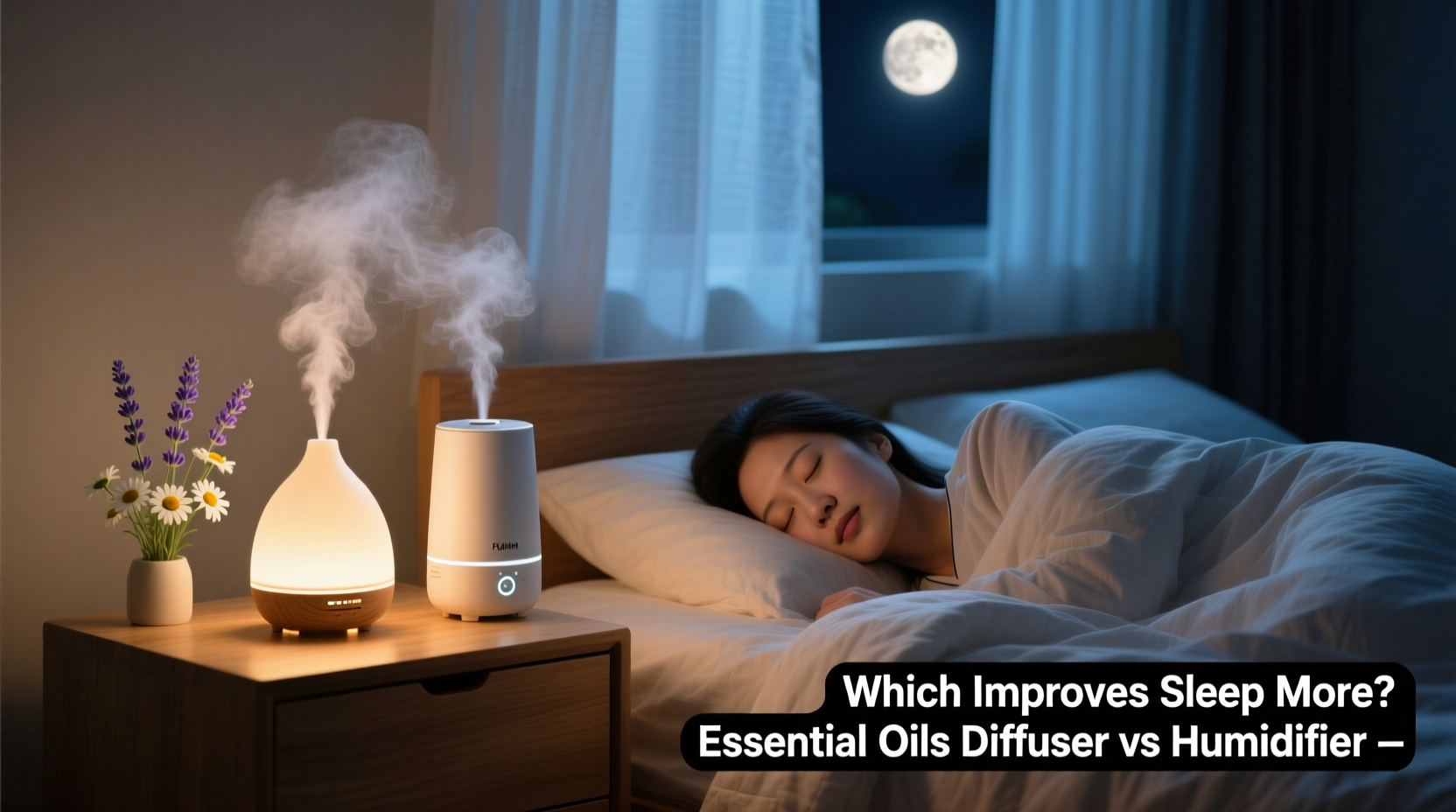
A humidifier adds moisture to dry indoor air, helping maintain optimal humidity levels—typically between 30% and 50%. During colder months or in arid climates, indoor heating systems can strip moisture from the air, leading to dry nasal passages, irritated throats, and even worsened snoring. By reintroducing moisture, humidifiers alleviate these discomforts, creating a more conducive environment for uninterrupted sleep.
For individuals with respiratory conditions such as allergies, asthma, or chronic sinusitis, dry air can exacerbate symptoms at night. A cool-mist humidifier, in particular, helps soothe inflamed airways and reduce congestion. Studies have shown that maintaining proper humidity can improve mucociliary clearance—the body’s natural process of removing pathogens from the respiratory tract—thereby reducing nighttime coughing and throat irritation.
The Role of Essential Oil Diffusers in Sleep Enhancement
Unlike humidifiers, essential oil diffusers are designed primarily to disperse aromatic plant extracts into the air. While some models do add minimal moisture, their main function is aromatherapy. Certain essential oils—most notably lavender, chamomile, and bergamot—have been studied for their calming effects on the nervous system. When inhaled, these compounds interact with the limbic system, the brain region responsible for emotions, stress response, and memory.
Lavender oil, in particular, has accumulated substantial evidence supporting its role in improving sleep. A 2017 meta-analysis published in *Complementary Therapies in Medicine* found that lavender aromatherapy significantly improved subjective sleep quality across multiple studies. Participants reported falling asleep faster, experiencing fewer nighttime awakenings, and feeling more rested upon waking.
However, the effectiveness of diffusers depends heavily on oil quality, concentration, and individual sensitivity. Poor-quality oils may contain synthetic additives that could irritate the respiratory tract or trigger headaches, counteracting any potential benefits.
“Controlled exposure to lavender via diffusers can modulate autonomic nervous activity, promoting relaxation before bedtime.” — Dr. Hiroko Kudo, Neuropharmacology Researcher, Osaka University
Key Differences: Function, Mechanism, and Impact
While both devices operate quietly in the bedroom, their purposes and physiological impacts differ significantly. The table below outlines key distinctions relevant to sleep improvement.
| Feature | Humidifier | Essential Oil Diffuser |
|---|---|---|
| Primary Function | Adds moisture to air | Disperses essential oils for scent |
| Impact on Air Quality | Improves humidity; reduces dryness | Alters scent profile; may purify air slightly |
| Sleep Benefit Mechanism | Reduces physical discomfort (e.g., dry throat) | Promotes psychological relaxation via scent |
| Best For | Dry climates, winter months, respiratory issues | Stress-related insomnia, anxiety, mood regulation |
| Maintenance Needs | Daily cleaning to prevent mold | Regular rinsing; avoid oil residue buildup |
| Potential Risks | Over-humidification leading to mold growth | Allergic reactions, sensitivities to strong scents |
Combining Both Devices: Is It More Effective?
Some users opt to use both a humidifier and a diffuser simultaneously, aiming to address both physical and emotional barriers to sleep. This dual approach can be effective—but only when carefully managed. Over-saturating the room with moisture or fragrance can backfire, leading to stuffiness, headaches, or respiratory irritation.
An alternative solution is using a hybrid device that combines humidification with essential oil diffusion. These units typically include a tray or pad where a few drops of oil can be added to the water reservoir. However, caution is advised: not all essential oils are safe for inhalation, and introducing oils directly into a humidifier’s water tank can damage internal components or disperse uncontrolled concentrations into the air.
If combining both functions, follow this sequence:
- Measure room humidity with a hygrometer before turning on the humidifier.
- Run the humidifier until humidity reaches 40–50%, then switch to low or off if possible.
- Use the diffuser separately, ideally 30–60 minutes before bedtime, with 3–5 drops of high-quality essential oil.
- Ensure adequate ventilation by leaving the bedroom door slightly open or using a fan.
Real-World Example: Sarah’s Journey to Better Sleep
Sarah, a 38-year-old project manager from Denver, struggled with frequent nighttime awakenings and morning fatigue. Living in a high-altitude, dry climate, she often woke with a sore throat and nasal congestion. Initially, she purchased a lavender diffuser based on social media recommendations. While she enjoyed the scent, her symptoms persisted.
After consulting a sleep specialist, she learned that her home’s humidity level was below 25%. She replaced the diffuser with a cool-mist humidifier and began monitoring indoor moisture. Within two weeks, her throat discomfort diminished, and she experienced fewer awakenings. Later, she reintroduced aromatherapy—using a diffuser briefly before bed—and found that the combination of optimal humidity and evening lavender exposure significantly improved her ability to fall asleep.
Her experience underscores a crucial insight: while scent can support relaxation, resolving underlying environmental factors like dry air often yields more substantial improvements in sleep continuity.
Which One Improves Sleep Quality More?
The answer depends on the root cause of poor sleep.
- If your issue is physical discomfort—dry nose, scratchy throat, congestion—a humidifier addresses the direct environmental trigger. Its impact is measurable and consistent, especially in dry environments.
- If your sleep problems stem from stress, anxiety, or hyperarousal, an essential oil diffuser may offer greater benefit by calming the mind and preparing the body for rest.
In head-to-head comparisons, humidifiers tend to provide broader, more universally applicable benefits. Dry air affects nearly everyone to some degree during certain seasons, whereas scent preferences and responses vary widely. Moreover, improper use of essential oils can introduce new problems, including respiratory irritation or disrupted sleep due to overpowering fragrance.
That said, the most effective long-term strategy often involves addressing multiple factors. A room with balanced humidity and a calming sensory environment creates ideal conditions for restorative sleep.
Checklist: Choosing the Right Device for Your Sleep Goals
Use this checklist to determine which option—or combination—is best for you:
- ✅ Do I live in a dry climate or use indoor heating frequently? → Consider a humidifier.
- ✅ Do I wake up with a dry throat or stuffy nose? → Prioritize humidification.
- ✅ Am I prone to stress or anxious thoughts at bedtime? → Try aromatherapy with a diffuser.
- ✅ Have I ruled out other sleep disruptors (e.g., caffeine, screen time)? → Address lifestyle habits first.
- ✅ Am I using high-quality, pure essential oils? → Avoid synthetic fragrances.
- ✅ Is my device cleaned regularly? → Prevent microbial contamination.
- ✅ Have I measured my room’s humidity? → Use a hygrometer for accuracy.
Frequently Asked Questions
Can I put essential oils in my humidifier?
Only if the manufacturer explicitly states it’s safe. Most standard humidifiers are not designed for essential oils, and doing so can damage internal parts or release unsafe particles. Instead, use a diffuser or a humidifier built with an essential oil tray.
Is it safe to run a diffuser all night?
No. Continuous exposure to concentrated essential oils can lead to headaches, dizziness, or respiratory irritation. Limit diffusion to 30–60 minutes before bed and turn it off before sleeping.
Which is better for babies: a humidifier or diffuser?
For infants, a cool-mist humidifier is generally safer and more recommended. Essential oils are not advised for children under 2 years old, and even older children may react unpredictably to strong scents.
Final Recommendation: Start with Humidity, Enhance with Scent
For most people, improving sleep begins with optimizing the physical sleep environment. Since dry air is a common, often overlooked disruptor, starting with a humidifier provides a strong foundation. Once humidity is stabilized, selective use of aromatherapy can enhance relaxation without introducing unnecessary risks.
The choice isn’t necessarily “either/or.” It’s about prioritization. If you’re unsure, begin by measuring your room’s humidity. If it’s below 30%, invest in a humidifier first. Once your breathing feels easier at night, consider adding a diffuser as a complementary tool—not a substitute—for better sleep hygiene.
“Environmental comfort is the first pillar of good sleep. You can’t relax deeply if your body is fighting dryness or congestion.” — Dr. Lena Torres, Sleep Medicine Specialist, Cleveland Clinic
Take Action Tonight
Small changes in your bedroom environment can yield significant improvements in how quickly you fall asleep and how well you stay asleep. Begin by assessing your current setup: check the air quality, observe how you feel upon waking, and identify any signs of dryness or tension. From there, choose the device that aligns with your specific needs. Whether it’s a quiet hum of a humidifier or the subtle aroma of lavender, let science—not trends—guide your decision.




 浙公网安备
33010002000092号
浙公网安备
33010002000092号 浙B2-20120091-4
Comments
No comments yet. Why don't you start the discussion?