
Ballet flats are a timeless wardrobe staple—elegant, versatile, and effortlessly chic. But too often, their delicate appearance comes at the cost of comfort, especially when worn for extended periods or while walking across city blocks. Many people assume that style and practicality can’t coexist in flat footwear, but with the right knowledge, you can find ballet flats that are both beautiful and supportive. The key lies in understanding what makes a flat truly walkable: from arch support and cushioning to material flexibility and heel stability. This guide breaks down expert-backed strategies to help you choose ballet flats that won’t leave your feet aching by midday.
Understand the Anatomy of a Walk-Friendly Ballet Flat
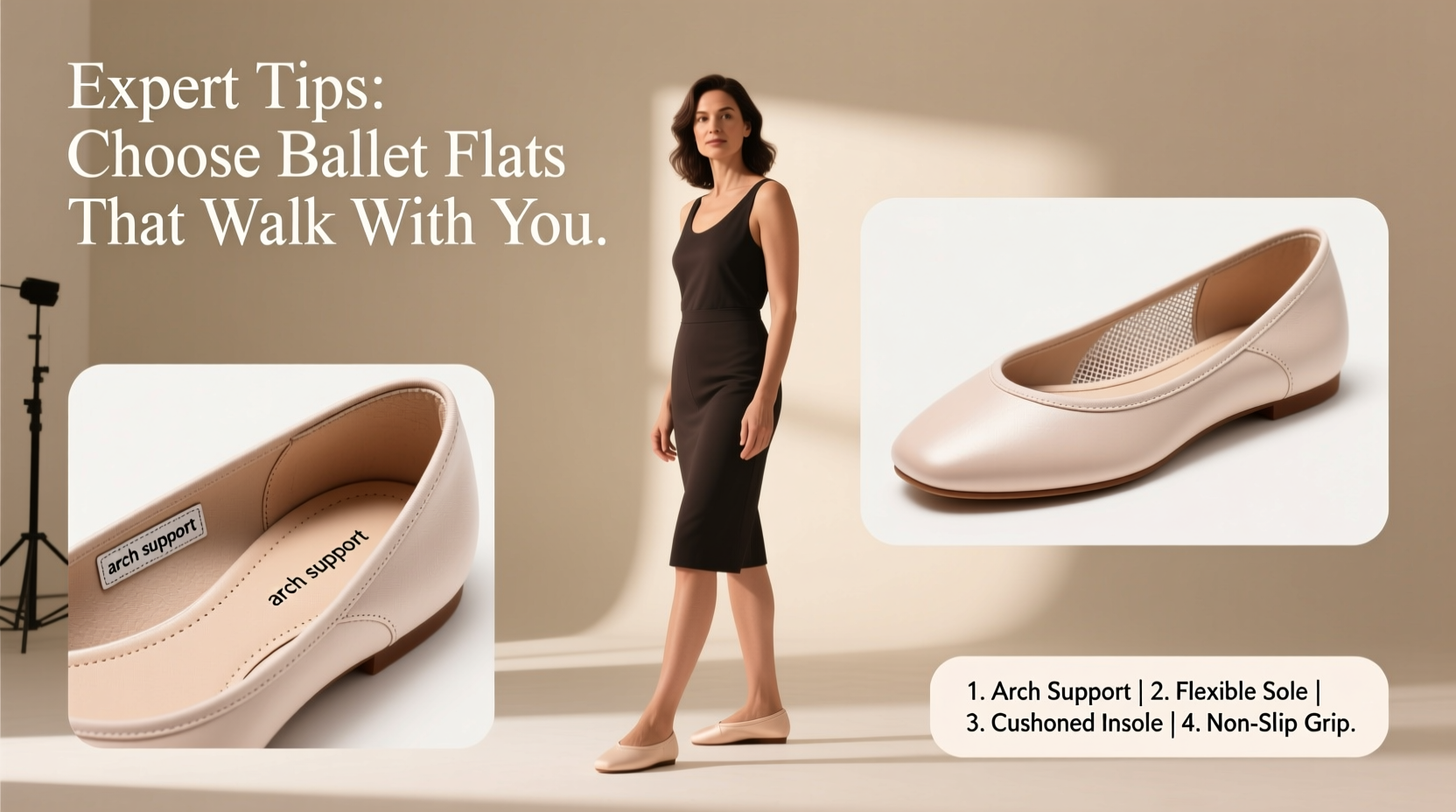
Aesthetic appeal matters, but function should never be sacrificed. When evaluating ballet flats for walking, focus on structural elements that contribute to long-term comfort. Unlike heels or sneakers, ballet flats have minimal elevation, which places more pressure on the ball of the foot and arch. Without proper construction, they can lead to plantar fasciitis, metatarsalgia, or general fatigue.
The most walkable ballet flats share several core features:
- Contoured insoles that mirror the natural shape of the foot
- Cushioned midsoles made from memory foam, EVA, or latex
- Flexible outsoles that bend with your stride, not against it
- Reinforced heel counters to prevent slippage and stabilize motion
- Roomy toe boxes that allow toes to splay naturally
Choose Materials That Balance Style and Support
Material choice directly impacts both comfort and durability. While satin and ultra-thin leather may look refined, they offer little breathability or structure. Prioritize high-quality, supple leathers or performance textiles that mold to your foot over time without losing shape.
| Material | Pros | Cons |
|---|---|---|
| Full-grain leather | Molds to foot, breathable, durable | Higher initial cost |
| Suede | Soft texture, flexible | Less water-resistant, wears faster |
| Textile blends (e.g., nylon-spandex) | Stretchy, lightweight, moisture-wicking | May lack structure |
| Satin or patent leather | Highly polished look | Rigid, non-breathable, prone to creasing |
Leather uppers with fabric linings tend to strike the best balance—offering breathability and softness inside while maintaining exterior elegance. Avoid completely synthetic shoes unless they’re specifically engineered for comfort; many trap heat and cause friction, leading to blisters.
Fit Fundamentals: How to Size and Try Ballet Flats Correctly
Finding the right size is more nuanced than simply matching your standard shoe size. Ballet flats often run narrow or short due to their minimalist design. Many women unknowingly wear flats that are too small, assuming the snug fit is part of the style. In reality, this compresses the forefoot and increases pressure on joints.
- Measure your feet at the end of the day—feet swell throughout daily activity.
- Ensure a thumbnail’s width (about 3–5 mm) between your longest toe and the shoe tip.
- Check for heel slippage by walking on a hard surface; slight movement is normal, but excessive slipping causes blisters.
- Try them on with the socks or hosiery you plan to wear.
- Walk on different surfaces—tile, carpet, pavement—to test real-world feel.
Expert Insight: What Podiatrists Look For
Dr. Lena Torres, a board-certified podiatrist specializing in footwear ergonomics, emphasizes that “many patients come in with foot pain traced back to ‘cute’ flats they wear daily. The issue isn’t the flat heel—it’s the lack of support and improper fit.”
“Look for a shoe with built-in arch contouring and a shock-absorbing forefoot. Even a millimeter of extra padding under the metatarsal heads can reduce pressure by 20%. Don’t assume dressy means unsupportive—brands are now integrating orthotic principles into stylish designs.” — Dr. Lena Torres, DPM
She also warns against overly flexible soles: “A shoe should bend at the ball of the foot, not in the middle. If you can twist it like a towel, it’s too flimsy and won’t protect your ligaments during walking.”
Top Brands and Models That Combine Comfort With Elegance
Not all ballet flats are created equal. Some brands invest heavily in biomechanical research and ergonomic design. Based on podiatrist recommendations and customer reviews, these models consistently deliver on comfort without sacrificing aesthetics:
- Taryn Rose Isadora – Features anatomically contoured footbeds and memory foam padding.
- Allbirds Tree Breezers – Made from sustainable eucalyptus fiber with excellent breathability and cushioning.
- Clarks Unstructured Collection – Combines soft leather with cushioned OrthoLite® insoles.
- Rothy’s Ballet Flat – Knitted from recycled plastic with flexible, washable soles.
- Mint & Rock (UK-based) – Offers wide-fit options and extra-deep toe boxes.
When shopping online, check return policies carefully. A brand’s willingness to accept returns after indoor testing is often a sign of confidence in comfort claims.
Real-World Example: From Pain to All-Day Wear
Sophie, a museum curator in Boston, spent years rotating through stylish flats only to end each workday with sore feet. Her job required her to stand and walk for six to eight hours during exhibitions. After seeing a podiatrist, she switched to Clarks’ Unstructured line with added gel inserts. “I was skeptical—could a flat really be comfortable? But within two weeks, my foot fatigue decreased dramatically. I now walk three miles a day during gallery tours without discomfort.”
Her turning point came when she stopped prioritizing looks over structure. “I realized I didn’t need to sacrifice style. These flats are still sleek and professional, but they actually support me.”
Comfort Checklist Before You Buy
Use this checklist to evaluate any ballet flat before purchase:
- ✅ Does the insole have visible contouring or cushioning?
- ✅ Can the sole flex at the ball of the foot—but not in the arch?
- ✅ Is there enough room in the toe box to wiggle toes freely?
- ✅ Does the heel counter feel firm, not floppy?
- ✅ Is the upper material soft and breathable?
- ✅ Does the shoe stay securely on your foot when walking briskly?
- ✅ Are the edges smooth inside to prevent rubbing?
Frequently Asked Questions
Can ballet flats be good for flat feet?
Yes, but only if they include structured arch support. Most traditional ballet flats lack this, so look for models with molded insoles or consider adding custom orthotics. Brands like Vionic and Propet offer flats designed specifically for low arches.
How can I break in ballet flats without getting blisters?
Wear them around the house with thick socks for short intervals. Use moleskin or blister pads on high-friction areas like the heel and pinky toe. Gradually increase wear time over 3–5 days to allow the material to adapt to your foot shape.
Are rubber soles acceptable on ballet flats?
Absolutely. Rubber provides superior traction and shock absorption compared to thin leather soles. Many modern ballet flats use lightweight rubber or TPR (thermoplastic rubber) outsoles that maintain elegance while improving safety and comfort on wet or uneven surfaces.
Final Thoughts: Walk Confidently in Style
Choosing ballet flats perfect for walking doesn’t mean settling for clunky designs or giving up elegance. It means being intentional about fit, materials, and structural support. With the right pair, you can navigate a full day of errands, work meetings, or travel with ease. The investment in a well-made flat pays dividends in comfort, foot health, and confidence.




 浙公网安备
33010002000092号
浙公网安备
33010002000092号 浙B2-20120091-4
Comments
No comments yet. Why don't you start the discussion?