
Moissanite has emerged as a brilliant, ethical, and cost-effective alternative to diamonds, prized for its fire, durability, and brilliance. But not all moissanite is created equal. With a growing market flooded with options from various suppliers and cuts, buyers must understand how to distinguish premium-quality stones from lower-grade alternatives. Whether you're shopping for an engagement ring or a statement piece, knowing what to look for ensures you get maximum sparkle, longevity, and value.
Understanding the 4Cs of Moissanite (And Why They Differ From Diamonds)
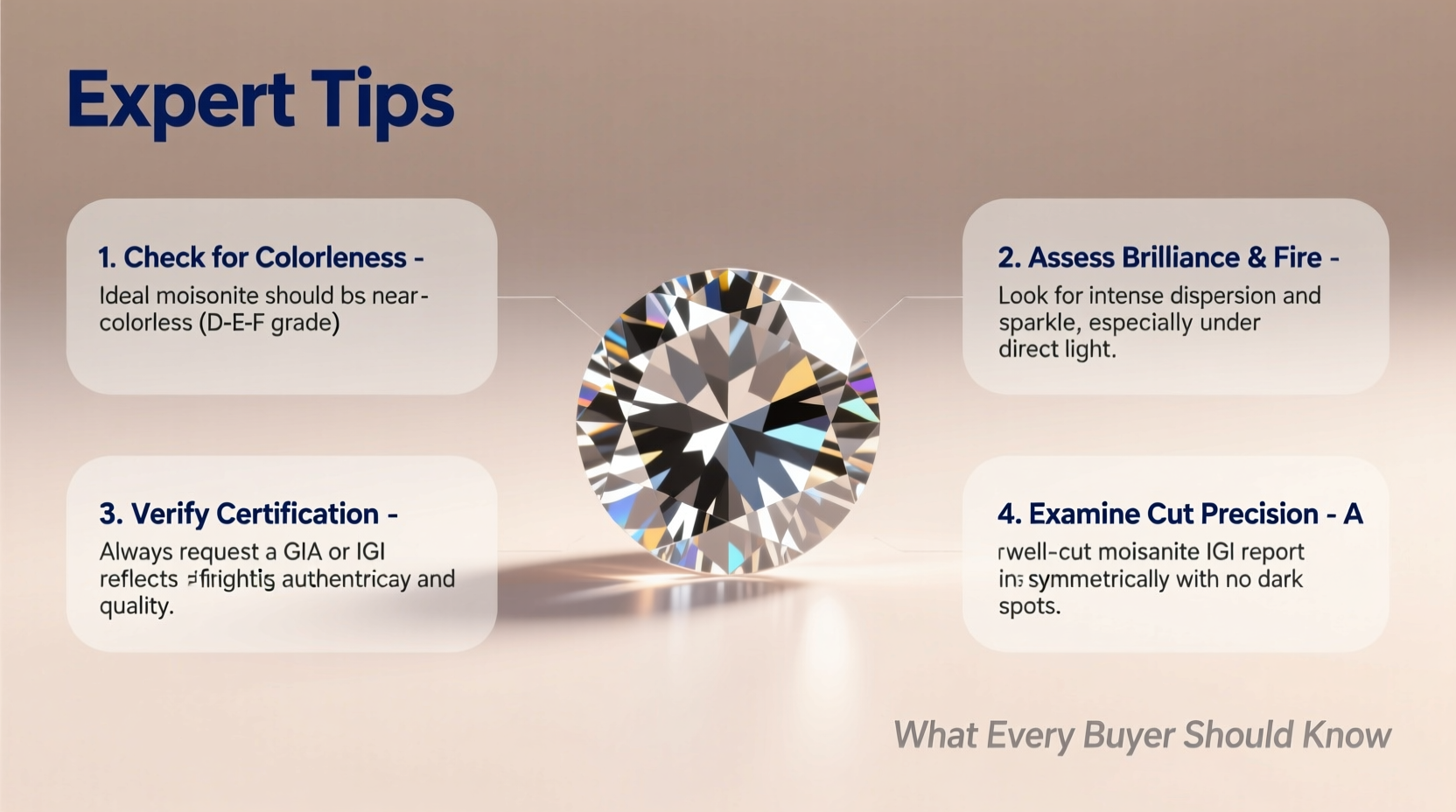
While diamonds are evaluated using the traditional 4Cs—cut, color, clarity, and carat weight—moissanite follows a similar framework, but with key differences that affect how each factor should be prioritized.
Cut is by far the most important attribute in moissanite. Because moissanite naturally exhibits more fire (colored light dispersion) than diamonds, a well-executed cut enhances brilliance while minimizing undesirable visual effects like \"disco ball\" flashes under certain lighting. Ideal cuts balance white light return (brilliance) with controlled fire.
Color in moissanite is graded differently than in diamonds. Most lab-created moissanite falls into near-colorless categories, typically graded as D-E-F (colorless) or G-H-I (near-colorless). However, some lower-quality stones may show faint yellow or gray tints, especially in larger sizes or under natural light. Premium moissanite brands use advanced growing techniques to minimize these undertones.
Clarity refers to internal inclusions. Unlike mined diamonds, moissanite is lab-grown, so it typically has fewer inclusions. High-quality moissanite is eye-clean—meaning no visible flaws under normal viewing conditions. However, poorly grown stones may contain needle-like inclusions or clouding that dull the stone’s appearance.
Carat weight measures size, but because moissanite is less dense than diamond, a one-carat moissanite will appear slightly larger than a one-carat diamond. Buyers often choose moissanite for its ability to offer greater visual size at a fraction of the price.
How to Evaluate Cut Quality: The Key to Maximum Sparkle
The cut determines how light interacts with the stone. A precision-cut moissanite reflects light evenly across its facets, creating balanced brilliance and scintillation. Poorly proportioned cuts can result in dark zones, uneven sparkle, or excessive colored flashes.
Look for stones cut to ideal proportions, particularly in popular shapes like round brilliant, cushion, and princess. Round brilliants tend to perform best due to their symmetrical facet arrangement and optimal light performance.
Reputable vendors provide information on cut quality, sometimes labeling stones as “premium” or “super ideal.” These designations usually indicate superior symmetry, polish, and light performance—attributes verified through tools like ASET (Angular Spectrum Evaluation Tool) or Idealscope imaging.
“Cut is everything with moissanite. Even the highest clarity and color won’t compensate for a dull or lifeless stone.” — Dr. Lena Torres, Gemologist and Materials Scientist
Checklist: What to Look for in a High-Quality Cut
- Symmetrical facet alignment
- No visible dark centers or “windows” when viewed face-up
- Balanced fire—not overly rainbow-like under indoor lighting
- High polish and precise angles
- Vendor-provided light performance data (if available)
Color Grading: How to Spot True Colorlessness
Despite marketing claims, not all moissanite is completely colorless. Many stones exhibit subtle warm or cool tones depending on lighting conditions. Understanding grading terminology helps avoid disappointment.
Premium moissanite brands such as Charles & Colvard (originators of commercial moissanite) and Harro Gem use proprietary growth methods to produce stones in the D–F range—truly colorless. Others may fall into the G–H range, which appears nearly colorless to most observers but might show faint yellow or greenish hints in daylight or when set in white gold.
| Color Grade | Description | Best For |
|---|---|---|
| D–F | Colorless; no tint visible under any lighting | White gold or platinum settings |
| G–H | Near-colorless; slight warmth in direct sunlight | Yellow or rose gold settings (which mask tint) |
| I+ | Faint yellow/gray tint; generally not recommended for center stones | Accent stones only |
Verifying Clarity and Inclusion Patterns
Because moissanite is lab-created, it tends to have higher clarity than natural diamonds. Still, lower-tier manufacturers may produce stones with visible inclusions such as fine needles, pinpoints, or cloudy areas.
High-quality moissanite should be eye-clean. Use a jeweler’s loupe (10x magnification) to inspect the stone if possible. Look specifically for clusters of inclusions near the center, which can interfere with light passage and reduce sparkle.
Some inclusions are characteristic of the crystal growth process and don't detract from beauty if they’re small and dispersed. However, large or centrally located flaws diminish transparency and brilliance.
Step-by-Step Guide: Evaluating Clarity at Home
- Hold the stone under bright, natural light.
- Examine it with a magnifying glass or macro camera lens.
- Rotate slowly and check for consistent brightness across the surface.
- Look for dark spots, haze, or thread-like lines.
- Compare against a known high-clarity reference (if available).
“We once had a client return a ‘deal’ moissanite because it looked foggy indoors. Upon inspection, it had significant internal strain patterns from rushed crystallization.” — James Rourke, Independent Jewelry Appraiser
Avoiding Common Pitfalls: Red Flags When Buying Moissanite
The rise in popularity of moissanite has attracted unscrupulous sellers who misrepresent quality or omit critical details. Being aware of common red flags protects your investment.
- No independent certification: Reputable sellers provide grading reports from labs like GCAL (Gem Certification & Assurance Lab) or their own detailed specifications.
- Vague descriptions: Phrases like “high quality” or “excellent sparkle” without supporting data are meaningless.
- Unrealistically low prices: If a two-carat “colorless” moissanite costs less than $200, it likely compromises on cut or color.
- Lack of return policy: Trustworthy vendors offer at least a 30-day return window.
Do’s and Don’ts When Shopping for Moissanite
| Do | Don’t |
|---|---|
| Buy from brands with transparent sourcing and cut standards | Purchase from unknown marketplaces with no reviews |
| Request detailed photos and videos in multiple lights | Assume stock images reflect actual product |
| Ask about warranty and lifetime cleaning services | Ignore customer service responsiveness |
| Compare side-by-side with diamond or CZ if possible | Base decision solely on price |
Real Buyer Experience: Choosing the Right Stone the Second Time Around
Sarah from Portland purchased her first moissanite engagement ring online during a sale. At 8mm (approx. 3 carats), it was dazzling in photos. But upon arrival, she noticed a faint green tint in sunlight and uneven sparkle. After returning it, she researched reputable vendors and invested in a Charles & Colvard Forever One D-color stone with a premium cut.
The difference was immediate. “It sparkled evenly in every light, no weird rainbows, and matched my platinum band perfectly,” she said. “Spending a bit more saved me from regret.” Her story underscores the importance of prioritizing verified quality over sheer size or price.
Frequently Asked Questions
Is moissanite durable enough for everyday wear?
Absolutely. Moissanite ranks 9.25 on the Mohs hardness scale, making it second only to diamond in scratch resistance. It’s ideal for engagement rings and daily jewelry, provided it’s well-maintained.
Will moissanite pass a diamond tester?
Yes—but with a caveat. Traditional diamond testers detect thermal conductivity and will identify moissanite as diamond. However, newer dual-testers that measure electrical conductivity can differentiate between the two. Always disclose the stone type when insuring or appraising.
Can I upgrade to a larger moissanite later?
Some vendors offer trade-in programs where you can apply the original purchase value toward a larger or upgraded stone. Check with the retailer before buying.
Final Thoughts: Make an Informed Choice
High-quality moissanite offers exceptional beauty, sustainability, and value—but only when sourced wisely. By focusing on cut precision, true colorlessness, and verified clarity, you ensure your stone delivers lasting brilliance. Don’t be swayed by flashy ads or bargain pricing. Instead, rely on trusted brands, detailed specifications, and real-world evaluations.




 浙公网安备
33010002000092号
浙公网安备
33010002000092号 浙B2-20120091-4
Comments
No comments yet. Why don't you start the discussion?