
Titanium has earned a strong reputation in the jewelry world for its strength, lightweight feel, and resistance to corrosion. As demand for titanium bracelets grows, so does the risk of encountering counterfeit or misrepresented pieces. Unlike gold or silver, titanium isn’t stamped as frequently, and many buyers assume its durability means authenticity is guaranteed. That’s not always the case. Fortunately, you don’t need to scratch, cut, or otherwise damage your bracelet to confirm whether it’s genuine. With the right knowledge and techniques, you can confidently verify authenticity using simple, non-invasive methods.
Why Authenticity Matters in Titanium Jewelry
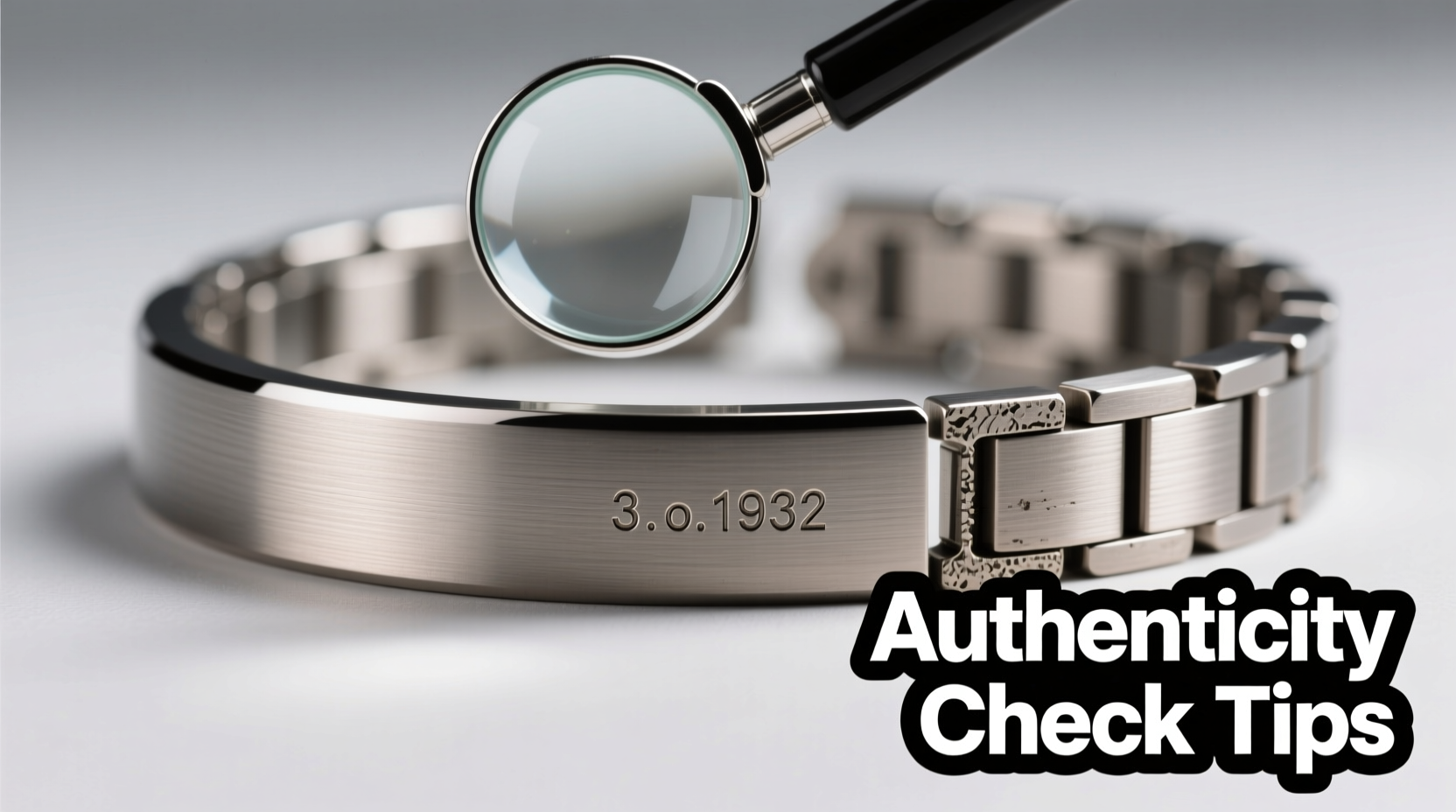
Titanium used in jewelry is typically either commercially pure (Grade 1–4) or an alloy like Grade 5 (Ti-6Al-4V), prized for its balance of strength and biocompatibility. Counterfeit items may be made from cheaper metals like stainless steel, aluminum, or even plated base metals that mimic titanium’s appearance but lack its benefits. Wearing fake titanium can lead to skin irritation, premature tarnishing, or structural failure over time. More importantly, you’re paying a premium for properties that aren’t actually present. Verifying authenticity protects your investment and ensures safety, especially for those with metal sensitivities.
“Titanium’s real value lies in its hypoallergenic nature and longevity. If it’s not real, you lose both.” — Dr. Lena Patel, Materials Scientist & Jewelry Integrity Consultant
Non-Destructive Verification Methods You Can Use at Home
The good news is that you don’t need a lab to begin assessing authenticity. Several reliable tests rely on physical properties unique to titanium and can be performed safely at home.
1. Weight and Density Check
Titanium is significantly lighter than stainless steel but heavier than aluminum. A genuine titanium bracelet will feel substantial without being heavy. To test:
- Weigh the bracelet using a precision scale (0.01g accuracy recommended).
- Measure volume by water displacement: submerge the bracelet in a graduated cylinder filled with water and note the change in volume.
- Divide mass by volume to calculate density. Pure titanium has a density of about 4.5 g/cm³. Stainless steel is closer to 7.9 g/cm³—nearly twice as dense.
2. Magnetic Test
While not all magnetic metals are fake, titanium is paramagnetic—meaning it shows no attraction to magnets. Use a strong neodymium magnet:
- Hold the magnet near the bracelet.
- If it sticks or pulls noticeably, the piece likely contains iron or nickel—common in stainless steel imitations.
A slight drag is normal due to trace elements, but full adhesion indicates a non-titanium base.
3. Temperature Conductivity
Titanium conducts heat slowly compared to metals like silver or copper. Hold the bracelet in your hand for 30 seconds. Genuine titanium will remain relatively cool, while more conductive imposters warm up quickly. This is subtle but useful when combined with other tests.
4. Sound Test
Gently tap the bracelet against a hard surface. Titanium produces a short, dull “thud,” whereas steel creates a sharper, ringing sound. This works best when comparing known samples side by side.
Professional and Retailer-Based Verification Techniques
For high-value purchases or estate pieces, professional verification adds certainty without causing harm.
X-Ray Fluorescence (XRF) Analysis
Jewelers and pawn shops often use handheld XRF guns to determine elemental composition. The device emits low-level X-rays and reads the energy returned from the material. It identifies the presence and percentage of titanium, vanadium, aluminum, and contaminants—all within seconds and completely non-destructively.
Laser Marking Inspection
Authentic titanium jewelry is sometimes laser-etched with grade information (e.g., “Ti-6Al-4V” or “Grade 5”). These marks are precise and cannot be easily replicated. Use a jeweler’s loupe to inspect engraving quality. Fake engravings may appear shallow, uneven, or applied with a different tool.
Certification and Provenance
Reputable sellers provide documentation, especially for medical-grade or aerospace-grade titanium. Ask for a certificate of authenticity, manufacturer details, or sourcing information. Brands like Boeing-sourced recycled titanium or ASTM F136-compliant materials carry verifiable standards.
“Always ask for proof of material grade. If a seller hesitates, that’s a red flag.” — Marcus Reed, Certified Gemologist & Appraiser
Comparison Table: Titanium vs. Common Imitations
| Property | Titanium (Grade 5) | Stainless Steel | Aluminum |
|---|---|---|---|
| Density (g/cm³) | 4.4–4.5 | 7.8–8.0 | 2.7 |
| Magnetic? | No (slight paramagnetism) | Yes (ferromagnetic) | No |
| Hypoallergenic? | Yes | Sometimes (varies by alloy) | Yes |
| Sound When Tapped | Dull thud | Sharp ring | Light ping |
| Heat Conduction | Slow | Fast | Very fast |
Real-World Example: Identifying a Counterfeit Purchase
Sophie bought a titanium bracelet online, advertised as “aerospace-grade” and “hypoallergenic.” Within days, her wrist developed a rash. Suspicious, she weighed it—finding it nearly 50% heavier than expected. A magnet test revealed strong attraction. She took it to a local jeweler who confirmed via XRF analysis: the piece was 316L stainless steel, not titanium. Though it looked identical, the material failed on weight, magnetism, and biocompatibility. Sophie returned the item and learned to verify through certified retailers only.
Step-by-Step Checklist to Confirm Authenticity
- Inspect markings: Look for laser-etched grade labels (e.g., “Ti,” “Grade 5”)
- Weigh the piece: Compare to expected weight based on size and design
- Conduct a magnet test: Use a strong magnet; no pull should occur
- Test thermal response: Does it stay cool in your hand?
- Listen to the sound: Tap gently—does it produce a muted thud?
- Seek XRF testing: Visit a reputable jeweler for chemical analysis
- Review documentation: Request certificates or sourcing details from the seller
Frequently Asked Questions
Can I use vinegar or acid to test titanium?
No. While some metals react visibly to acids, titanium is highly corrosion-resistant. Acid tests won’t reliably distinguish it and may damage finishes or coatings. Stick to non-chemical methods.
Do all titanium bracelets have stamps?
Not necessarily. Unlike gold or silver, titanium isn’t regulated for hallmarking in most countries. Lack of stamp doesn’t mean it’s fake—but presence of a clear, accurate grade mark increases credibility.
Is colored titanium still authentic?
Yes. Titanium can be anodized to produce colors through controlled oxidation. This process doesn’t alter the base metal. However, if the color chips or wears off unevenly, it may indicate plating over another metal.
Final Thoughts: Confidence Through Knowledge
Verifying a titanium bracelet doesn’t require destruction or guesswork. By combining sensory observations, basic physics, and access to professional tools, you can make informed decisions with confidence. Whether you're buying your first piece or curating a collection, knowing how to authenticate protects your health, finances, and trust in the market. Always prioritize transparency—buy from reputable sources, ask questions, and never hesitate to request proof of material integrity.




 浙公网安备
33010002000092号
浙公网安备
33010002000092号 浙B2-20120091-4
Comments
No comments yet. Why don't you start the discussion?