
Applying makeup is as much about technique as it is about products. One of the most debated topics in modern beauty routines is whether to use a face mist or toner between layers of makeup for optimal hydration. Both are water-based, both promise refreshed skin—but they serve different roles in skincare and makeup application. Understanding their unique properties can transform your routine from patchy and dry to seamless and luminous.
The confusion often arises because both products feel similar upon application: a light splash, a cooling sensation, an instant burst of moisture. But their formulation, timing, and function diverge significantly. Choosing the wrong one at the wrong stage can lead to makeup slipping, settling into fine lines, or failing to adhere properly. The real question isn’t just about hydration—it’s about how, when, and why each product works best during makeup application.
Understanding the Basics: What Is a Face Mist?
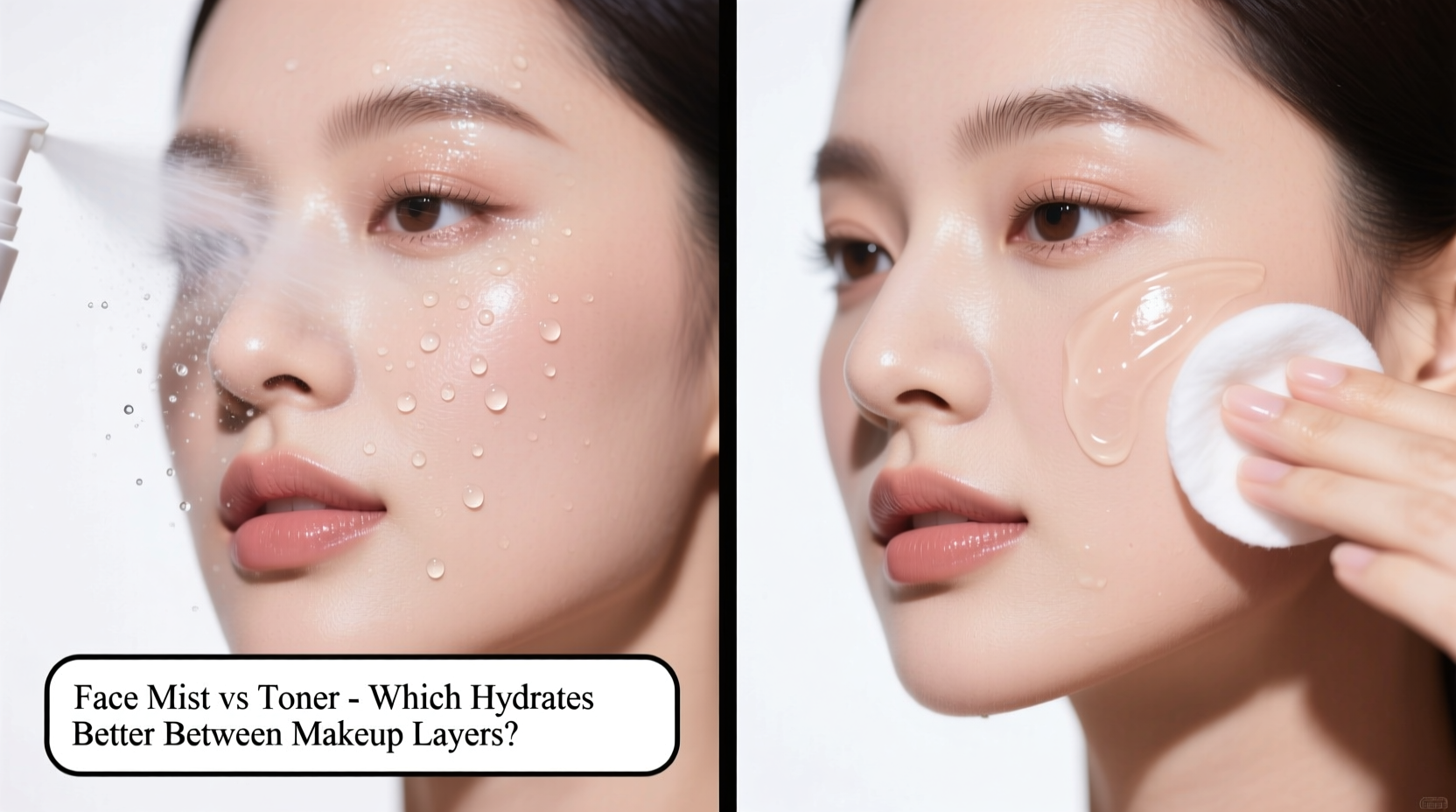
A face mist is a lightweight, sprayable formula designed to deliver hydration, refresh the skin, or set makeup. Typically housed in a fine mist bottle, it contains water, humectants like glycerin or hyaluronic acid, botanical extracts, and sometimes antioxidants or pH-balancing ingredients. Unlike heavier serums or creams, mists are meant for quick absorption without residue.
Face mists are multipurpose. Some are formulated purely for hydration—think rosewater or aloe vera sprays—while others are marketed as setting sprays that lock makeup in place with polymers or film-forming agents. However, true hydrating mists focus on replenishing moisture rather than creating a seal over makeup.
When used between makeup layers—say, after foundation but before powder—a hydrating mist can revive dry patches, soften the texture of applied product, and help blend edges seamlessly. It's especially effective in dry climates or during long wear, where skin tends to dehydrate under layers of coverage.
What Exactly Does a Toner Do?
Toners have evolved far beyond their original astringent roots. Once harsh alcohol-laden liquids meant to “strip” oil, today’s toners are gentle, pH-balancing elixirs enriched with hydrating agents, ceramides, niacinamide, and soothing botanicals. Applied post-cleansing and pre-serum, toners prepare the skin to absorb subsequent products more effectively.
In terms of hydration, many modern toners are essentially liquid moisturizers. They work by drawing water into the upper layers of the skin using humectants. Some even contain mild exfoliants like lactic or glycolic acid to smooth texture and improve radiance. However, their primary role remains prep—not mid-application intervention.
Using toner between makeup layers is technically possible, but logistically tricky. Most toners come in bottles requiring cotton pads or hands for application, making them impractical once foundation is on. Applying with fingers risks smudging; using a pad may remove product unevenly. Even if the toner is hydrating, disrupting makeup to reapply defeats the purpose.
“Toners are foundational—they balance and prime. Mists are functional—they refresh and enhance. Confusing the two leads to compromised results.” — Dr. Lena Park, Cosmetic Dermatologist
Hydration Showdown: Face Mist vs Toner During Makeup Application
To determine which hydrates better between makeup layers, consider three key factors: delivery method, compatibility with makeup, and immediate effect on skin texture.
| Feature | Face Mist | Toner |
|---|---|---|
| Application Method | Spray—non-contact, even coverage | Liquid—requires pad or hands, contact needed |
| Use Mid-Makeup | Yes—ideal for layering | No—risks disturbing makeup |
| Hydration Speed | Instant—evaporates quickly, leaves moisture | Fast—but requires rubbing, may pill |
| Residue | Minimal to none | Potential stickiness or dampness |
| Makeup Compatibility | High—blends layers, prevents cracking | Low—can break down emulsions |
From this comparison, face mist clearly wins when hydration is needed between makeup layers. Its non-invasive delivery allows you to add moisture without touching up or removing existing product. A few spritzes rehydrate the skin surface, soften foundation buildup around the nose or chin, and create a dewier finish—all without compromising coverage.
Toner, while highly effective in a skincare routine, lacks the practicality for mid-application use. Even if poured into a spray bottle (a DIY workaround some suggest), its formulation isn’t optimized for atomization. Ingredients may clog the nozzle, and active components like acids could interact unpredictably with silicone-based primers or powders.
Step-by-Step: How to Use Face Mist Between Makeup Layers
Maximizing hydration during makeup application isn’t just about spraying and hoping. Follow this timeline for best results:
- Apply foundation and concealer as usual, blending thoroughly.
- Evaluate skin texture—look for tightness, flakiness, or dullness, especially around cheeks and forehead.
- Close eyes and lips, then hold the face mist 8–10 inches away.
- Spray 3–5 times in an “X” pattern (diagonal left to right, then right to left) followed by a “T” (horizontal across forehead, vertical down nose).
- Wait 15–20 seconds for the mist to settle and absorb slightly—do not blot.
- Continue with next step (e.g., cream blush, contour, or powder). Use a damp sponge or brush to blend if needed.
- Repeat after powder if desired for a final “glass skin” effect.
This method keeps the skin supple, prevents makeup from drying too fast, and enhances luminosity. For oily skin types, opt for a mattifying mist with silica or thermal water instead of heavy humectants to avoid excess shine.
Real-World Example: The Bridal Touch-Up Dilemma
Consider Sarah, a bride preparing for her outdoor summer wedding. Her makeup artist applied full-coverage foundation and setting powder early in the day. By mid-afternoon, under the sun and humidity, her skin began to feel tight and look cakey—especially around the jawline.
Instead of adding more powder or wiping areas clean, the artist used a hydrating face mist containing hyaluronic acid and cucumber extract. After a light spritz and gentle press with a sponge, Sarah’s makeup softened, redensified, and regained a natural glow. The mist hydrated her skin beneath the layers without dissolving her base.
Had the artist tried to apply toner with a cotton pad, it would have removed foundation unevenly, requiring a full touch-up. The mist provided targeted hydration with zero disruption—proving its superiority in real-time, high-stakes situations.
Can You Use Toner as a Face Mist?
Some beauty enthusiasts pour toner into empty spray bottles for convenience. While this seems efficient, it’s not always advisable. Not all toners are formulated for misting. Alcohol-based or exfoliating toners (containing AHAs/BHAs) can become airborne irritants when sprayed, potentially entering eyes or lungs. Even hydrating toners may lack stabilizers needed for prolonged storage in spray form, leading to separation or bacterial growth.
If you insist on repurposing toner, only use alcohol-free, fragrance-free formulas with simple ingredient lists. Transfer to a sterilized glass spray bottle and store in the refrigerator for up to one week. Never use expired or cloudy mixtures.
Alternatively, choose a commercial face mist specifically designed for mid-makeup hydration. These are tested for safety, consistency, and compatibility with cosmetic products.
Checklist: Choosing the Right Hydrator for Makeup Layering
- ✅ Look for mists labeled “hydrating,” “refreshing,” or “setting” (if longevity is key)
- ✅ Avoid mists with high alcohol content—they dry out skin over time
- ✅ Prioritize ingredients like hyaluronic acid, glycerin, aloe vera, or green tea extract
- ✅ Choose fine-nozzle sprayers for even, non-dripping application
- ✅ Test the mist over foundation first to ensure it doesn’t cause pilling or melting
- ✅ Store in a cool, dark place—heat can degrade active ingredients
Frequently Asked Questions
Can I use face mist before applying foundation?
Absolutely. Spraying a hydrating mist before foundation helps plump the skin and creates a smoother canvas. Just allow it to absorb fully (about 30 seconds) before applying product to prevent slippage.
Will face mist make my makeup run?
Not if used correctly. A light, even mist won’t overload the skin. Heavy spraying or using mists with poor formulations (e.g., oil-heavy or sticky bases) can break down makeup. Stick to reputable brands and use sparingly.
Is toner necessary if I use a face mist?
Yes—but at different stages. Toner belongs in your skincare routine, post-cleanse and pre-serum. Face mist serves a cosmetic function during or after makeup. They’re complementary, not interchangeable.
Final Verdict: Hydration Winner for Makeup Layering
When it comes to hydrating between makeup layers, face mist is the clear winner. Its design, delivery, and compatibility with cosmetic products make it uniquely suited for mid-application refreshment. It adds moisture without disruption, blends layers seamlessly, and enhances the overall finish of makeup.
Toner, while invaluable in skincare, does not belong in the middle of a makeup routine. Its role is preparatory—to cleanse, balance, and prime. Using it after foundation compromises both hygiene and aesthetics.
The takeaway isn’t that one product is “better” overall, but that each has a distinct purpose. Respect their roles, and you’ll achieve longer-lasting, healthier-looking makeup with genuine hydration from within.




 浙公网安备
33010002000092号
浙公网安备
33010002000092号 浙B2-20120091-4
Comments
No comments yet. Why don't you start the discussion?