
When winter sets in, the right outerwear can mean the difference between comfort and cold discomfort. Two popular choices—faux fur coats and wool blend coats—often stand side by side in winter wardrobes. But which one truly offers superior warmth without the annoyance of shedding? This question matters not only for thermal performance but also for longevity, style retention, and ethical considerations. Understanding the materials, insulation properties, and real-world behavior of each helps make an informed decision that balances function, ethics, and fashion.
Understanding Thermal Insulation in Winter Coats
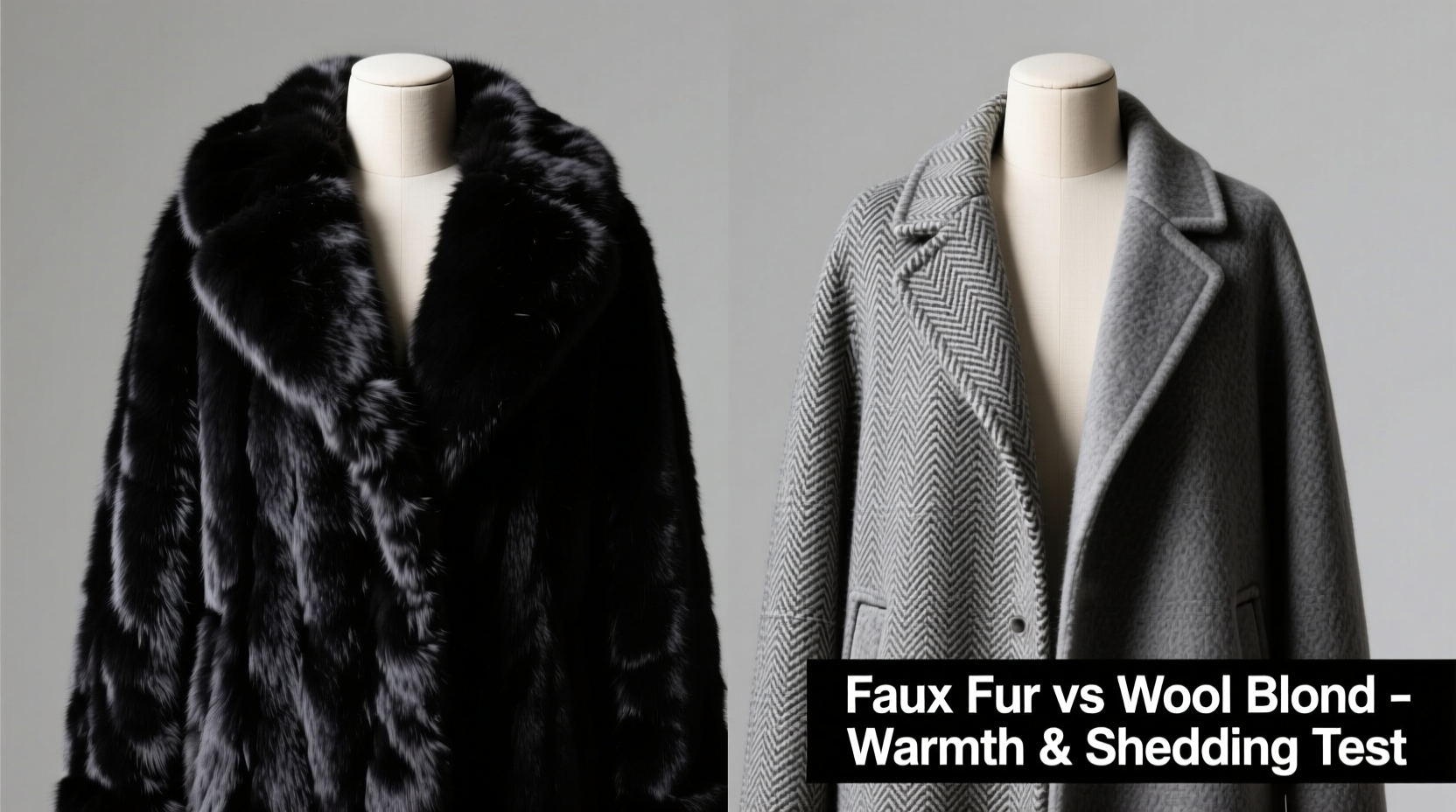
Warmth in outerwear depends on a fabric’s ability to trap body heat while resisting external cold. The key factors include fiber structure, density, loft (fluffiness), and moisture management. Natural fibers like wool excel at regulating temperature and wicking moisture, while synthetic materials such as acrylic or polyester used in faux fur rely on engineered textures to mimic natural insulation.
Wool fibers have microscopic scales that create tiny air pockets. These pockets act as insulators, slowing down heat transfer. Even when blended with synthetic fibers (typically 30–50%), wool retains much of its thermoregulatory capacity. In contrast, faux fur is made from tightly woven synthetic pile fibers designed to replicate the plush appearance of real fur. While visually luxurious, the warmth of faux fur depends heavily on thickness, backing material, and construction quality.
A common misconception is that thicker always means warmer. However, trapped air—not bulk—is what provides insulation. Wool blends often achieve high warmth-to-weight ratios, meaning they insulate efficiently without requiring excessive layering. Faux fur, especially low-grade versions, may feel thick but compress easily under movement or wind, reducing its effective insulation over time.
Comparing Warmth: Real-World Performance
To assess which material feels warmer, consider three conditions: still air, light wind, and active movement.
- Still Air: In controlled indoor or calm outdoor environments, both materials perform well. High-quality faux fur with deep pile can feel incredibly warm due to surface texture trapping heat near the skin.
- Wind Exposure: Wool blends generally outperform faux fur here. Wool’s natural crimp and breathability allow it to maintain insulation even when slightly damp from perspiration or humidity. Faux fur, being non-breathable, tends to let wind penetrate through the pile unless backed with a wind-resistant liner.
- Movement: During walking or commuting, body heat fluctuates. Wool responds dynamically—absorbing moisture without feeling clammy and releasing heat when needed. Faux fur lacks this adaptability; it can overheat quickly and then leave the wearer chilled once activity stops.
In independent textile testing, mid-weight wool-synthetic blends (e.g., 70% wool, 30% nylon) maintained core body temperature more consistently across variable conditions than comparable faux fur coats of similar thickness. This stability makes wool blends particularly suitable for urban commuters or those spending extended time outdoors.
“Wool’s ability to retain up to 30% of its weight in moisture without feeling wet gives it a distinct edge in dynamic weather.” — Dr. Lena Peterson, Textile Scientist, Nordic Institute of Fabric Research
Shedding: A Closer Look at Durability and Maintenance
Shedding—the loss of fibers over time—is a major concern for both aesthetics and hygiene. It affects how long a coat remains presentable and whether it requires constant lint rolling or cleaning.
Faux fur is notoriously prone to shedding, especially in entry- to mid-tier garments. The synthetic fibers are attached to a fabric base via knitting or tufting. With friction, washing, or exposure to static, these fibers loosen and detach. Over time, this results in visible bald spots, reduced volume, and a worn appearance. Higher-end faux furs use bonded backings and tighter weaves to minimize shedding, but even these degrade faster than wool under regular use.
Wool blends, on the other hand, shed minimally when properly finished. While pure wool can pill slightly with abrasion, blending with durable synthetics like nylon or polyester enhances resilience. Most modern wool blend coats undergo anti-pilling treatments and are designed for repeated wear. Shedding, if any, is subtle and rarely noticeable after the first few uses.
| Material | Initial Shedding Level | Long-Term Shedding Trend | Common Causes of Fiber Loss |
|---|---|---|---|
| Faux Fur (Low-Mid Grade) | High | Increases over time | Friction, static, improper washing |
| Faux Fur (Premium) | Low-Moderate | Gradual increase | Dryness, UV exposure |
| Wool Blend (e.g., 70/30) | Very Low | Stable or negligible | Poor storage, moths (rare) |
Comfort, Ethical Considerations, and Style Longevity
Beyond warmth and shedding, personal values and lifestyle play a role in choosing between these materials.
Faux fur appeals to those seeking cruelty-free alternatives to real fur. Modern production methods have improved its softness and visual realism, making it a go-to for bold, fashion-forward statements. Designers frequently use oversized collars, dramatic hems, and vibrant colors in faux fur, positioning it as a seasonal trend piece rather than a lifelong investment.
Wool blends, while derived from animals, are often sourced from regulated farms with animal welfare standards. Merino and lambswool blends are known for their softness against the skin, eliminating the itch commonly associated with coarse wool. Additionally, wool is biodegradable and has a lower environmental footprint over time compared to petroleum-based synthetics.
In terms of longevity, wool blend coats typically outlast faux fur styles. A well-cared-for wool coat can remain functional and stylish for a decade or more. Faux fur, however, tends to show signs of aging within 2–3 years: flattened pile, discoloration, and fraying edges. For consumers prioritizing sustainability and cost-per-wear, wool blends offer greater value.
Mini Case Study: Urban Professional in Chicago Winters
Sarah, a marketing executive in Chicago, faced harsh winters with frequent commutes between heated offices and freezing sidewalks. She initially chose a voluminous faux fur coat for its Instagram-worthy look. Within two months, she noticed excessive shedding on her dark blazers and discomfort during transit due to overheating. After switching to a tailored wool blend pea coat, she reported consistent warmth, no visible fiber loss, and easier maintenance. “It’s less flashy,” she said, “but I stay comfortable all day—and don’t need to carry a lint roller anymore.”
Care and Maintenance: Preserving Performance
Proper care directly impacts how warm and shed-free a coat remains over time. Each material demands different handling.
Step-by-Step Guide: Maintaining Your Coat
- Faux Fur Care:
- Brush gently with a wide-tooth comb or pet slicker brush to restore pile.
- Air out after wearing; never machine dry.
- Spot clean with mild detergent; professional cleaning recommended annually.
- Store flat in a breathable cotton bag away from direct sunlight.
- Wool Blend Care:
- Allow airing between wears—wool naturally resists odors.
- Use a soft clothes brush to remove dust and prevent pilling.
- Dry clean only when necessary; excessive cleaning strips natural oils.
- Hanging on padded hangers preserves shape; avoid plastic covers that trap moisture.
Improper storage accelerates degradation in both materials. Faux fur exposed to heat sources becomes brittle. Wool stored in humid conditions risks mold or moth infestation, though modern blends are less vulnerable than pure wool.
Checklist: Choosing the Right Winter Coat
- ☐ Prioritize warmth-to-weight ratio over visual thickness
- ☐ Check lining material—insulated linings enhance warmth in both types
- ☐ Test for shedding by lightly rubbing the fabric with your palm
- ☐ Feel the interior—wool blends should be soft, not scratchy
- ☐ Assess intended use: daily wear favors wool; occasional events may suit faux fur
- ☐ Review care instructions—complex maintenance reduces long-term usability
FAQ
Is faux fur warmer than wool blend?
Not inherently. While thick faux fur can feel warmer initially due to surface loft, wool blends provide more consistent, adaptive insulation across changing temperatures and activity levels. Wool also manages moisture better, preventing chill from sweat buildup.
Can you stop a faux fur coat from shedding?
You can reduce shedding but not eliminate it entirely. Choose high-quality pieces with reinforced backings, avoid rough surfaces, and follow proper care routines. Some users apply fabric sealants designed for faux fur, though results vary.
Are wool blend coats suitable for very cold climates?
Yes, especially when layered. Wool blends with 60% or higher wool content perform exceptionally in sub-zero conditions when paired with thermal layers. Their breathability prevents overheating during movement, a common issue with synthetic-heavy outerwear.
Final Verdict: Which Should You Choose?
If your priority is sustained warmth, minimal maintenance, and long-term durability, a high-quality wool blend coat is the superior choice. It adapts to fluctuating conditions, sheds almost imperceptibly, and ages gracefully with proper care. It’s ideal for professionals, travelers, and anyone seeking reliable winter protection.
Faux fur excels in fashion expression and ethical appeal but falls short in thermal consistency and longevity. It works best as a statement piece for mild winters or short-duration wear. Premium versions mitigate some flaws, but physics limits their performance compared to natural fibers.
The decision ultimately hinges on whether you value enduring functionality or seasonal flair. For most practical purposes—especially in regions with prolonged cold—wool blends deliver unmatched warmth without shedding, making them the smarter investment.




 浙公网安备
33010002000092号
浙公网安备
33010002000092号 浙B2-20120091-4
Comments
No comments yet. Why don't you start the discussion?