
For decades, fighting game purists have debated the merits of using a fight stick over a standard controller when playing titles like Street Fighter. While modern pads offer precision, portability, and familiarity, arcade-style fight sticks deliver a tactile experience that mimics the original coin-op machines. But with a steeper learning curve, higher cost, and less versatility, many players wonder: Is switching to a fight stick truly worth it? The answer depends on your goals, playstyle, and commitment to mastering the genre.
The Fundamental Differences: Design and Input Mechanics
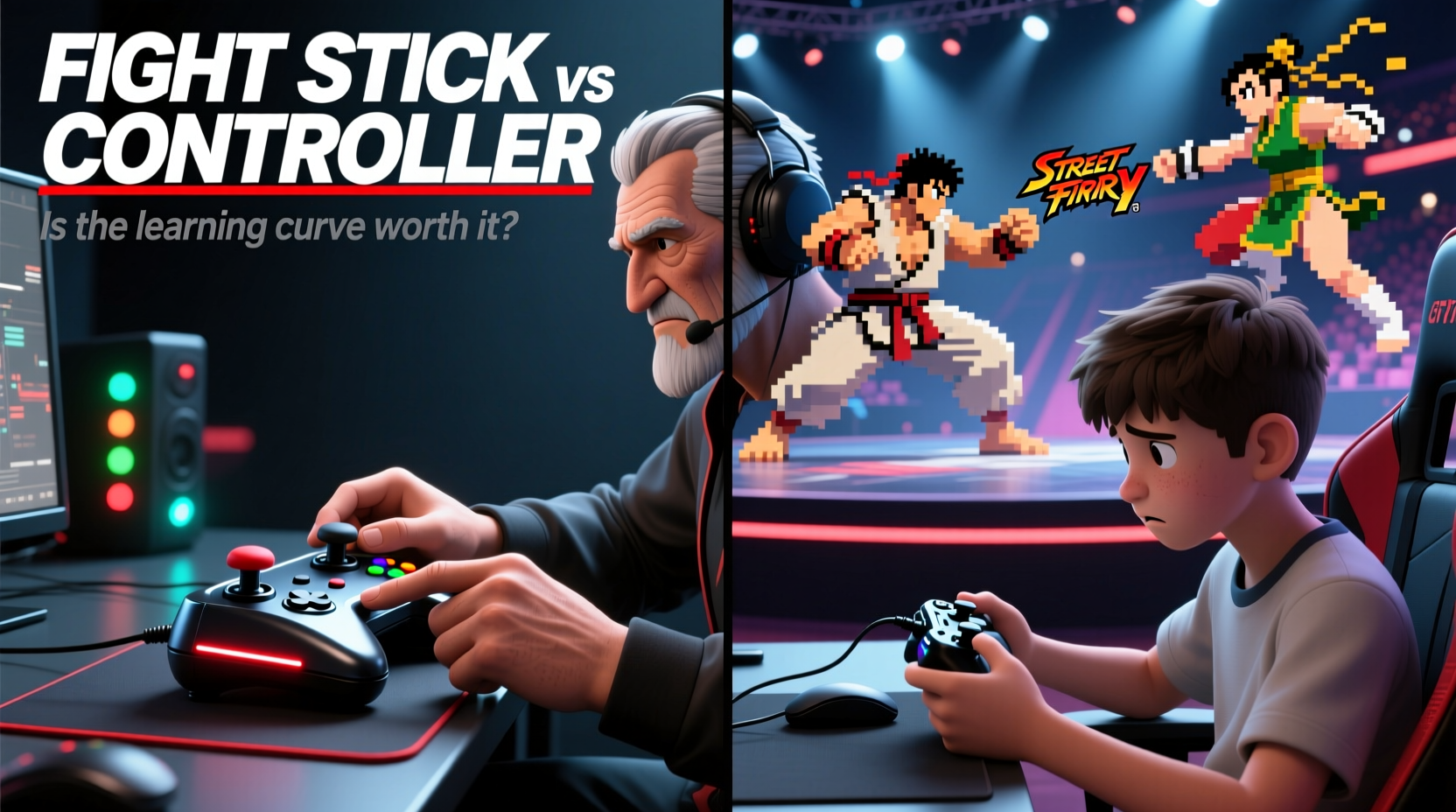
Fight sticks and controllers differ not just in form but in how they translate player intent into in-game action. A fight stick features a large joystick and six to eight large buttons arranged in two or three rows, replicating the layout of classic arcade cabinets. In contrast, controllers use a directional pad (D-pad) or analog stick combined with face buttons and triggers, designed for broad gaming functionality beyond fighting games.
The joystick on a fight stick allows for fluid directional inputs—essential for executing complex motions like quarter-circles, half-circles, and dragon punches. These movements are often more intuitive on a single lever than on a D-pad, especially at high speeds. However, this design demands greater hand coordination and spatial awareness. Controllers, particularly those with high-quality D-pads like the Xbox Elite or DualShock 4/5, allow precise input through muscle memory built over years of console gaming.
Performance Advantages of Fight Sticks
At the highest levels of competition, small advantages in execution can determine match outcomes. Many professional Street Fighter players swear by fight sticks for several reasons:
- Natural motion execution: Quarter-circle forward/backward motions feel more organic on a joystick, reducing input errors during pressure situations.
- Better charge retention: Holding back for charge characters (like Guile or Necro) is more comfortable and consistent with a centered joystick.
- Larger buttons: Easier to hit accurately under stress, minimizing mistimed special moves.
- Tactile feedback: High-end sticks use Sanwa or Seimitsu parts, known for their crisp actuation and durability.
However, these advantages come with trade-offs. Fight sticks are bulkier, less portable, and often require desk mounting or lap support. They also demand more desk space and are impractical for couch play. For casual players who enjoy Street Fighter alongside other genres, this lack of flexibility can be a dealbreaker.
“Once you master the stick, your execution becomes second nature. It’s not about flashy hardware—it’s about consistency under pressure.” — Ryan “Filipino Champ” Ramirez, EVO Champion
Controller Strengths in Modern Fighting Games
Modern controllers have evolved significantly. With improved D-pad designs (e.g., concave plus-shaped or octagonal), low actuation force, and customizable back buttons, today’s pads offer unprecedented precision for fighting games. Players using controllers often report faster access to combos, easier buffering, and better integration with assist mechanics in newer entries like Street Fighter 6.
Additionally, adaptive triggers and haptic feedback in newer consoles can simulate resistance during certain inputs, adding a layer of immersion. For players invested in multiple game genres, a single controller serves as a universal tool—no need to switch devices between sessions.
Perhaps most importantly, the learning curve is far gentler. Most gamers already possess refined D-pad muscle memory from years of platformers, shooters, or RPGs. Transitioning to a fight stick requires rebuilding that foundation from scratch, which can be frustrating and demotivating, especially during early losses due to input errors.
Is the Learning Curve Worth It?
The real question isn’t whether fight sticks are objectively better—it’s whether the investment of time, effort, and money pays off for you. Consider the following factors:
Commitment Level
If you’re a casual player who enjoys Street Fighter occasionally, a controller is likely sufficient. You’ll benefit from instant usability and seamless transitions between games. But if you aim to compete online or attend tournaments regularly, a fight stick may eventually become necessary to keep pace with top-tier players.
Character Synergy
Certain characters perform better with specific input devices. Charge-based fighters like Zangief or R.Mika benefit from the stability of a joystick. Conversely, fast, combo-heavy characters like Cammy or Kimberly may feel more responsive on a D-pad due to quicker directional shifts.
Skill Ceiling and Muscle Memory
Mastering a fight stick typically takes 3–6 months of consistent practice. During this period, performance may dip as your brain adapts to new motor patterns. But once established, muscle memory on a stick tends to be more durable and less prone to degradation under stress.
Real-World Example: From Controller to Stick Success
Take the case of Alex Tran, a mid-tier ranked player in Street Fighter 6. After placing consistently in the top 20% of online leaderboards with a DualShock 5, Alex decided to switch to a custom-modded Qanba Drone fight stick to prepare for regional tournaments. The first month was brutal—his win rate dropped by nearly 40%, and he struggled with basic fireballs during matches.
Instead of quitting, Alex adopted a structured transition plan: he practiced motion inputs daily using training mode drills, recorded his gameplay to identify input errors, and played only offline versus or ranked matches with lenient netcode. By month three, his execution had stabilized. By month five, he placed top 8 at a local event using Chun-Li—a character whose command grabs and rapid-fire specials benefited from stick precision.
“It wasn’t an overnight change,” Alex said. “But now I feel more connected to the game. My inputs are cleaner, and I’m making fewer mistakes under pressure.”
Comparison Table: Fight Stick vs Controller
| Feature | Fight Stick | Controller |
|---|---|---|
| Motion Input Accuracy | High – natural arc movement | Moderate – depends on D-pad quality |
| Charge Retention | Excellent – stable joystick centering | Poor – difficult to hold direction precisely |
| Portability | Low – bulky, often requires case | High – compact and travel-friendly |
| Learning Curve | Steep – 3–6 months to proficiency | Gentle – familiar to most players |
| Versatility Across Genres | Low – optimized for fighting games | High – works across all game types |
| Cost | $$–$$$ (entry-level to custom builds) | $–$$ (standard to premium models) |
| Tournament Prevalence | Common – especially in Japan and North America | Widespread – dominant in casual and some pro scenes |
Step-by-Step Guide to Transitioning from Controller to Fight Stick
Switching devices doesn’t have to derail your progress. Follow this timeline to minimize setbacks and accelerate adaptation:
- Week 1–2: Familiarization – Use the stick exclusively in training mode. Focus on idle joystick control, neutral position awareness, and slow-motion execution of special moves.
- Week 3–4: Drills & Buffering – Practice link combos, cancels, and input sequences. Use visual input display (if available) to verify accuracy.
- Month 2: Limited Match Play – Play ranked matches but accept lower performance. Prioritize clean execution over winning.
- Month 3–4: Refinement – Record gameplay to analyze missed inputs. Adjust sensitivity or gate type (square, octagonal) if needed.
- Month 5+: Integration – Compete in lobbies or local events. Fine-tune character selection based on stick synergy.
Frequently Asked Questions
Can I be competitive using a controller?
Absolutely. Many top players, including some Grand Finalists at EVO, have used controllers successfully. Execution tools like auto-combos in Street Fighter 6 help bridge the gap. Skill and game sense matter more than hardware.
Do fight sticks work on all platforms?
Most modern fight sticks support PC, PlayStation, and sometimes Xbox (check compatibility). Nintendo Switch has limited native support, often requiring third-party adapters. Always verify before purchasing.
Are expensive fight sticks worth it?
For serious players, yes. Premium components like Sanwa levers and buttons offer superior responsiveness and longevity. Entry-level sticks (e.g., Hori Real Arcade Pro) are great for testing the waters without a major investment.
Final Verdict: Weighing Value Against Effort
The learning curve of a fight stick is undeniably steep. It demands patience, discipline, and a willingness to endure temporary setbacks. But for players deeply invested in Street Fighter, the payoff can be profound. Improved execution, stronger tournament presence, and a deeper connection to the game’s roots make the journey worthwhile.
That said, there’s no shame in sticking with a controller. The goal is mastery—not conformity. Whether you choose a joystick or a D-pad, what matters most is consistent practice, strategic thinking, and passion for the craft.




 浙公网安备
33010002000092号
浙公网安备
33010002000092号 浙B2-20120091-4
Comments
No comments yet. Why don't you start the discussion?